На обычной будней автобусной остановке я понял, что очередь в Китае — это не только форма построения
The first time I carefully observed queueing at a Chinese bus stop on a weekday morning was because I thought I had already chosen the right place, yet I still fell half a beat behind when the bus arrived. On the surface, everyone was simply waiting near the platform. But the people with experience were not standing randomly. They naturally drew closer to a narrow zone, left a gap for those getting off, and still kept themselves in the place most likely to board first. I was standing politely and correctly, yet I had chosen a spot that looked like a queue without actually being the entrance. When the doors opened, I suddenly understood that at many bus stops in China, queueing is not judged only by a straight line. It is guided by a rhythm that changes together with the bus door, the flow of disembarking passengers, and the exact position of the sign.
That day was an entirely ordinary workday. There was no rain and nothing especially chaotic. Some people had laptop bags, some carried breakfast, some were looking down at their phones, but almost everyone was also watching the road from the corner of an eye. As soon as the bus entered the stop, the previously scattered group tightened into a clearer shape. What interested me most was that this shape was not fixed. People first opened slightly to let passengers get off, and then naturally folded inward again. No one shouted and no one obviously directed the process, yet the movement was remarkably consistent. For foreigners, this kind of order is easy to miss at first glance because it does not always look like airport security with clearly marked lanes. It feels more like a positioning language built out of shared habit.
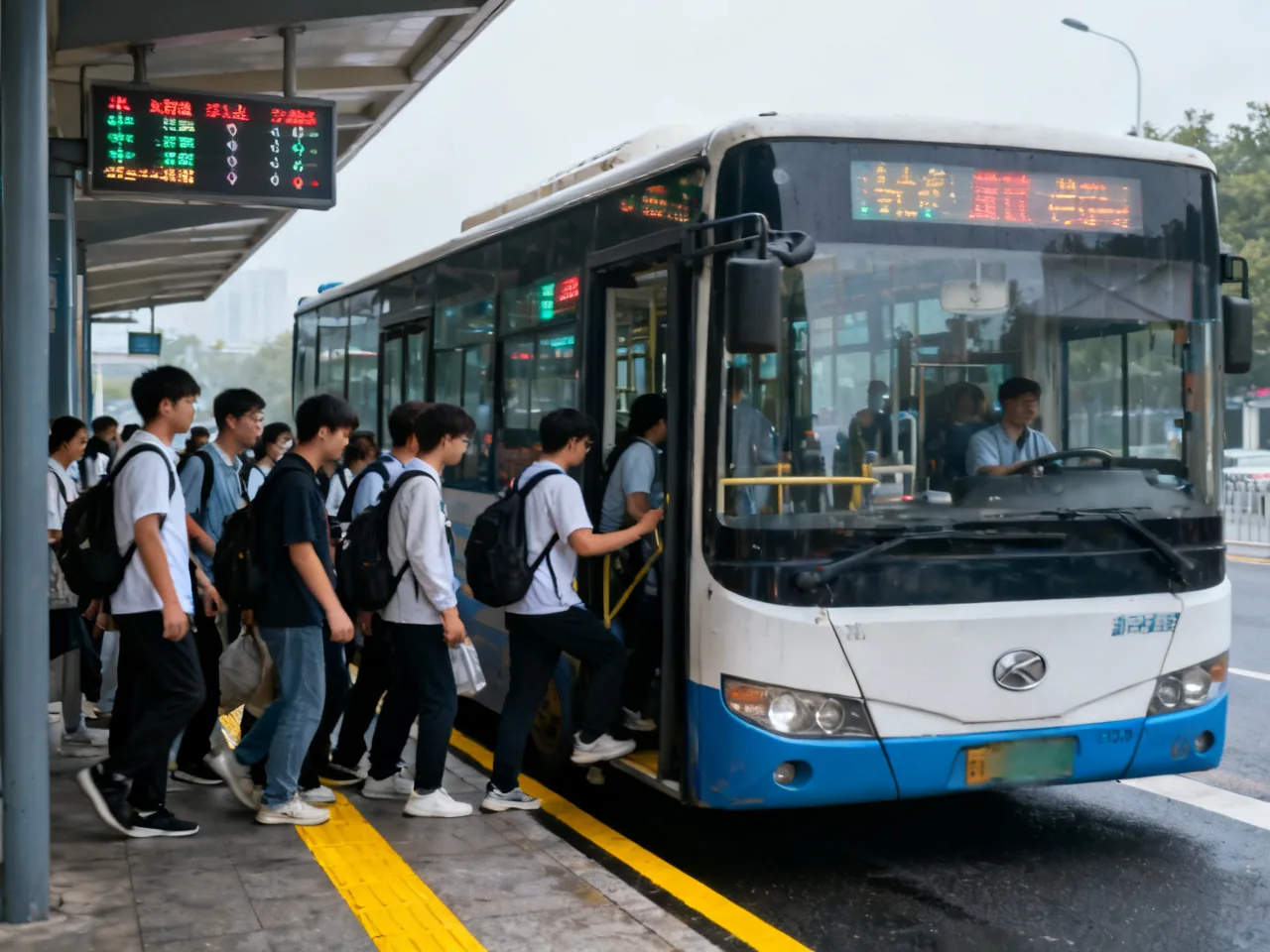
Later I learned a very practical method: do not only look at where people are lining up. Look at how they make room for the door. If everyone is merely standing in a straight way, you still may not have identified the true boarding point. What matters is the timing of that small opening and then that small closing again. Another detail matters too: watch where experienced riders place their feet. Some step half a pace toward where the door is likely to stop, but not so far that they block it. Others deliberately leave a disembarking channel while still keeping themselves aligned with the main boarding flow. Once I started noticing these movements, many mornings that used to feel just slightly off suddenly became smooth. I was no longer searching for a line. I was learning an order in motion.
This observation also helped me understand a common feature of everyday order in China: many rules are not fully written out. They are maintained through repeated physical habits inside repeated scenes. Bus stops are one example. If you only want to find an absolutely static, perfectly neat line, you may actually misread the situation. The real clues lie in how people balance efficiency with giving way, and how they adjust position quickly without speaking. Over time I came to believe even more strongly in the value of making layered observations before acting, because at a bus stop, watching for three more seconds is often more useful than pushing one step earlier.
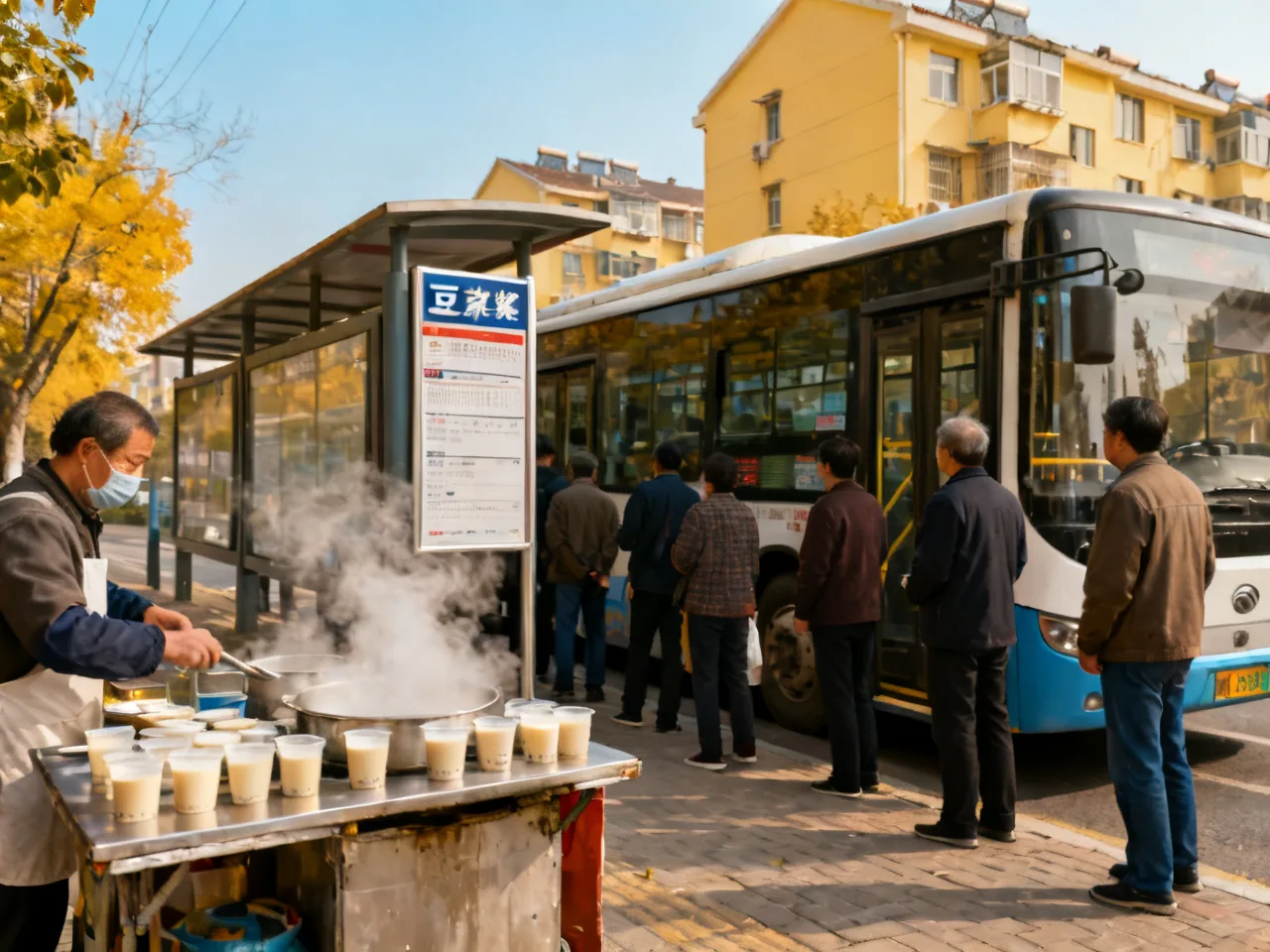
Later, I spent several days watching the same bus arrive at a stop outside a residential compound. I noticed that the most practiced people almost never rushed. They simply stood accurately, yielded accurately, and closed the gap accurately. Some could even keep sipping soy milk while making a tiny position adjustment before the bus fully stopped, neither anxious nor scattered. I admired that steadiness, because it showed that these people were not merely “quick reactors.” They had placed the rhythm into their bodies. That realization also made me less afraid of looking awkward on public transport. I understood that what I lacked was not courage. I had simply not watched enough yet.
If someone asks me now what is most worth learning first at a Chinese bus stop, I would not begin with routes or payment codes. I would say: learn to read the rhythm of the queue. Watch how people leave space for those getting off, how they judge where the door will stop, and how on an ordinary workday morning a small group of strangers temporarily becomes a smooth boarding order. Once you understand that rhythm, many moments that used to feel tense at the platform suddenly become simple. For me, that has been a deeply everyday lesson, but also a very city-in-China kind of one.