 Travel Notes
 Tiananmen Square: An Eight-Hundred-Metre Central Axis
East Chang’an Street, Dongcheng district. The Tiananmen gatehouse stands at the north end and the Qianmen tower at the south, with the Monument to the People’s Heroes in the middle, the National Museum of China to the east and the Great Hall of the People to the west. The whole surface is laid in pale granite setts: 880 metres north to south, 500 east to west, 440,000 square metres in all, room for a million people — the largest urban central square in the world.
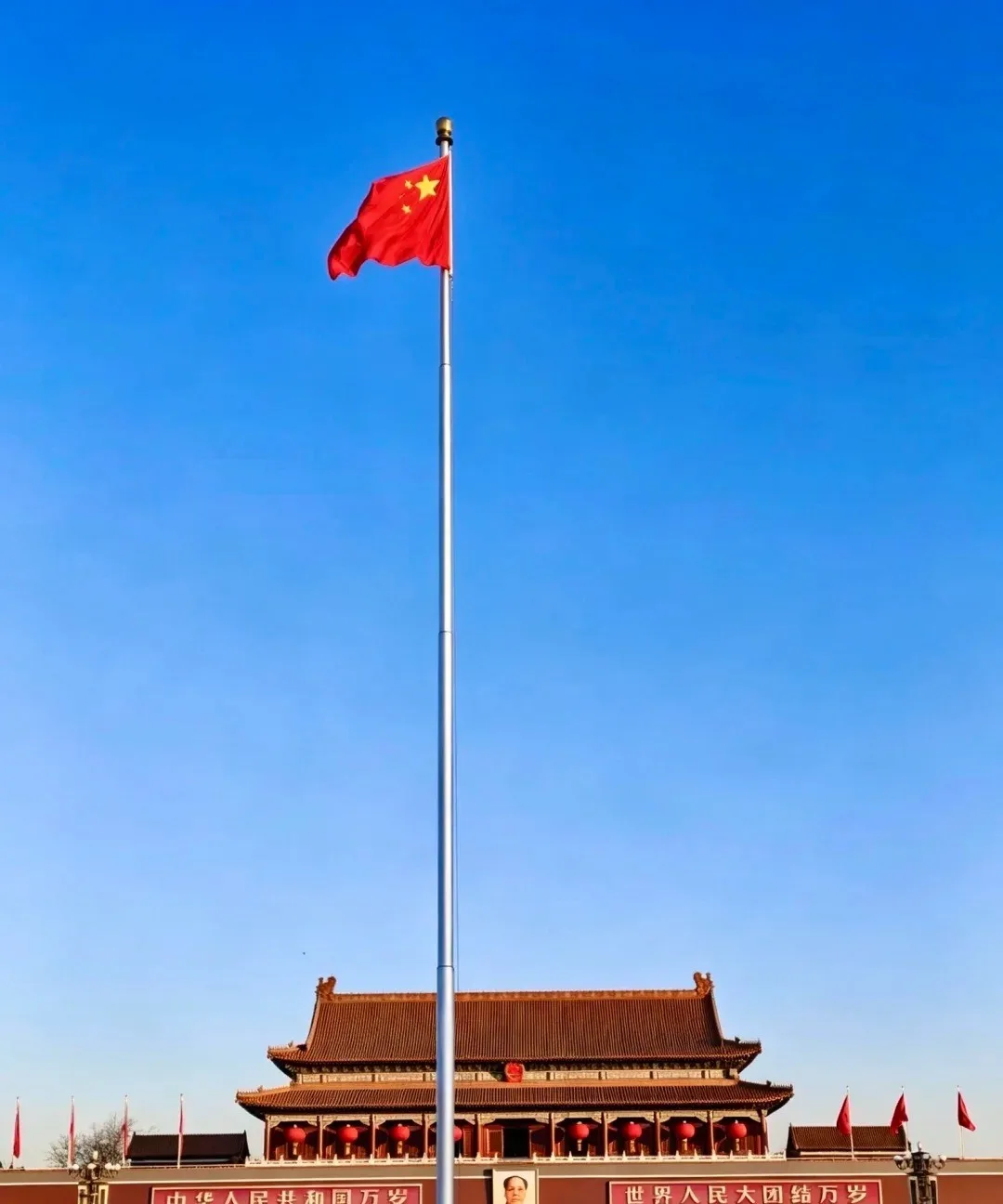
From Jingtian gate to a square
In 1417, after the Yongle emperor moved the capital, the Cheng’an gate (today’s Tiananmen) was built on the foundation of the old southern wall of the Yuan capital, with a T-shaped square in front known as the Heavenly Street or the Checkerboard Street. In 1651 the Qing rebuilt and renamed it Tiananmen, and the layout carried on much as before. In the Ming and Qing the square hosted proclamations and the ceremony of naming the graduates, and nobody outside the palace could set foot in it.
After the 1911 revolution the square opened to the public. The May Fourth movement of 1919, the March Eighteenth massacre of 1926 and the December Ninth movement of 1935 all happened here. On 1 October 1949 the founding ceremony was held, with Mao Zedong proclaiming the People’s Republic from the gatehouse. In 1958, for the tenth national anniversary, the China gate and the checkerboard streets were pulled down and the square grew to its present size; the memorial hall was built in 1976; and in 1999, for the fiftieth anniversary, the whole ground surface was relaid in granite setts.
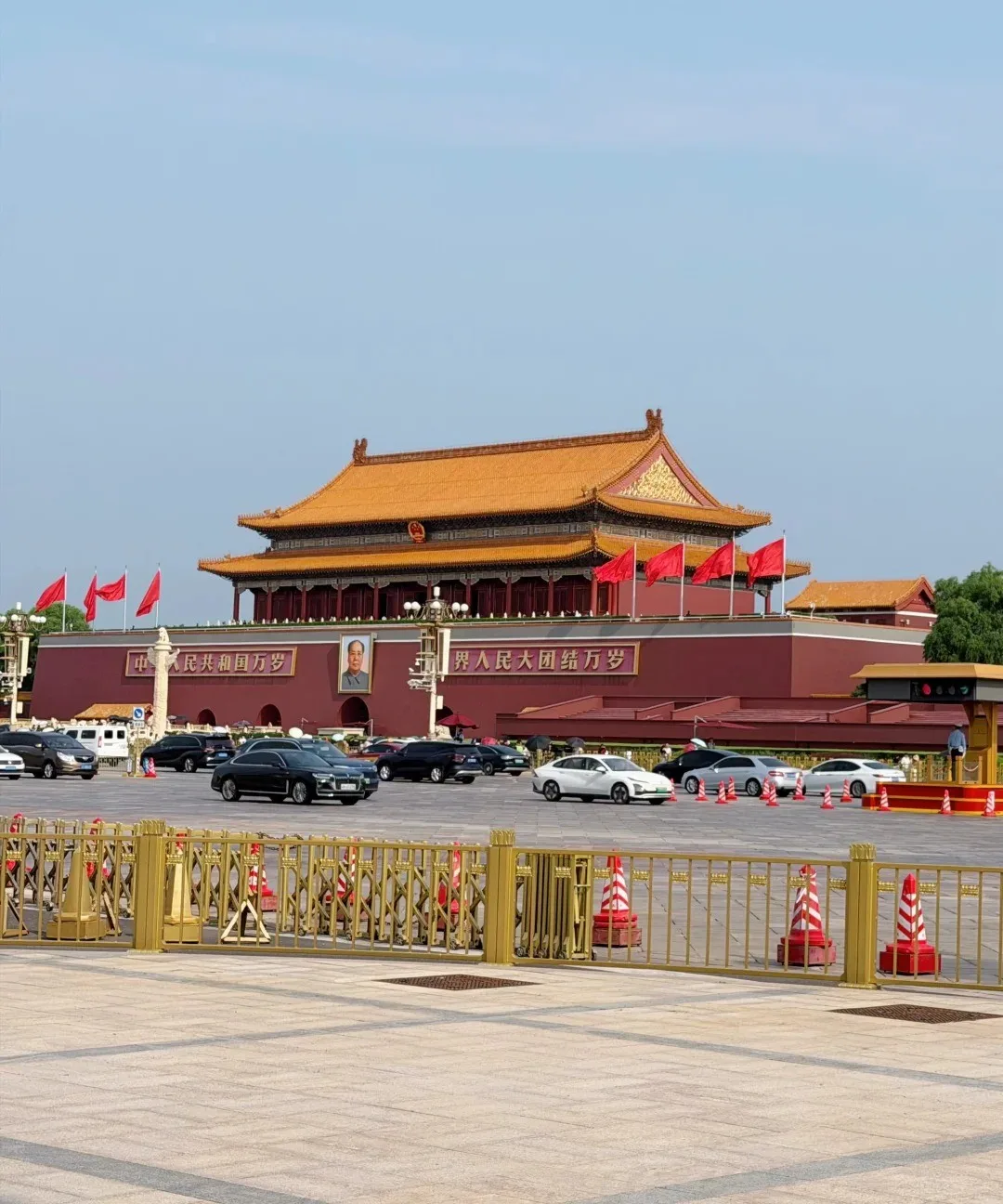
The four main buildings
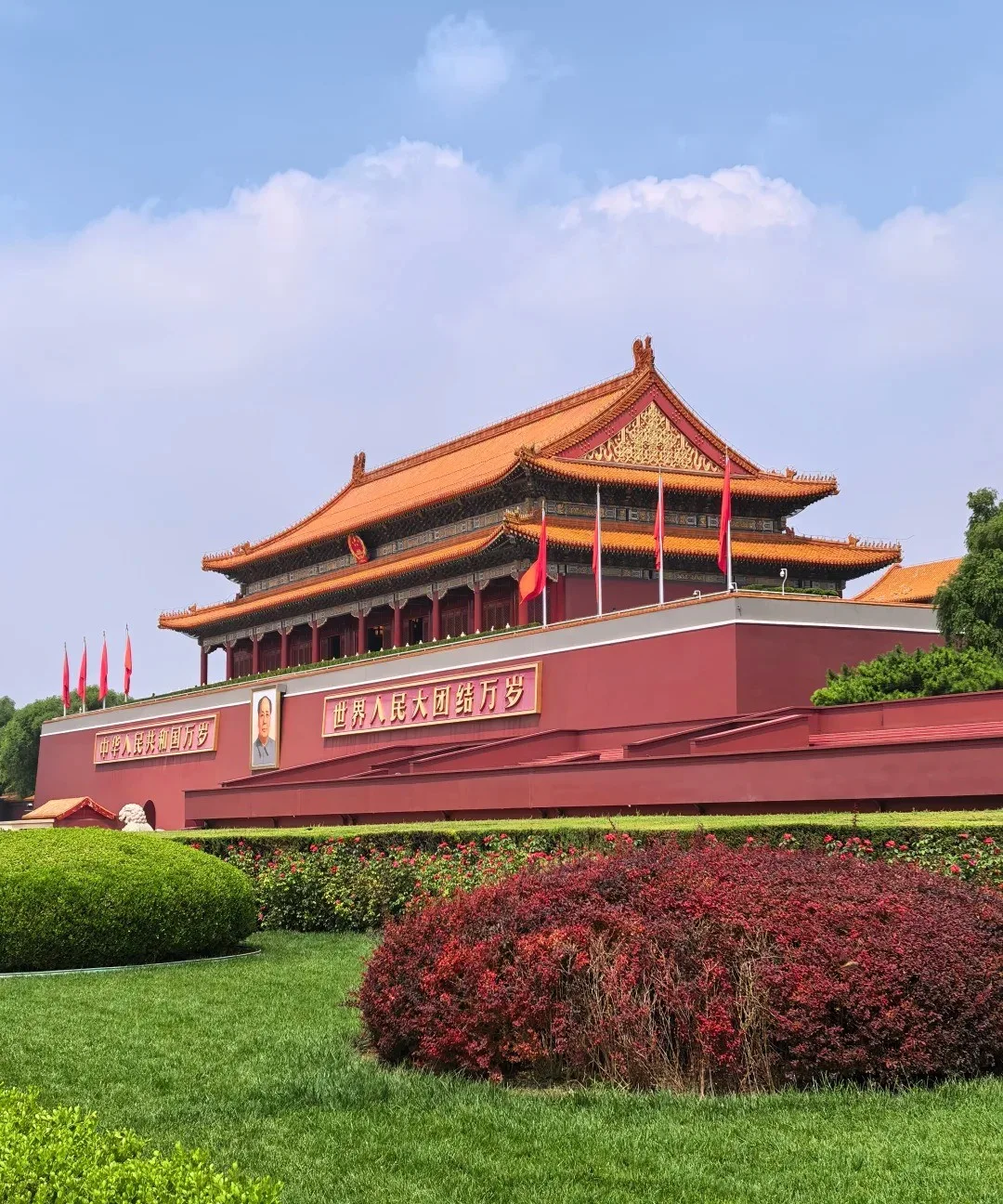
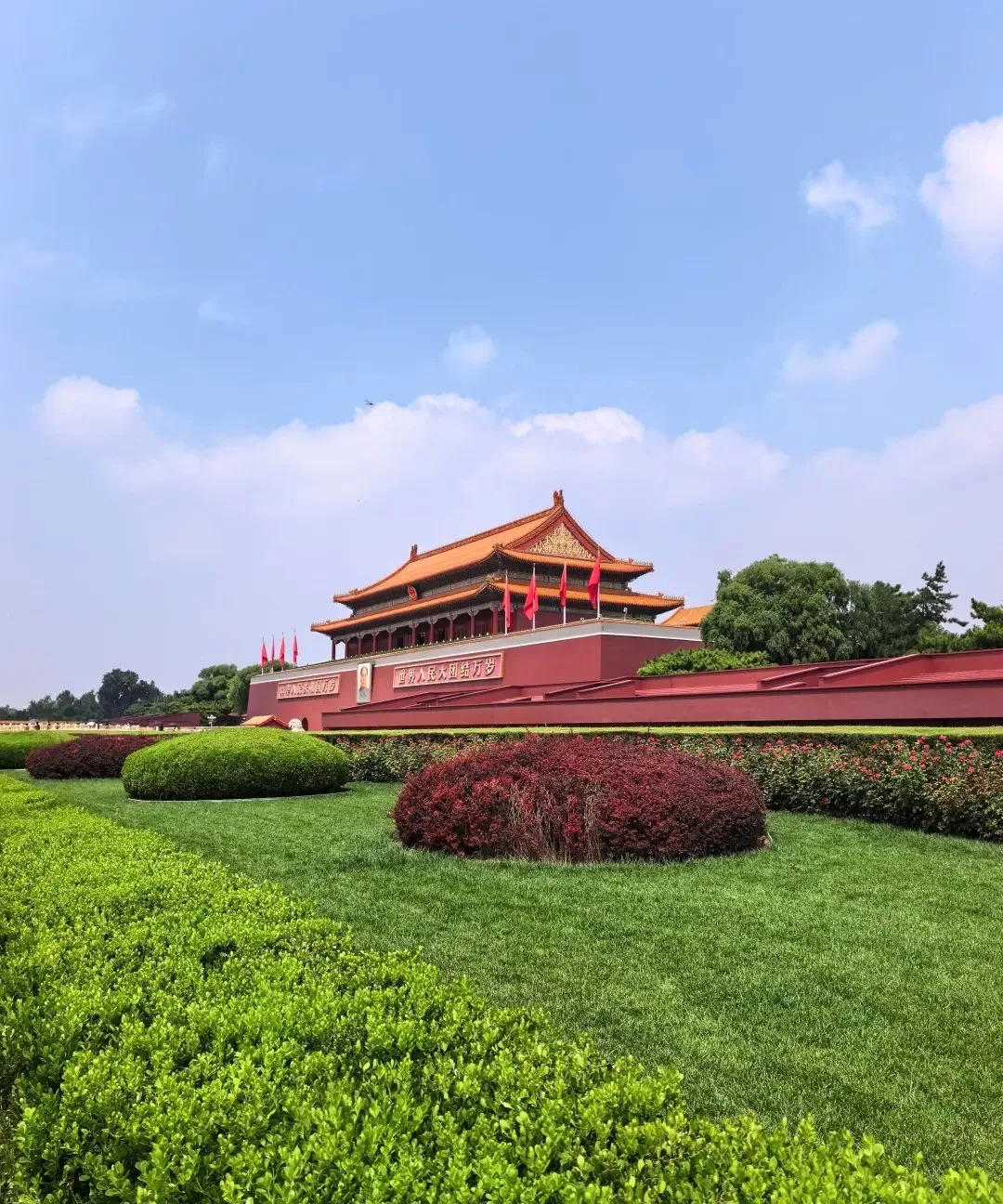
- Tiananmen gatehouse: begun in 1417 as the Cheng’an gate and renamed in 1651. Thirty-four point seven metres in all, on a brick and stone platform with a marble base 1.59 metres high and five arched gateways pierced through its centre. Above sits the double-eave hip roof, nine bays wide and five deep, following the “nine and five” emperor’s rule. A portrait of Mao Zedong hangs over the central archway, flanked by the words “Long live the People’s Republic of China” and “Long live the great unity of the world’s peoples”.
- Monument to the People’s Heroes: begun in 1952 and finished in 1958, 37.94 metres tall, built of some 17,000 blocks of granite and marble. The front face carries the eight gilded characters “Eternal glory to the people’s heroes”, written by Mao; the rear carries the inscription composed by Zhou Enlai. Ten marble reliefs are set into the base: the destruction of the opium at Guangzhou, the Taiping revolt, the Wuchang uprising, the May Fourth movement, the May Thirtieth movement, the Nanchang uprising, the anti-Japanese guerrilla war, the crossing of the Yangtze, the support of the front and the welcome of the People’s Liberation Army. Each relief is two metres high and the ten together run 40.68 metres, depicting more than 170 figures.
- Memorial hall of Chairman Mao: completed in 1977, square, facing north, 28,000 square metres. It consists of a north hall for memorial observances, where a marble seated figure of Mao stands; a central hall of veneration holding the crystal coffin with his embalmed body; and a south hall whose walls carry his poem “Ode to the Jinshi Militant, in Reply to Guo Moruo”.
- Flagpole: at the north end, on the same axis as the gatehouse, 32.6 metres high on a marble base. The flag rises at sunrise and comes down at sunset. A guard of thirty-six walks the hundred and thirty-eight paces from the Golden Water Bridge to the pole, the figure standing for the hundred and thirty-eight years from the founding of the Communist Party to the founding of the People’s Republic.
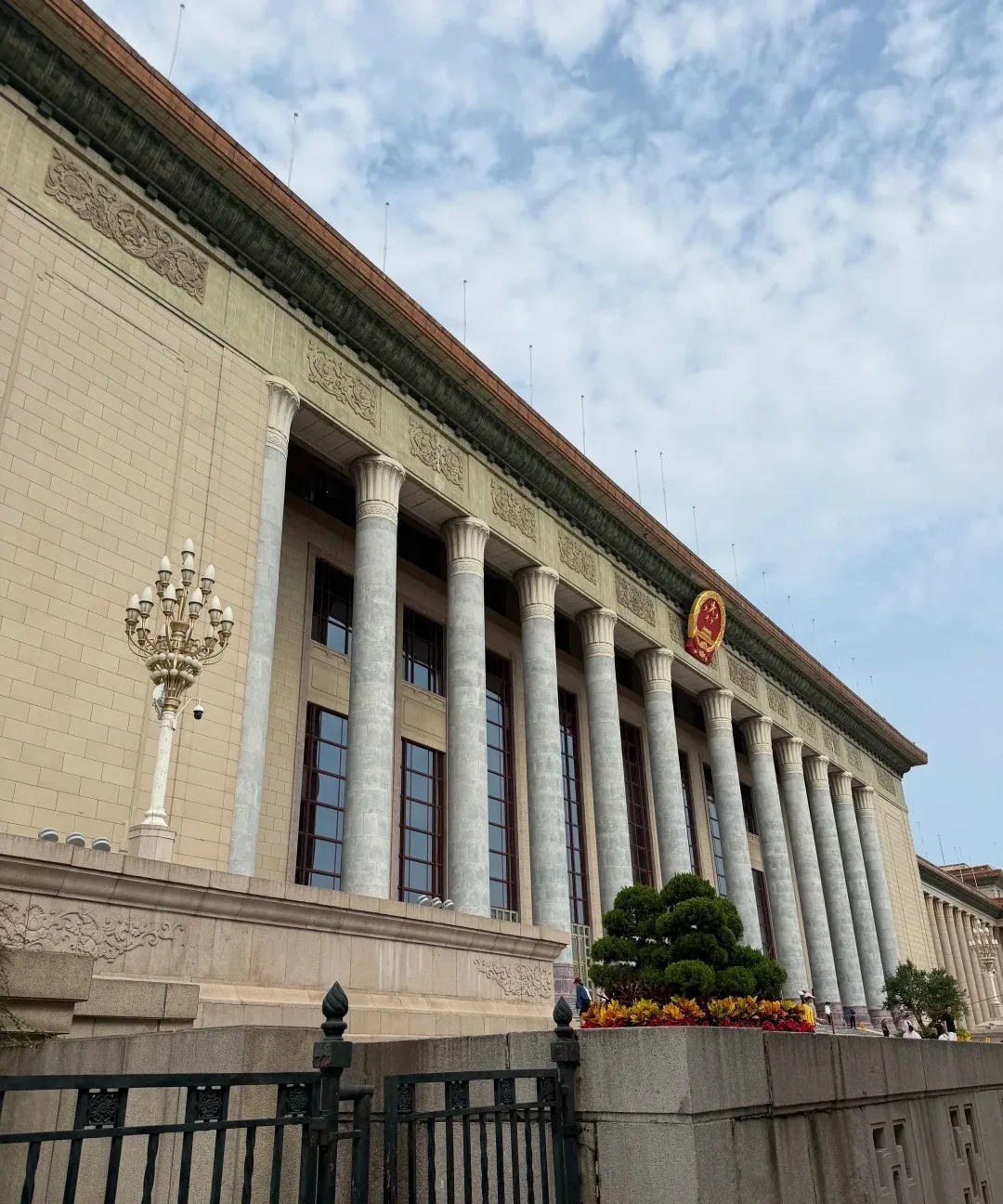
An enclosed square
The gatehouse, the monument, the memorial hall and the Qianmen tower stand one after another on a single axis running about two and a half kilometres; the Great Hall of the People and the National Museum close the square on the east and west, with the gatehouse completing an enclosure on three sides that gives the whole its weight.
On the gatehouse roof, beast figures sit at both ends of the main ridge and nine immortal-and-beast figures march along the curved eaves — the highest grade there is. The painting inside and out is dominated by gold dragon and xie work.
Practical information
- Hours: the square is open round the clock but requires a security check. The memorial hall is open Tuesday to Sunday 8:00–12:00 and closed Mondays; the gatehouse 8:30–16:30
- Tickets: the square is free. The gatehouse costs 15 yuan; the memorial hall is free but needs a booking; the Great Hall of the People 30 yuan; the National Museum free but with a booking
- Booking: one to nine days ahead through the WeChat mini-program “Tiananmen Square reservation”, where places are limited. The memorial hall uses its own official account for its veneration slots
- Security: knives, flammable material, drones and banners are forbidden; carry your identity document and co-operate with the checks
- Metro: Line 1 to Tiananmen East (exits A or B) or Tiananmen West (exit B); Line 2 to Qianmen (exit A) for the southern end
- Bus: routes 1, 2, 5, 52, 82, 120 and the sightseeing line 1 to Tiananmen East or Tiananmen West
- Driving: no parking around the square; leave the car on Qianmen Street or in the underground car park of the National Centre for the Performing Arts and walk
Related reading
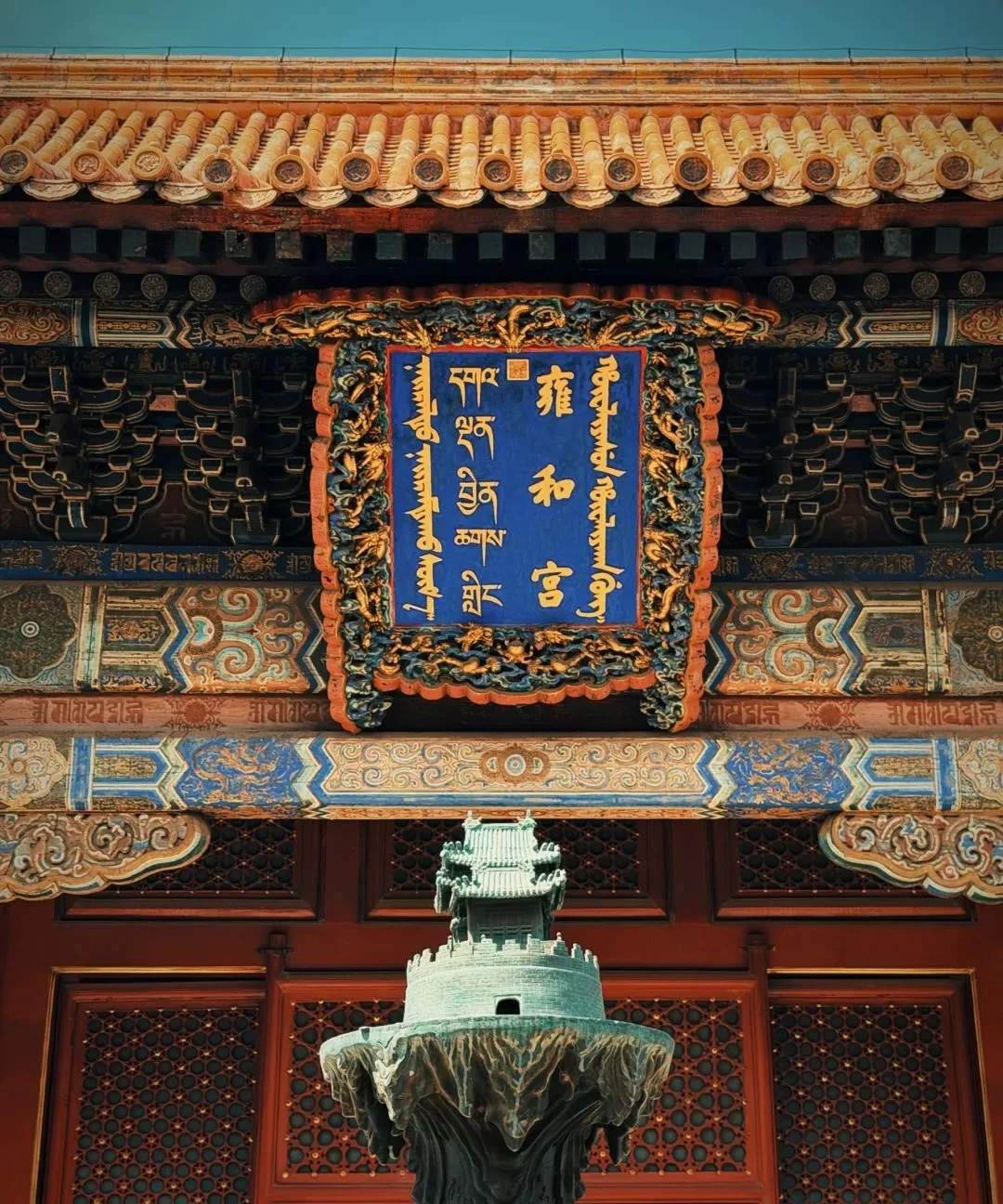
Yonghe Temple: From a Prince's Mansion to Beijing's Largest Tibetan Buddhist Temple
Yonghe Temple began as the mansion where Yongzheng lived as a prince, and was turned into a Tibetan Buddhist monastery in 1744 by his son Qianlong. Red walls and yellow tiles, seven courtyards, and an eighteen-metre Maitreya carved from a single sandalwood trunk make it one of Beijing's busiest places of worship.
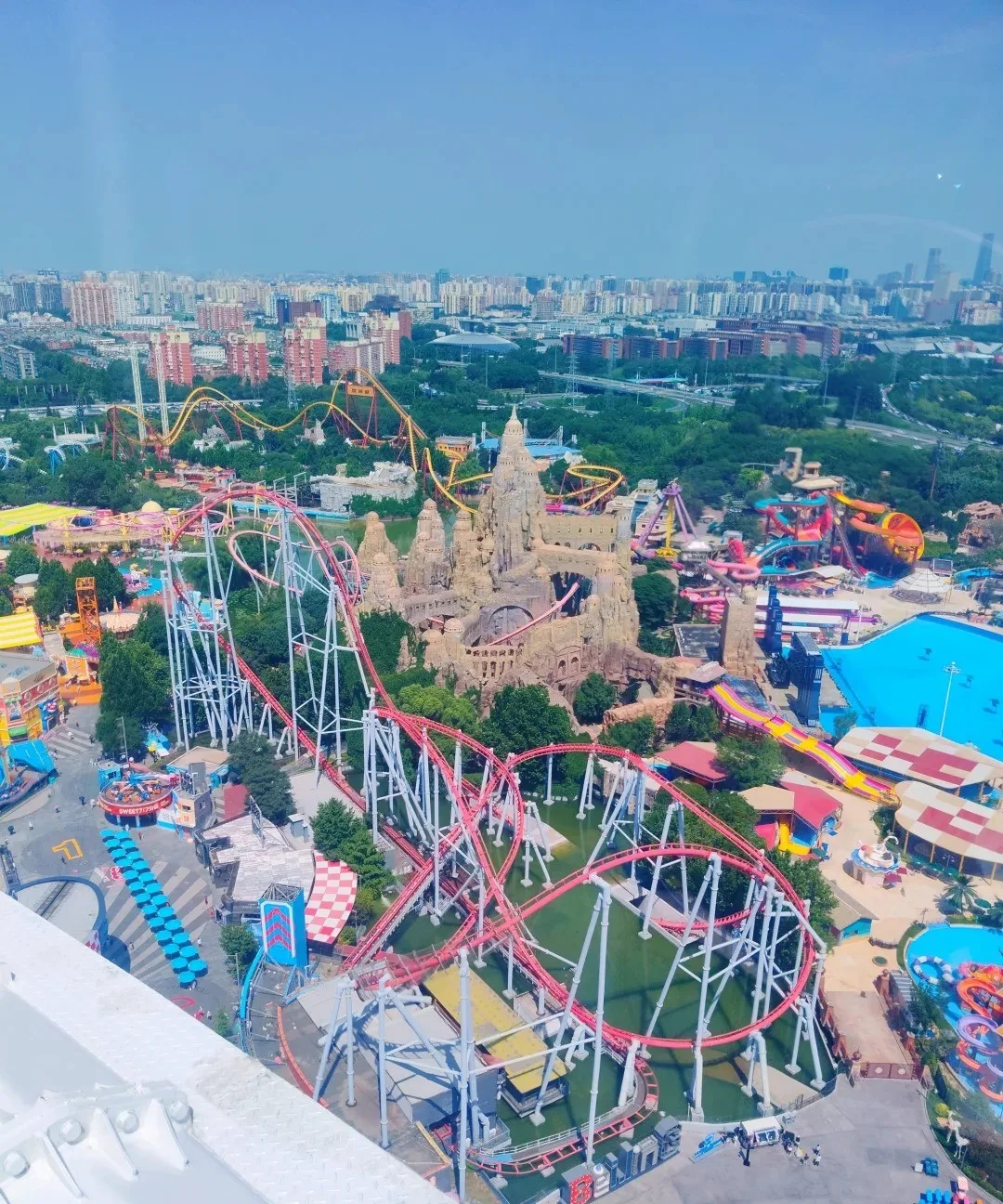
Beijing Happy Valley: One Route Round the Park, Six Roller Coasters
In the southeast corner of Dongcheng's fourth ring, 560,000 square metres and seven themed areas hold China's first launch coaster: 135 km/h, sixty metres high, thirty seconds end to end.
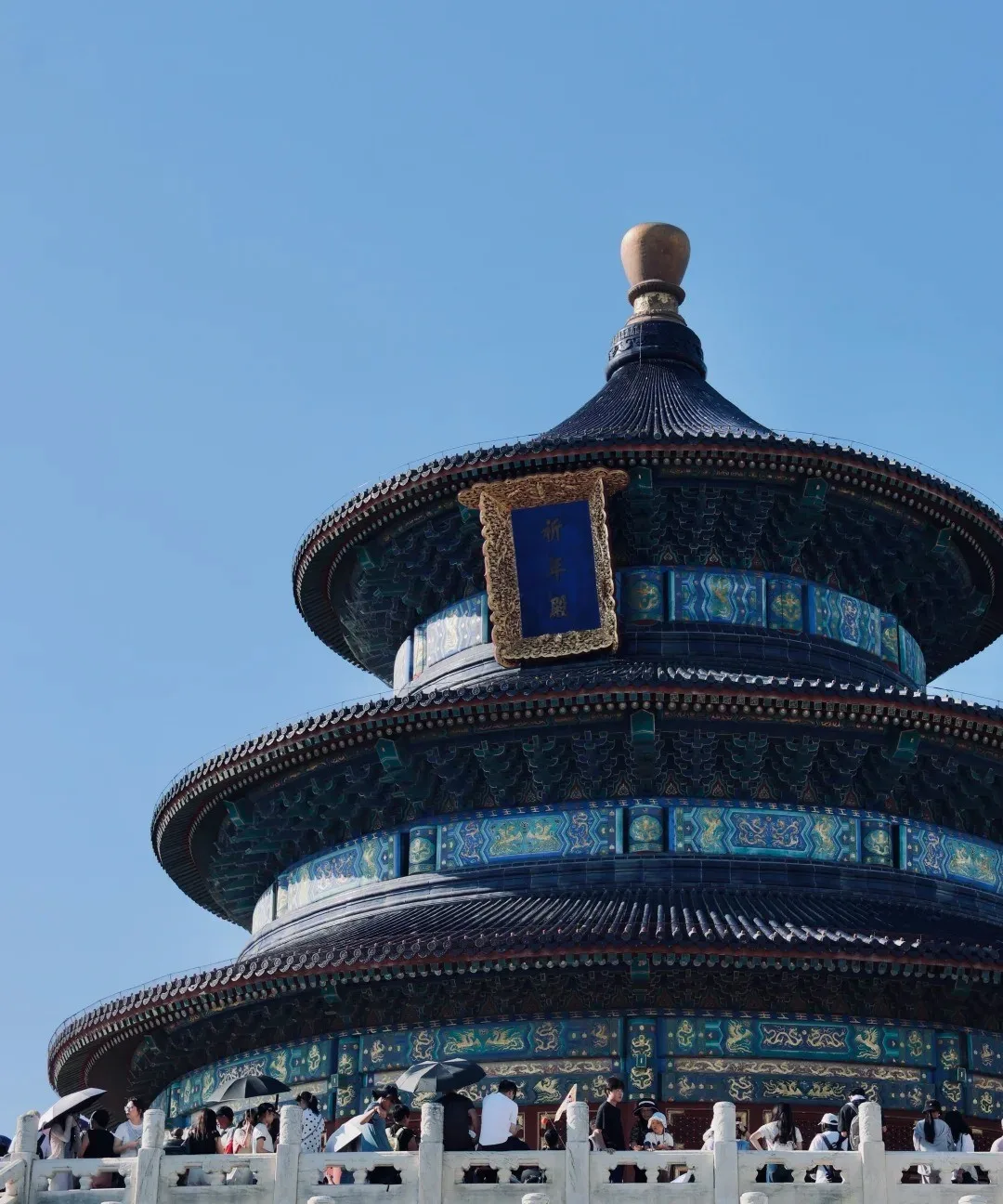
Temple of Heaven: Where the Square and the Circle Met
A circle at the north, a square at the south, and a 360-metre stone causeway running between them to the Hall of Prayer for Good Harvests. The Temple of Heaven turned an idea about the sky into a place you can walk through — sound skims along its walls, and every count of stone is a multiple of nine.
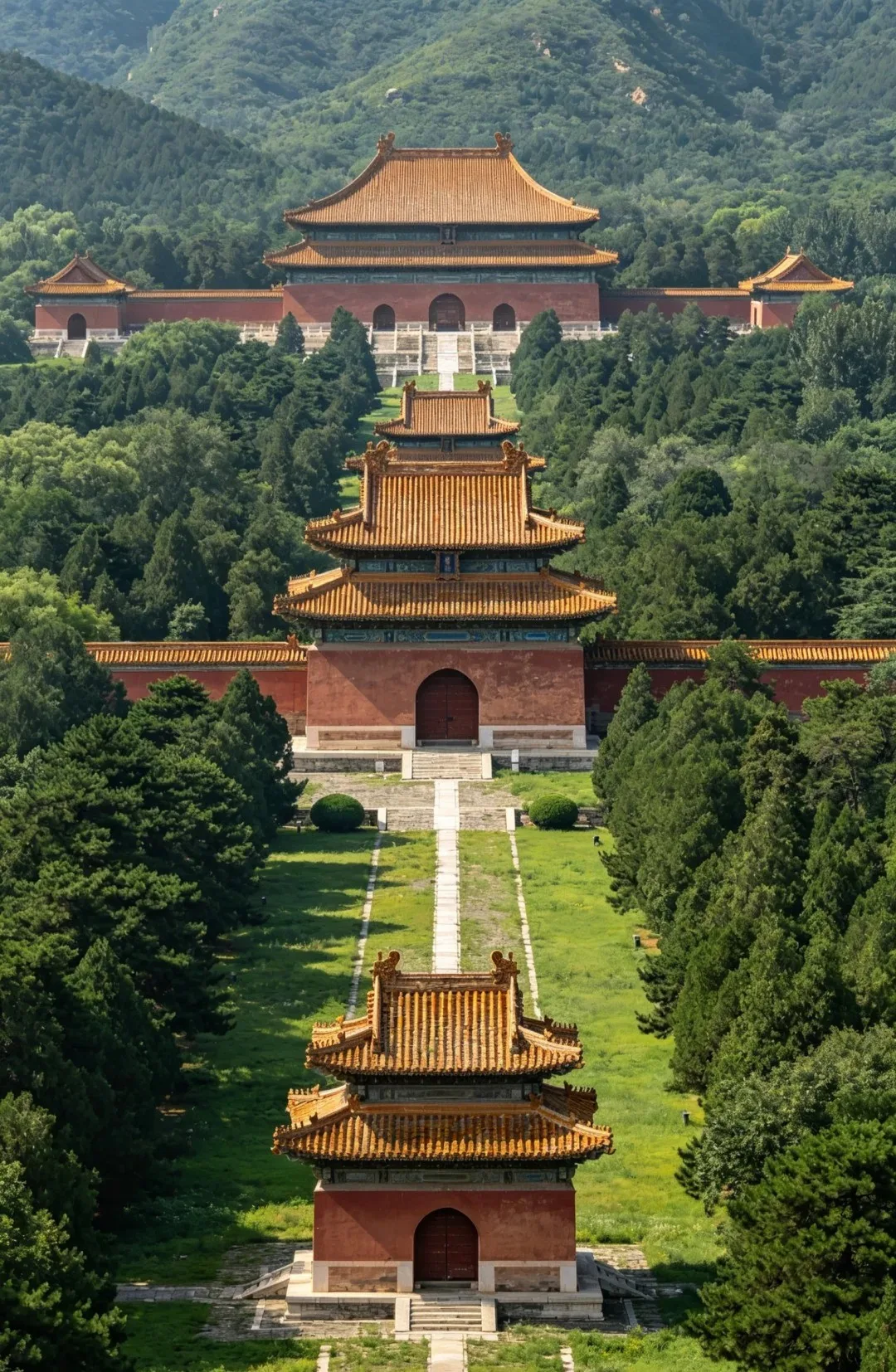
Ming Tombs: Thirteen Emperors in One Mountain Basin
In a forty-square-kilometre basin south of Tianshou Hill lie thirteen emperors of the Ming: the founder's son who moved the capital, the ruler who held no court for twenty-eight years, the last one who hanged himself on Coal Mountain. One stone sacred way, lined with carved animals, links all thirteen.
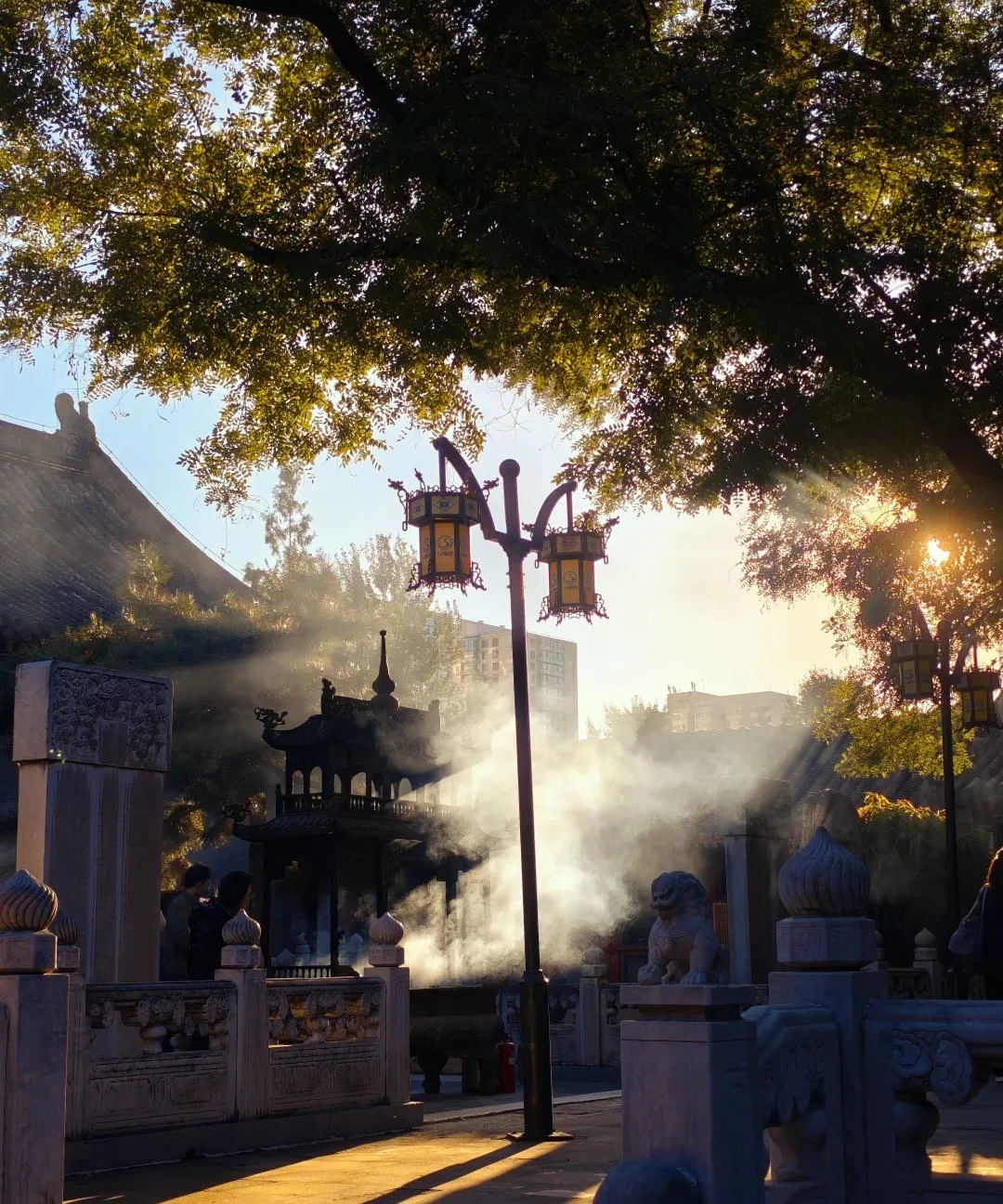
White Cloud Temple: The First Abbey of the Quanzhen Order
No. 9 Baiyunguan Street, Xicheng district. A monastery founded in 739 as Tianchangguan, called Taijigong under the Jin and Changchunguan under the Yuan, took its present name when rebuilt in 1394. Under the statue of Qiu Chuji in the Qiu Zu hall lie his bones; the monastery also keeps a complete 5,305-juan copy of the Daozang canon.