 Travel Notes
 Yonghe Temple: From a Prince's Mansion to Beijing's Largest Tibetan Buddhist Temple
Twelve Yonghegong Street, Dongcheng district: red walls, yellow tiles, two hundred metres from the Yonghegong metro station. This is the highest-ranked and largest Tibetan Buddhist monastery of the Gelug school still standing in Beijing, and for two centuries the centre of Tibetan Buddhism inside the Qing capital — a royal monastery made out of a prince’s house.
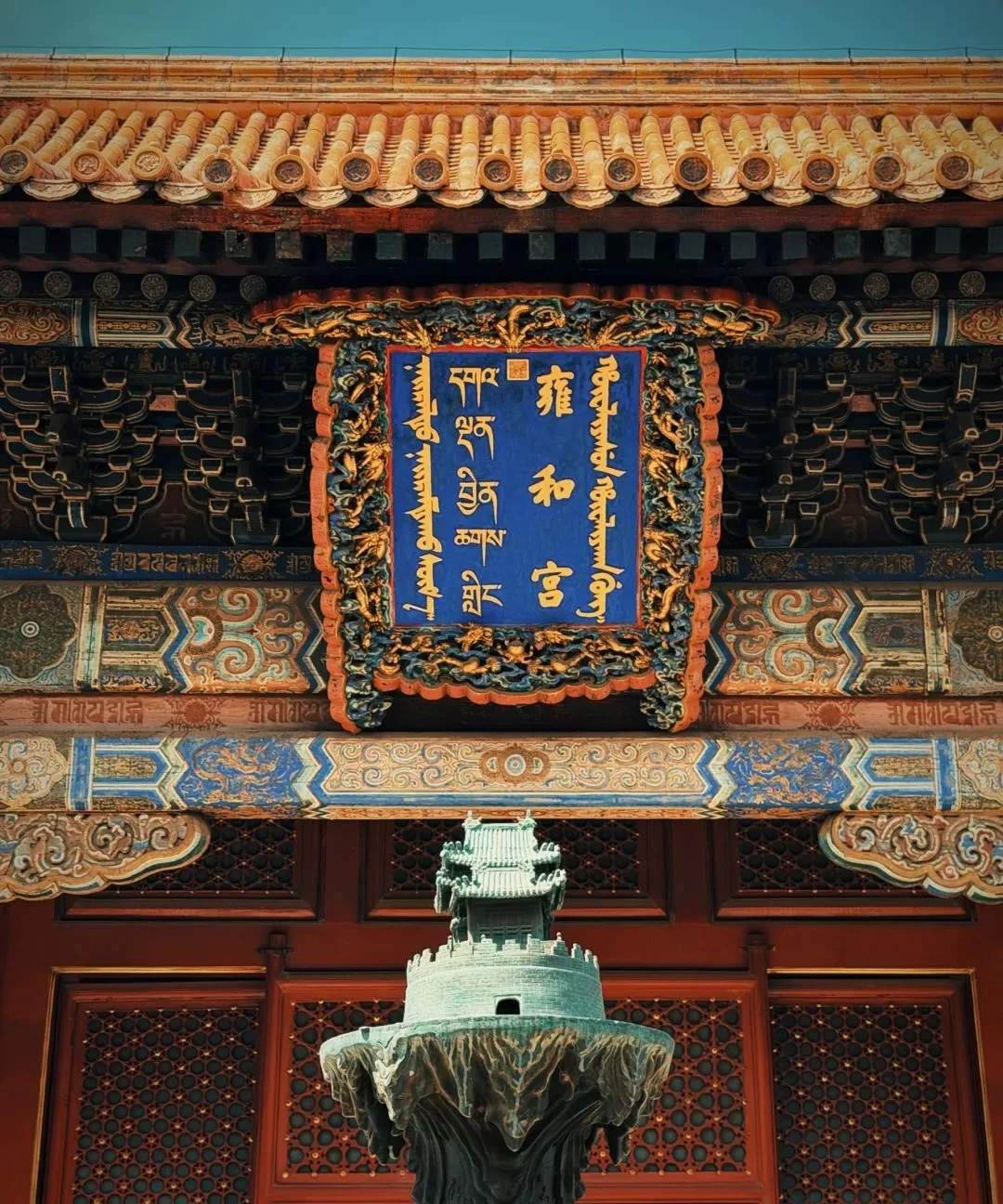
A mansion that became a monastery
In 1694 the Kangxi emperor built a residence for his fourth son Yinzhen, first called the Zhen Beile Mansion. When Yinzhen was made Yongqin prince the complex grew to princely rank, with a central axis carrying the gate hall, the silver-security hall and the sleeping quarters. In 1722 Kangxi died and Yinzhen took the throne as Yongzheng, who raised his old residence to a palace and named it Yonghegong — though the site still kept some of its mansion functions.
In 1735 the Yongzheng emperor died, and his coffin lay in the Yongyou hall. His son Qianlong, wanting both to honour his father and to win the loyalty of Tibet and Mongolia, had the place converted into a Gelug monastery in 1744 and wrote his own “Yonghegong Stele” to explain why. The work continued for decades: the Falun and Wanfu halls were added, lamas were invited from Tibet, Mongolia and Qinghai, and by the end of Qianlong’s reign the temple ran four colleges — exoteric, esoteric, medicine and calendar — with several hundred monks. In 1780 the Sixth Patriarch Rölpé Dorjé stayed here.
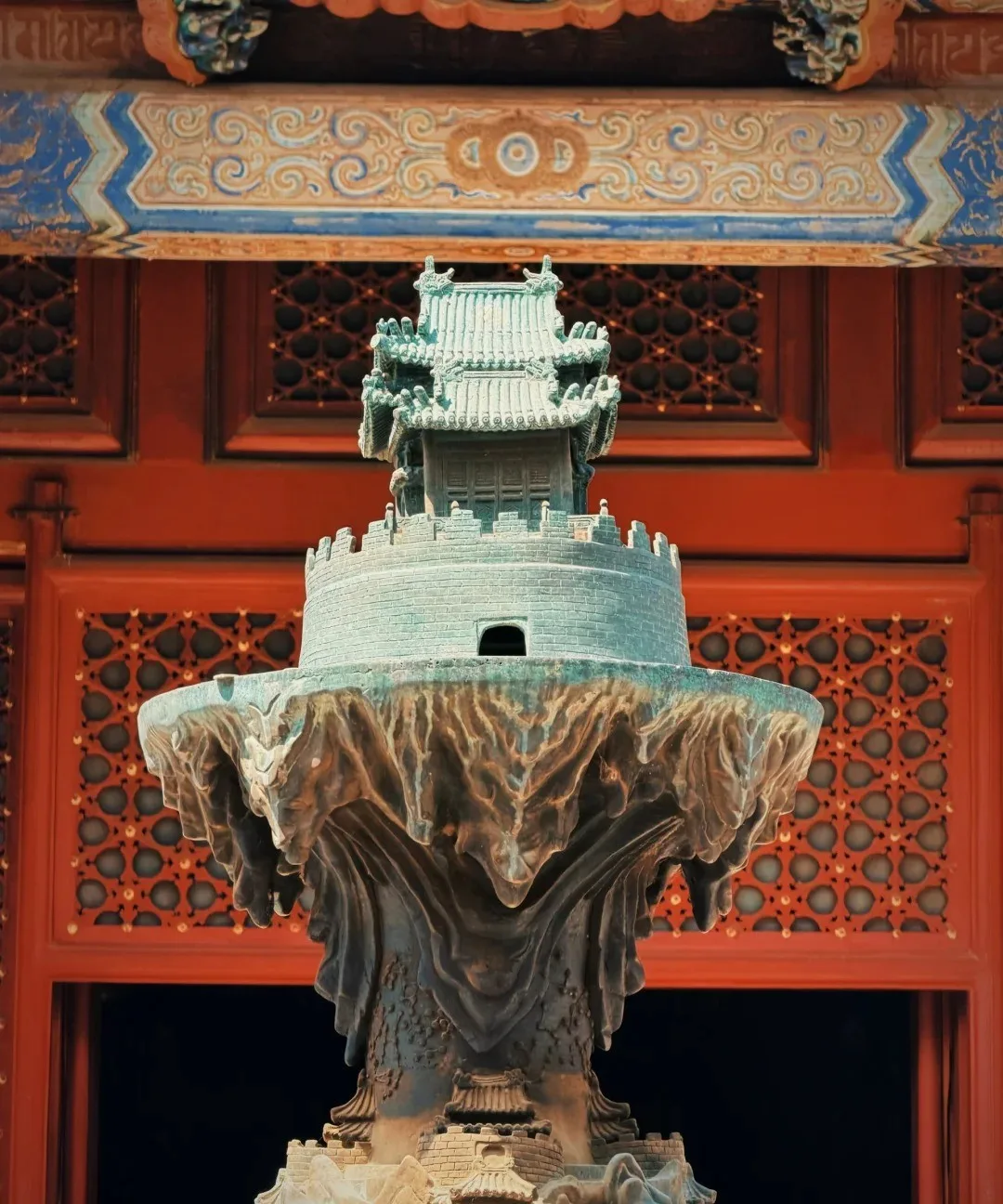
Seven courtyards rising northward
The monastery faces south, and each courtyard sits higher than the last:
- Entrance: three pailou; the central one has four pillars, three bays and nine roofs, its tablets reading “Honouring kin beneath the world” and “Benevolence and long life for all beings.” Behind it a screen wall, then the main gate, the Zhaotai gate.
- First courtyard: the Heavenly King hall, five bays wide, single-eave hip roof, Maitreya at the centre with the four heavenly kings on either side. Two stele pavilions stand on the east and west, holding Qianlong’s own “Yonghegong stele” and “On Lamas”, both cut in Manchu, Chinese, Mongol and Tibetan.
- Second courtyard: the Yonghe palace hall, seven bays by five, double-eave hip roof under yellow glazed tiles — the highest-rank building in the temple — with a bronze Sakyamuni about 2.5 metres high inside.
- Third courtyard: the Yongyou hall (Yongzheng’s old sleeping quarters, later used for the Medicine Buddha and the Buddha of Longevity) and the Falun hall. The Falun hall is seven bays square, with a gilded bronze wheel on the ridge and the largest Tsongkhapa bronze in Beijing, about six metres tall; its wall paintings of the lives of Sakyamuni run some fifty metres by three and show a hundred and eight scenes.
- Fourth courtyard: the Wanfu pavilion, the tallest structure here, three storeys, about thirty metres, under yellow tiles.
- Fifth courtyard: the Suicheng hall at the northern end, with Amitayus, White Tara and Green Tara.
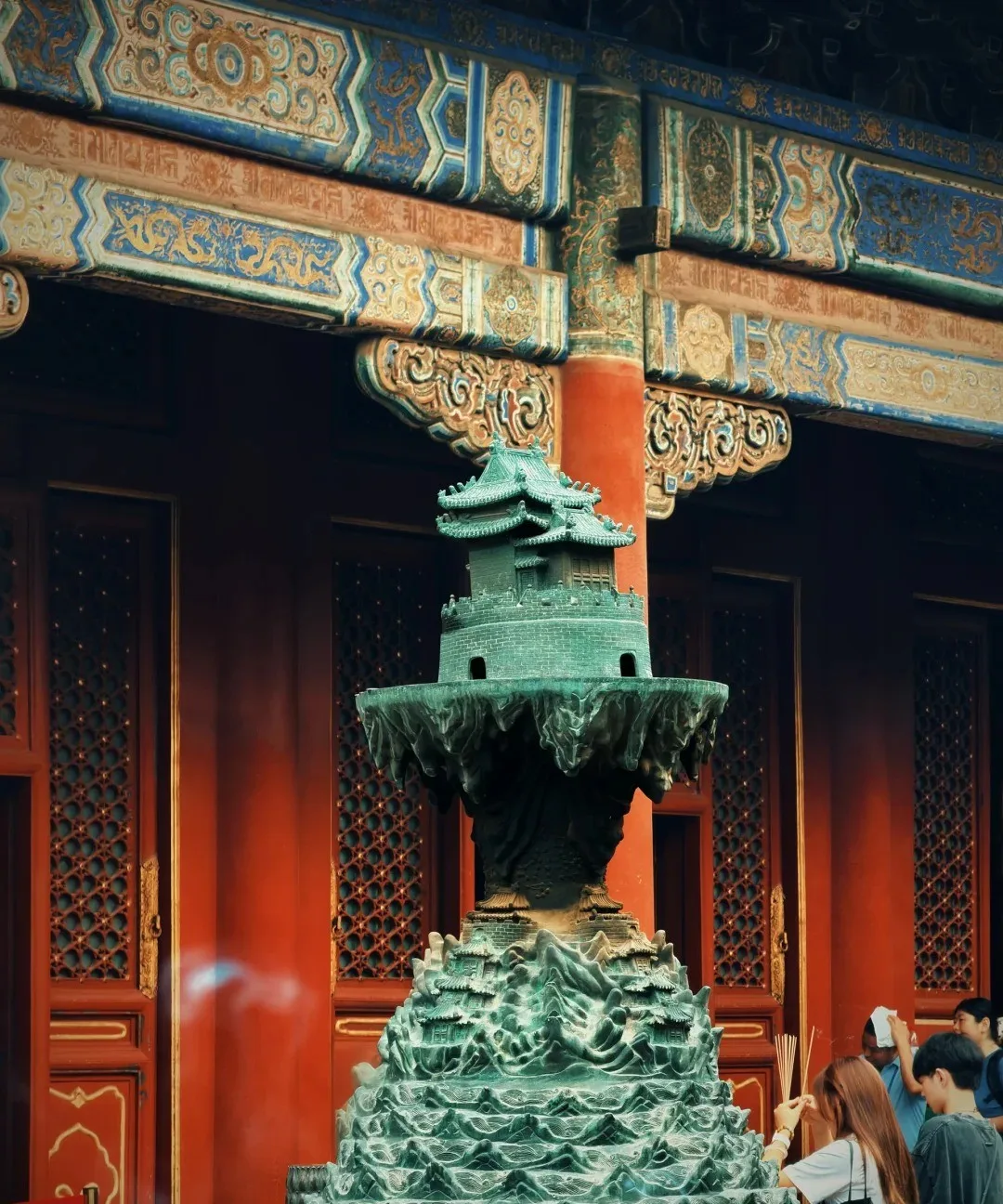
The sandalwood trunk
The Maitreya inside the Wanfu pavilion is the reason most people come. The figure was carved from a single sandalwood trunk: twenty-six metres in all, eighteen above ground and eight buried below, about three metres across, roughly a hundred tons. The face is kind, the eyes lowered, the right hand in the gesture of reassurance, the left in that of giving; the drapery falls in clean lines. No other Qing wooden figure of this scale survives.
The pavilion also has side corridors linking the Yansui and Yongkang pavilions, making a three-pavilion group that is equally unusual in Qing palace architecture.
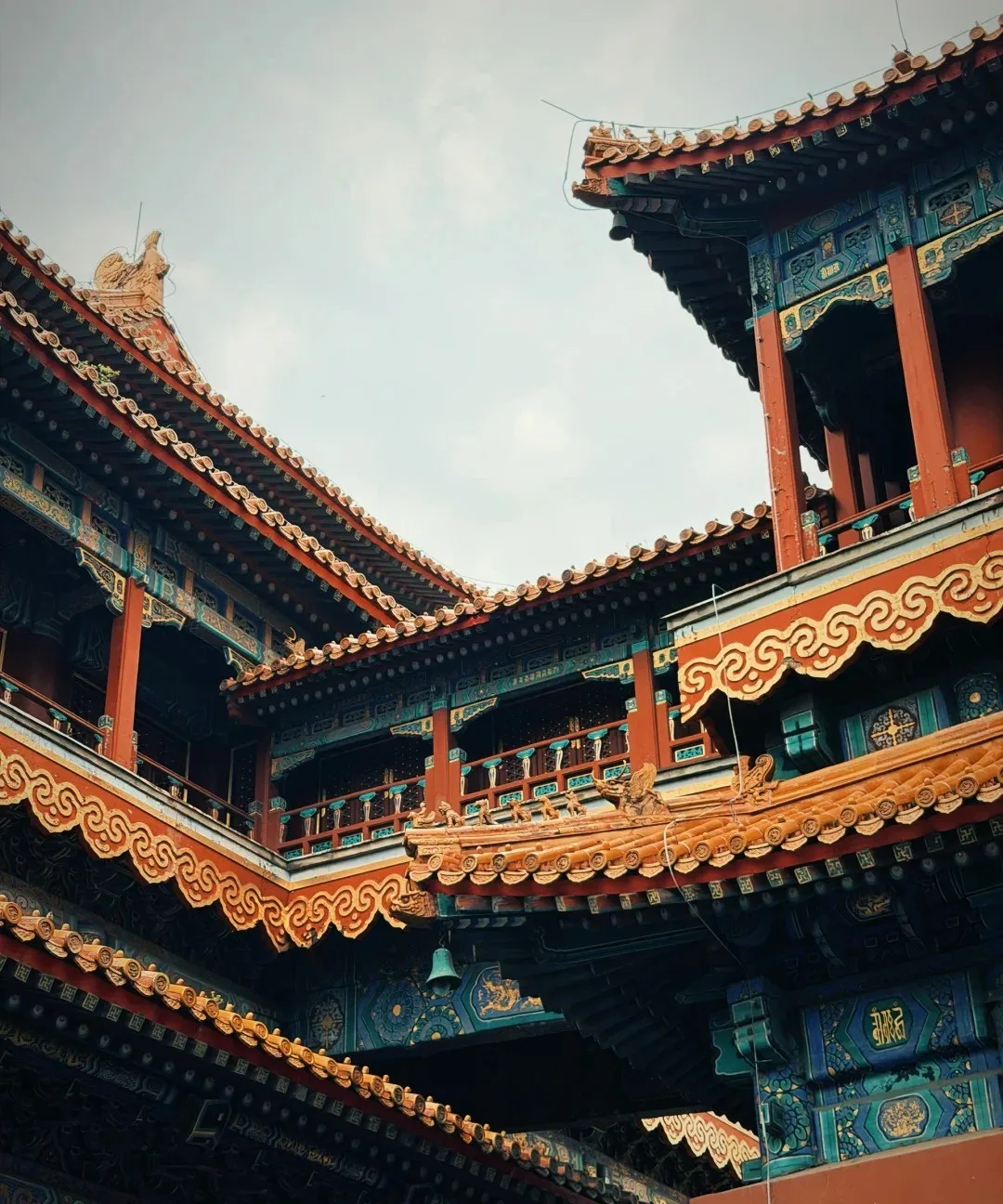
Two building traditions on one axis
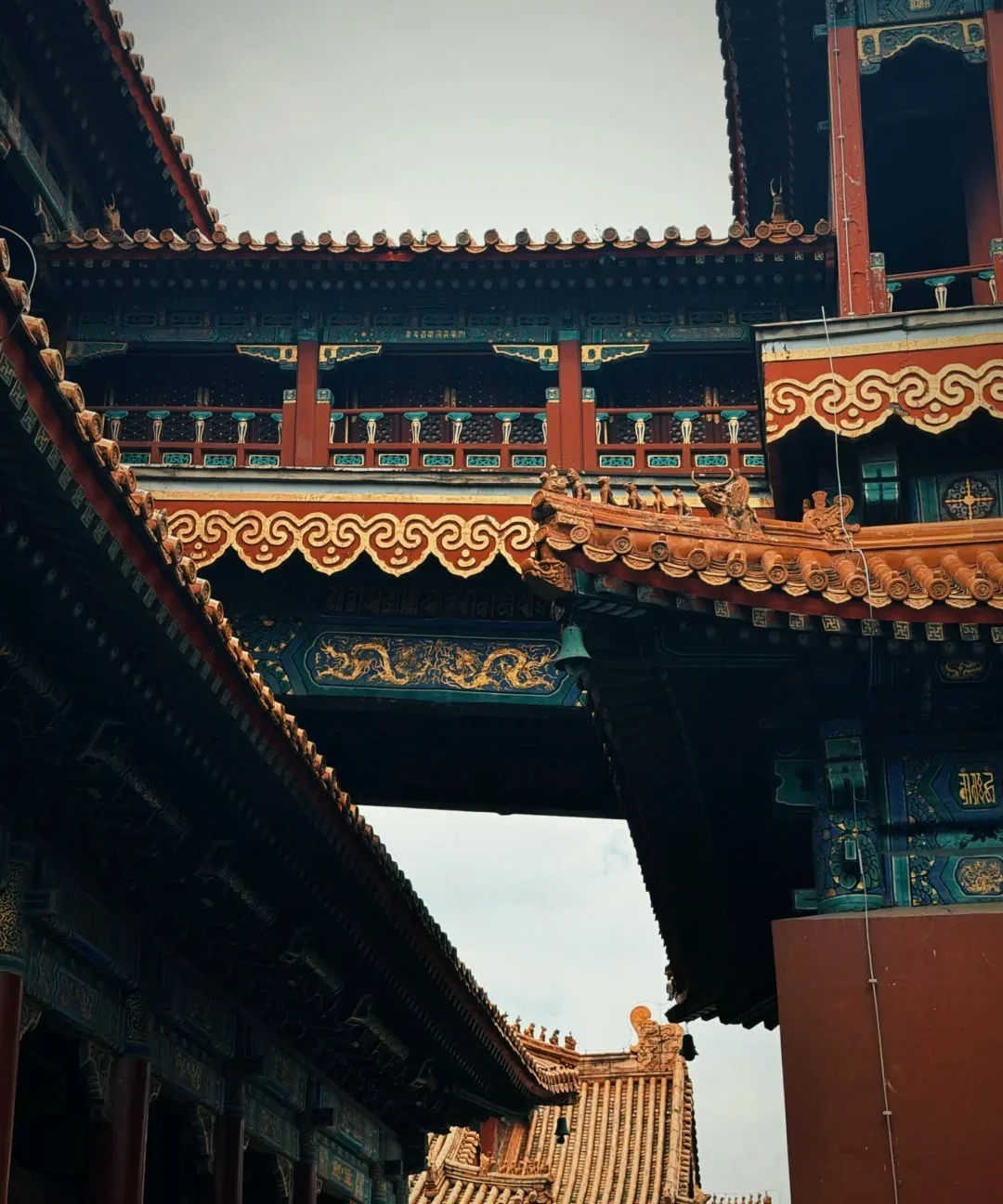
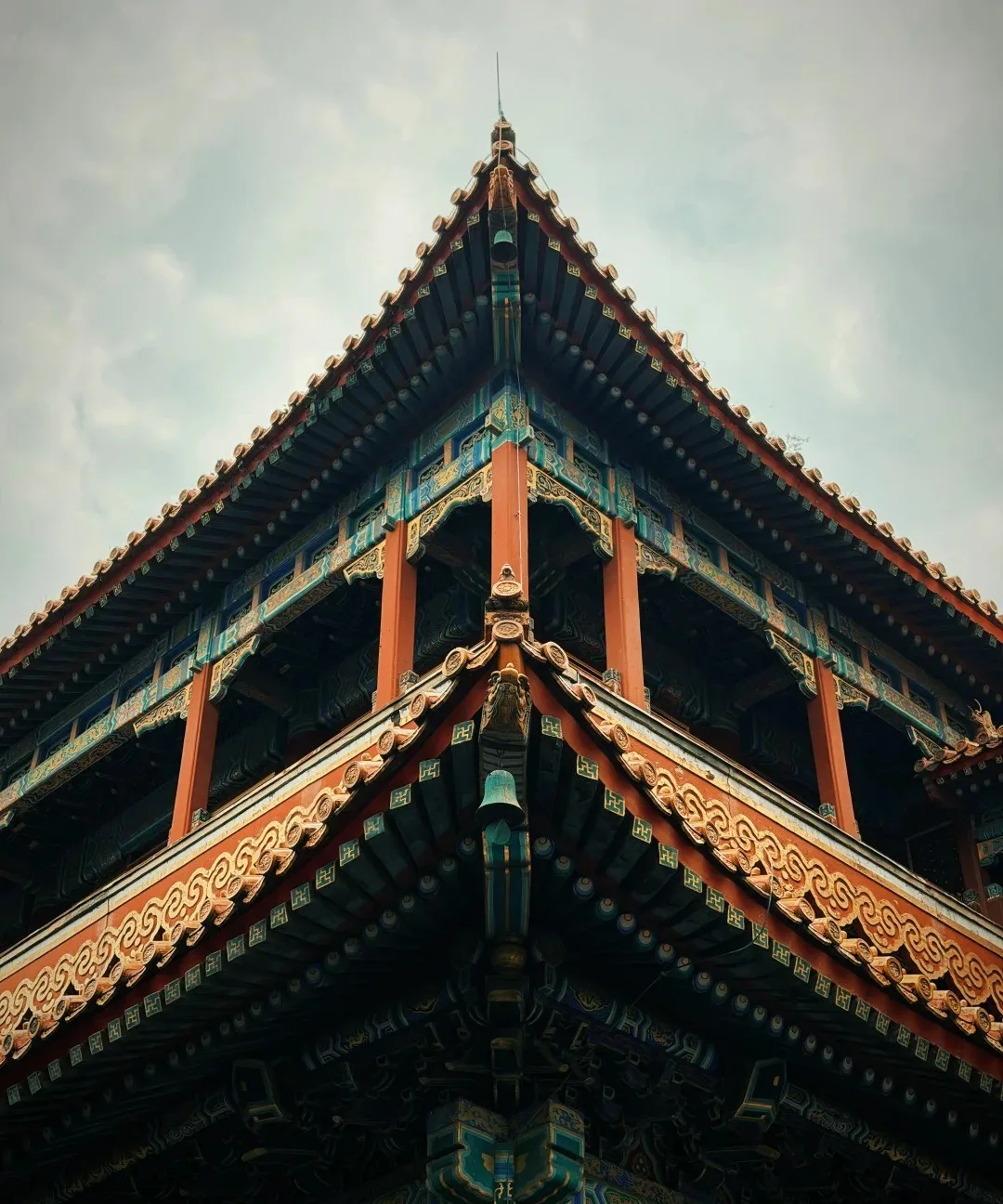
The Chinese elements are the ones you read first: axial symmetry, hip and gable roofs, bracket sets and painted decoration, glazed tile roofs. The Tibetan elements are the gold wheel and deer on the Falun hall ridge, the multi-storey form of the Wanfu pavilion, the thangkas and prayer flags inside, and the Tibetan patterns painted everywhere. They follow the same hierarchy — the bracket sets of the Yonghe palace use five-fling double-suspended sets, while the Falun hall uses seven-fling triple-suspended sets with five tiers, the highest grade in Qing official style; the paintings are predominantly dragon-and-xie gold-and-water work in blue, green and gold.
Practical information
- Hours: 1 April–31 October 8:30–17:00; 1 November–31 March 8:30–16:30. Closed Mondays except public holidays
- Tickets: 25 yuan in season, 20 yuan off season; students and seniors pay half (subject to official announcement)
- Metro: Line 2 or Line 5 to Yonghegong, exits C or F, about 200 metres on foot
- Bus: routes 13, 116, 117 and 684 to Yonghegong or Yonghegong bridge east
- Driving: the temple has parking but very few spaces; take public transport
- Tip: walk the axis from the gate to the back; mornings are quieter and the light is better
Related reading
Tiananmen Square: An Eight-Hundred-Metre Central Axis
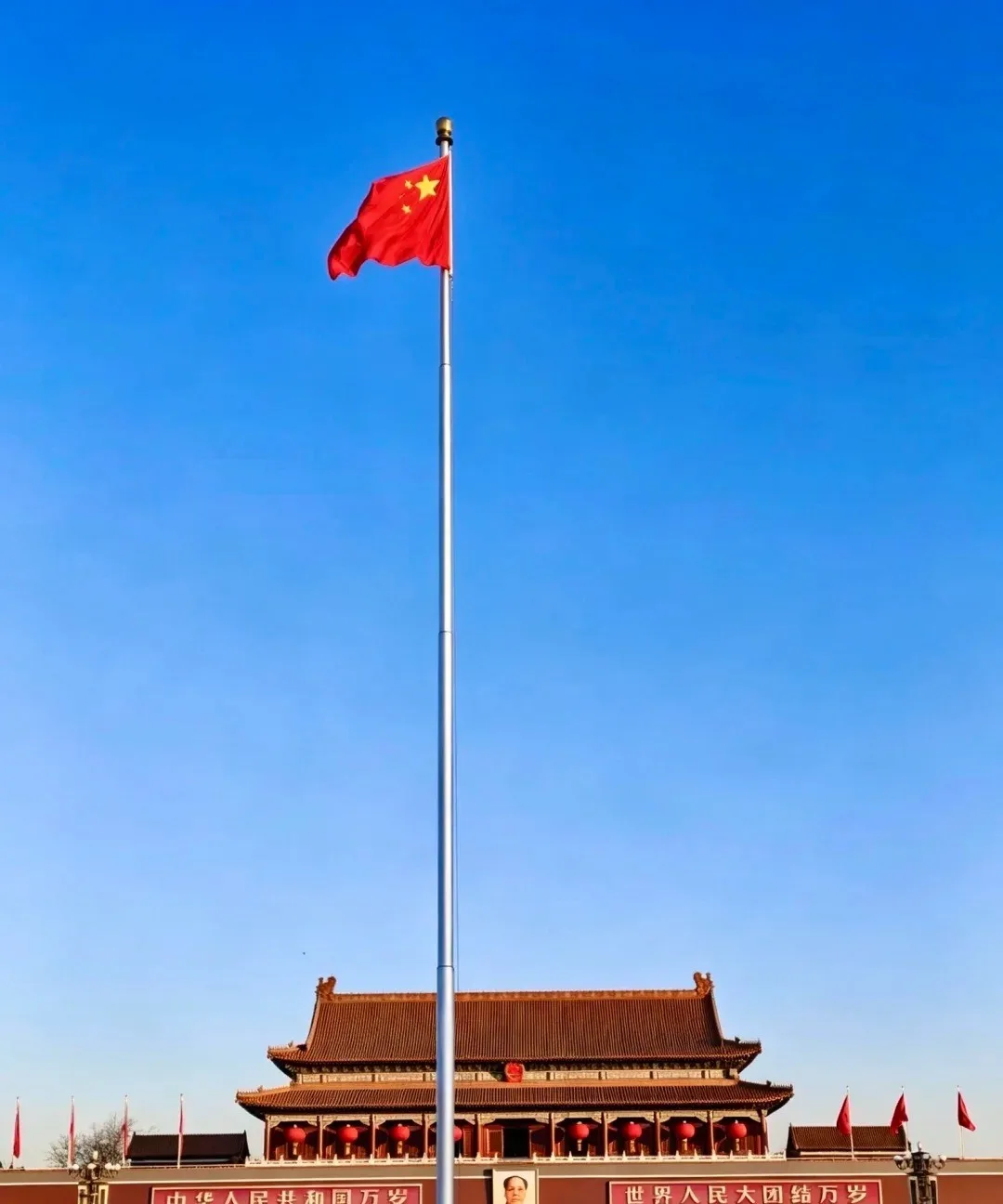
Eight hundred eighty metres north to south, five hundred east to west, 440,000 square metres, room for a million people. In the Ming and Qing it was a T-shaped street that ordinary subjects could not enter; only after the founding ceremony of 1 October 1949 did it become what it is.
Beijing Happy Valley: One Route Round the Park, Six Roller Coasters
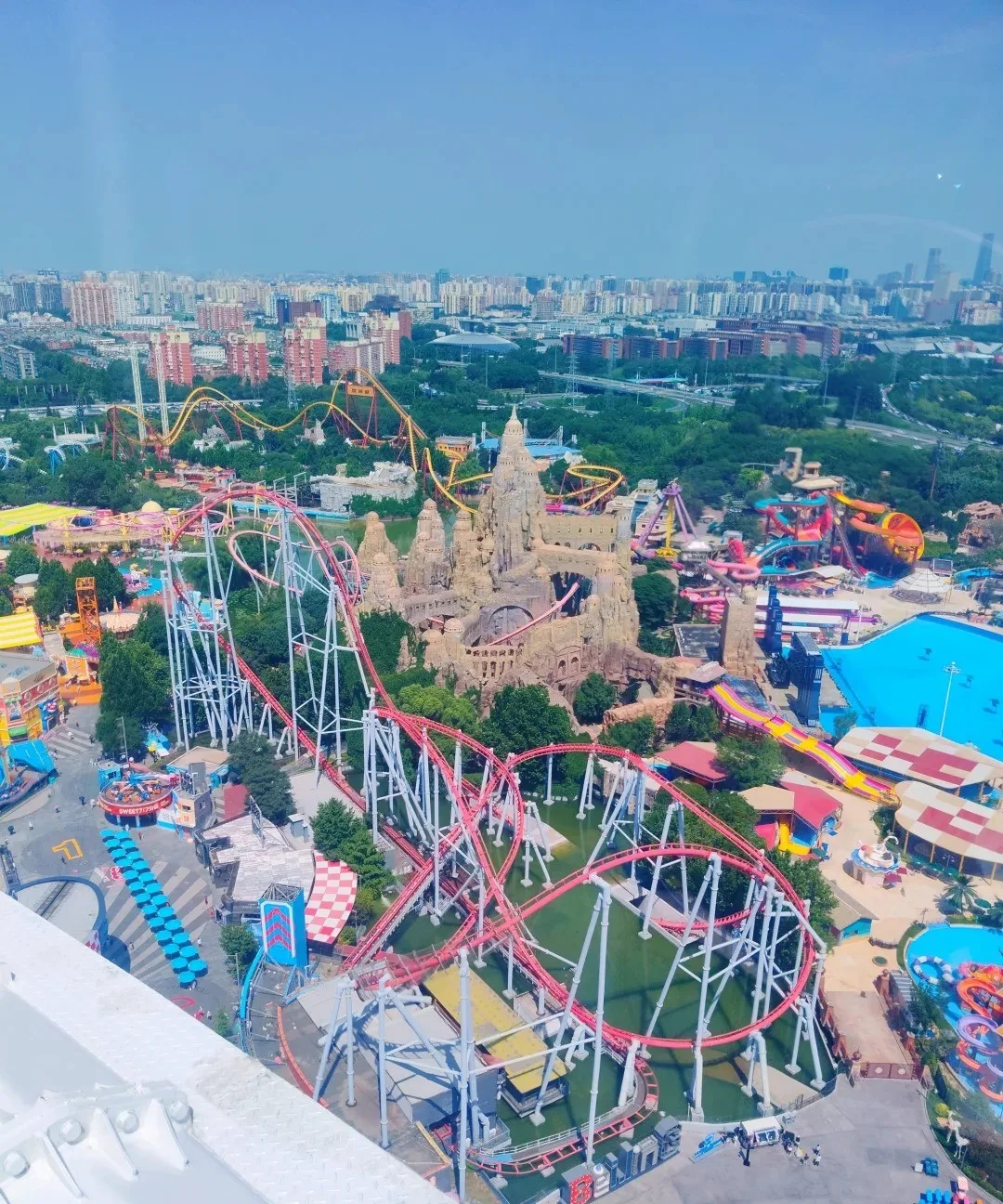
In the southeast corner of Dongcheng's fourth ring, 560,000 square metres and seven themed areas hold China's first launch coaster: 135 km/h, sixty metres high, thirty seconds end to end.
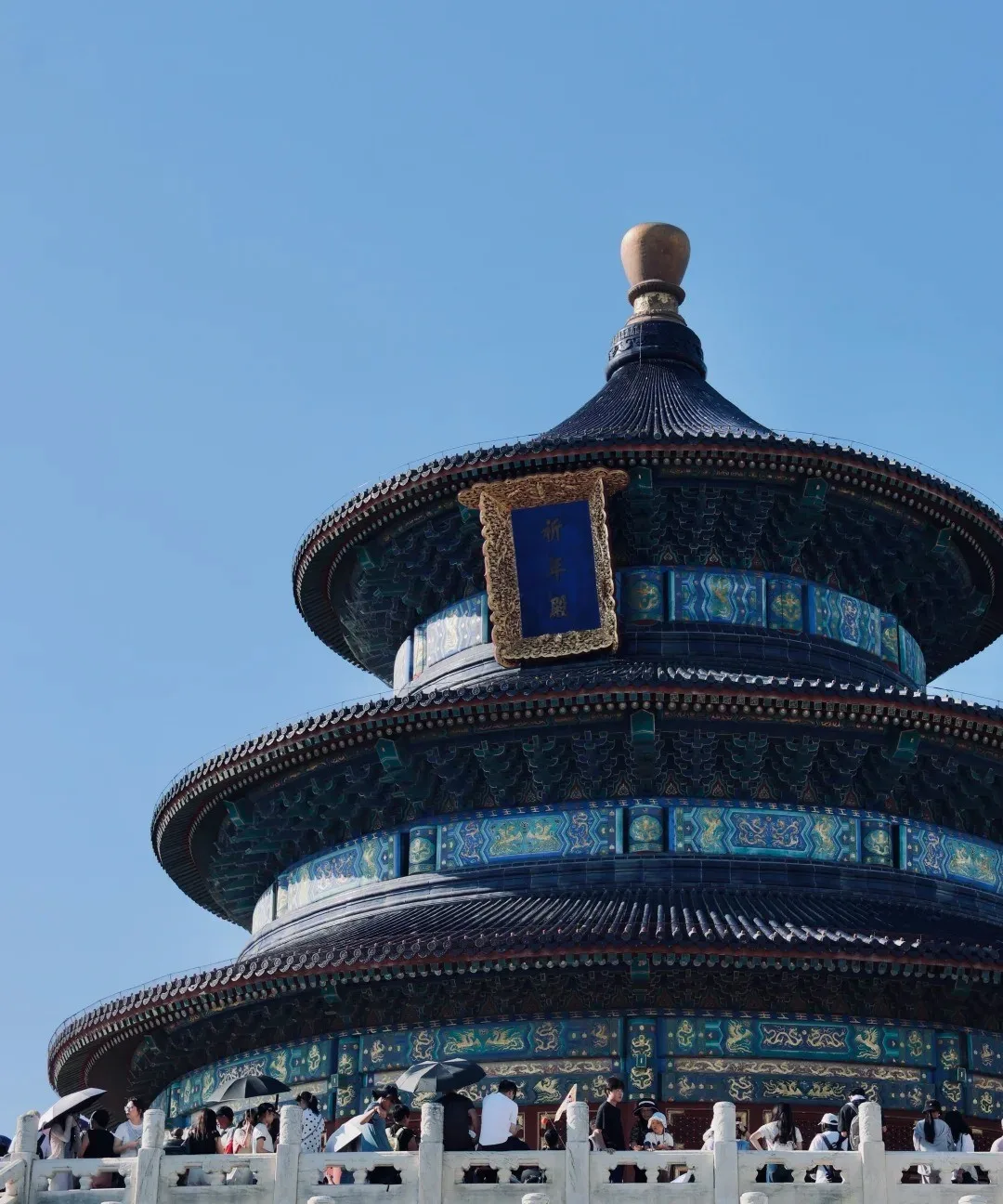
Temple of Heaven: Where the Square and the Circle Met
A circle at the north, a square at the south, and a 360-metre stone causeway running between them to the Hall of Prayer for Good Harvests. The Temple of Heaven turned an idea about the sky into a place you can walk through — sound skims along its walls, and every count of stone is a multiple of nine.
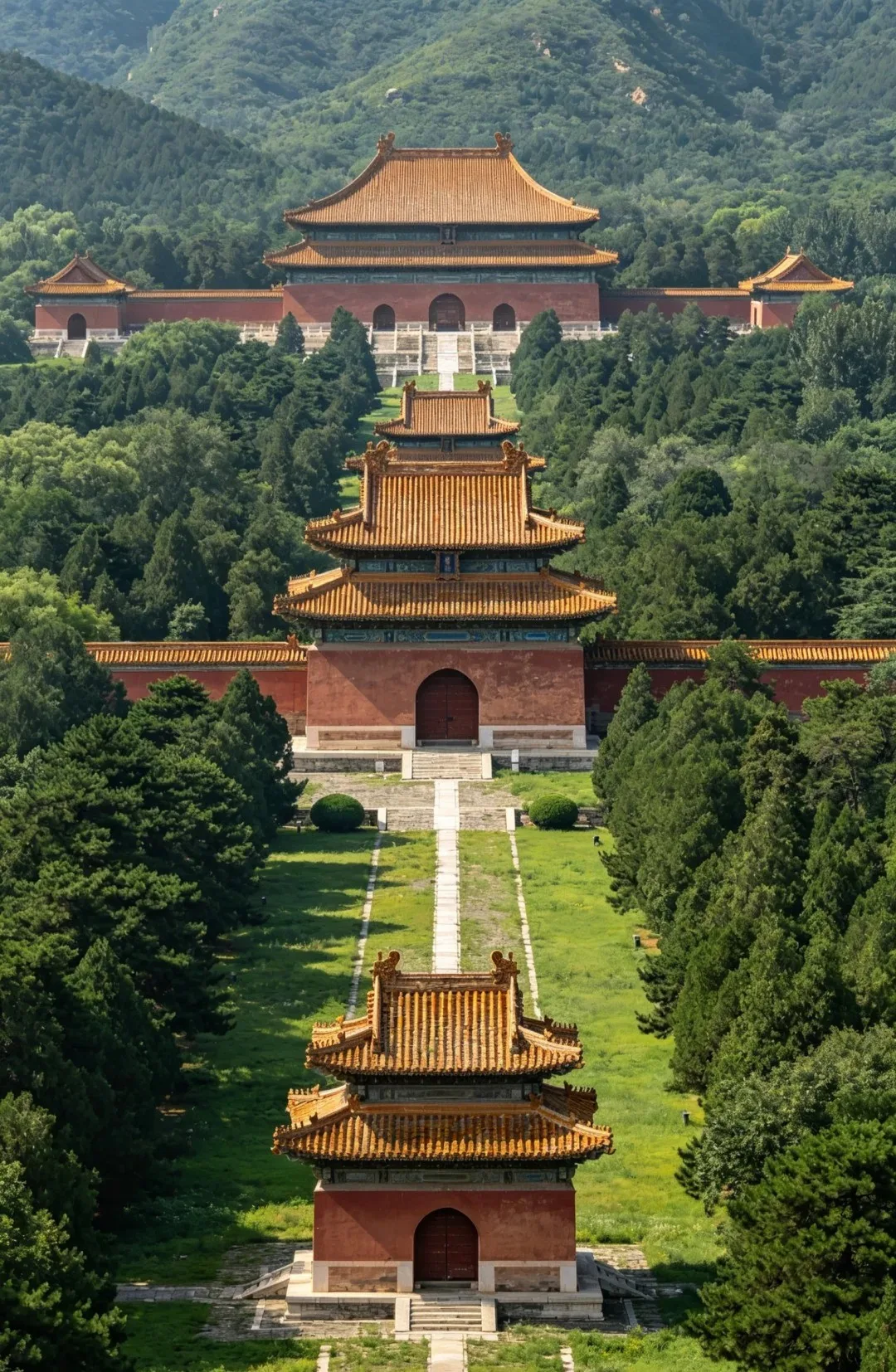
Ming Tombs: Thirteen Emperors in One Mountain Basin
In a forty-square-kilometre basin south of Tianshou Hill lie thirteen emperors of the Ming: the founder's son who moved the capital, the ruler who held no court for twenty-eight years, the last one who hanged himself on Coal Mountain. One stone sacred way, lined with carved animals, links all thirteen.
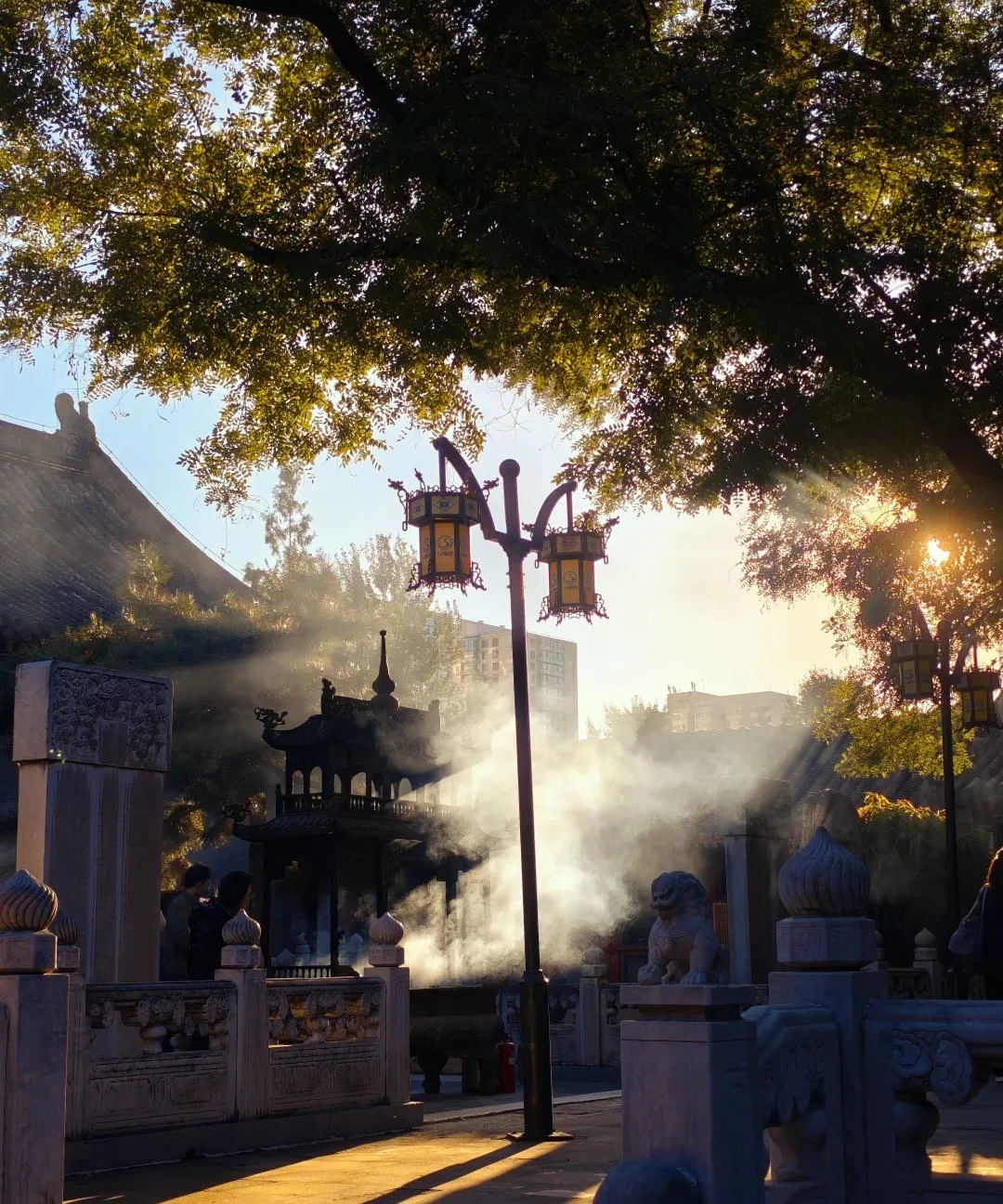
White Cloud Temple: The First Abbey of the Quanzhen Order
No. 9 Baiyunguan Street, Xicheng district. A monastery founded in 739 as Tianchangguan, called Taijigong under the Jin and Changchunguan under the Yuan, took its present name when rebuilt in 1394. Under the statue of Qiu Chuji in the Qiu Zu hall lie his bones; the monastery also keeps a complete 5,305-juan copy of the Daozang canon.