 Travel Notes
 Summer Palace: A Southern Landscape Transplanted to the North
In the north-west of Beijing there is a garden where water outweighs land. It is the Summer Palace, inscribed on the World Heritage list in 1998 for being “a outstanding example of the art of Chinese landscape garden design, perfectly combining natural scenery with man-made works.” It was named a national heritage site in the first batch back in 1961, under heritage number 880.
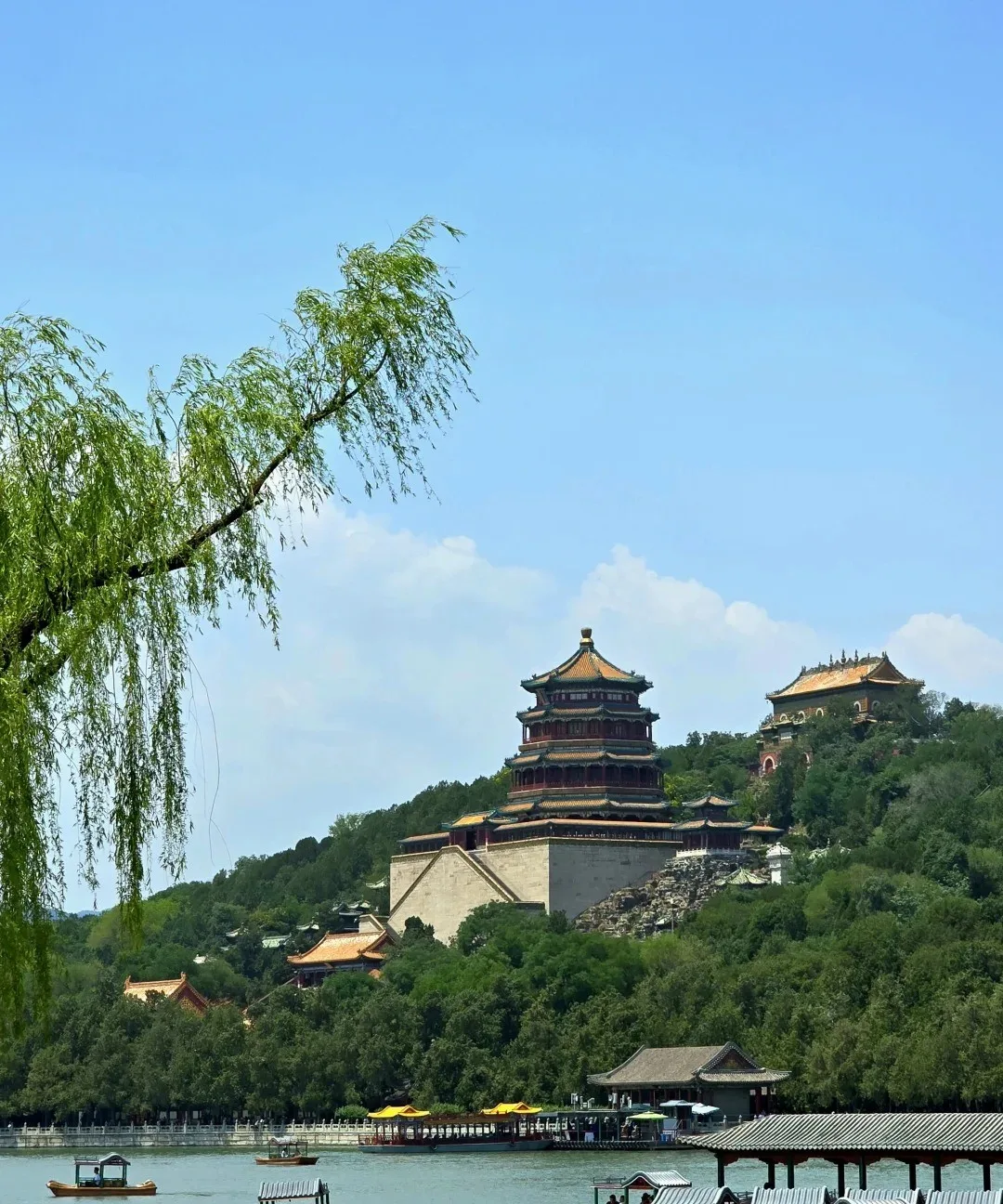
How three hundred hectares appeared
The garden covers about 300.59 hectares, three-quarters of it water; built area is just over 70,000 square metres. The main water is Kunming Lake at roughly 220 hectares, and the main hill, Wanshou, rises to about 108.94 metres.
It began as the Garden of Clear Ripples, started in 1750. The Qianlong emperor wanted to mark his mother, Empress Chongqing, reaching sixty, and in the course of that also dredged the western water system, rebuilding the whole thing around two features: Wengshan Hill and the Western Lake. The lake was deepened and widened, then renamed Kunming Lake after the Han emperor who dug a lake near Chang’an to train a fleet; the hill became Wanshou Hill, “ten thousand years of life.” Work ran fifteen years and finished around 1764, costing some 4.48 million taels. It was the last of the “three hills and five gardens” to be completed.
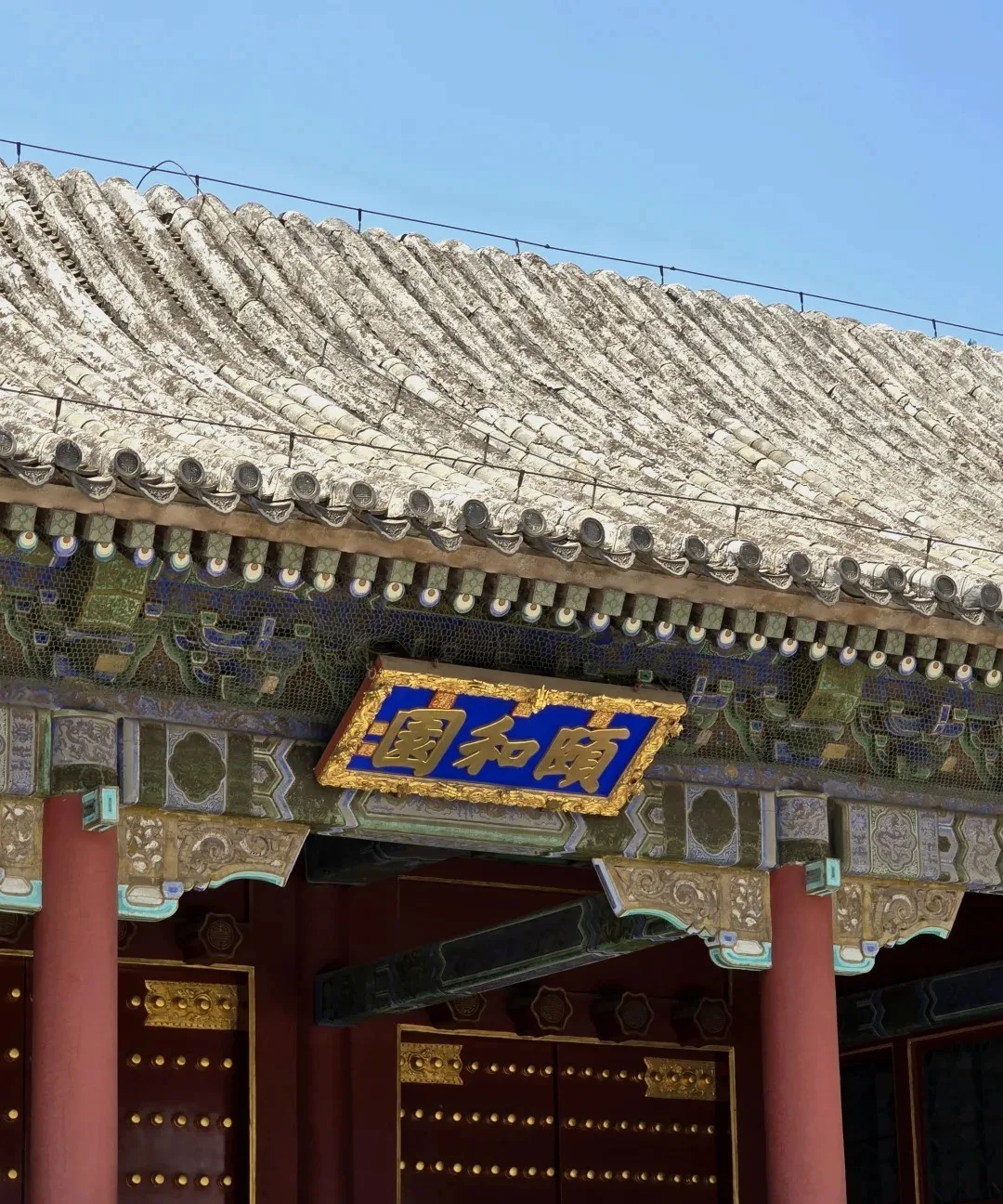
One fire, and ten years of rebuilding
In 1860 the Anglo-French forces entered Beijing and burned and looted the western gardens. The Clear Ripples garden was all but levelled; only metal or stone structures such as the Bronze Pavilion survived, while every timber building turned to ash.
In 1886 the Dowager Cixi, ruling from behind the screen, began reconstruction in the name of “nourishing harmony,” diverting money from the navy (officially for building a fleet). Ten years of work wrapped up in 1895, and the garden was renamed the Summer Palace. The plan came back, but money did not: parts such as the Bathing and Longevity Temple at the back hill were never fully restored, and the buildings became more ornate — the taste of a late empire.
The Long Corridor: a gallery of 273 rooms
Running from the Gate of Dispelling Clouds to the marble boat, the corridor measures 728 metres across 273 bays and is the longest painted gallery still standing in China. Its beams carry Suzhou-style paintings: landscapes, flowers, birds, and scenes from Dream of the Red Chamber and Journey to the West. A single walk through it is a walk through a picture book. In late spring the light rakes across the columns and their shadows fall on the lake — the shot people come for.
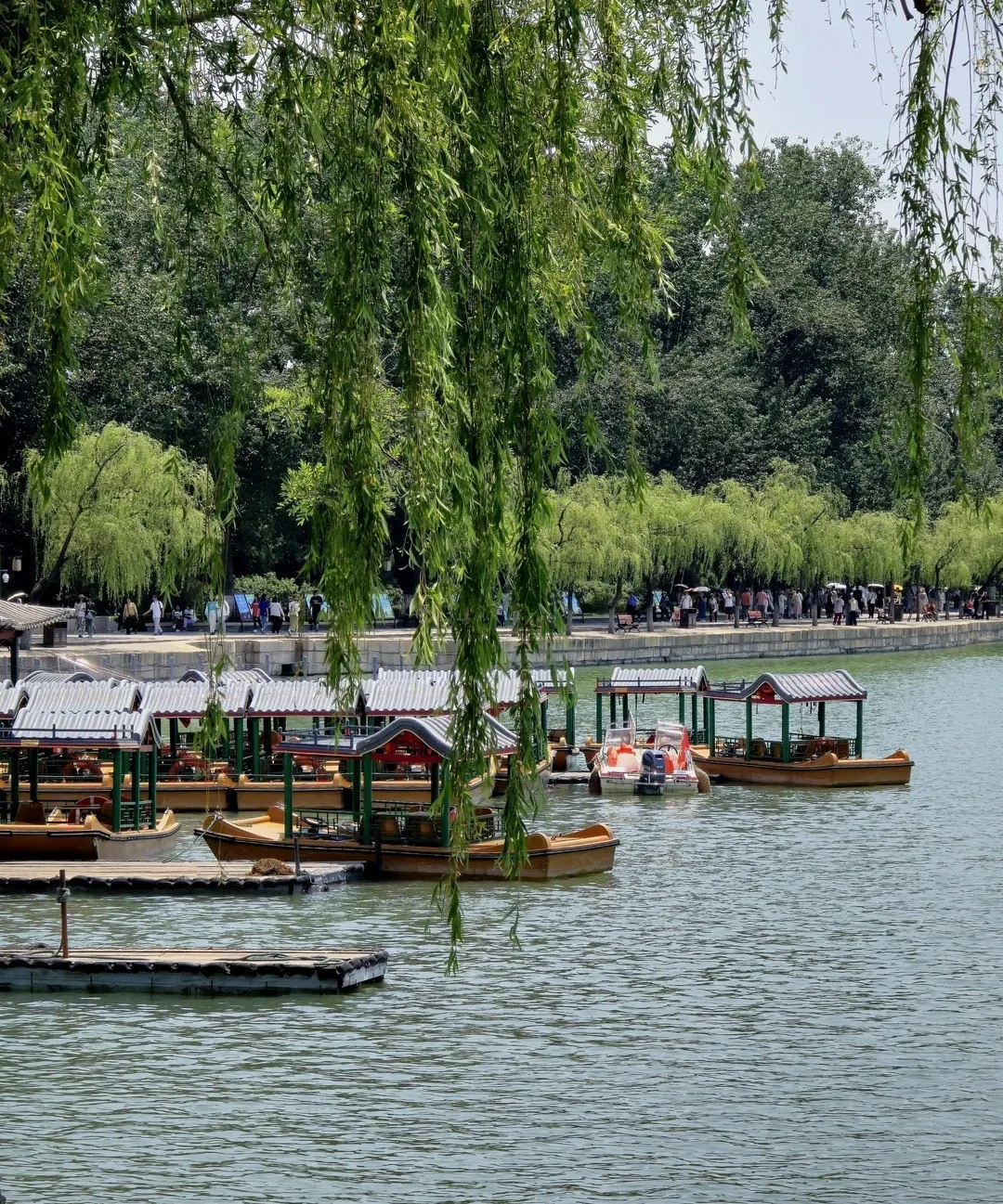
The front hill: from the Hall of Clouds to the pagoda
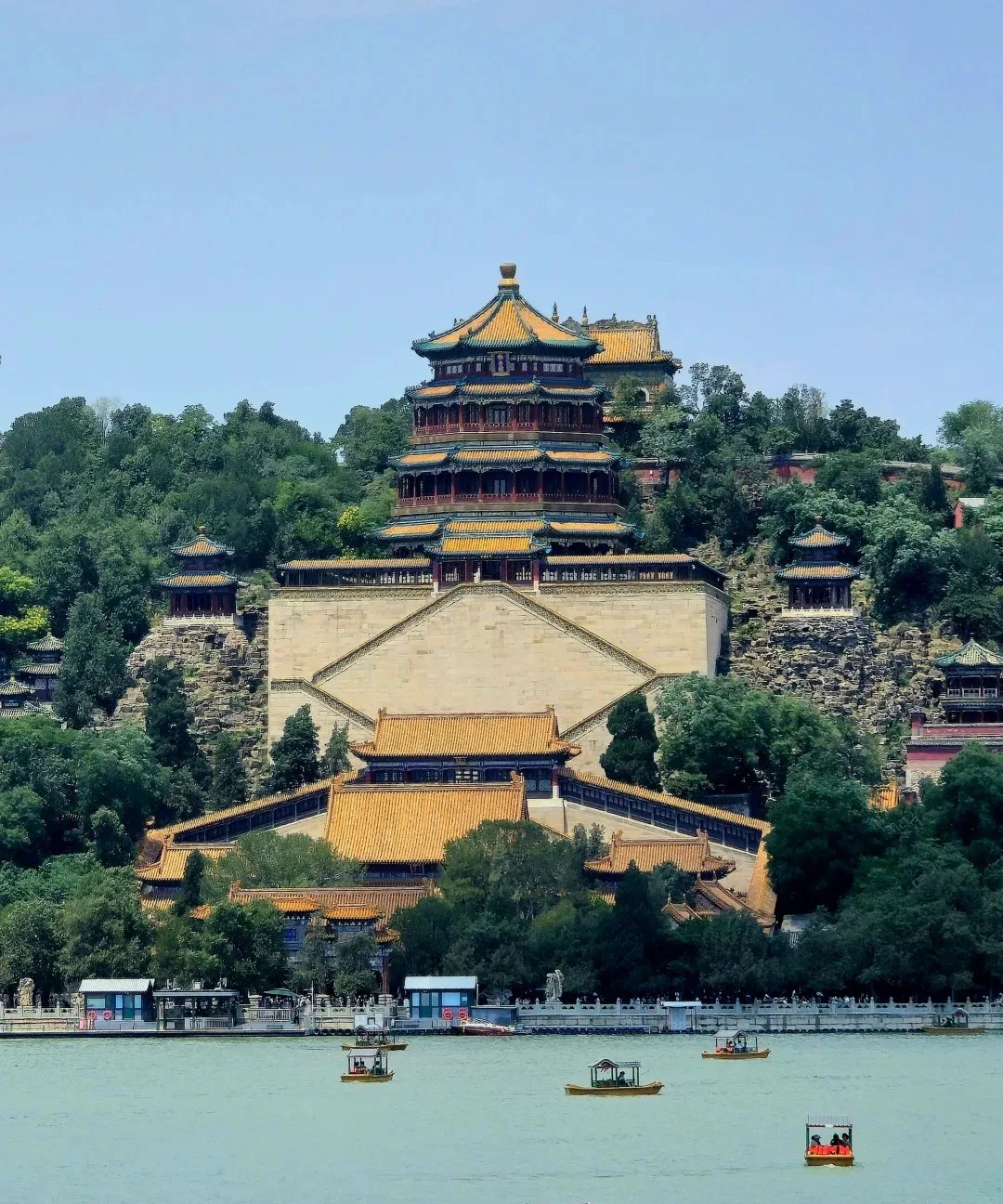
The front hill climbs along one axis: the Gate of Dispelling Clouds, the Hall of Dispelling Clouds, the Hall of Virtue and Harmony (the quarters rebuilt for the empress dowager, containing Dehe Garden), and then the 41-metre Hall of the Buddha’s Light. It is the tallest structure in the garden, octagonal with three tiers under four eaves; from its top you see the whole surface of Kunming Lake and the ribbon of water at the back hill. Above it climb the Hall of Fragrance, the Sea of Wisdom, and a ridge of glazed pagodas to the summit.
Kunming Lake and the West Causeway
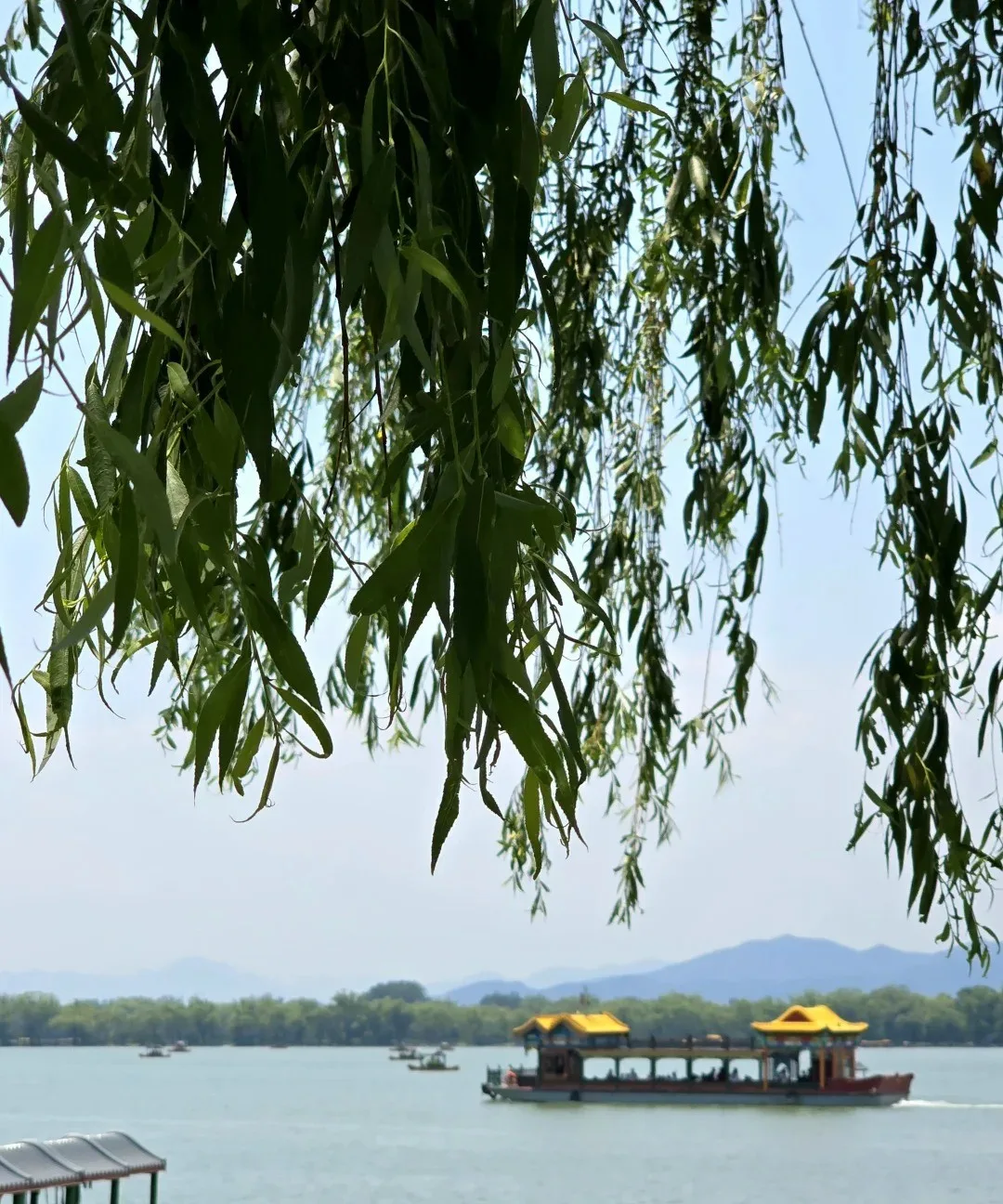
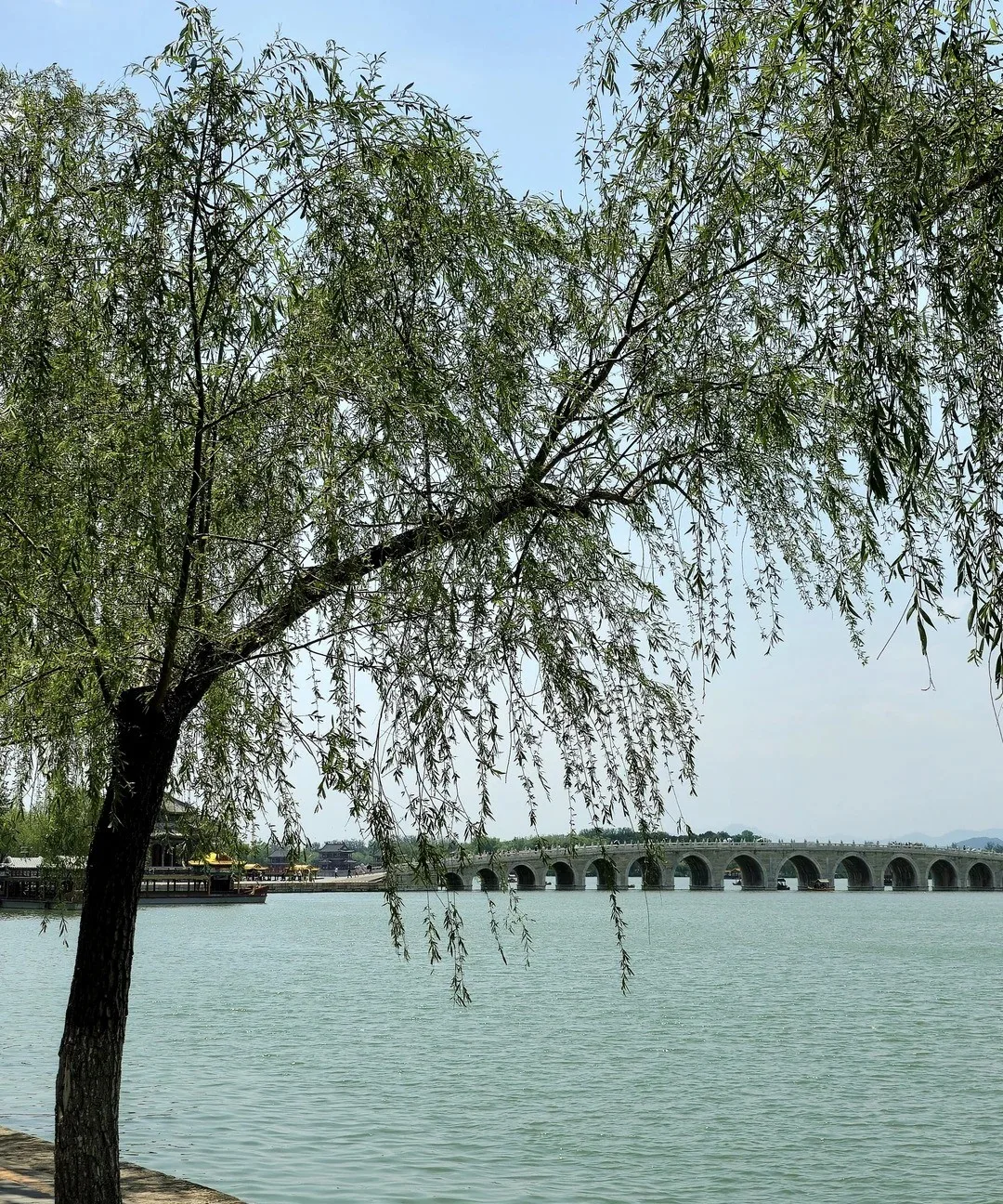
The eastern and northern banks hold the formal palace precinct. West of that the mood changes entirely. The Seventeen-Arch Bridge reaches out from the south-east into the lake, hundreds of marble lions along its railings, each arch flashing gold at sunset. The West Causeway carries six bridges in a row, modelled on the Su Causeway by Hangzhou’s West Lake, planted with peach and willow so that in spring you could be forgiven for thinking you are on the Qiantang river. Floating in the lake is the marble boat, Qing Yan Fang — a hull built entirely of white stone topped with a rose-wood cabin, the sort of vessel the Qianlong emperor saw on his southern tours, parked on the water.
Back hill, back lake and Suizhou Street
North and down from the pagoda, the back hill and back lake are quiet and overgrown. Suizhou Street along the water is a commercial street built to look like a southern market, originally for the empress dowager’s excursions, and part of it has been reconstructed in situ. Unlike the formal symmetry of the front hill, this area is all terrain, waterway and small stone bridges; it feels like a mountain path. It is cold here in winter and the best escape in summer.
How to see it without exhausting yourself
- Hours: 6:30–18:00 from 1 April to 31 October; 7:00–17:00 from 1 November to 31 March. In-garden spots such as the Hall of the Buddha’s Light and Dehe Garden: 8:30–17:00 peak, 9:00–16:00 off-peak. Closed Mondays.
- Tickets: 30 yuan peak season (60 combined), 20 yuan off-peak (50 combined); students half price. The combined ticket covers the pagoda, Dehe Garden and Suizhou Street.
- Getting there: Metro Line 4 to Bei Gongmen (exit D) or Xi Yuan (exit C2), about 500 metres’ walk; Line 16 also serves Xi Yuan. Buses 303, 330, 331, 346, 375, 384, 393, 563, 584, 601, 608 and 618 stop at Summer Palace or Summer Palace North Gate.
- In the garden: walk, take a boat from Kunming Lake’s pier, or ride the electric buggy from the East Palace Gate as far as Suizhou Street.
- Suggested order: enter at the East Palace Gate, leave at the North Gate — pagoda first, then the West Causeway, with a boat ride in the middle. Do not try to cover it on foot.
Related reading
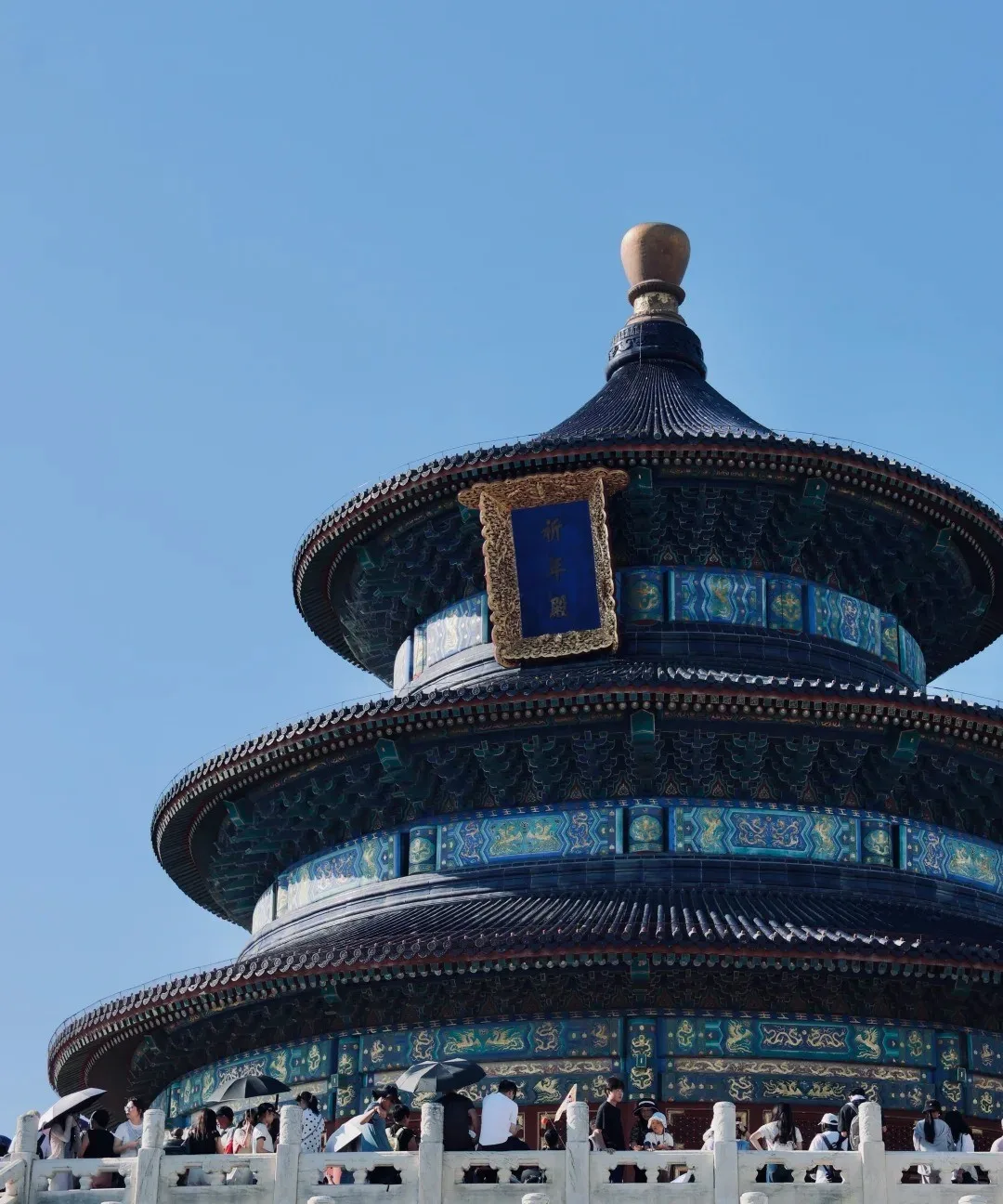
Temple of Heaven: Where the Square and the Circle Met
A circle at the north, a square at the south, and a 360-metre stone causeway running between them to the Hall of Prayer for Good Harvests. The Temple of Heaven turned an idea about the sky into a place you can walk through — sound skims along its walls, and every count of stone is a multiple of nine.
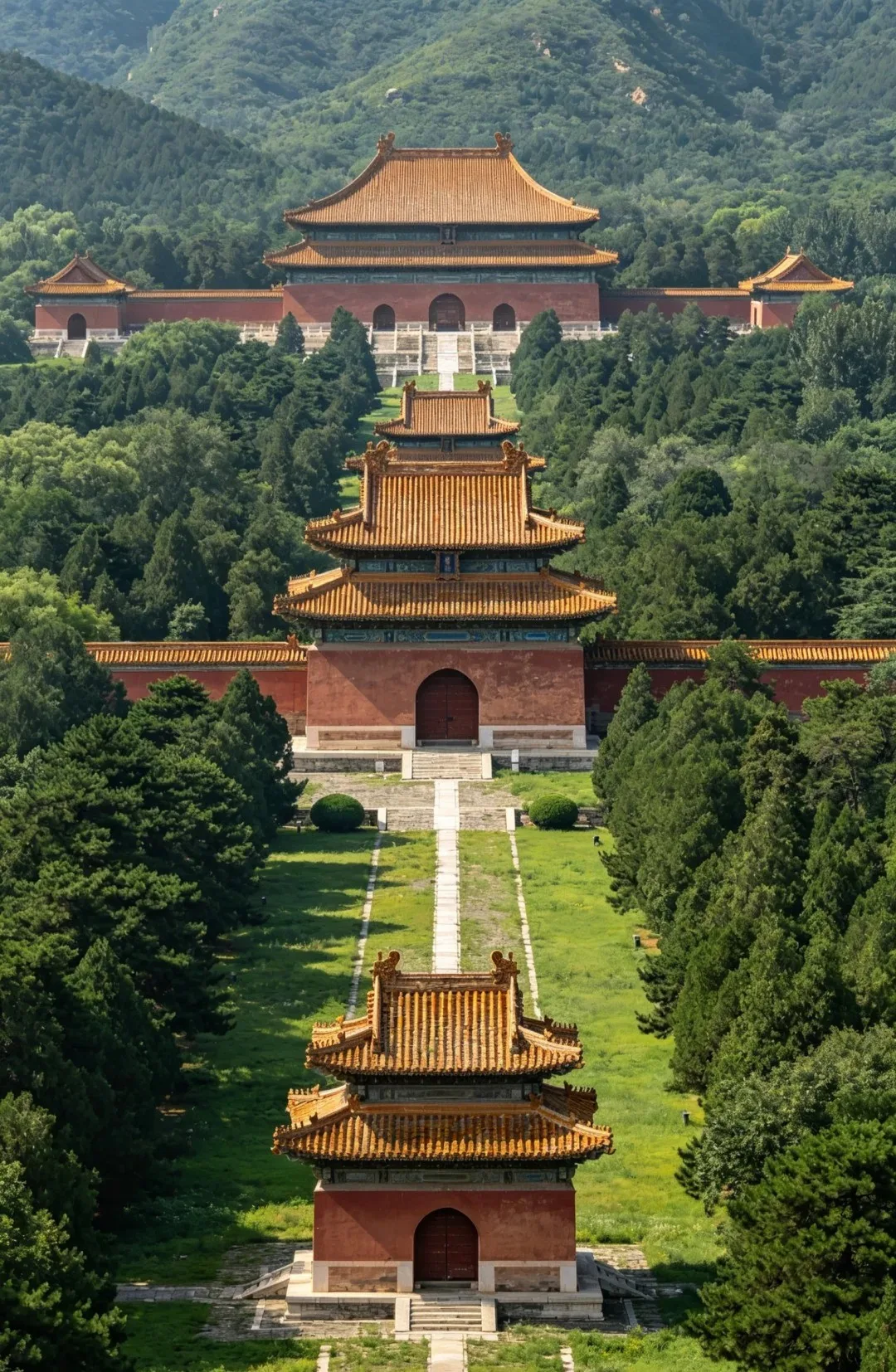
Ming Tombs: Thirteen Emperors in One Mountain Basin
In a forty-square-kilometre basin south of Tianshou Hill lie thirteen emperors of the Ming: the founder's son who moved the capital, the ruler who held no court for twenty-eight years, the last one who hanged himself on Coal Mountain. One stone sacred way, lined with carved animals, links all thirteen.
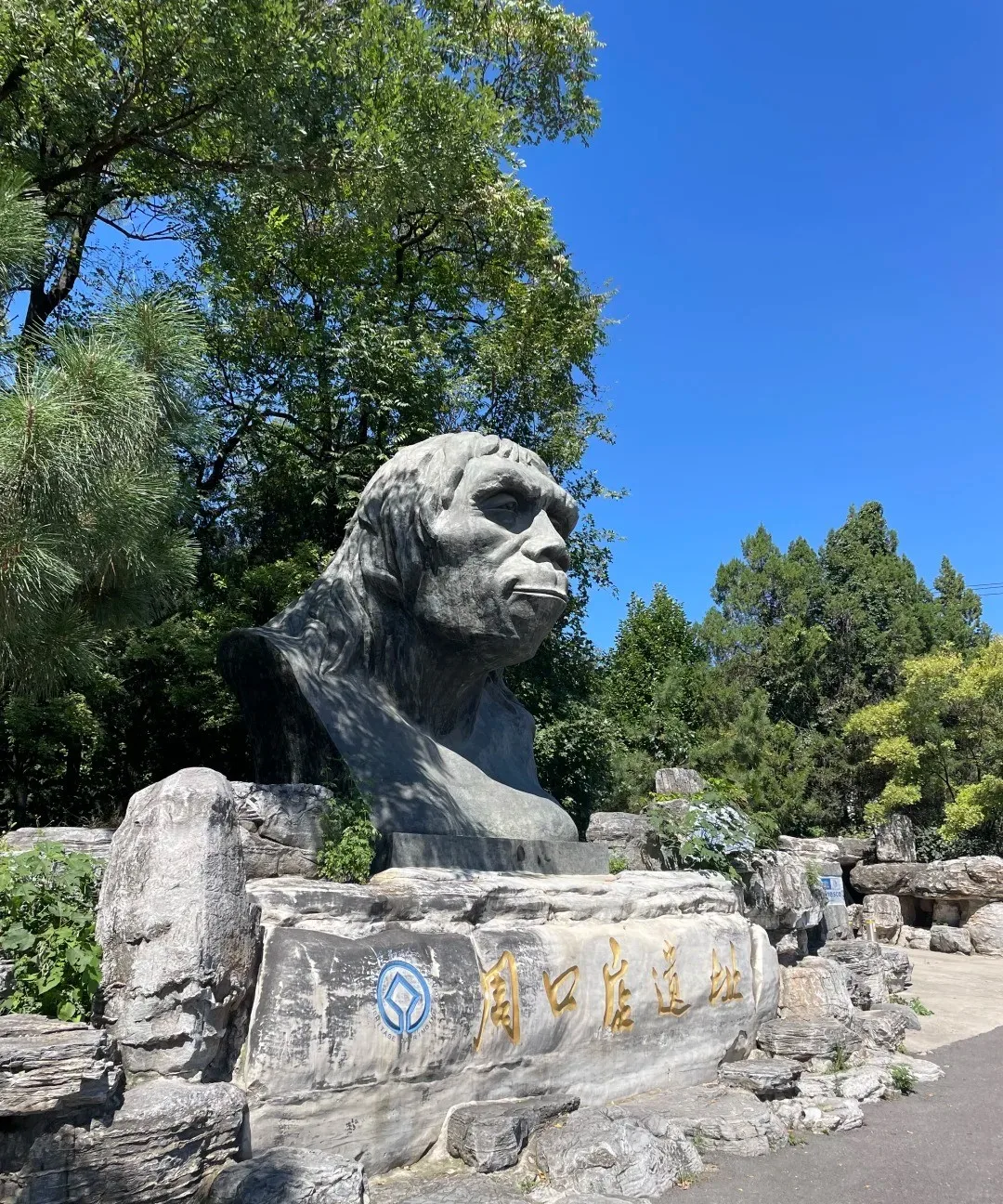
Zhoukoudian Peking Man Site: The First Spade Back in 1929
Beneath a cave on Longgu Shan, some forty metres of silt have built up layer by layer, and the Peking Man skulls sit in level eleven. On 2 December 1929 Pei Wenzhong lifted out the first complete one. In 1941 the collection vanished in the fighting.
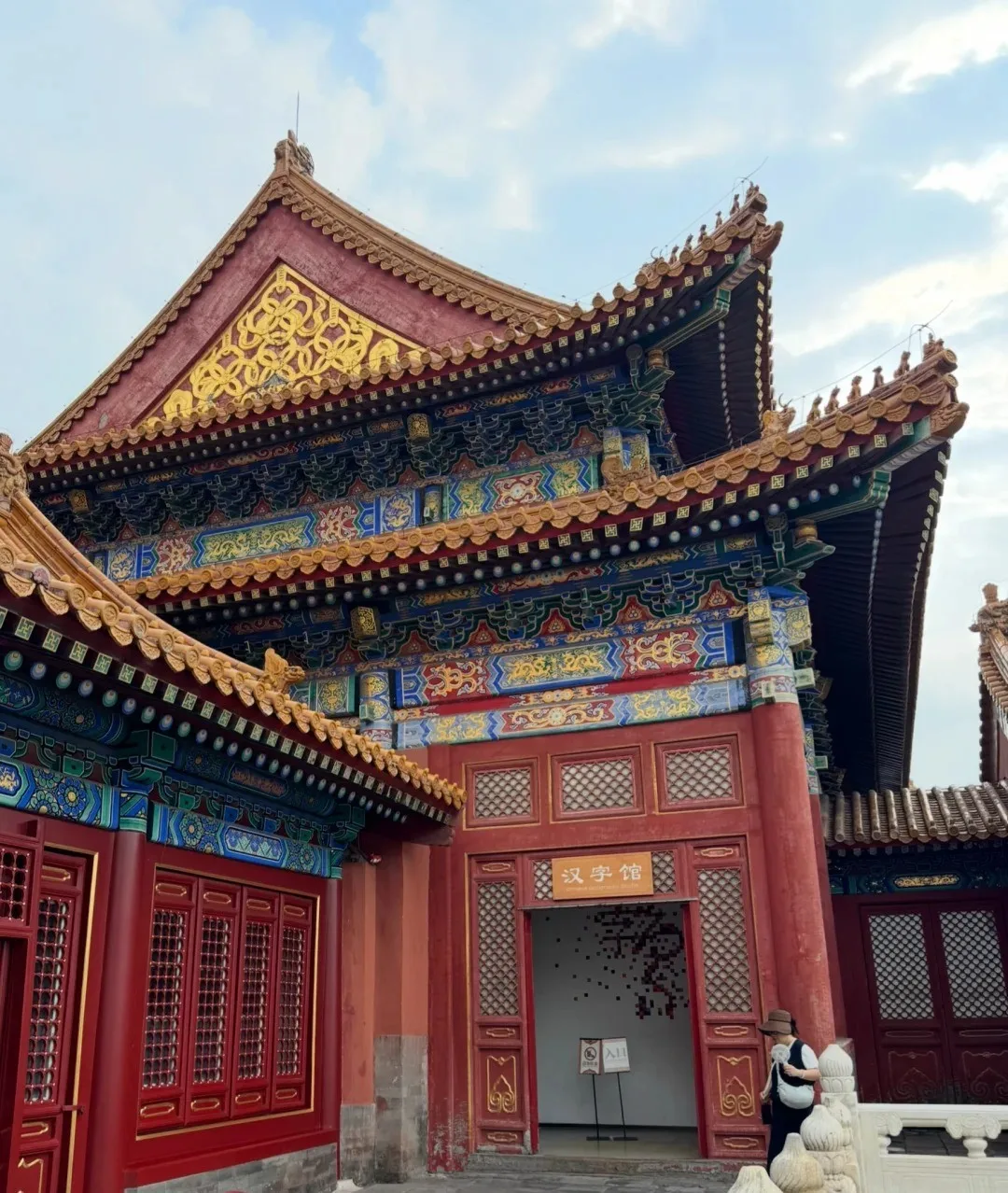
Forbidden City: A Wooden City Standing on Beijing's Central Axis
For two dynasties, China piled its most expensive timber, its longest central axis and its strictest rituals inside one walled rectangle. The Forbidden City grew out of a single decision to move the capital north, burned down four times, was rebuilt four times, and today is still the quietest large courtyard in Beijing.
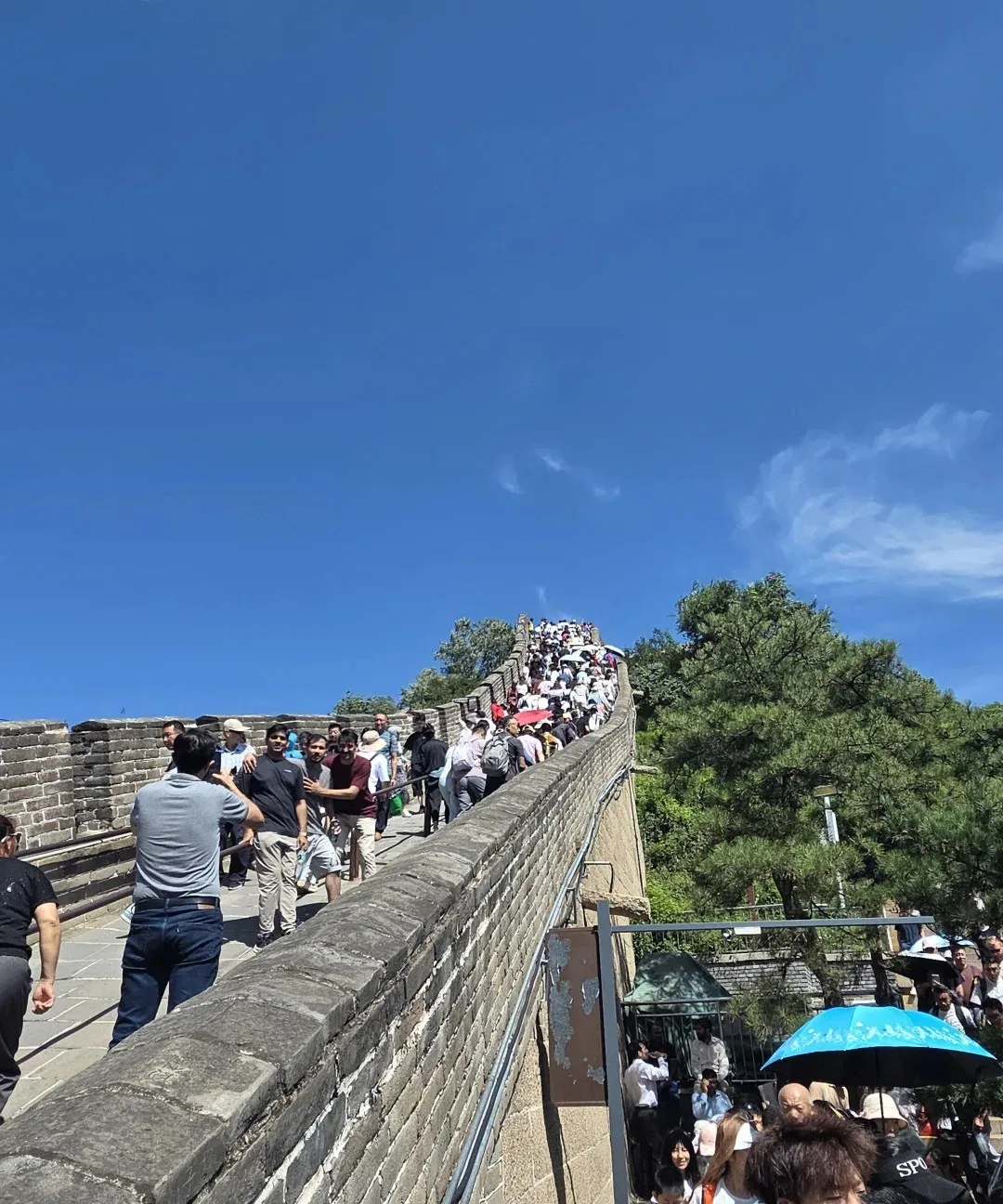
Badaling: The Pass Worth Climbing, and the Trait It Cut Through
A pass at a thousand metres, a Ming section of wall, 3,741 metres of rampart and nineteen beacon towers. Badaling is neither the longest nor the most dramatic stretch of the Great Wall — but it was the first to open to visitors, which is why six centuries later almost everyone recognises this particular frame.