 Travel Notes
 Beijing Travel Guide: Three Millennia of Capital, the Central Axis and Seven World Heritage Sites
Beijing is usually described as a city you must see at least once. Anyone who has been will tell you that once is nowhere near enough. Three thousand years of city-building, eight hundred years as an imperial capital, and four dynasties — Jin, Yuan, Ming and Qing — chose it as their seat. Seven World Heritage Sites lie within and around it, a density that is rare anywhere on earth. What makes it remarkable is that “ancient capital” never fully defines it: at dawn people climb Jingshan to wait for the sunrise, in the afternoon pigeon whistles skim over grey courtyard tiles, and after dark the food stalls of Guijie and the drums of the opera houses come alive at the same time. Grand national narrative and small everyday life run in parallel here.
One central axis holds the whole city together
The best way to understand Beijing is to start with a single line. The central axis runs roughly 7.8 kilometres from north to south: it begins at the Drum and Bell Towers, passes Jingshan, the Forbidden City, Tiananmen, Zhengyangmen and ends at Yongdingmen. The architect Liang Sicheng called it “the city’s backbone.” Yuan-era Dadu and Ming-Qing Beijing both grew inside this framework, which is why the grid is still so legible today — avenues and hutongs meet at right angles, and you almost never lose your bearings.
The best place to read that line is the Wanchun Pavilion on Jingshan. Look south and the Forbidden City’s glazed tiles spread into a sheet of gold, the axis asserting itself all at once; look north and the grey roofs of the Bell and Drum Towers overlap with the glass towers beyond. No photograph captures more than a fraction of that layering of old and new.
High in the northwest, low in the southeast
Beijing tilts from northwest to southeast. The Western Hills, an offshoot of the Taihang range, form the western edge; the Yanshan mountains run across the north and northeast, with the Great Wall riding the ridges of the Jundu range. Only to the southeast does the land flatten into the North China Plain, under 100 metres above sea level. The Yongding and Chaobai rivers cut through diagonally from northwest to southeast. The municipality covers about 16,400 square kilometres, is divided into sixteen districts, and is home to more than twenty million residents.
The climate is temperate monsoon, with four clear seasons: an annual average of about 12°C, January the coldest month and July the hottest, and roughly 600 mm of rain a year — nearly 70 percent of it falling in July and August. Keep those numbers in mind when you plan. Carry an umbrella in summer, pack properly for winter, and aim for spring or autumn. Spring is windy with occasional dust, but the magnolias and crab apples bloom regardless. Summer thunderstorms arrive fast and leave fast, and the smell of wet earth afterwards is oddly bracing. Autumn is the brightest season, the sky transparently blue and the ginkgo leaves almost fluorescent. Winter is dry and cold, the rivers and lakes freeze over, and a snowfall over the Forbidden City is what many photographers quietly wait years for.
Three thousand years, layer upon layer
Beijing’s weight is written into every brick. The Western Zhou site of Yan proves there was a settlement here three thousand years ago. The Liao made it their Nanjing, the Jin expanded it into Zhongdu, and in the Yuan dynasty Liu Bingzhong laid out Dadu. The Ming and Qing kept their capitals here, ruling for more than eight centuries in total. In 1949 Beijing became the capital of the People’s Republic of China.
Those layers are still legible in the modern city. In the Yuan Dadu City Wall Relics Park, the surviving earthwork looks like nothing more than a grassy ridge — but it was the edge of this city seven hundred years ago. The brick remnants in the Ming City Wall Relics Park hint at the complete ring that once stood there. History here is never loud, but it is there for anyone willing to look down.
The Forbidden City: give it half a day at least
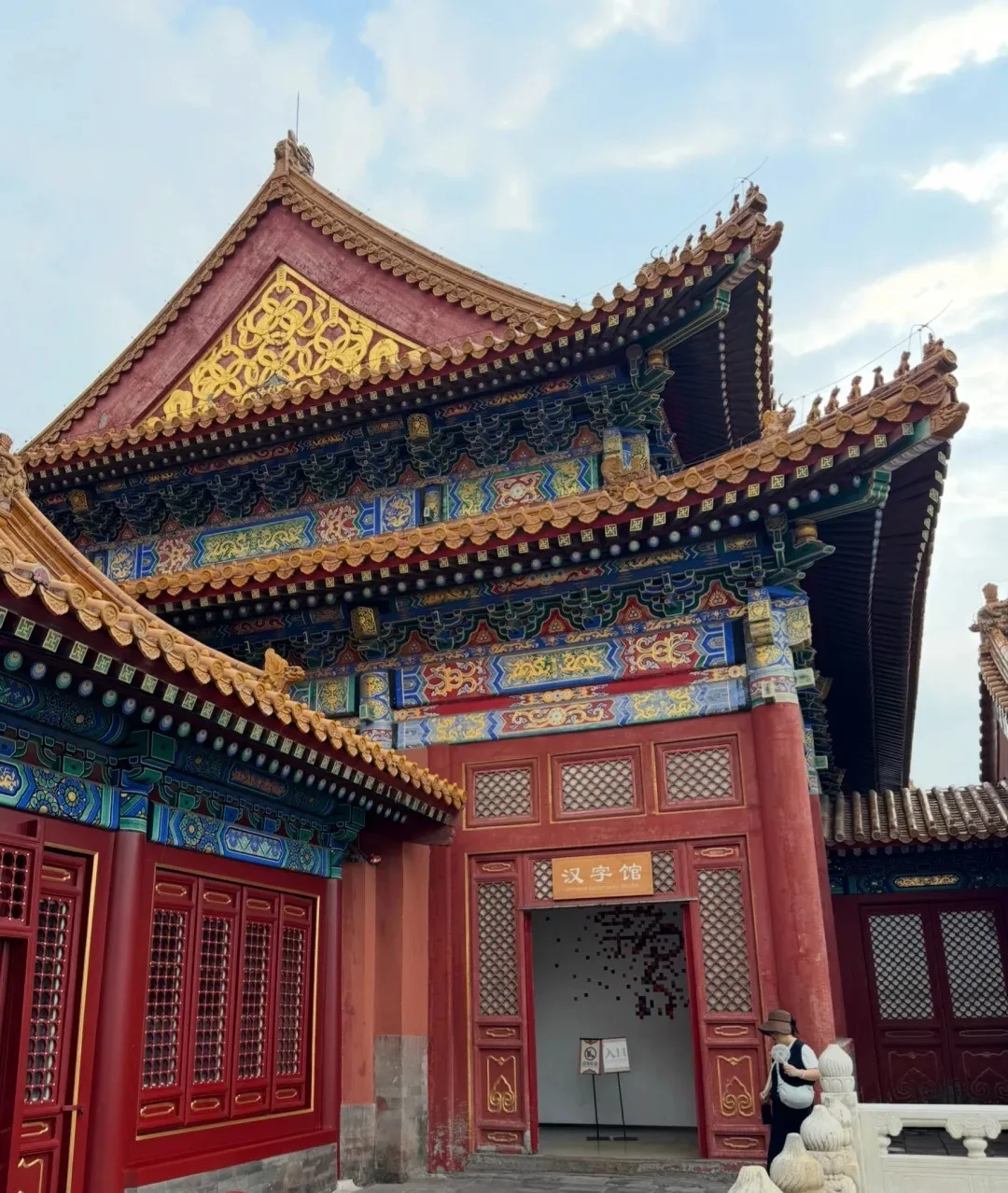
For most visitors the Forbidden City is the first stop, and the one that most rewards slowing down. Built under the Yongle Emperor between 1406 and 1420, it covers about 720,000 square metres and contains more than 9,000 surviving rooms — the largest and most complete surviving complex of wooden palace architecture in the world.

Enter through the Meridian Gate and follow the axis through the three outer halls — Taihe, Zhonghe and Baohe — then through the Gate of Heavenly Purity into the inner court, past the Palace of Heavenly Purity and the Palace of Earthly Tranquility, and out through the Gate of Divine Prowess. Half a day gives you only a glimpse of the scale. Of the three great halls, Taihe — known as the Hall of Supreme Harmony — is where enthronements and grand ceremonies took place, paved in “gold bricks” and framed by coiled-dragon columns; Zhonghe and Baohe were used for banquets and imperial examinations. In the inner court the imperial garden is planted with ancient cypresses, with the Hall of Imperial Peace standing quietly among them. Walk to the corners of the wall and you reach the corner towers, built with nine beams, eighteen pillars and seventy-two ridges — a structural puzzle that architecture enthusiasts come specifically to see. If you have energy left, separate tickets to the Treasure Gallery and the Clock Gallery show another side of palace life.
The Great Wall: choosing between Badaling, Mutianyu and Simatai
To grasp what “the Great Wall” really means, Badaling and Mutianyu are the most accessible sections. Badaling lies about 70 kilometres from the city, with mature facilities and a powerful presence — it is most people’s first choice. Mutianyu has denser watchtowers, heavier vegetation and noticeably fewer visitors, better suited to a slow walk; a cable car takes you up, and you can hike between the towers. If you want both authenticity and quiet, Simatai and the nearby Gubei Water Town are worth the detour — an unrestored section of the original wall sits beside a northern water town, and the night views are excellent. Juyongguan guards the northwestern approach, its Cloud Platform gateway carved with fine reliefs. Whichever section you pick, go early in the morning or late in the afternoon: the light is better and so are the crowds.
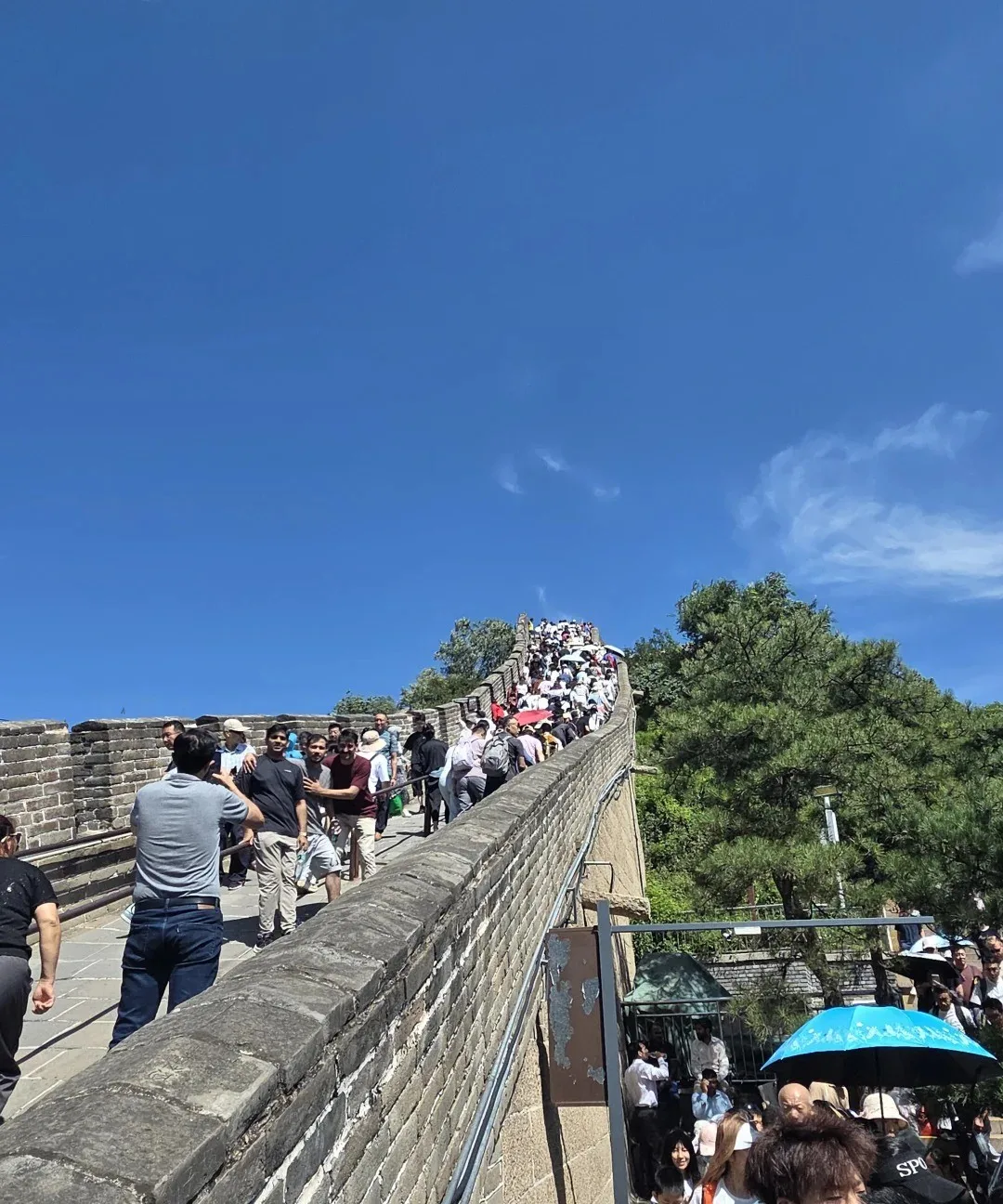
The wind on the wall is usually strong, and the stone underfoot has been polished smooth by centuries of feet, but you can still feel its cold purpose as a military structure. Standing on a watchtower and looking out at ridge after ridge, you suddenly understand why the ancients built a wall here — not just a pile of bricks, but a conviction about order and security.
Temple of Heaven and Summer Palace: ritual and garden
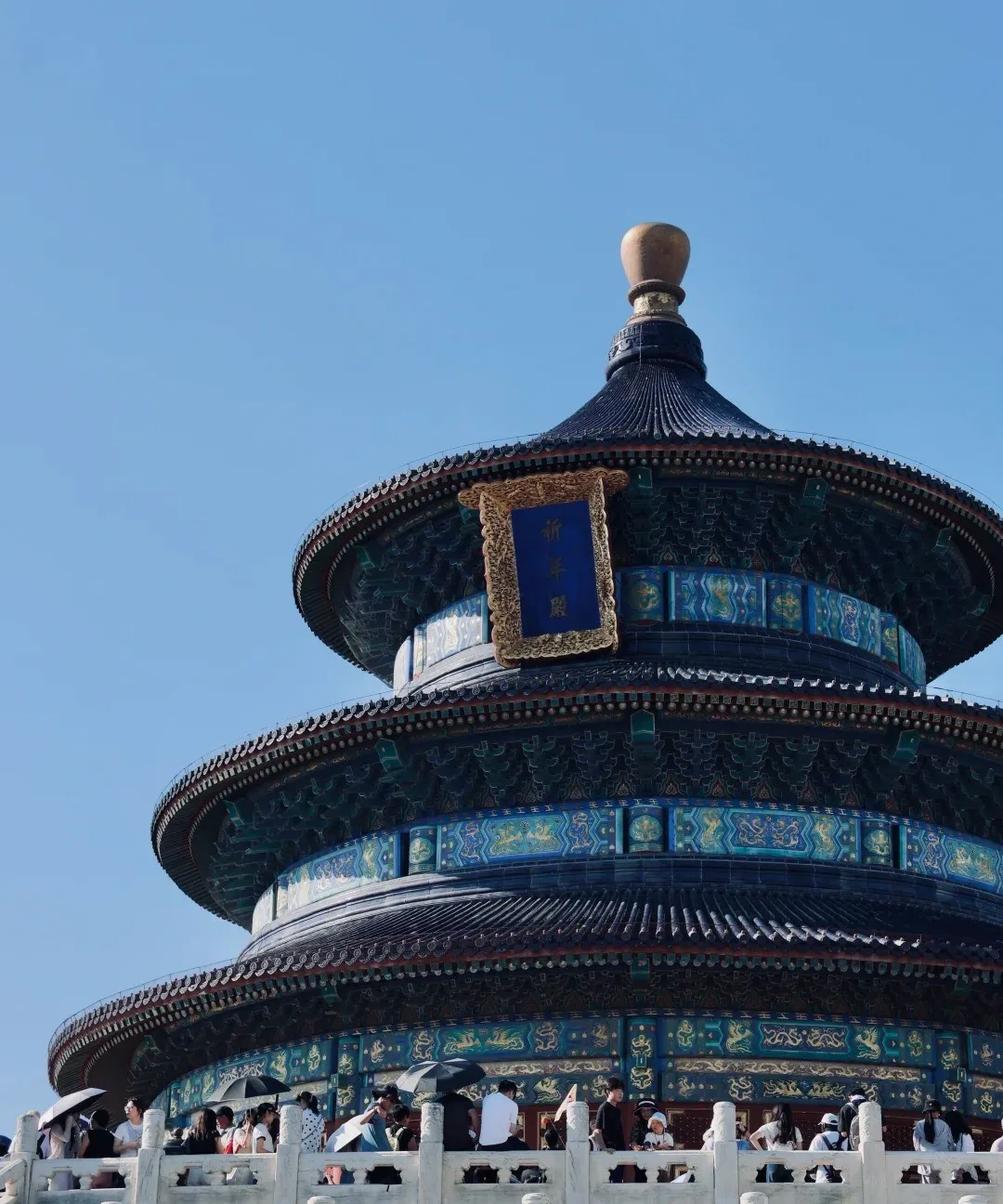
The Temple of Heaven is where Ming and Qing emperors prayed for good harvests. Its main hall, the Hall of Prayer for Good Harvests, with its triple-eaved round roof of blue tiles and gold finial, is one of Beijing’s most recognisable silhouettes; the Circular Mound Altar, the Imperial Vault of Heaven and the Sacred Way all encode a precise astronomy and ritual system. Stand on the “Heavenly Heart Stone” at the centre of the Circular Mound and clap or shout — the echo is remarkably clear, and the ancients believed this was where one could speak with heaven.
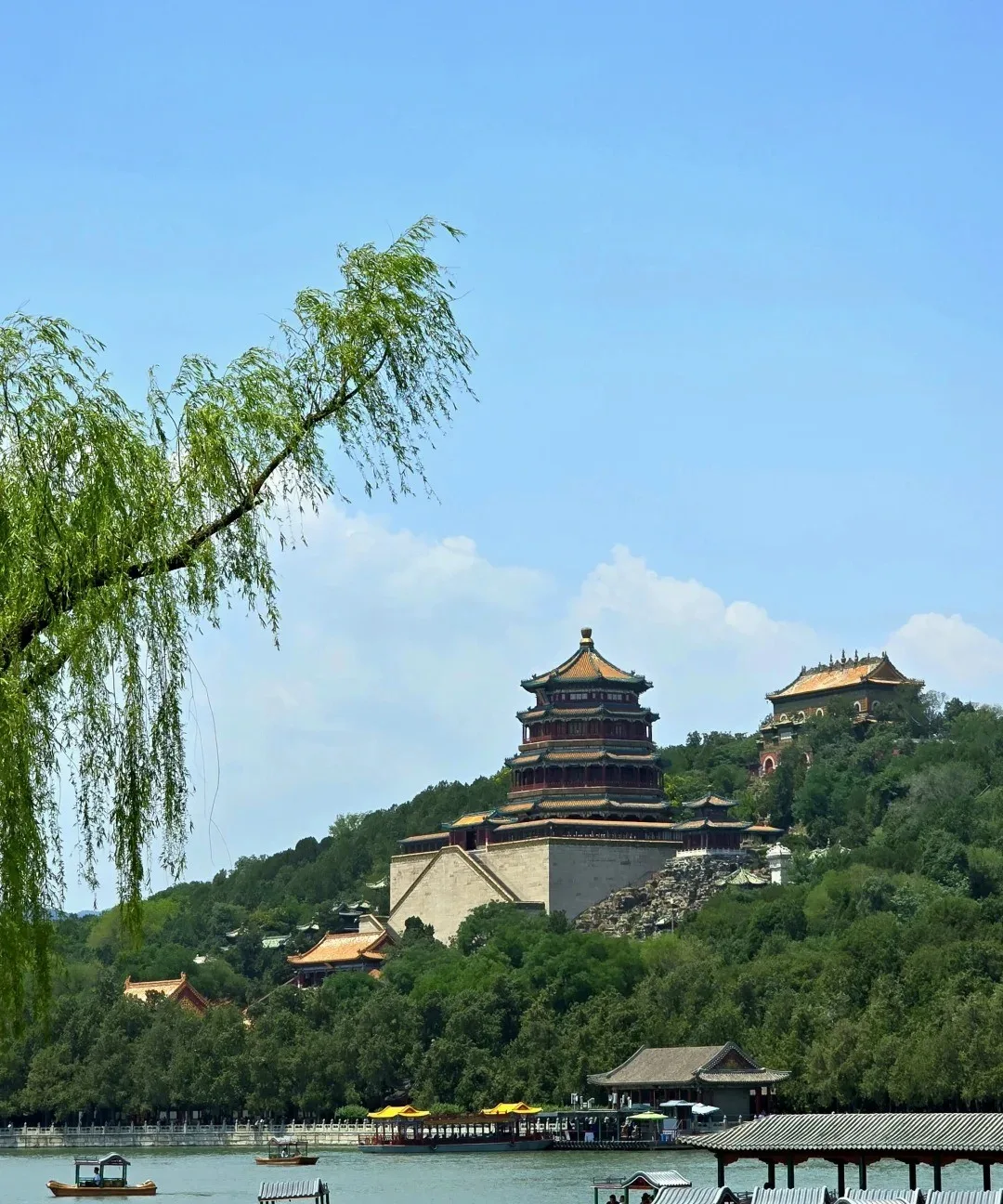
The Summer Palace is built around Kunming Lake and Longevity Hill, with the Long Corridor, the Marble Boat, the Tower of Buddhist Incense and the Seventeen-Arch Bridge laid out in sequence — the fullest expression of northern imperial garden design. The corridor alone is said to run more than 700 metres, its beams painted with classical stories. Next door, the Old Summer Palace (Yuanmingyuan) survives only as ruins, chiefly the stone columns of the Western-style buildings, and it is precisely that brokenness that speaks — a deliberate counterpoint to the Summer Palace’s splendour. Farther north, the Ming Tombs hold the burial sites of most Ming emperors; the underground palace at Dingling is open to visitors and shows how these tombs were laid out.
Temples beyond the walls
The temples outside the old city walls are just as worth your time. Tanzhe Temple gave rise to the saying “first came Tanzhe Temple, then came Beijing”; Jietai Temple is known for the largest ordination platform of any Chinese Buddhist monastery; both sit deep in the Western Hills and are especially beautiful in autumn. Baiyun Temple is the ancestral home of the Quanzhen school of Daoism, and its Lunar New Year fair draws enormous crowds. The bronze bell at the Great Bell Temple, cast in the Yongle era, weighs 46 tonnes and can still be heard from far away. Farther out, the stone-carved sutras at Yunju Temple in Fangshan and the Bai Li Shan Shui gallery in Yanqing push Beijing’s edges toward mountains and river valleys.
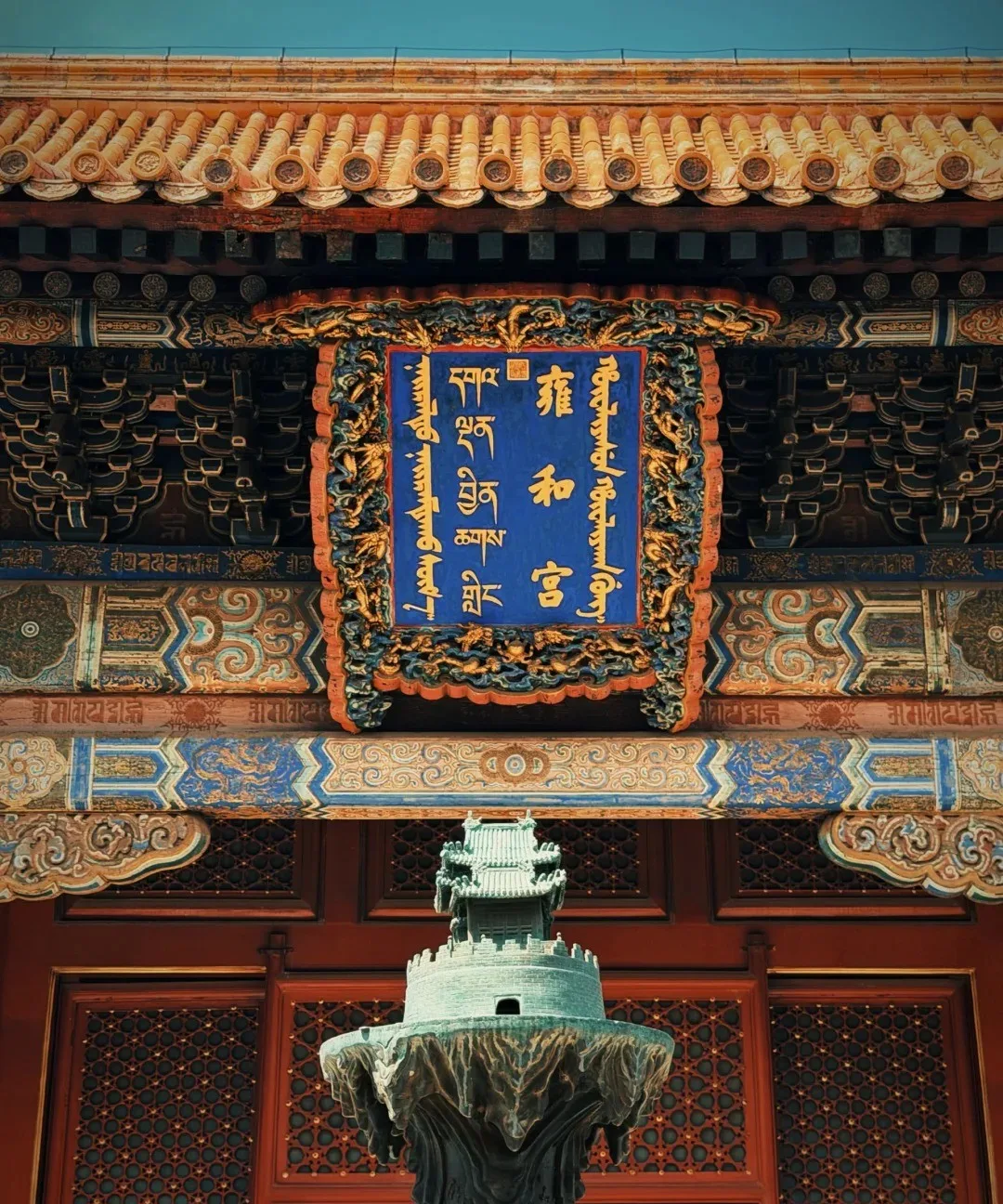
Inside the city there is one heavyweight too: Yonghe Temple is Beijing’s most visited Tibetan Buddhist monastery, especially busy on the first and fifteenth days of the lunar month, and its Pavilion of Ten Thousand Happinesses houses a Maitreya Buddha carved from a single trunk of white sandalwood.
Hutongs and courtyard houses
The flavour of old Beijing lives in the hutongs and courtyard houses. A classic siheyuan faces south, with the main hall and side wings enclosing a small courtyard; carved brick screen walls, ornamental gates and old locust trees make up the city’s most characteristic domestic picture. Nanluoguxiang and the lanes beside it, Mao’er Hutong and Yu’er Hutong, still keep their gatehouses and old trees; by Shichahai, the Silver Ingot Bridge and Yandai Xiejie are at their most alive in the evening. For something more authentic, wander the ordinary lanes around Dongsi and Xisi — carved stones on gate piers, chess games between neighbours, laundry swaying on poles. Old alleys like Zhuanta Hutong and Dongsi Santiao have street signs worn by time. Beside Shichahai stands the Prince Gong Mansion, of which it is said “one mansion, half the history of the Qing” — its Western-style gate and theatre stage are both worth a stop.
What to eat
Food is another language for reading Beijing. Roast duck at Quanjude or Bianyifang — crisp skin, tender meat, carved while hot and wrapped with pancakes, spring onion and sweet bean sauce — is the city’s first calling card to the world. Donglaishun’s lamb hotpot insists on clear broth, a copper pot and hand-sliced meat, because the point is the flavour of the meat itself. Closer to the ground are zhajiangmian noodles, luzhu, chaogan, baodu, and douzhi with fried jiaoquan rings — the last two have a smell all their own, but for many locals they taste of home. The halal cooking of Niujie and the snack clusters around Huguosi and Longfusi are worth a dedicated trip. In the evening, Qianmen Street and Dashilan mix century-old shops with new businesses, ideal for eating as you walk. For gifts that travel well, there is Daoxiangcun pastries, Liubiju pickles and Zhang Yiyuan jasmine tea.
Museums and live culture
Museums are another trump card. The National Museum of China sits beside Tiananmen, and its “Ancient China” permanent exhibition runs from Yangshao painted pottery to the peak of Ming and Qing porcelain — a full day is not enough. The Capital Museum’s city history and old-Beijing folklore galleries are the fastest route into the city’s past and present. The Military Museum, the Natural History Museum and the China Railway Museum each have their own strengths. Tsinghua University Art Museum and CAFA Art Museum represent the academic side, while small neighbourhood museums — the Shijia Hutong Museum, for instance — are often more moving, folding a century of one lane’s memory into a few old rooms.
For live culture, Peking opera and crosstalk are the two cards Beijing plays for itself. The Chang’an Grand Theatre and Liyuan Theatre stage opera regularly; the painted faces and role types are legible even to newcomers. The crosstalk houses at Deyunshe and Tianqiao are earthier, and a single rapid-fire tongue-twister routine can leave you in tears. For something quieter, catch a drum-song performance at Laoshe Teahouse, or an independent gig at a livehouse in Sanlitun or 798.
Seasons and festivals
The four seasons are sharply different, and so is the experience. The most comfortable stretch is September and October: clear skies, yellow leaves, and the red maple of Fragrant Hills, the ginkgo avenue at Diaoyutai and the golden ginkgos of Ditan all arriving together. To dodge the crowds, a weekday in deep winter lets you have the Forbidden City’s solemnity and the Great Wall’s emptiness almost to yourself.
The year has its own rhythm too: temple fairs at Ditan and Longtan over Lunar New Year, with candied hawthorns and pinwheels filling the streets; cherry blossom at Yuyuantan and crab apple along the Yuan city wall around Qingming; lotus fragrance at Lianhuachi and Beihai in high summer; then, beyond Fragrant Hills, the terraced gold of Pofengling and Baiwangshan in autumn; and hotpot restaurants steaming on the winter solstice. Follow the calendar and the same city shows you several different faces.
Getting around and where to stay
Beijing has two major airports — Capital International and Daxing International, which opened in 2019 — with dense domestic and international routes. The metro network now exceeds 700 kilometres and covers the main urban districts and most sights, making it the default way to get around. Most central sights are a direct metro ride away; the S2 suburban railway serves Badaling, and tourist shuttle buses run to Mutianyu, so you do not need a car. Ride-hailing and shared bikes cover the last kilometre, and cycling through the hutong districts is often freer than driving.
Thinking in districts makes both sightseeing and accommodation clearer:
- Dongcheng and Xicheng — the historic core, containing the Forbidden City, Temple of Heaven, Beihai and Nanluoguxiang; best explored on foot or by bike
- Chaoyang — embassies and the CBD, with Sanlitun, Guomao and the 798 Art District; the densest nightlife and contemporary art
- Haidian — home to Zhongguancun, Peking University and Tsinghua; technology and scholarship side by side
- Tongzhou — the city’s administrative sub-centre since 2019, with the Grand Canal Forest Park reshaping the skyline
- Shunyi — where Capital Airport sits, convenient for early flights or layovers
Beyond its classical face, Beijing is thoroughly modern. The Bird’s Nest and Water Cube in Olympic Park are legacies of the 2008 Games, good for night runs and ice skating year-round. Zhongguancun and Wudaokou concentrate China’s densest cluster of tech workers and young people, with cafés, bookshops and concept stores turning over fast. Wangjing’s Koreatown and the bar streets of Sanlitun keep the old capital open and mixed. Walk both the old city and the new, and you see Beijing’s full outline.
Suggested itineraries and practical notes
For a first visit, allow at least five to seven days. Give two days to the Forbidden City, Temple of Heaven and the central axis, one day to the Great Wall, one to the Summer Palace and Yuanmingyuan, and one more to hutongs and museums — the “Ancient China” galleries at the National Museum and the Capital Museum’s city history will connect scattered impressions into a coherent thread. The rest can go to 798, Sanlitun, or the Fragrant Hills and Beihai on the outskirts. If time is very tight, a three-day version still stands up: axis and Forbidden City one day, Great Wall one day, Summer Palace and hutongs one day.
A few things worth remembering:
- Bookings: the Forbidden City, National Museum and other popular venues require advance reservations through official channels; in peak season tickets are often gone well ahead
- Shoes: the Great Wall and the Summer Palace are both large — comfortable shoes matter more than anything else
- Language: Mandarin is universal, and signage at major sights usually includes English; younger people often have some English
- Payment: mobile payment covers almost everything; a little cash is enough
- Pace: the city is safe, but expect crowding on the metro at rush hour and at popular sights. Beijing time is UTC+8, with no offset from most East Asian cities
Beijing’s charm is rarely in the first item on an itinerary. It shows up on an afternoon when you turn into the wrong hutong, or in the moment a bowl of douzhi goes down. Slow down, and it starts telling you its stories.
Related reading
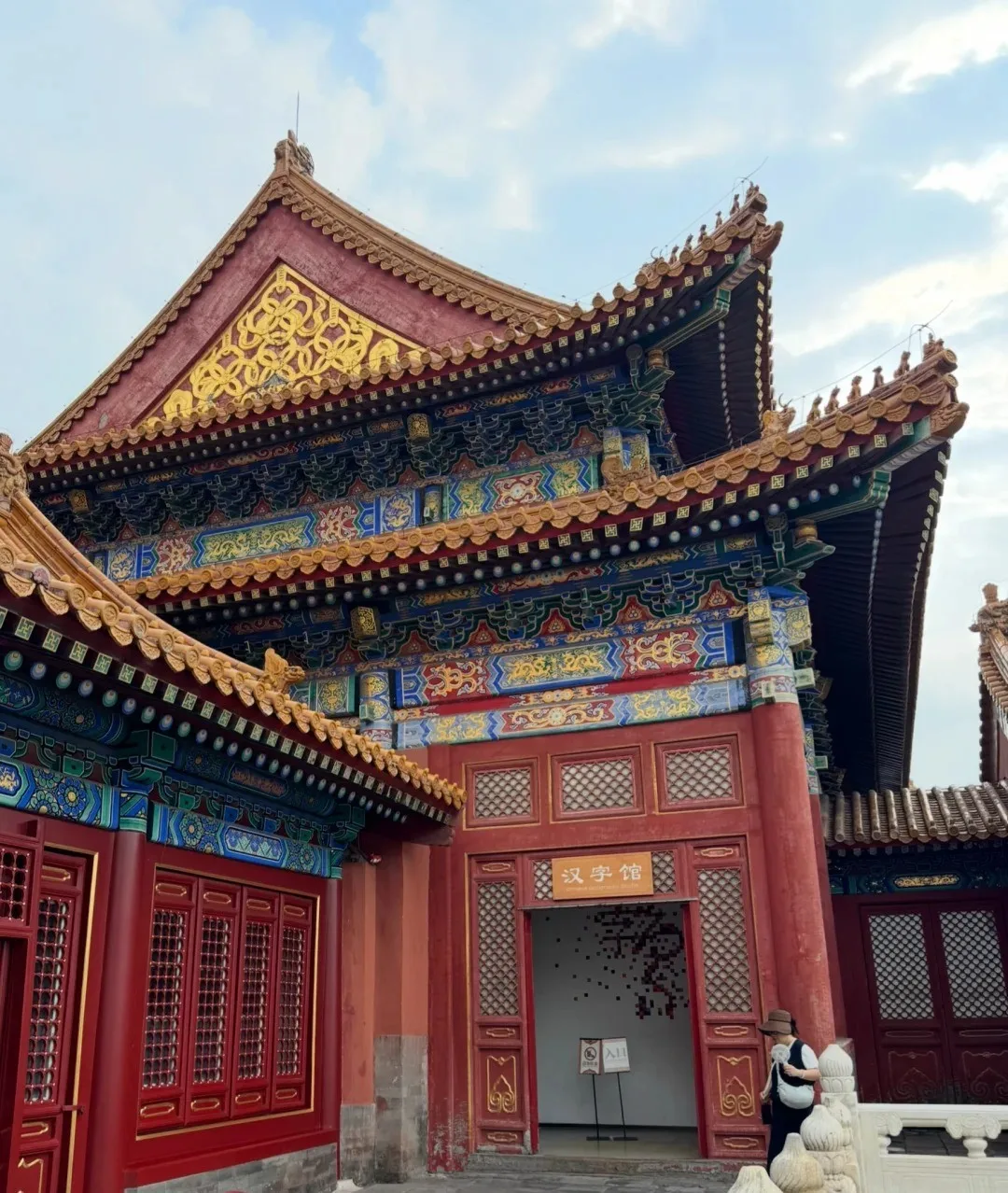
Forbidden City: A Wooden City Standing on Beijing's Central Axis
For two dynasties, China piled its most expensive timber, its longest central axis and its strictest rituals inside one walled rectangle. The Forbidden City grew out of a single decision to move the capital north, burned down four times, was rebuilt four times, and today is still the quietest large courtyard in Beijing.
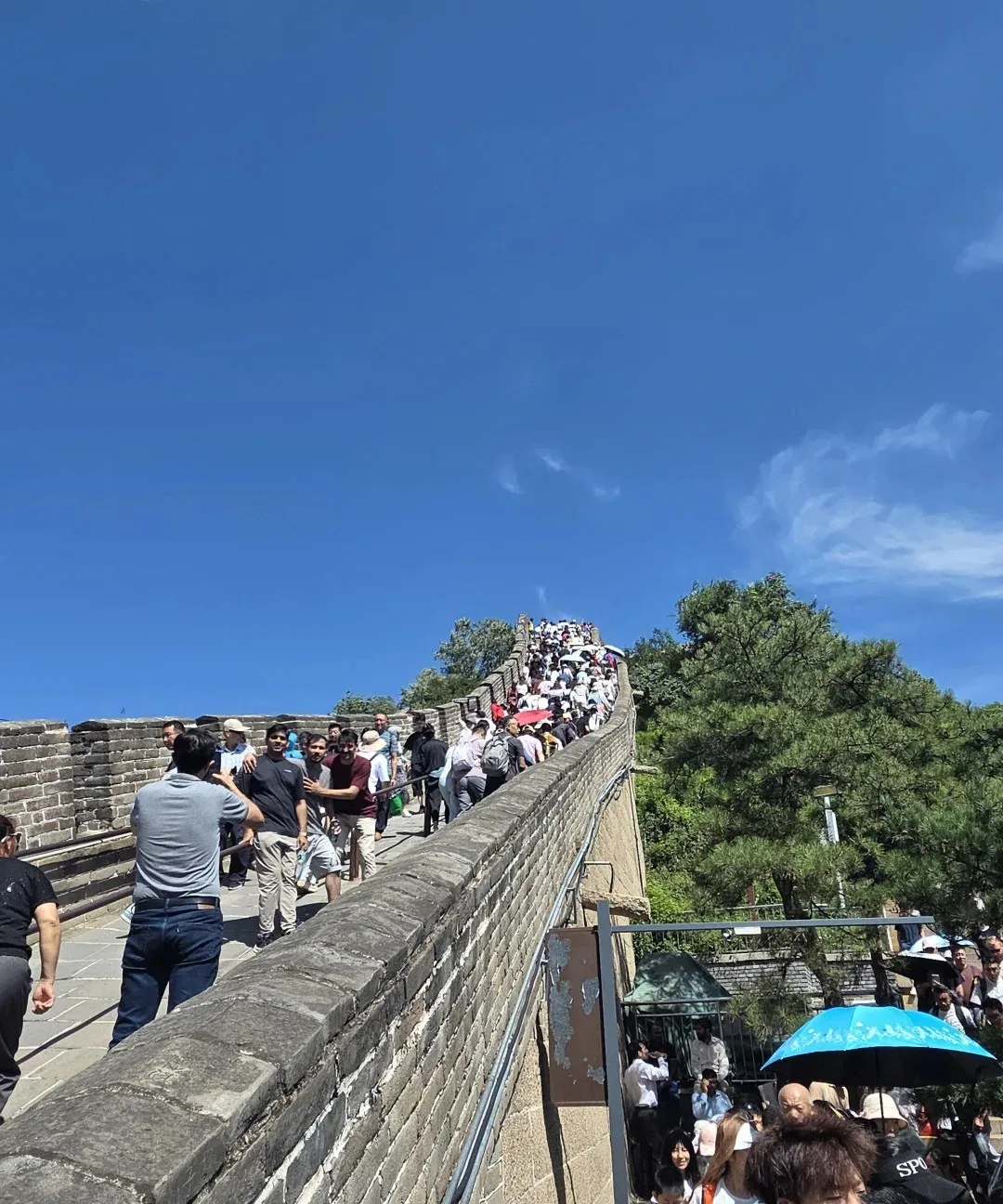
Badaling: The Pass Worth Climbing, and the Trait It Cut Through
A pass at a thousand metres, a Ming section of wall, 3,741 metres of rampart and nineteen beacon towers. Badaling is neither the longest nor the most dramatic stretch of the Great Wall — but it was the first to open to visitors, which is why six centuries later almost everyone recognises this particular frame.
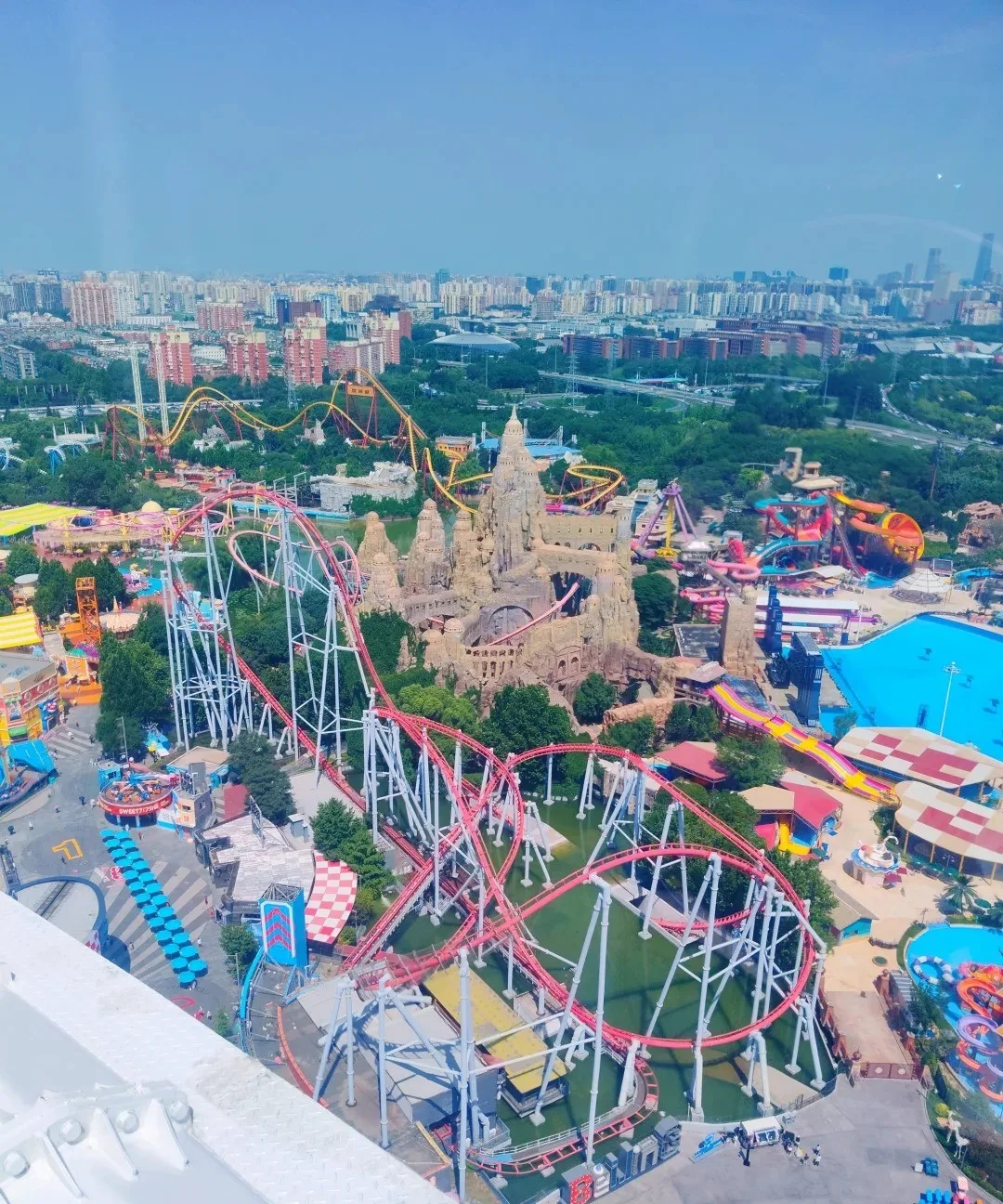
Beijing Happy Valley: One Route Round the Park, Six Roller Coasters
In the southeast corner of Dongcheng's fourth ring, 560,000 square metres and seven themed areas hold China's first launch coaster: 135 km/h, sixty metres high, thirty seconds end to end.
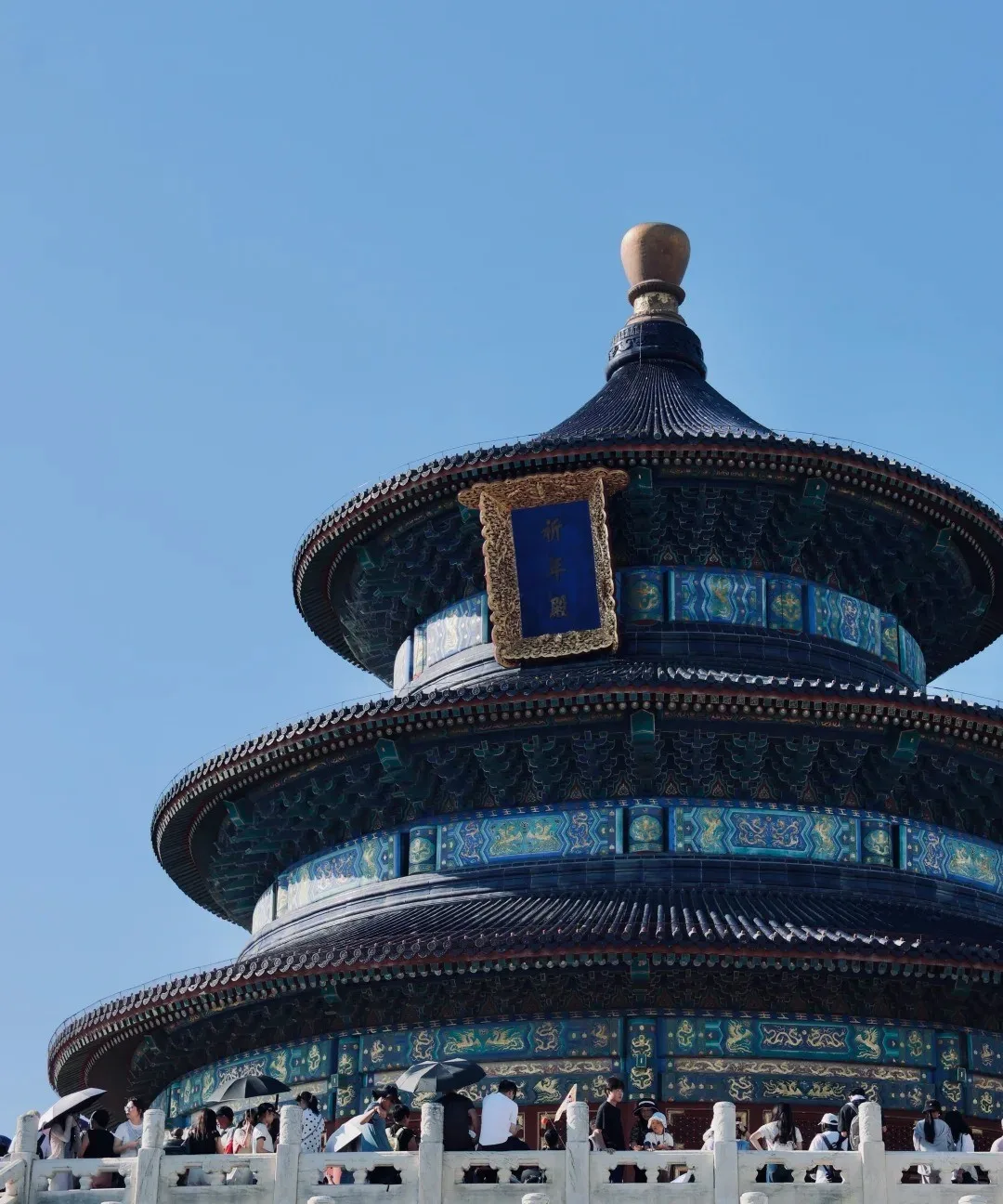
Temple of Heaven: Where the Square and the Circle Met
A circle at the north, a square at the south, and a 360-metre stone causeway running between them to the Hall of Prayer for Good Harvests. The Temple of Heaven turned an idea about the sky into a place you can walk through — sound skims along its walls, and every count of stone is a multiple of nine.
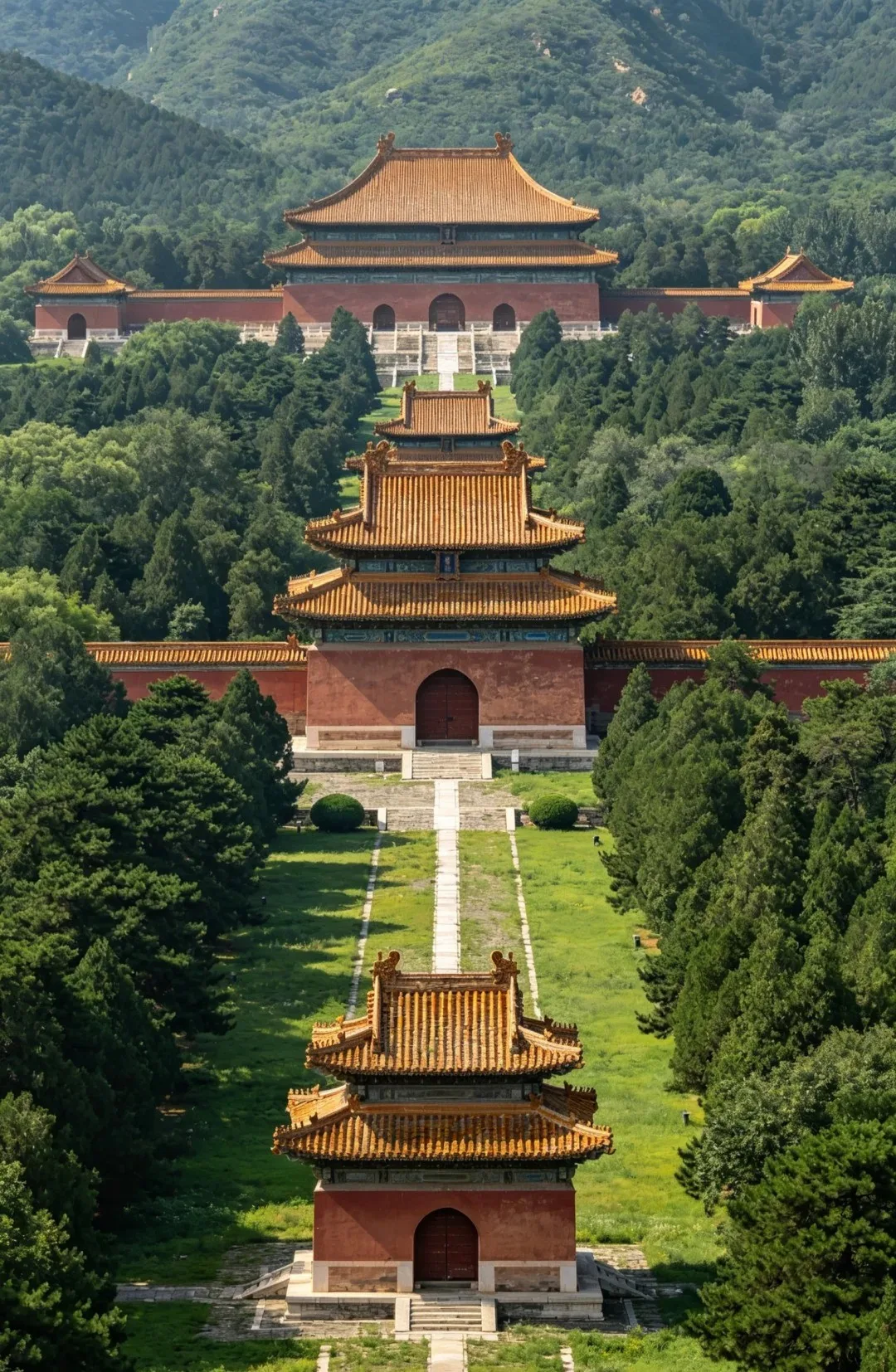
Ming Tombs: Thirteen Emperors in One Mountain Basin
In a forty-square-kilometre basin south of Tianshou Hill lie thirteen emperors of the Ming: the founder's son who moved the capital, the ruler who held no court for twenty-eight years, the last one who hanged himself on Coal Mountain. One stone sacred way, lined with carved animals, links all thirteen.