В утренний час пик в шанхайском метро я научился сначала крепко встать, а потом смотреть на карту
At 8:12 in the morning, we stepped off the escalator at People’s Square Station. The first thing we noticed was not a train, but a dense layer of footsteps. Shoes struck the pale floor tiles like rain without drums. My friend lifted his phone to check which line we needed for Lujiazui, and I gently stopped him. Not because I already knew the answer, but because we were standing at the exact spot where people coming off the escalator could run into us.
In that second I understood that the most important action in Shanghai’s morning rush hour is not “be fast,” but “do not block.” If you have just arrived in China, especially in a large city like Shanghai, it is easy to treat the metro station as a huge map interface: line colors, arrows, station names, exit numbers. It feels as if reading them is enough. But once you enter the rush-hour flow, the map is only the second step. The first step is finding a small corner where you do not interrupt other people’s rhythm.
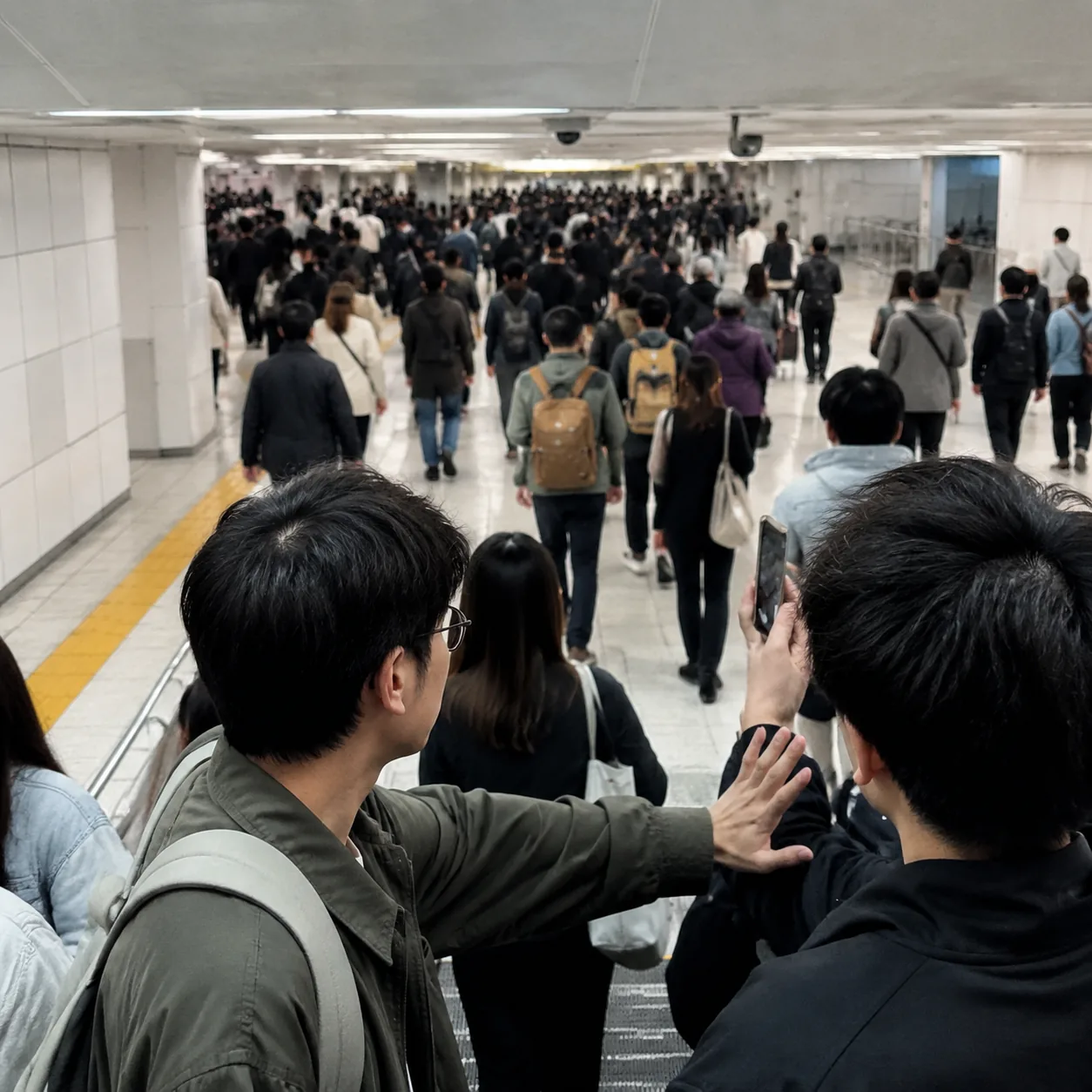
We moved beside a column. Not completely against the wall, because people were already waiting near a vending machine there; not in the middle of the corridor either, because someone with a laptop bag brushed past every half second. Beside the column, there was just enough empty space for two people to stand shoulder to shoulder. I turned my backpack to the front, and my friend lowered his phone screen so only he could see it. The posture felt a little clumsy, but immediately it felt safer.
Shanghai’s rush-hour metro has a very clear order, but it is not always written on signs. You see people walking quickly, but rarely cutting sideways into the crowd. If someone slows down at the gate, the person behind naturally switches to another lane. If someone misses an escalator, they usually do not stand at the opening feeling upset for long; they move with the flow and find another place to turn back. This order is not a gentle slow motion. It is more like a river whose speed has already been set.
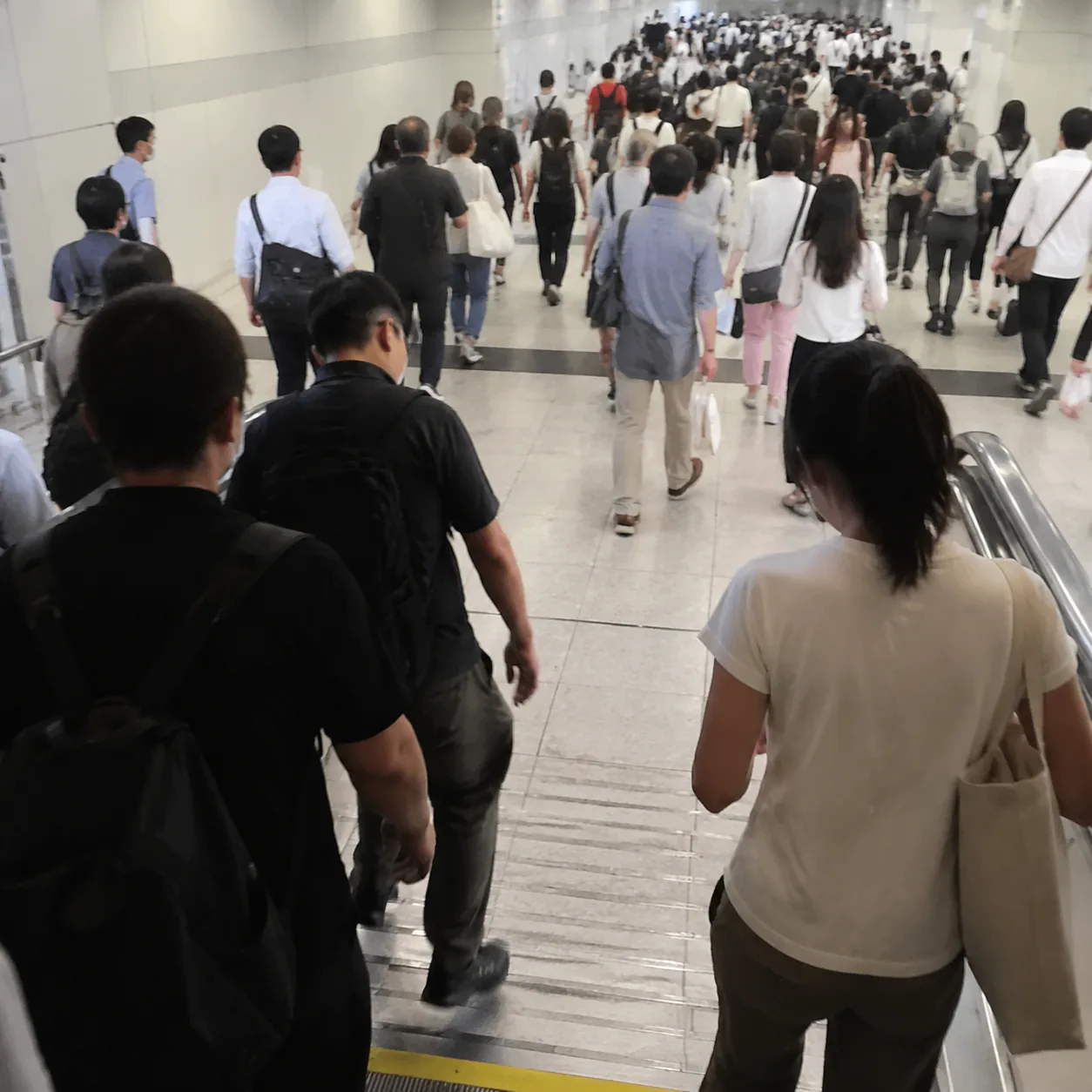
My friend asked, “Should we check the map now?” I said, “Wait five seconds.” In those five seconds, I looked at three things: where the transfer flow narrowed, where the overhead arrows repeated, and at which fork the staff member was standing. Only then did we look down at the phone. The map told us to transfer to Line 2, but the station told us to walk about twenty meters on the left first and then turn with the blue sign, instead of turning at the first fork.
This sounds like a tiny trick, but tiny tricks in rush hour often decide whether you become nervous. As we turned into the corridor, an office worker in a gray suit passed us. He did not speak; he simply used the coffee cup in his hand to gesture slightly to the right. Someone ahead had stopped to photograph the station name, and he moved around them. We followed. No one blamed anyone. People simply used small movements to open the corridor again.
When I used metro systems abroad, I often understood wayfinding as a personal task: I read my map, I choose my direction, and I deal with my mistakes. Shanghai’s morning rush changed that idea. In this kind of density, wayfinding is actually a public action. Where you stand, how long you pause, which side your bag is on, and when you look up all affect other people, and they also affect your own sense of safety.
When we reached the platform, we did not push to the front. My friend first wanted to move closer to the doors, but I pointed at the queue lines on the floor and then at the two lines of people already standing there. The markings on Shanghai metro platforms are very useful, but you have to read them together with the people. Some doors already had thick queues; others still had a little space. We walked two doors farther, stood at the back of a shorter line, and actually boarded more easily.
When the doors opened, another rhythm began. “Let passengers get off before boarding” is not just a slogan; it is a very concrete time gap. As people came out, the queue naturally split to both sides, leaving a narrow opening in the middle. Only after the last person with a suitcase stepped out did the outside crowd close in. We did not take the first step. We waited until the shoulders ahead began to move, then followed. Inside the carriage, the air was a little warm, and the handrail still held the body heat of the previous passenger.
My friend finally laughed and asked, “Do we look like locals now?” I said, “Not yet, but at least we do not look like people blocking the way.” After saying it, I laughed too. Many improvements in travel do not mean suddenly becoming skilled. They begin with creating fewer problems. You may not immediately know every transfer route, but you can first learn where to place yourself in a moving crowd.
After that rush-hour ride, I understood Chinese big-city metros in more concrete ways. At transfer stations, it is not better to check your phone as early as possible; first move away from exits, escalator mouths, and gates. On the platform, it is not always better to stand closest to the door; look for the thinner queue. Asking for directions is not something to do while walking; stand still first, then clearly show the destination or line name to a staff member.
What surprised me most was that rush hour did not make me dislike Shanghai. Instead, it showed me how the city keeps operating in high density: announcements repeat, staff guide people with hand gestures, passengers give way through very short pauses, and floor markings work together with overhead signs. It is tense, but not chaotic. It is fast, but not ruleless.
When we arrived at Lujiazui, the glass facades outside were already catching the morning light. My friend put his phone away and said he finally understood why I kept telling him to “stand still first.” It was not because the map was unimportant. It was because the map only tells us where to go; in Shanghai’s morning rush hour, the body has to be in the right place before the mind has room to decide the next step.