Одна половина дня в чайной Чэнду запомнилась мне больше, чем три достопримечательности
On my first day in Chengdu, my schedule listed three places: a museum, an old street, and a park known for its night view. They were close enough that, according to the map, I could easily connect them in one afternoon. But after lunch I passed a street-side teahouse and saw rows of bamboo chairs under the trees, lids resting lightly on gaiwan cups, and several people letting time loosen around them. In that moment, I no longer wanted to hurry to the next stop. I went in, ordered a cup of covered-bowl tea, and sat down with the familiar guilt of a traveler, as if removing attractions from a list were a kind of waste. Only when the sky grew dim did I understand that the afternoon had not been wasted; it had opened Chengdu for me.
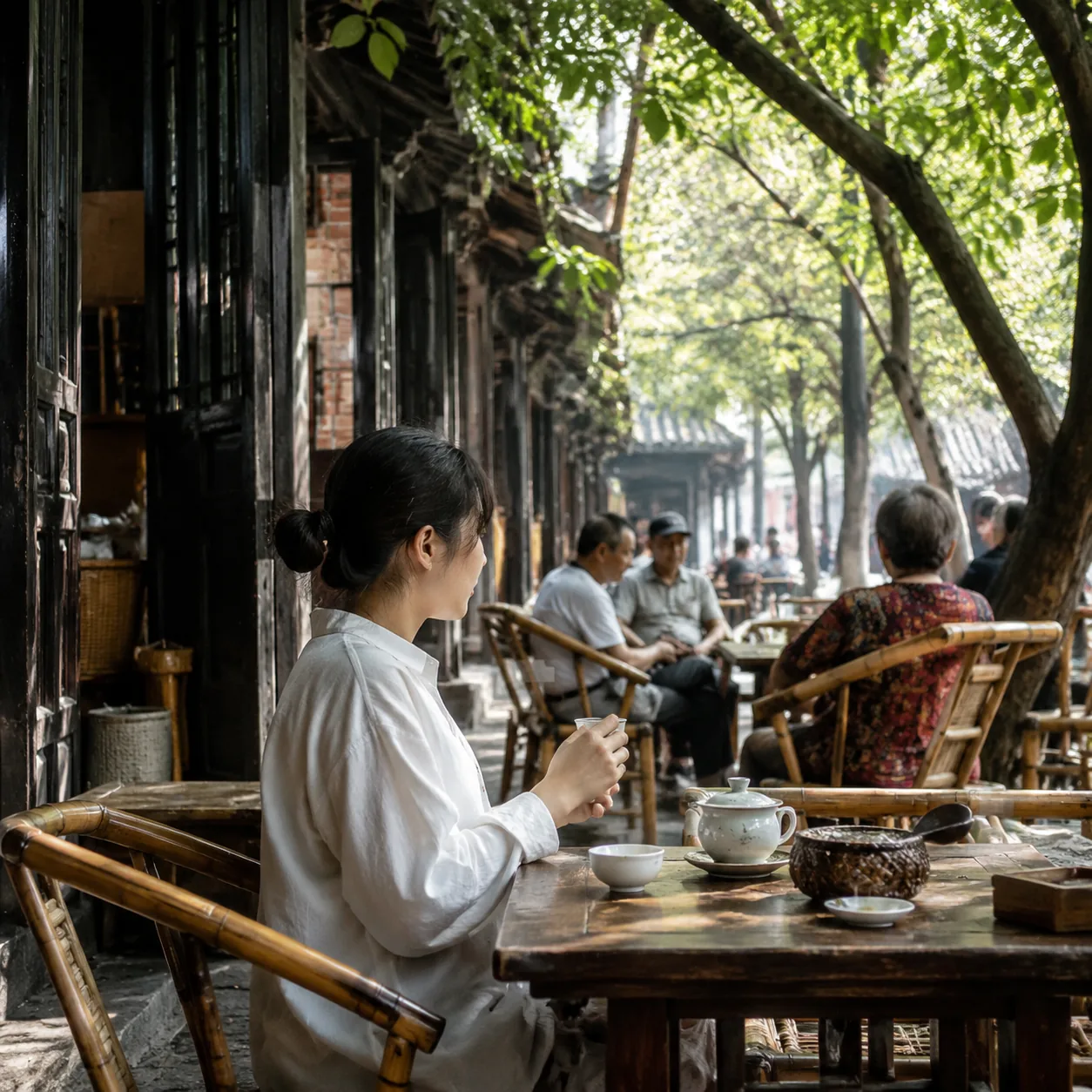
The teahouse was not elegant in a polished way. Its sign was a little old, the edges of the wooden tables had been shined by elbows, and the wall held a menu beside several faded notices. Two trees stood in the courtyard, their leaves sifting sunlight into fragments that fell on teacups, sunflower-seed shells, and shoulders. A server moved between tables with a long-spouted copper kettle; when the spout tilted, hot water landed precisely in the bowl, a daily repetition that still looked graceful. At the next table, elderly men were playing chess. Whenever a piece landed, people nearby leaned in naturally, then drifted back into their own quiet. No one asked me to understand anything at once. The teahouse simply offered me a chair and a stretch of time.
For the first half hour, I did not really know how to stay. I picked up my phone and put it down, opened the map and closed it, constantly calculating which attraction I could still reach if I left immediately. The first sip of gaiwan tea was a little too hot. The fragrance did not rush out; first came steam against my face, then a clean bitterness lingering at the back of the tongue. Across from me, a woman shelled peanuts with steady hands while talking to a friend about her cat. To my left, a young man had brought a laptop but did not type for a long time; he only watched tree shadows move across the screen. Gradually I realized that sitting here was not “doing nothing.” It was learning a speed I did not yet know.
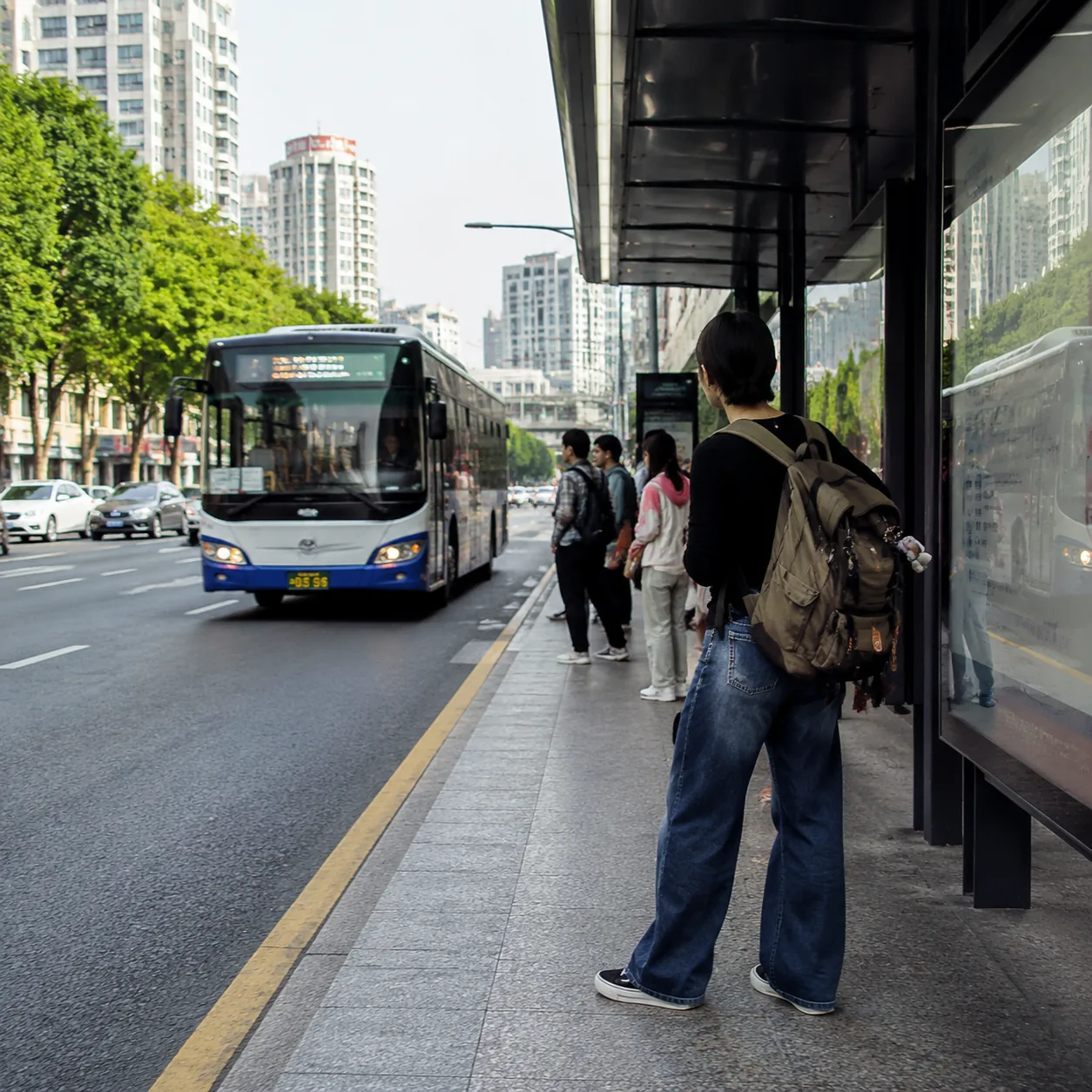
Chengdu’s teahouses have a special kind of tolerance. A person sitting alone does not look lonely. Two people sharing silence do not seem awkward. A group talking together does not necessarily feel noisy. The sounds seem softened by tea: mahjong tiles, chess pieces, conversation, and traffic from the street rise and fall at the same temperature. Someone lifts a lid slightly to push aside floating leaves. Someone folds a newspaper into a quarter of its size and brings it close to his eyes. Someone calls for more hot water in the tone used for an acquaintance. For travelers, a city often becomes a collection of symbols to identify. In this teahouse, Chengdu was not first a symbol, but an everyday life that could be overheard.
The museum I had planned to visit might have given me a more systematic understanding of Chengdu. The old street would have offered photogenic façades. The park’s night view would probably have been pleasant too. But the teahouse gave me something slower and harder to replace. It showed me how local people arranged an ordinary afternoon: not by filling time completely, but by leaving gaps inside it. Two elderly men argued over one chess move for ten minutes, then laughed and reset the board. A father brought his child to do homework; after every three lines of writing, the child looked up to watch cards at the next table. A man in a suit finished a phone call and sighed deeply as he sat down again. Everyone seemed to know there were many things outside to handle, yet also knew that for now they could take a sip of tea first.
By the third refill, I stopped checking the time so often. The tea had become lighter, which made it better for slow drinking. Sunflower-seed shells formed a small hill on the table, and when a server passed, she swept them neatly into a dustpan. Sunlight slanted from the other side of the courtyard and touched old photographs on the wall: people posing at the teahouse entrance, people smiling with cups in hand. The clothing in the photos was outdated, but the postures and expressions resembled the people before me. For a moment, the teahouse felt like a thin thread stringing together many ordinary afternoons. It did not rely on monumental solemnity; it carried weight through repetition, familiarity, and a life that allowed pauses.
After sitting long enough, I began to be held by the teahouse’s small rules. A tilted lid meant the tea was not finished. When the kettle approached, you moved your body slightly aside. When others watched a chess game, you did not offer too many opinions. If a chair blocked the path, you pulled it inward. No one formally taught me, but these rules happened again and again before my eyes, and I learned a little by watching. One of the happiest moments in travel is when you stop merely looking at a place and briefly join its rhythm. That afternoon, I did not become a Chengdu local, and of course no one understands a city through one cup of tea. But I did move a small step inward from the position of an observer.
Before evening, the teahouse changed its crowd. Office workers stopped by after work for a cup before going home. A few tourists came in and quietly discussed what tea to order. The elderly men’s chess game had not ended, though the onlookers had changed. The street light turned orange, tree shadows grew longer, and the server wiped several empty tables before straightening the chairs. I suddenly remembered the three attractions I had missed, and I felt no regret. Not because they were unworthy, but because I finally admitted that knowing a city does not always require completing a list. Sometimes you need to give an afternoon to one place and let it tell you, in unobvious ways, who it is.
When I left, I placed the tea money beside the small dish and stood up, only then realizing that my legs were slightly numb from sitting too long. The street outside had entered the evening rush, with traffic and voices growing dense again, yet my mind felt quiet. The teahouse had not given me a story to boast about, no dramatic turn, and no signature item that had to be recommended to everyone. It had given me only an afternoon: hot water poured into the bowl again and again, tree shadows moving from tabletop to ground, strangers’ conversations rising and falling nearby. But this undramatic stay was exactly what turned Chengdu from a destination on a map into a place with breath, patience, and room.
If I return to Chengdu, I will certainly still visit museums, wander through lanes, and look for night views. Those places form the city’s bright outline and deserve time. But I will first leave an unscheduled afternoon for a teahouse, not treating it as a rest stop or a folk performance, but as an entrance to understanding Chengdu. Order a cup of tea, sit under a tree, watch people come and go, and allow yourself not to summarize too quickly. Many travel memories fade along with their photographs, but the tea water, bamboo chair, chess sounds, and slowed breathing of that afternoon have become clearer after I left. For me, what Chengdu first preserved was not an attraction reached, but an afternoon properly sat through.