When You First Enter Guangzhou, What Hits Your Face Is Often Not Landmark Energy but the Heat from Breakfast Stalls
By seven-thirty in the morning, Guangzhou is not just waking up. It has already moved a little way into the day. Under the arcade streets, half-open shutters rise one by one, plastic stools are dragged outside, electric scooters are packed close to the curb, and the steam from soy milk leaves a pale layer across the glass. For a foreign traveler coming to China for the first time, this is not the kind of city that grabs attention through a single famous attraction. It pulls people in through ordinary corners first. One hears spoons hit bowls, shop staff calling out orders, tires crossing damp ground after rain, and only then realizes that Guangzhou’s real strength may not lie in one point at all, but in the ordered heat with which the whole city begins to move.
In much outside content, the first reaction to Guangzhou is always food. That reaction is understandable, because Guangzhou really does know how to keep people through eating. But if the writing stops at “the food is very good,” the article becomes thin. What deserves real explanation is why, in Guangzhou, eating is never an isolated activity. One does not finish seeing the city and then sit down somewhere. One reads the city through eating: through its rhythm, direction, density, and pause points. That is exactly why Guangzhou suits a third-person reported format far better than a simple food ranking.
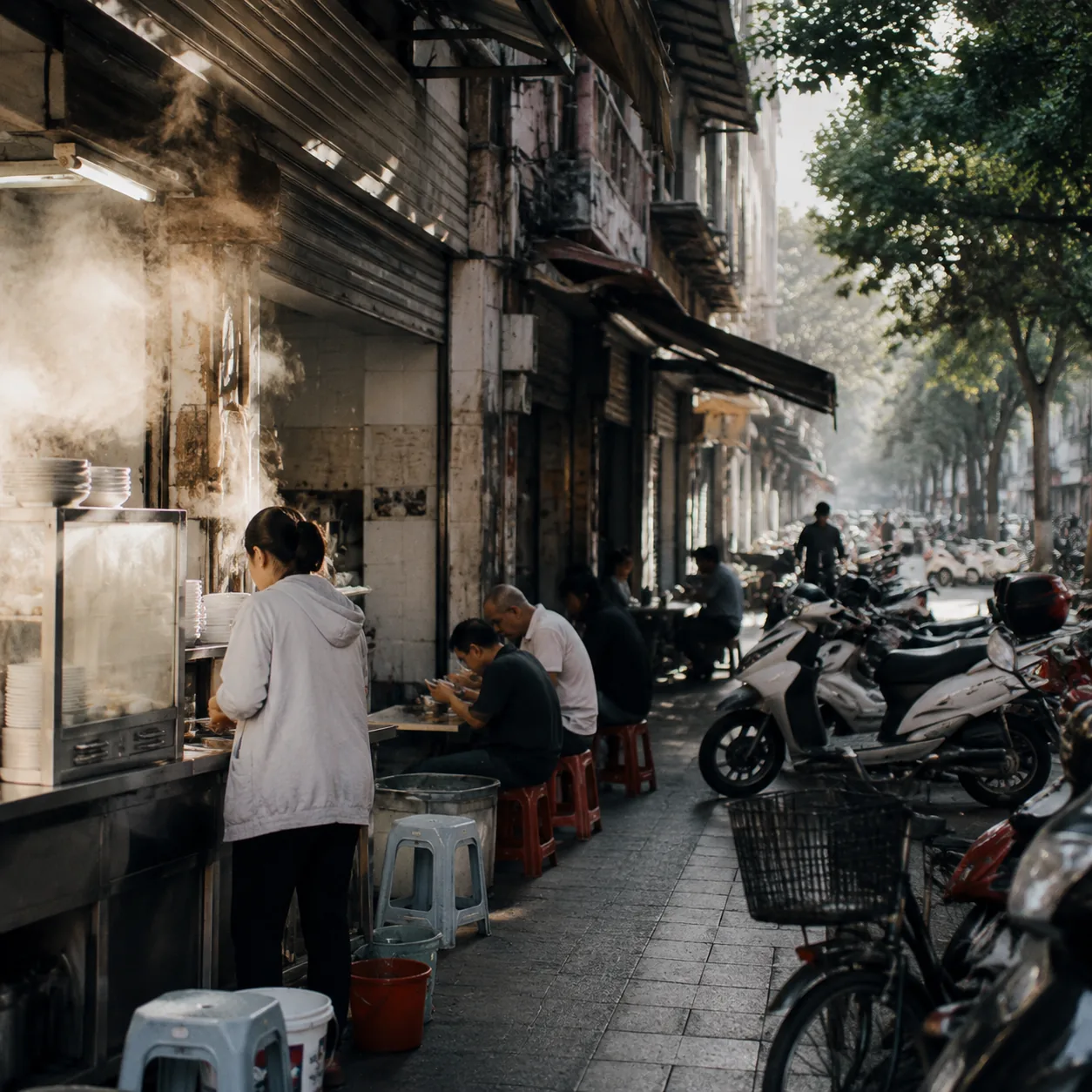
In Guangzhou, Route and Meal Time Are Already the Same Thing
Guangzhou does not behave like a scenic city where route and food live in separate compartments. In some places, one reaches a landmark, takes the photographs, and only then searches for a restaurant worth checking in at. Guangzhou follows a very different structure. A route works here largely because one knows when to sit down, when to eat while moving, and when a meal should be used to bring body and mood back into balance. Morning tea is not just breakfast slipped into the schedule. It is often the opening gesture of the whole day. After leaving the teahouse, one’s reading of density, sound, and pedestrian flow changes completely.
That is also one of the most easily overlooked yet most valuable things for Travel Notes to catch when foreign creators write about Guangzhou: food is not decoration added to the journey. It is one of the methods by which the journey is organized. Even a plain bowl of noodles, a plate of rice rolls, or one dessert soup can become more than a pleasant meal if it appears in the right position. It can reset the legs and the patience needed for the rest of the day. For ordinary readers, that method is far more useful than a list of ten famous places to eat, because it directly determines whether the city will eventually be walked smoothly or not.
Arcade Streets, Markets, and Teahouses Divide Guangzhou into Three Ways of Reading It
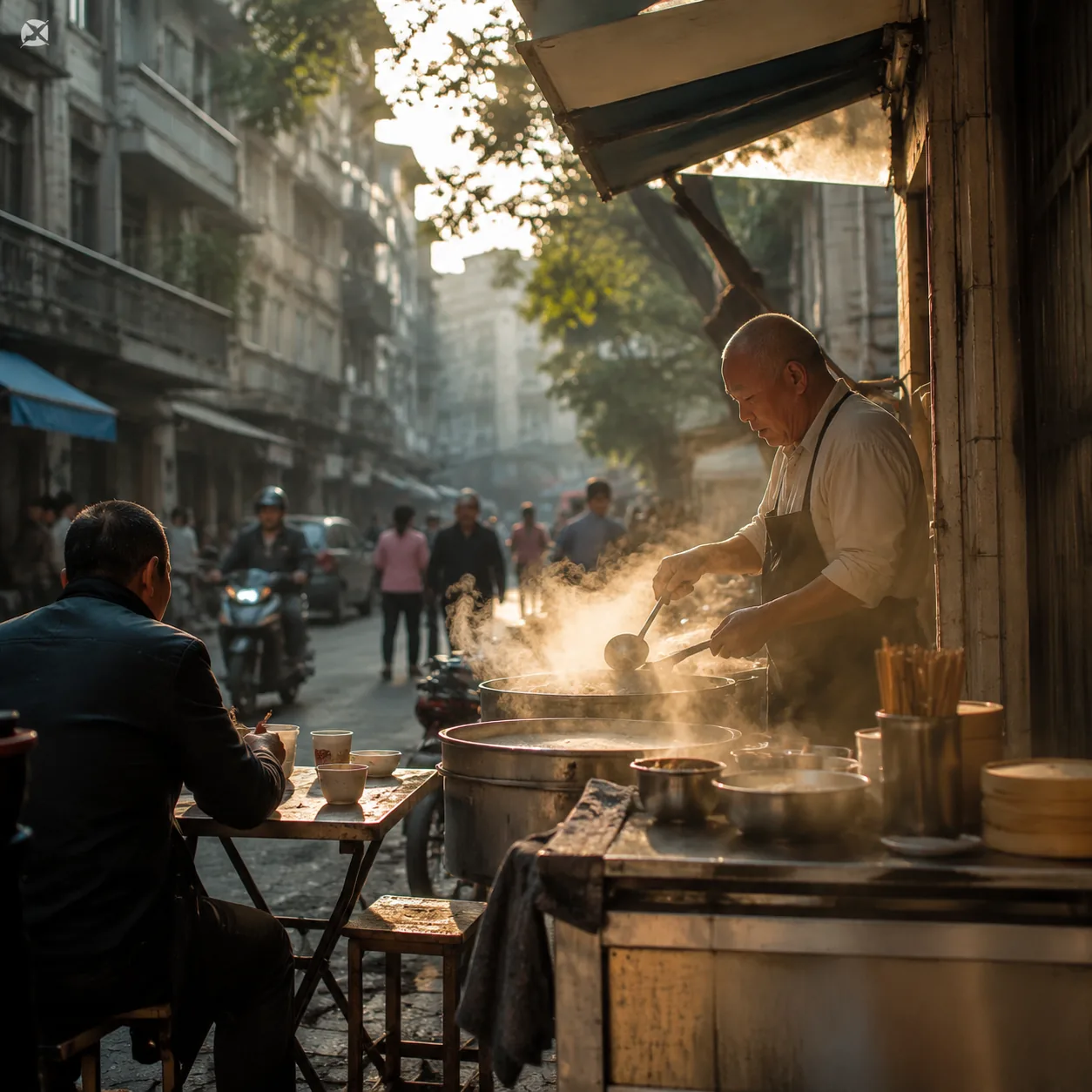
One of the most interesting things about Guangzhou is that it does not speak through only one kind of space. The arcade streets form its walking grammar. Under them, the traveler is neither fully exposed to the sun nor separated from the businesses along the edge. Markets form Guangzhou’s grammar of density: smell, humidity, plastic bags brushing against one another, chopping boards, and crowd movement quickly drag a person into the reality that the city is actively working. Teahouses are something else again. They function like a buffer zone capable of gently slowing the whole morning down. It is the connection between these three spaces that makes Guangzhou so walkable over time.
If outside content treats the market only as atmosphere, the arcade streets only as nostalgia, and the teahouse only as a local experience, then it still has not reached Guangzhou’s core. Guangzhou’s real strength lies in the fact that these are not isolated attractions. Together they form a route that shifts its own gears. First the density speeds the traveler up, then the teahouse slows everything back down, and finally the walking line beneath the arcades draws the traveler back into the street. Once a reader understands that pattern, it becomes clear why Guangzhou should never be reduced to a city that merely knows how to feed people.
The Moments That Keep People in Guangzhou Often Begin Once They Stop Hunting for Highlights
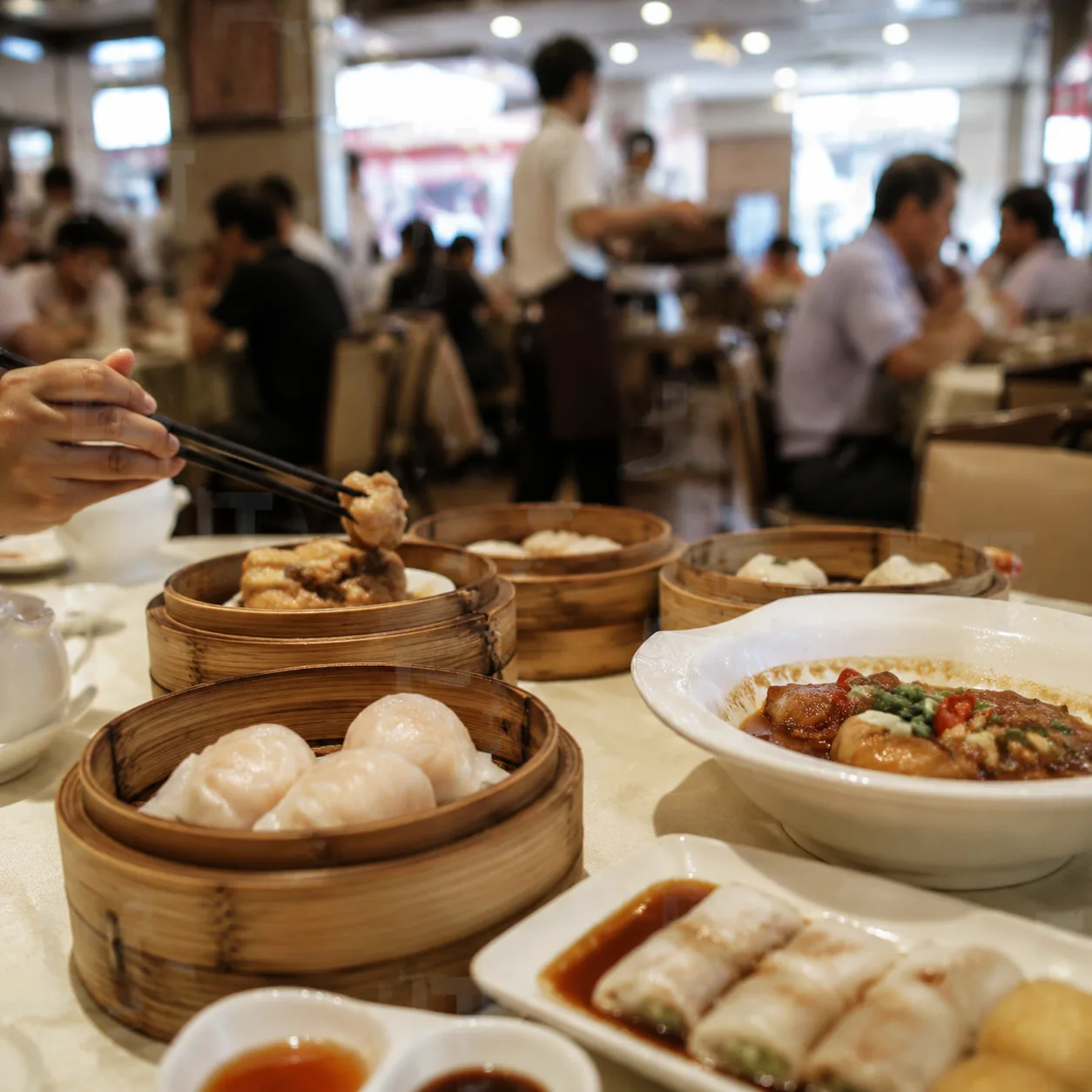
Many first-time visitors to China carry the same instinct into every unfamiliar city: quickly identify what is most worth seeing, eating, and posting. Guangzhou does not strongly reward that impatience. If one keeps using highlight-hunting mode, the city may even appear to lack a single overwhelming point. But if the mind steps back slightly, Guangzhou begins to return value in a different way. Not through a gigantic surprise, but through a continuous sequence of smaller satisfactions: one doorway, one crowded table, one hot dish, one stretch of road reflecting after rain.
That also explains why many foreign creators, even when they arrive intending to film “city content,” often leave behind a more lived-aftertaste in their storytelling. Guangzhou is not unsuitable for dramatic writing. It is simply a city that grows thicker when written slowly. What readers remember in the end is not “I checked off these places today,” but “so this is how a major Chinese city can receive a traveler without panic.” From the perspective of Travel Notes, that is an unusually valuable route quality, because it truly lowers the pressure felt by first-time visitors entering China.
What Should Finally Be Remembered Is Not the Shop Name, but the Rhythm Judgment
The names of restaurants matter, and what to eat certainly matters too. But for a first-time visitor to China, the scarcer skill is judgment: when to sit down, when to continue walking, when to let a street speak for itself, and when to let one meal reorganize the previous half-day. Guangzhou’s greatest strength is not that it constantly places the single best bite in front of the traveler. It is that it keeps teaching the same lesson: city and food are not two separate lines. They have always been one.