Travel Notes
 Chongqing Luohan Temple: A Thousand-Year-Old Sanctuary Beneath the Skyscrapers
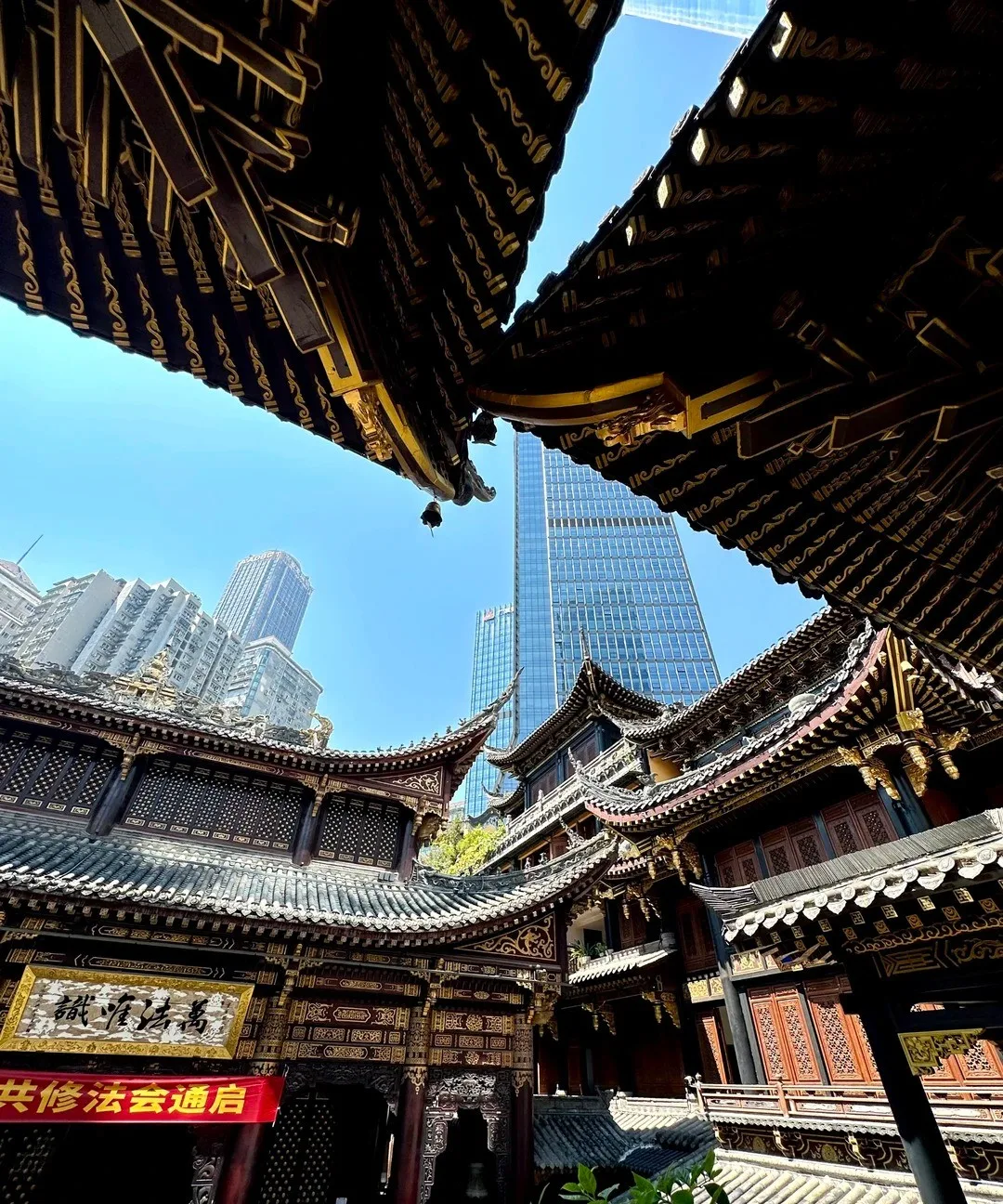
Step out of a department store in Jiefangbei and you may find yourself facing a stone gateway from the Northern Song dynasty. What makes Luohan Temple special isn’t its size but its location: boxed in by Chongqing’s tallest towers, it keeps a calm that has barely shifted in nearly a thousand years.
A Temple That Grew Up Inside the Mall District
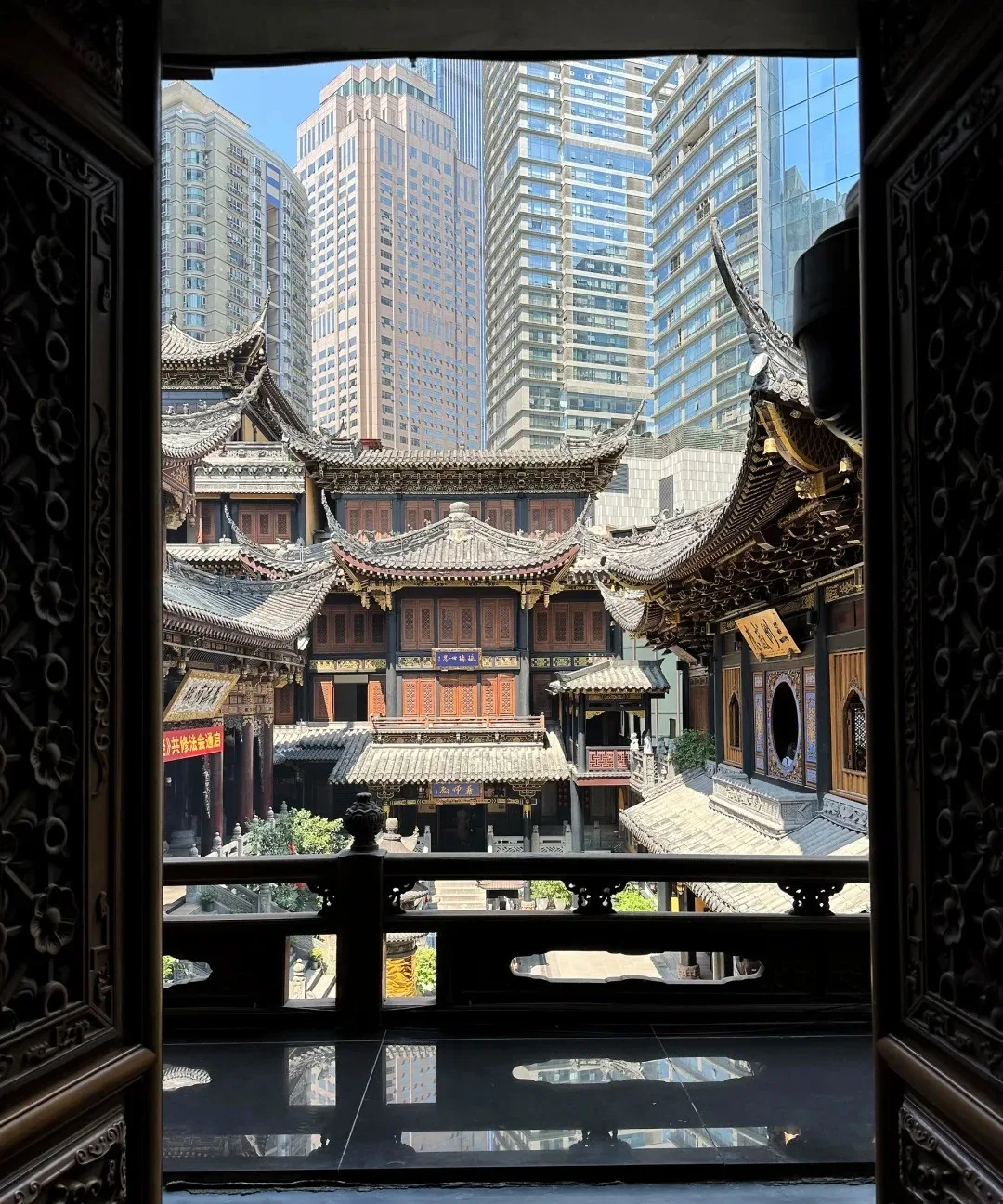
Luohan Temple sits on Minzu Road in Yuzhong District, the dead centre of the Jiefangbei commercial hub. The whole compound covers about 5,160 square metres, ringed by office towers, department stores and subway exits. This “temple in the city, city in the temple” layout is hard to find anywhere else in a Chinese downtown. You don’t need to plan a trip around it — drop in when your legs tire of shopping, and ten minutes is enough to swap crowd noise for the ring of a bell.
Five Hundred Arhats, Counted One by One
The temple’s claim to fame is the hall of 500 clay arhats. This set was re-cast in 1885 (the 11th year of Guangxu) under the abbot Longfa, each figure distinct in posture and expression — one of the notable arhat halls in southwest China. Old Chongqing had a custom of “counting the arhats”: pick any statue, then count forward by your age; the one you land on was said to hint at the year’s fortune. Treat it as a game, but it does slow you down in front of the long rows.
The other must-see is the Ancient Buddha Cliff, a cluster of cliff carvings inside the grounds that predate the temple itself and are valuable for studying early Buddhist art in Chongqing.
From Zhiping Temple to Luohan Temple
The story starts in the Northern Song, during the Zhi ping era (1064–1067), when the site was called Zhiping Temple. A large expansion under the Wanli emperor of the Ming gave it the five-hundred-arhat hall and, gradually, the name Luohan Temple. The Qing was its golden age; the Guangxu restoration re-cast the arhats. It was listed among the nation’s key temples in 1983 and joined the seventh batch of Major Historical and Cultural Sites Protected at the National Level in 2013. One walk through is a skim of Chongqing’s near-millennium of urban history.
How to Wander the Urban Zen
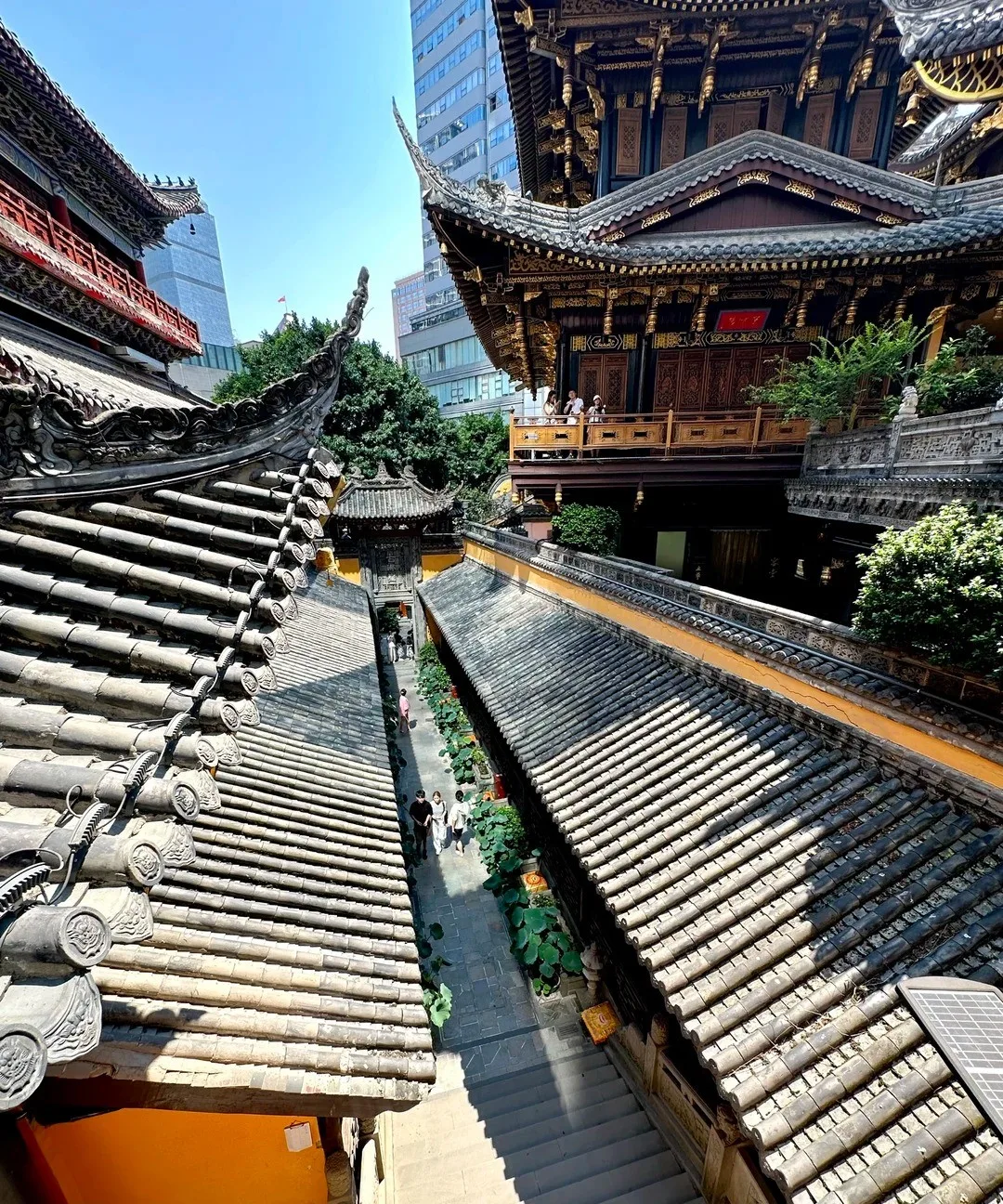
From the gate, the path runs through the Hall of Heavenly Kings, the Mahavira Hall, the arhat hall and the scripture library, with the Ancient Buddha Cliff tucked among the courtyards. A good rhythm: take in the scale of the main hall first, then linger in the arhat hall counting statues, and finish at the cliff carvings. The grounds are small — a careful visit is just over an hour — but the payoff is that you can drop in and leave whenever you like.
Practical Information
- Address: Minzu Road, Yuzhong District (core of Jiefangbei, next to Xiaoshizi)
- Hours: typically 08:00–17:30; confirm on site
- Tickets: roughly 10–20 RMB; check the on-site notice
- Getting there: Line 1 or 6 to Xiaoshizi station, a few minutes’ walk; also an easy walk from Jiefangbei
- Best season: year-round; weekdays and early mornings are quieter
A Few Tips
Counting the arhats is the house tradition — enjoy it, but don’t read too much into it. It’s an active religious site, so dress modestly and keep your voice down. If you have time, string Luohan Temple, Jiefangbei and Hongyadong into a half-day loop: the temple in the morning, lunch in Jiefangbei, Hongyadong’s lights at dusk. It’s a neat contrast between the modern city and old Chongqing.