At a Guangzhou Dim Sum Table, My Child Learned to Listen Before Speaking
Mornings in Guangzhou carry a trace of humidity. On the day we went for dim sum, it was only a little after eight, yet the street was already lively. People cycled past under the trees, and several families were waiting outside the teahouse. Inside, carts moved back and forth, teacups clicked lightly against tabletops, and the air smelled of shrimp dumplings, chicken feet, barbecue pork buns, and fresh tea. Even adults can get excited quickly in that atmosphere. My daughter sat down and clearly did not know where to begin looking.
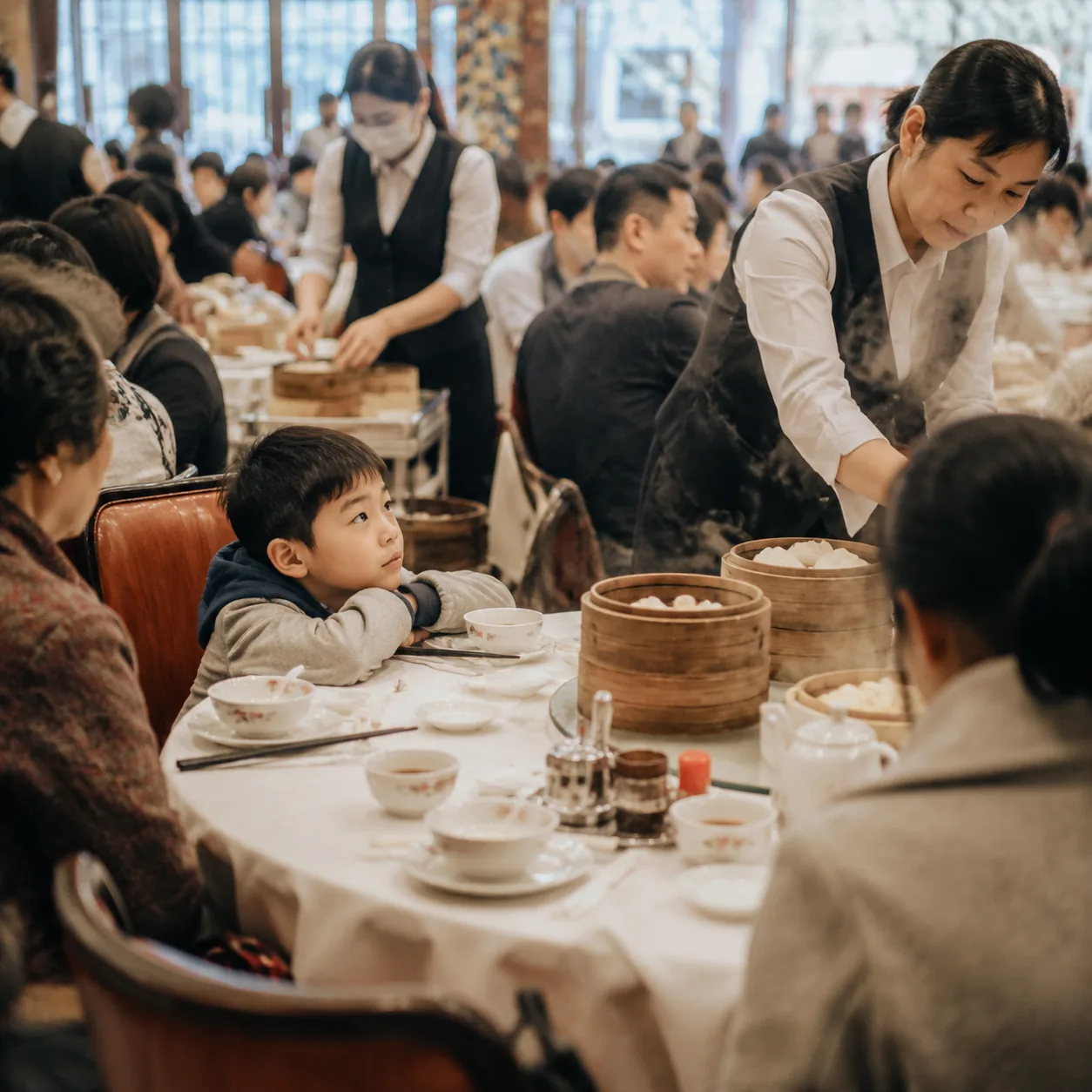
There were many words on the menu, and the people at the next table spoke quickly. My daughter leaned toward me and whispered, “Mom, how do I order?” I almost answered for her immediately. Just then, however, a grandmother at the next table was ordering with her grandson. The boy said brightly, “I want shrimp dumplings and barbecue pork buns.” Instead of deciding everything for him, the grandmother asked, “What tea would you like?” My daughter watched for a moment and then murmured to me, “They listen first, and then they speak.”
I nodded and told her, “Yes. You can also listen to how the servers speak to other people first.” So she quietly observed several rounds. She listened to the way the server asked about tea, confirmed the number of guests, and recommended dishes. She listened to how customers answered, how they said thank you, and how one person added, “Please don’t make it too hot.” What looked like simple daily exchanges suddenly became a very practical language lesson in my daughter’s eyes. She was not memorizing vocabulary or filling out a workbook, but she was learning how to catch key information, wait until someone finished speaking, and express her own needs clearly.
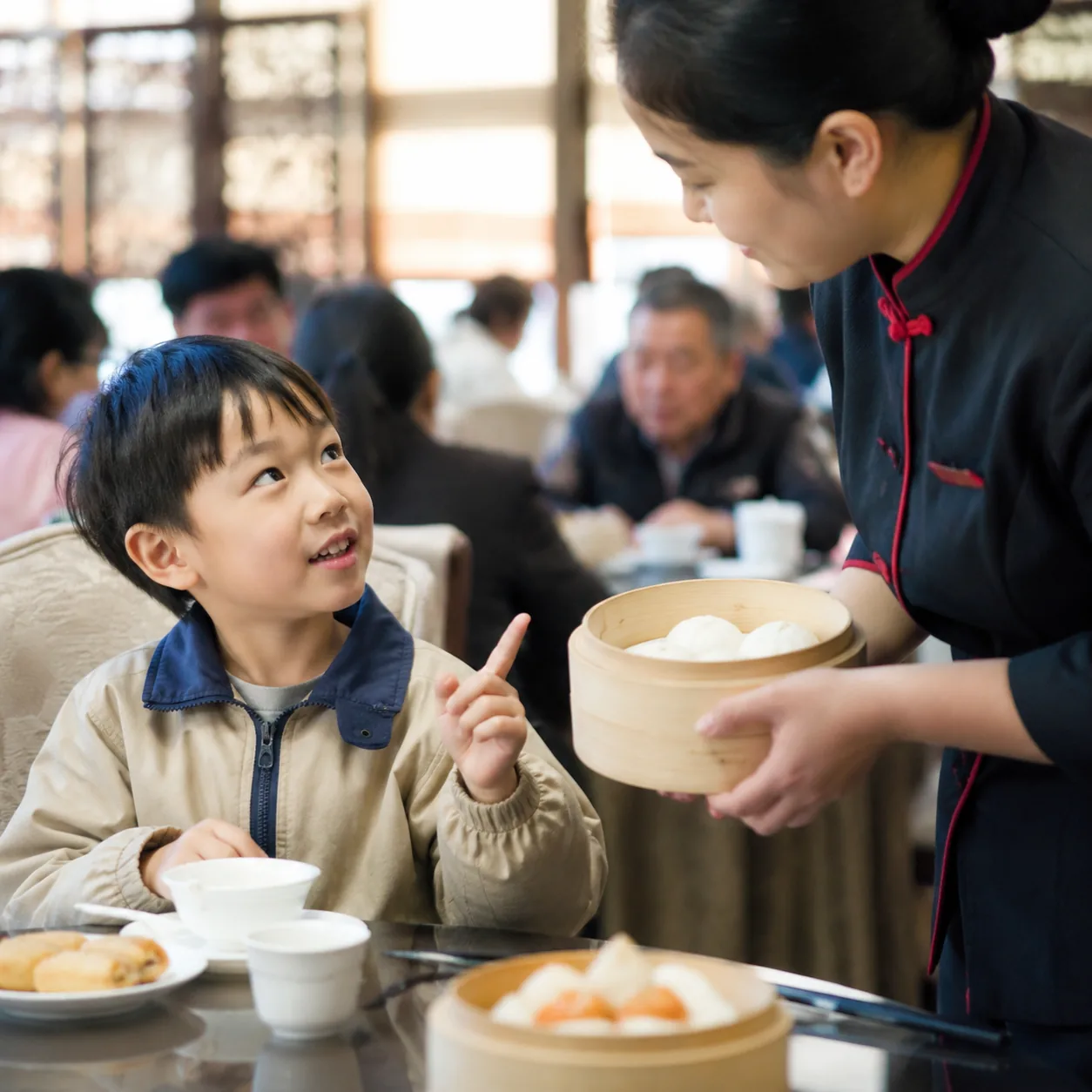
When it was finally our turn, she took a breath and asked seriously, “Excuse me, do you have custard buns that are not too hot?” The server looked surprised for a split second and then smiled. “Yes, we do. You order very well.” My daughter was so pleased that she sat a little straighter. What interested me even more was that she stopped rushing to speak and started paying attention to how other people spoke. She listened to dish names, to another child explaining that he did not like things too sweet, and to an older man calmly adding, “Let it cool for the child first.”
For many children, this ability—listening first and then organizing their own words—is more important than simply memorizing a few phrases. Guangzhou is a wonderful city for this kind of everyday Chinese communication because the table is not only a place for eating. It is a natural site for observation. A child can learn how politeness works, how tone softens a request, how to catch key points when people speak quickly, and how to make a need clear. They learn while eating, and they do not even feel that they are in class.
Halfway through the meal, my daughter held a barbecue pork bun and suddenly said, “So communication is not just talking all the time. Understanding first matters too.” That sentence stopped me for a moment. Adults often hope children will be brave and expressive, but we forget that good communication is half listening. This dim sum breakfast in Guangzhou taught that lesson so naturally. It did not tell her what she should do in the style of a classroom. It let her see, compare, and try it herself at a real table.
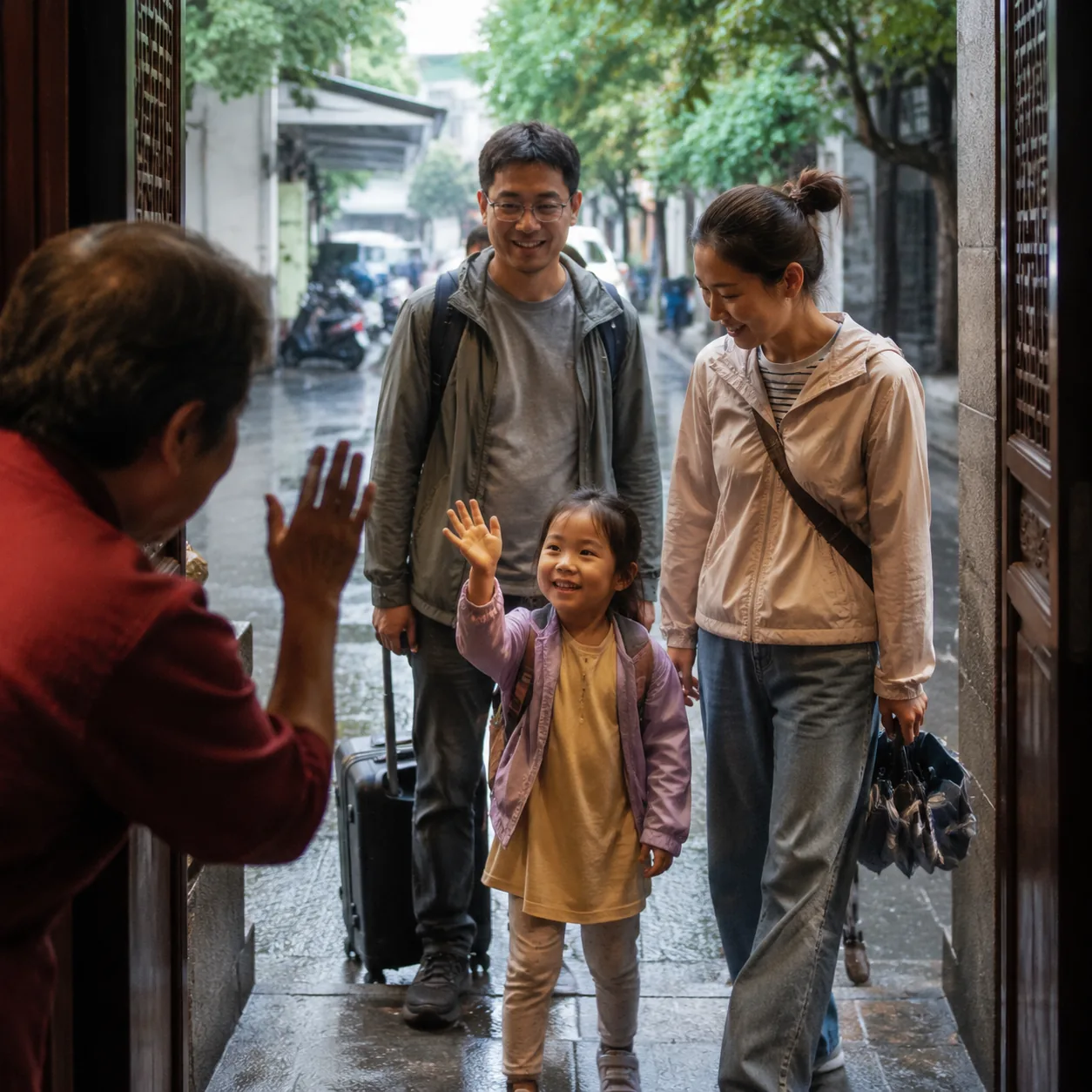
When we left the teahouse, the day’s heat was already rising from the street. She spent the walk repeating bits of conversation she had just heard between the servers and customers. At the door she even told one of the staff, “Thank you, goodbye,” on her own. The woman smiled and waved, and my daughter smiled back, as if she had tucked the whole morning’s confidence into her pocket. One reason China works so well for family travel is that so many daily scenes can become learning scenes. They are not staged. They are not performances created for children. They are already happening, and children learn simply by being allowed to join in.
If you bring a child to Guangzhou, I strongly recommend resisting the urge to order everything for them immediately. Give them one round of observation first, then teach a few practical expressions such as “Excuse me,” “Do you have this,” “Thank you,” and “Not too hot, please.” After they manage to say them aloud, ask them to retell the ordering process. For a child, that kind of practice is more valuable than taking a perfect photo of the table. They bring home not only flavors, but also a method for entering public life.