Travel Notes
 Chongqing Dazu Rock Carvings: The Last Great Peak of Chinese Buddhist Cliff Art
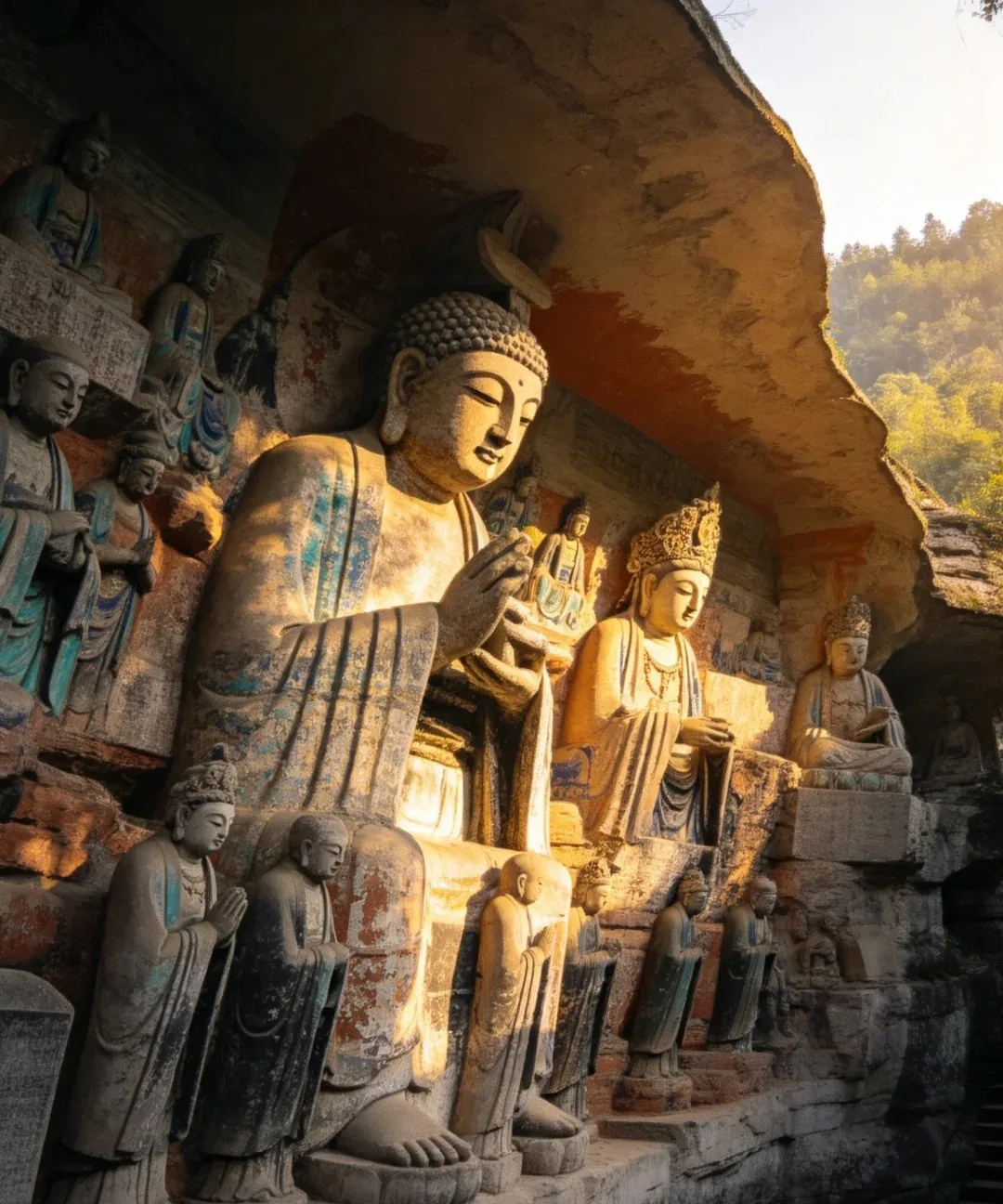
About 100 km west of central Chongqing, in Dazu District, a series of cliff carvings was cut from the Tang through the Song. It joined UNESCO’s World Heritage list in 1999 — China’s second inscribed cliff-art site after Dunhuang — which means if you want the closing chapter of Chinese cave art, Dazu is close to mandatory.
Why It Matters
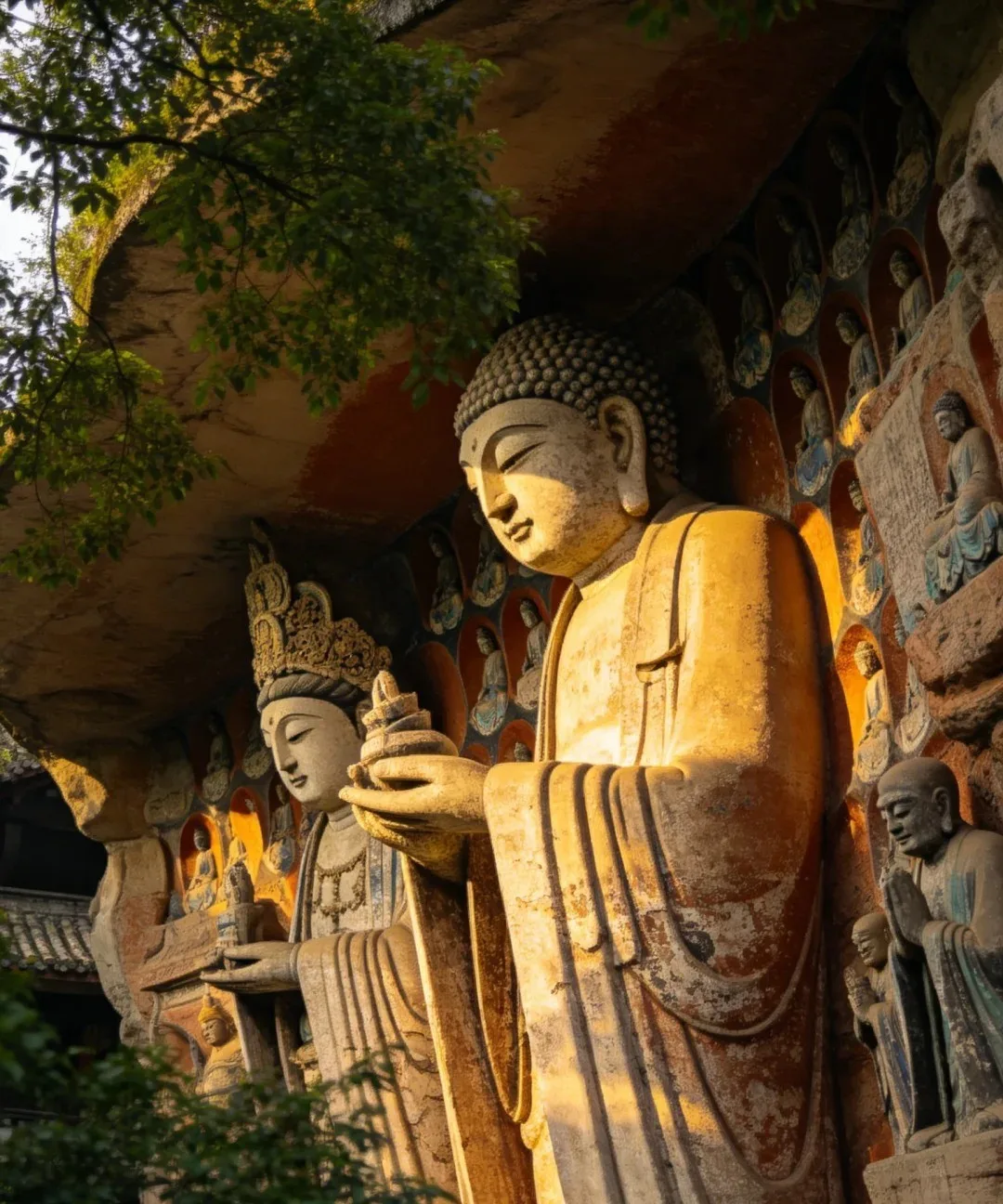
China’s cave art runs on a timeline: Dunhuang, Yungang and Longmen are the early and middle phases, and by the Ming-Qing it had basically stopped. Dazu fills the “late phase” slot — and holds its own against the earlier masters, nicknamed the last monument of world cliff art. Across Dazu there are 75 rock-carving sites, over 50,000 statues and more than 100,000 characters of inscription. Carving began in the late Tang (late 7th century) and peaked in the Song (10th–13th). The five sites inscribed in 1999 are Beishan, Baoding, Nanshan, Shizhuanshan and Shimenshan. It had already been a first-batch National Key Protected Site in 1961.
The Two Sites Most Visitors See
Most people come for two: Baoding Mountain and Beishan.
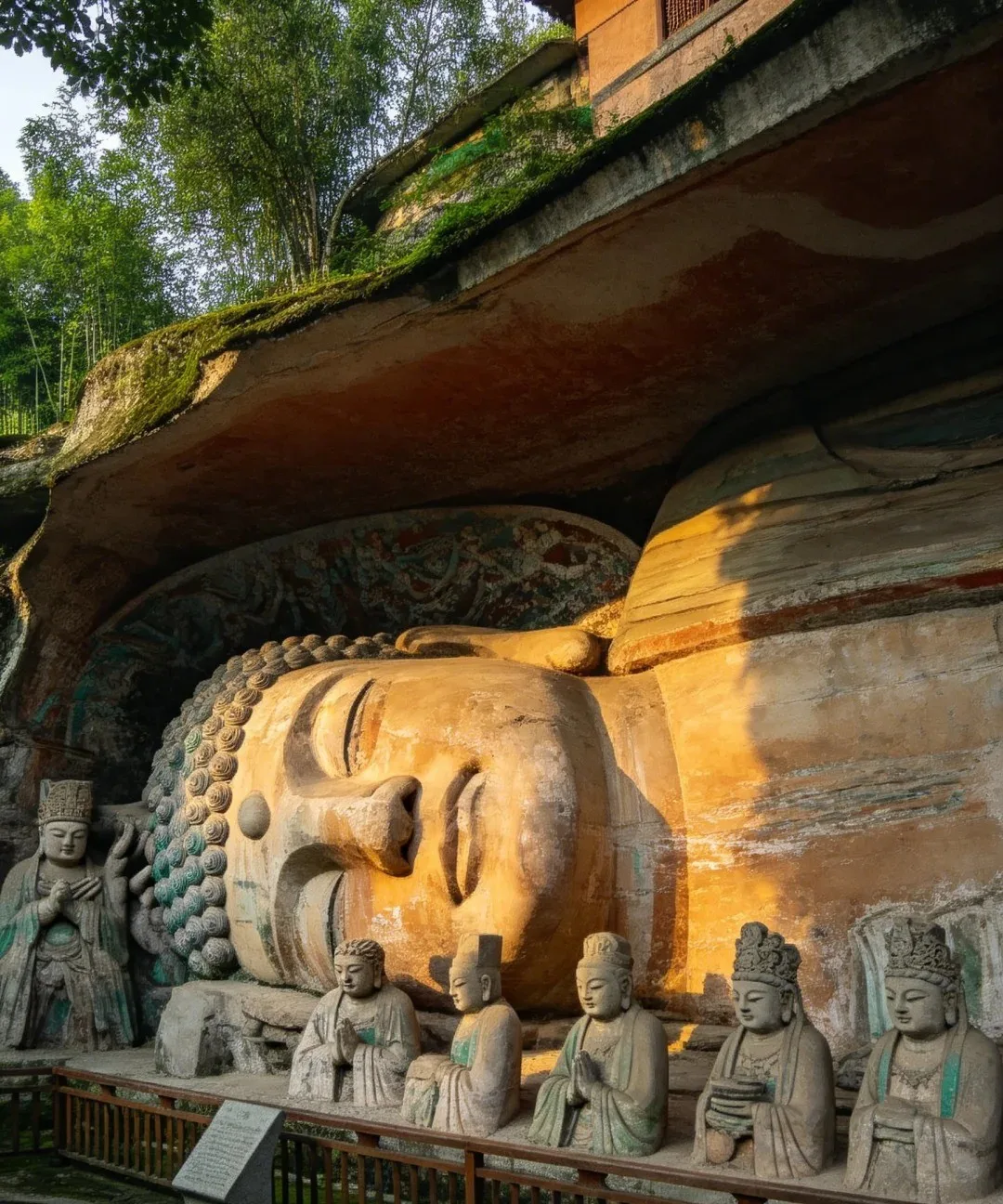
Baoding is the headliner. From 1174 to 1252, the monk Zhao Zhifeng spent seventy-odd years directing a tantric (Esoteric Buddhist) precinct here. What’s special is the storytelling — the sutras are carved as long, continuous picture-scrolls, so you read the cliff like a stone picture-book. The Thousand-Hand Guanyin, the Herding Oxen tableau and the Requital for Parents are signature pieces; it’s big, concentrated, and the safe first pick.
Beishan started earlier. In 892 (Tang Jingfu era), Wei Junjing, prefect of Changzhou, built Yongchang fortress here and “cut stone into images,” opening Dazu’s large-scale carving. Beishan’s Song-era statues are especially fine; the Revolving Sutra Library cave blends realism and idealisation and is considered the pinnacle of figure carving in China’s caves.
How to Do It
Dazu is about 100 km from the city core, doable as a day trip. From Chongqing North or West station, the high-speed train to Dazu South, then a shuttle to the scenic area is the easiest; long-distance buses also run from Chenjiaping or Caiyuanba. Baoding is the absolute core — give it a big half-day; Beishan can be tagged on the same day. Spring and autumn are most comfortable; in summer shield yourself from heat and sun at the open-air carvings.
Practical Information
- Location: Dazu District, Chongqing (Baoding and Beishan are the main open sites)
- Tickets: a Baoding + Beishan combo ticket runs roughly 120–150 RMB; confirm on-site; open generally about 08:30–18:00
- Getting there: high-speed rail from Chongqing North/West to Dazu South, then a scenic shuttle; or long-distance bus from Chenjiaping/Caiyuanba
- Best season: spring and autumn; summer — heat and sun protection
- Guides: the carvings are story-heavy; a guide or audio tour pays off
A Few Reminders
These are open-air originals, and weathering is irreversible — bring shade and rain gear, and don’t touch the statues. Almost every group has a sutra-story behind it; without explanation you’ll mostly see stone, so a guide turns the rock into narrative. Dazu is over an hour from the city, so don’t cram it into the same day as downtown sights — give it its own day and you’ll be far more relaxed.