武漢の熱干面の屋台の前にできた行列が、私に街の気性の読み方を教えてくれた
The first time I queued for hot dry noodles in Wuhan, it was on a street that had not fully woken up. The sky was pale gray, rolling shutters along the road were half open, electric scooters slipped through gaps between people, and a crooked line had already formed in front of the breakfast stall. The aroma of sesame paste arrived before anything else, like a hand pulling people out of sleep. The vendor did not greet anyone or explain the process. He lifted noodles from the pot, shook them twice, dropped them into a bowl, added sauce, scallions, and diced pickled radish, moving as if he had long ago agreed on a rhythm with the city. Standing at the end of the line, I felt I was not merely waiting for a bowl of noodles. I was waiting for Wuhan to show me an entrance.
This queue was different from queues I had seen in other cities. It was neither quiet nor chaotic, neither gentle nor rude. Someone talked loudly on the phone while waiting, yet moved forward by exactly half a step when his turn came. Someone bought three bowls for coworkers, stating the flavors first, then saying no chili, and finally adding, “make it quick.” People behind him did not look annoyed. They simply shifted aside so those carrying noodles could leave. The line felt alive. It was maintained not by posted instructions but by everyone’s shared reading of space, speed, and temper.
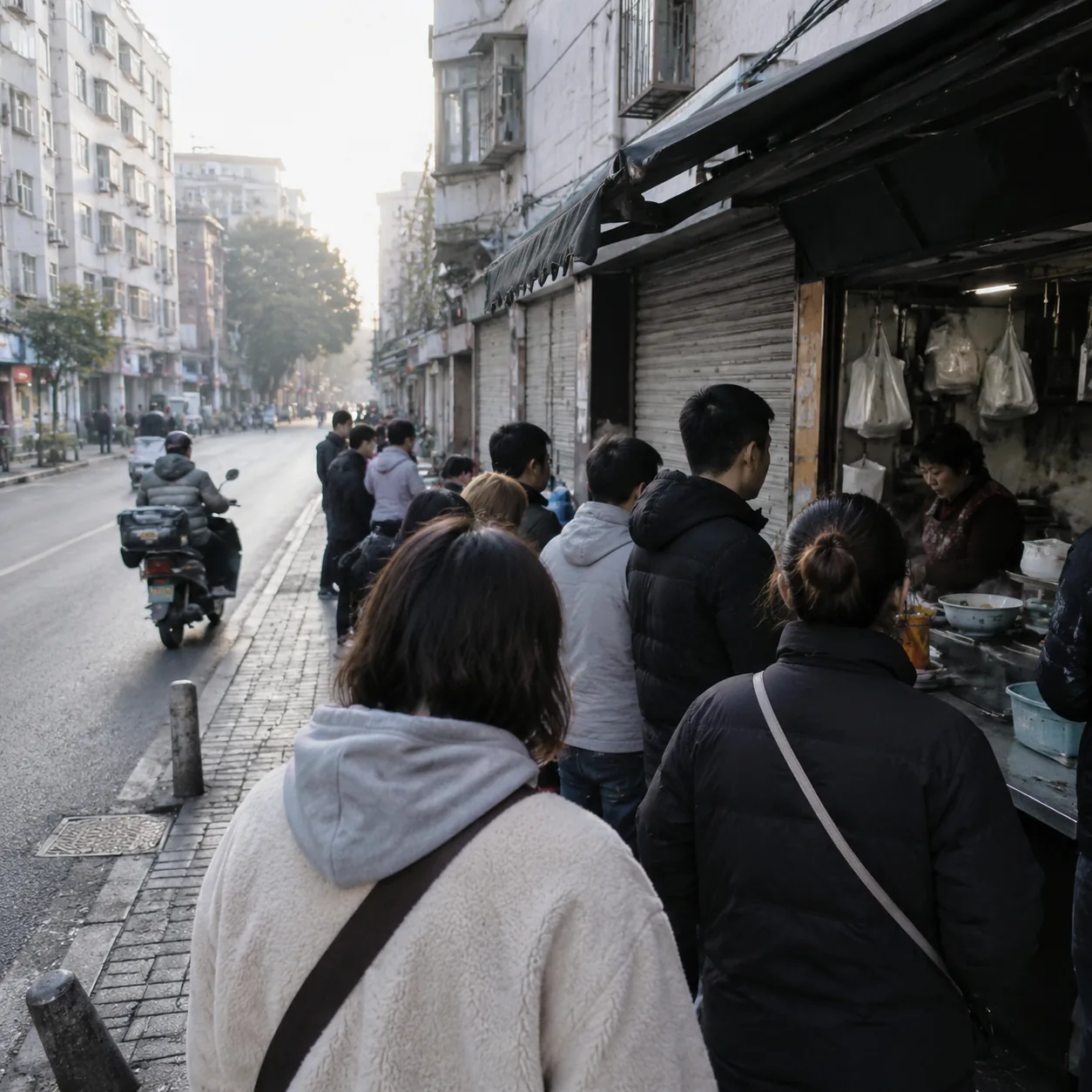
The breakfast stall quickly taught me that Wuhan is not a city that overpackages things in politeness. Its warmth often has direct edges, like the sesame paste in hot dry noodles: dense, sticky, and thick, needing to be mixed while hot. If you hesitate too long in front of the stall, the vendor may look up and ask what you want, sounding impatient when he is really pushing the choice into your hands. Care here does not always arrive softly. It may appear as a reminder not to block the way, a motion that pushes the bowl closer to your hand, or a stranger noticing your first attempt and saying, almost casually, “mix it well, or the bottom will be too salty.”
When my turn came, I hesitated for a second because I had not clearly heard how the people ahead ordered. The vendor looked at me, I looked at the noodles in the pot, and the line kept breathing behind me. I asked for a regular bowl. He asked whether I wanted chili, and I said just a little. He did not comment on my nonlocal accent. He simply placed the seasonings with practiced steadiness. When the bowl came toward me, steam rose into my face. Before I had time to look for a seat, someone behind me said, “carry it away before you look.” There was no malice in it, but it felt very Wuhan. It put efficiency in front of me and pulled me out of the half-beat delay of a tourist.
Holding the bowl, I moved to a small table nearby and realized that the first step with hot dry noodles was not eating but mixing. When I pushed my chopsticks in, the resistance was obvious. The sesame paste clung to the noodles as if unwilling to step aside easily. Everyone around me mixed quickly, turning the wrist so noodles rose from the bottom, the color became even, and scallions and pickled radish spread through the bowl. I copied them and used more force, my chopsticks tapping lightly against the rim. In that moment, hot dry noodles seemed much like Wuhan. It does not take responsibility for making you like it effortlessly. It asks you to participate, to apply some strength, before the aroma truly opens.
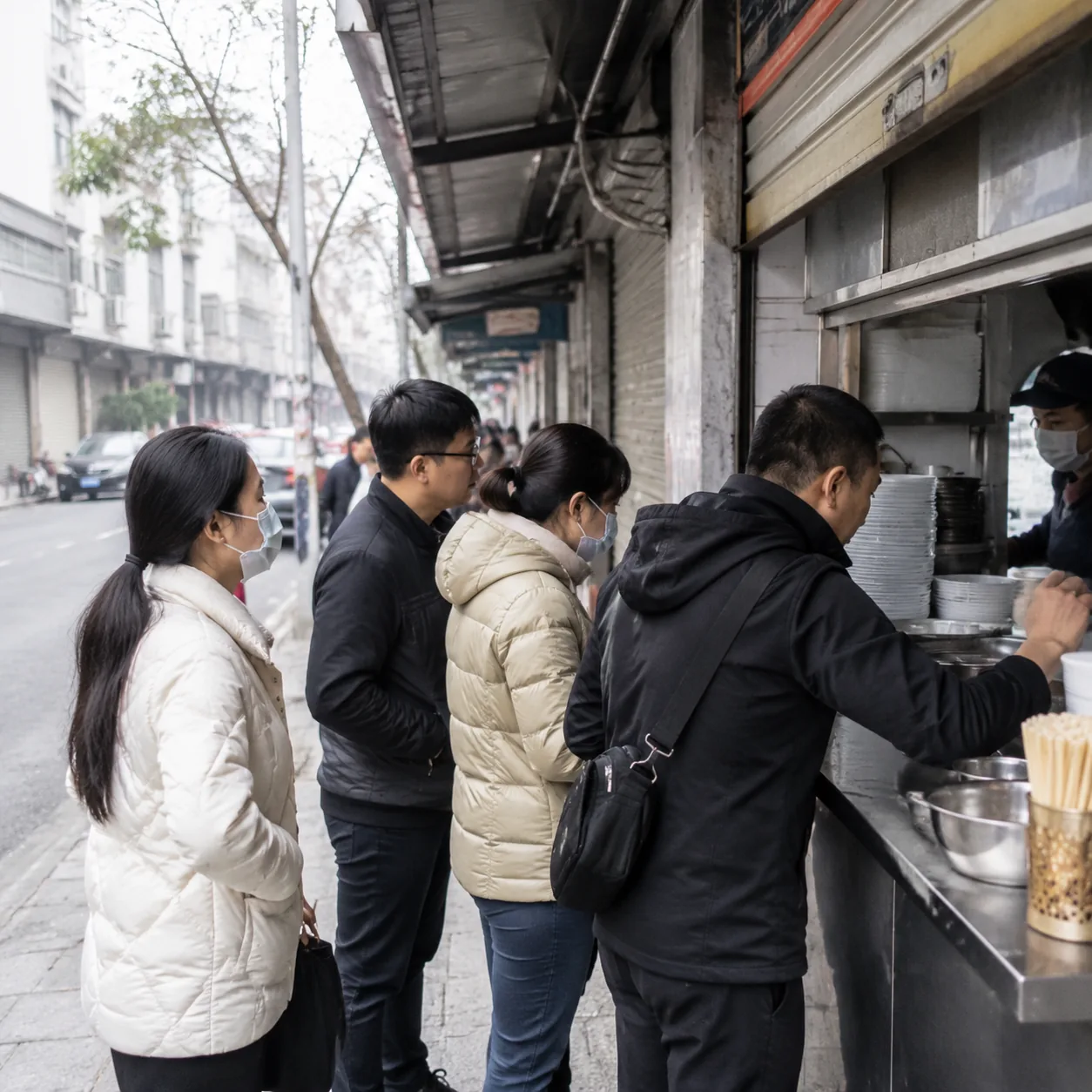
While queuing, I noticed a small detail: people in Wuhan seemed good at switching between urgency and ease. When buying noodles, everyone moved cleanly and spoke briefly but accurately. Once they reached the tables, they could suddenly slow down, eating and talking, even laughing loudly at a joke. The city’s temper showed itself in that switch. It was not always rushing, and it was not always relaxed. It moved fast when speed was needed and truly stopped when stopping was possible. For an outsider, the rhythm first felt a little hard, like noodles not yet mixed. But once I followed it, I found an unpretentious ease inside.
The street was not pretty. Some signs were new and others old, the ground held marks from last night’s rain, plastic stools were stacked beside the stall, and a speaker from a nearby shop played a slightly distorted advertisement. Yet I liked this undecorated morning more and more. It did not hide the city’s character. It placed the most immediate parts in front of me: people hurrying to early shifts, parents taking children to school, shopkeepers eating a bowl before opening, and elderly residents in slippers coming downstairs for noodles. Everyone carried their own business, yet for a short time they formed the same line before one pot.
I used to begin understanding a city through attractions, metro lines, and popular districts. Those are useful, but they can turn a city into an organized map too easily. The queue for hot dry noodles in Wuhan offered another entrance: watch how people wait, urge, make room, and cooperate without explaining too much. The order in the line was not a quiet order. It was an order with sound and friction. People interrupted, corrected, laughed, teased, and helped pass tissues. On the surface it was lively; underneath it ran a shared sense of measure.
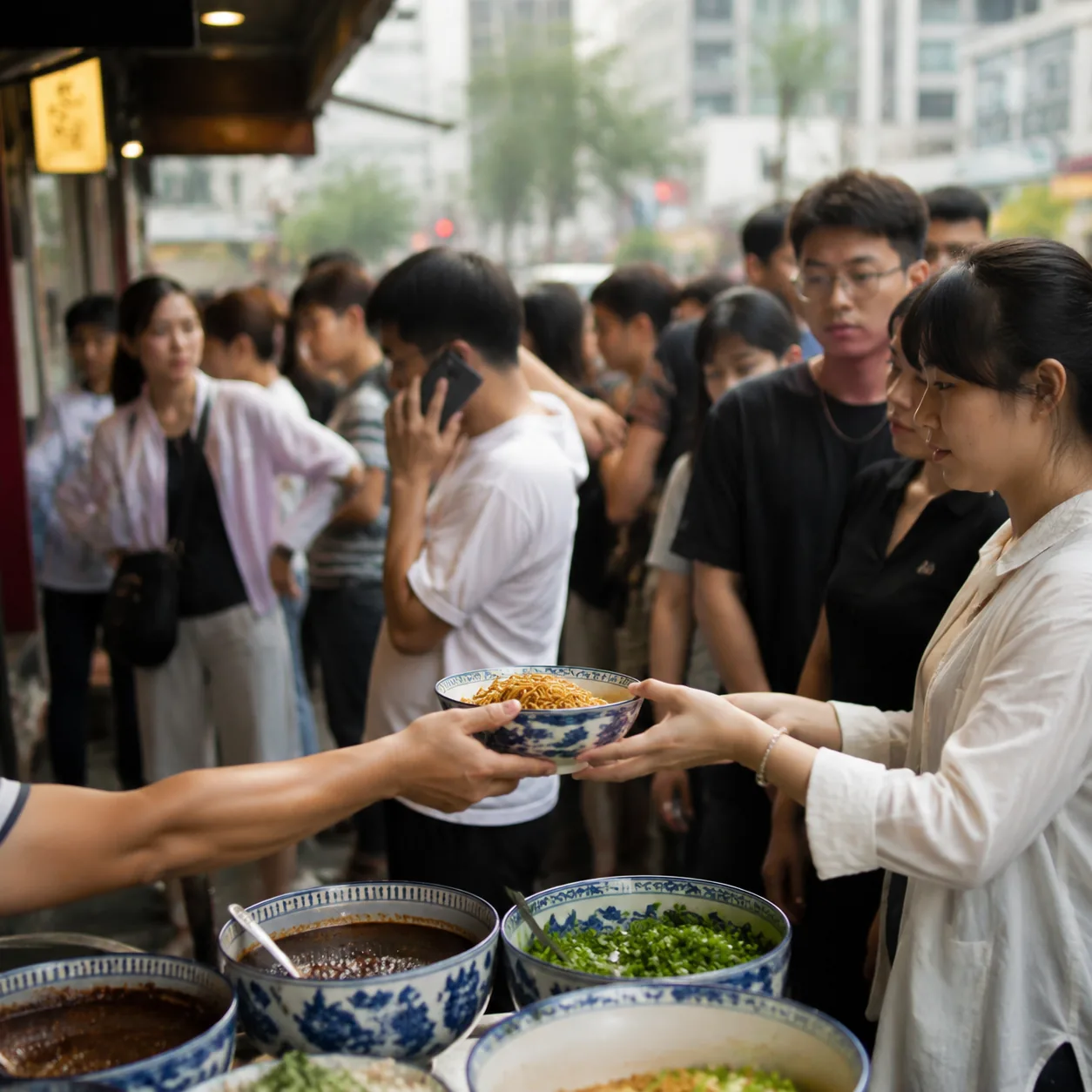
Halfway through the bowl, I understood why hot dry noodles suit a Wuhan morning. They are fast enough to keep pace with work and school, yet substantial enough to make a person feel grounded for the day. This is not food that asks you to slowly admire its plating, nor does it prove itself through delicate posture. It hands you a bowl, asks you to mix quickly, eat quickly, and continue with what you need to do. Yet within that speed, it is not careless. Sesame paste, alkaline noodles, chili oil, and scallions each have their place; remove one, and the balance feels wrong.
An older man beside me noticed that I was still not mixing skillfully. He pointed to the bottom of the bowl and said I should lift from underneath, not just stir the top. Then he went back to eating his own noodles, as if he had completed a very small task. I followed his advice, and the flavor did become much more even. That moment gave me a better understanding of Wuhan’s directness. It is not direct in order to show dominance. Many things here simply do not require a roundabout path. If you do something wrong, someone reminds you. If you block the way, someone tells you to move. If you need help, someone may hand you a solution after a sentence that sounds blunt.
After finishing, a trace of sesame color remained at the bottom of the bowl. I returned it to the collection area, while the vendor was already handling the next batch of noodles and the line had changed its people. Those who had queued with me scattered in different directions, like a brief gathering of wind. The street grew brighter, buses entered the stop, shops opened one after another, and the city moved from breakfast speed into the official day. Standing by the road, I saw a new line form and suddenly felt that the repetition was not monotonous. It was the city’s daily startup motion: simple, forceful, and punctual.
When traveling, we often want to find the most distinctive symbol of a place. Before arriving in Wuhan, I thought that symbol might be the Yangtze River Bridge, Yellow Crane Tower, the night view along the riverfront, or a historic street. They certainly represent part of Wuhan. But the queue in front of the hot dry noodle stall gave me information closer to the skin. It showed how the city handles morning, how it pushes people from sleepiness toward action, how it keeps measure inside crowding, and how an unglamorous bowl of noodles mixes out the rhythm of shared life.
Over the next few days, I ate hot dry noodles at several different street corners. Each stall tasted different: some had thicker sauce, some brighter chili, some crunchier pickled radish. The queues had different personalities too. Some felt more neighborly, while others resembled temporary battlefields. But the common pattern remained: no one wanted to waste the morning on excessive explanation, and no one truly pushed strangers away completely. Wuhan’s temper is like its breakfast: hot, direct, heavy in flavor, but not without delicacy. Its delicacy hides inside speed, in a reminder, a small shift of space, or a pair of chopsticks pointing you toward the bottom of the bowl.
When I left Wuhan, I did not carry away a perfect itinerary. I carried a way of reading cities. To understand a city’s temper, watch one of its most ordinary morning queues: how people line up, order, treat someone who is half a beat slow, and briefly share the same pot, window, and small table. A city’s character is not always written in slogans, nor is it always hidden in grand buildings. Often, it stands at a breakfast stall and is handed directly to you through the speed, heat, and weight of a bowl of hot dry noodles.