惣菜店のガラスケース前で聞かれた「何人で食べますか」——その一言で、中国ではグラムだけで頼んではいけないと初めて学んだ
The first time I tried to buy dinner from a neighborhood deli in Nanjing, I stood in front of the glass counter with almost no idea what I was doing. It was an ordinary weekday evening. The sky was not fully dark yet, and the street-side shops had all switched on their lights. The deli’s sign glowed warm yellow, and a thin layer of steam fogged the glass. Inside the case, braised chicken legs, duck wings, beef shank, kelp knots, dried tofu, and cold dishes were arranged in neat rows. The smell of soy-braised meat, star anise, fresh steam, and chopped scallions from the cutting board all mixed together into something deeply grounding. The customers ahead of me spoke quickly: “Half a duck.” “Slice some of this.” “Mix a portion for two people.” The boss lady’s knife never seemed to stop. Weighing, chopping, boxing, and tying bags all happened in one smooth sequence. As a foreigner still adjusting to the rhythm of Chinese neighborhood life, though, I could think only in the clumsiest possible way: how many grams of this, how many grams of that.
When it was finally my turn, I pointed to several braised items that all looked good and prepared to list them one by one. The boss lady glanced up at me, but instead of reaching for the knife, she asked, “How many people are eating?” I froze for a second because the question did not fit my old habit at all. In my mind, buying deli food meant deciding exact portions myself and having the shop follow my instructions. Seeing my pause, she added, “Two people? Three? I can help you match it, otherwise you’ll probably buy too much.” That sentence made me realize immediately that I was about to fall into a very typical misunderstanding: treating the deli counter as a place for pure weight-based transactions, while missing that people here were also judging portions according to how the meal would actually be eaten.
I told her honestly that it was for two people, and she immediately began assembling the order for me: slice the beef shank thin, because it works both with drinks and with rice; do not take too much dried tofu, just enough for flavor; add a small box of cucumber salad to lighten the texture; and if we did not want to make soup that evening, half a braised chicken would already be enough. She talked while chopping, her knife hitting the board in a quick, crisp rhythm, and she moved so fast I could barely interrupt. What was even more interesting was that nobody waiting behind me found this strange at all. One customer simply said, “Family of three.” Another said, “Just me tonight, not too much.” The owner adjusted her suggestions immediately to fit the answer. At that moment I finally understood that what gets processed quickly in a deli is not only meat and vegetables, but the proportions of each household’s dinner that evening.
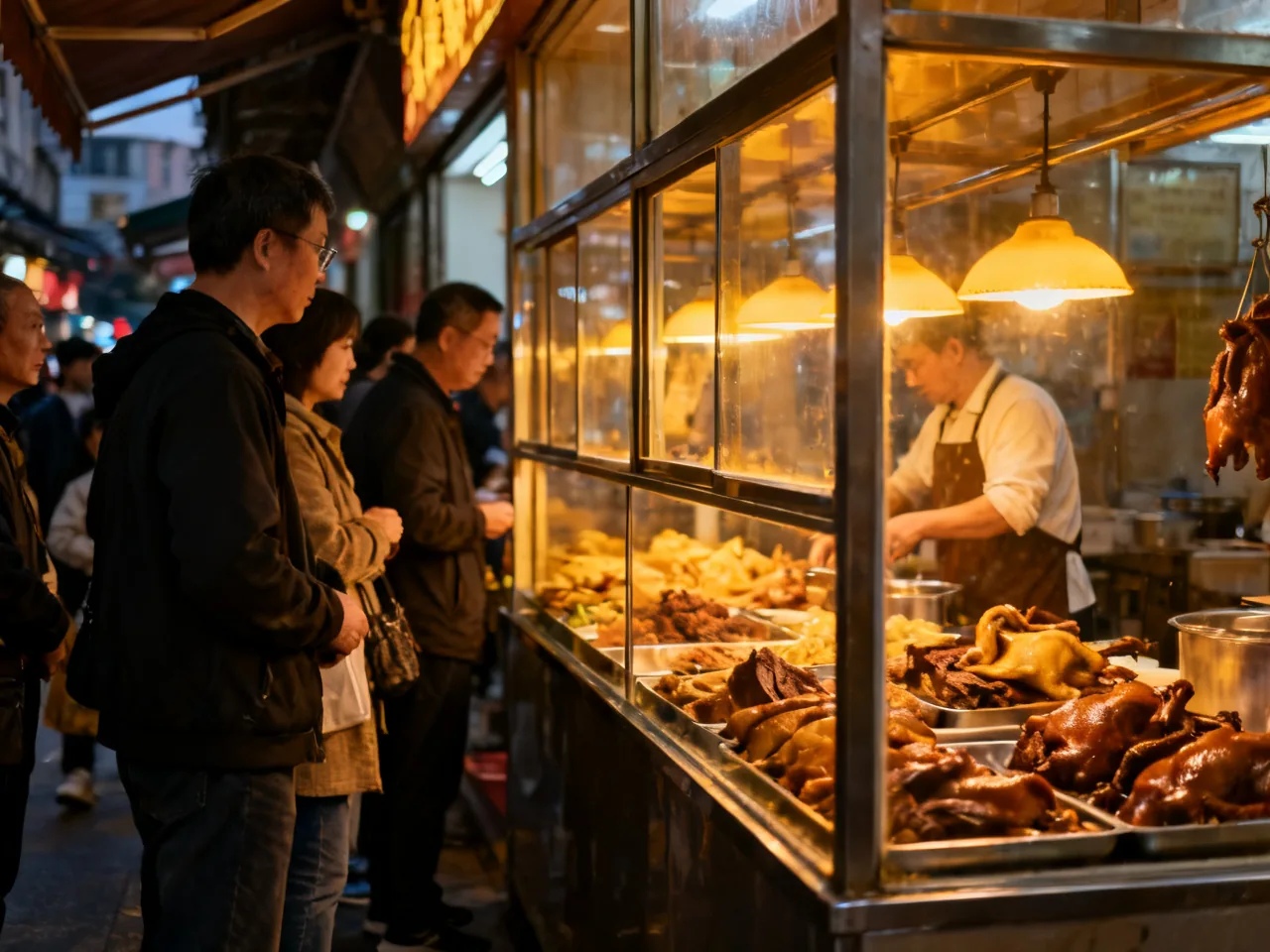
After a few more visits, I gradually saw how practical this habit of asking the number of diners really was, and how deeply it fit the logic of Chinese home-style meals. Deli items are often not the whole dinner. They appear alongside rice, porridge, greens, soup, or another hot dish already being made at home. So the same amount of beef means something completely different if one person is eating it with noodles than if a family of three is sharing it with two other dishes. When the boss lady asks first how many people are eating, she is not only helping with the total cost. She is helping prevent imbalance at the table: too much meat and too little vegetable, or a spread that looks generous but becomes greasy by the end. What she knows is not abstract weight. It is whether a combination feels enough, whether the weather calls for lighter or heavier food, and whether a household is in the mood to cook anything else that night. For me, this was a very domestic decision system I had encountered only rarely before.
I also started noticing how other customers spoke. People familiar with the place rarely ordered the way I had on my first visit, stiffly naming exact weights for each item. Instead they described their needs in the language of daily life: the older person at home has weak teeth, so slice it thinner; the child still has homework, so make it quick and simple tonight; guests are coming, add one more meat dish; the weather is hot, so give us more cold vegetables. After hearing that, the owner could almost always put together a decent dinner very quickly. I found this fascinating because it shows that in many eating situations in China, buying food is not a matter of mechanically adding up menu items. It is about folding headcount, taste, timing, effort, and even everyone’s remaining energy for the day into a few short sentences.
Once I almost overbought again. I was very hungry that evening, and when I saw the braised duck, cold wood-ear salad, and chili tripe strips, I wanted all of them and started ordering too much. The boss lady did not weigh anything immediately. Instead she asked, “Do you already have other dishes at home?” I told her there was a pot of fresh rice and a tomato-and-egg soup in the fridge. She laughed and said that in that case I did not need so much meat, otherwise we would not finish it and the texture would be worse the next day. At first I almost felt she was talking herself out of a sale. But when I set everything on the table at home, I saw that the reduced amount was exactly right, with hardly any leftovers. That kind of instinct—the ability to tap the brakes for you—comes only from someone who has spent a long time standing inside the rhythm of neighborhood dinners.
Following the same way of reading a scene, [中国街边食物怎么点更自然] and [中国午饭高峰里的小判断] also reinforce this habit from other angles.
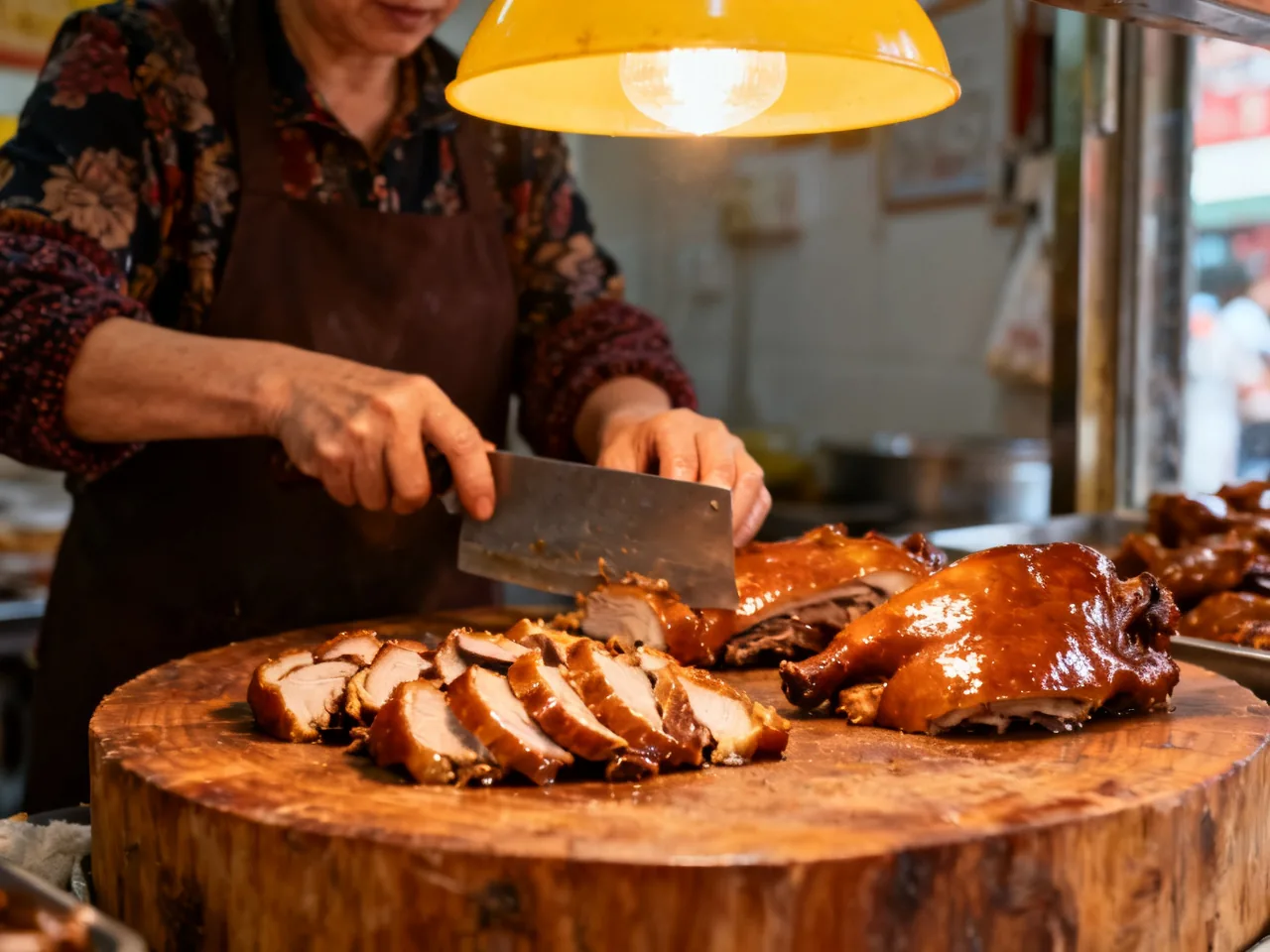
Now, if a friend newly arrived in China asks me what is most worth learning first before visiting a neighborhood deli, I would say it is not memorizing food names, and not rushing to master exact weight-based ordering. It is learning to explain clearly how many people will eat and what else will be served with it. That is not lazily handing the decision over to the shopkeeper. It is recognizing that she understands the portion logic of this scene better than you do. To me, that one question at the glass deli counter—“How many people are eating?”—was like a small threshold. Once I crossed it, I finally began to understand that what many everyday eating situations in China value is not absolute standardization but proportion that feels just right. Enough, but not excessive. Varied, but not wasteful. Paying for convenience, while also shaping a dinner that truly feels like a meal. Since learning that, every time I carry a bag of prepared dishes home, I feel I have not only bought supper. I have understood one more piece of the local language of daily life.