広東の朝茶:食べるだけではなく、ひとつの生き方
I’ve heard people say “yám chàh” in Cantonese and assume it just means drinking tea. It doesn’t.
It means going to a teahouse, ordering a pot of tea, calling for a few bamboo steamers of dim sum, and sitting for two or three hours with family or friends. In Guangzhou this is called “tàan jóu chàh” — the character 嘆 carries a sense of savoring, of taking your time. Morning tea isn’t fast food or a working lunch. It’s a ritual.
The core of Cantonese morning tea is “yī zhōng liǎng jiàn” — one pot of tea, two items of dim sum.
Tea comes first. Common choices: pu-erh, tieguanyin, chrysanthemum, jasmine. The first thing you do when the teapot arrives is pour for the elders at the table — that’s the etiquette. When the pot runs dry, tilt the lid to one side; the server will see it and come refill without being asked.
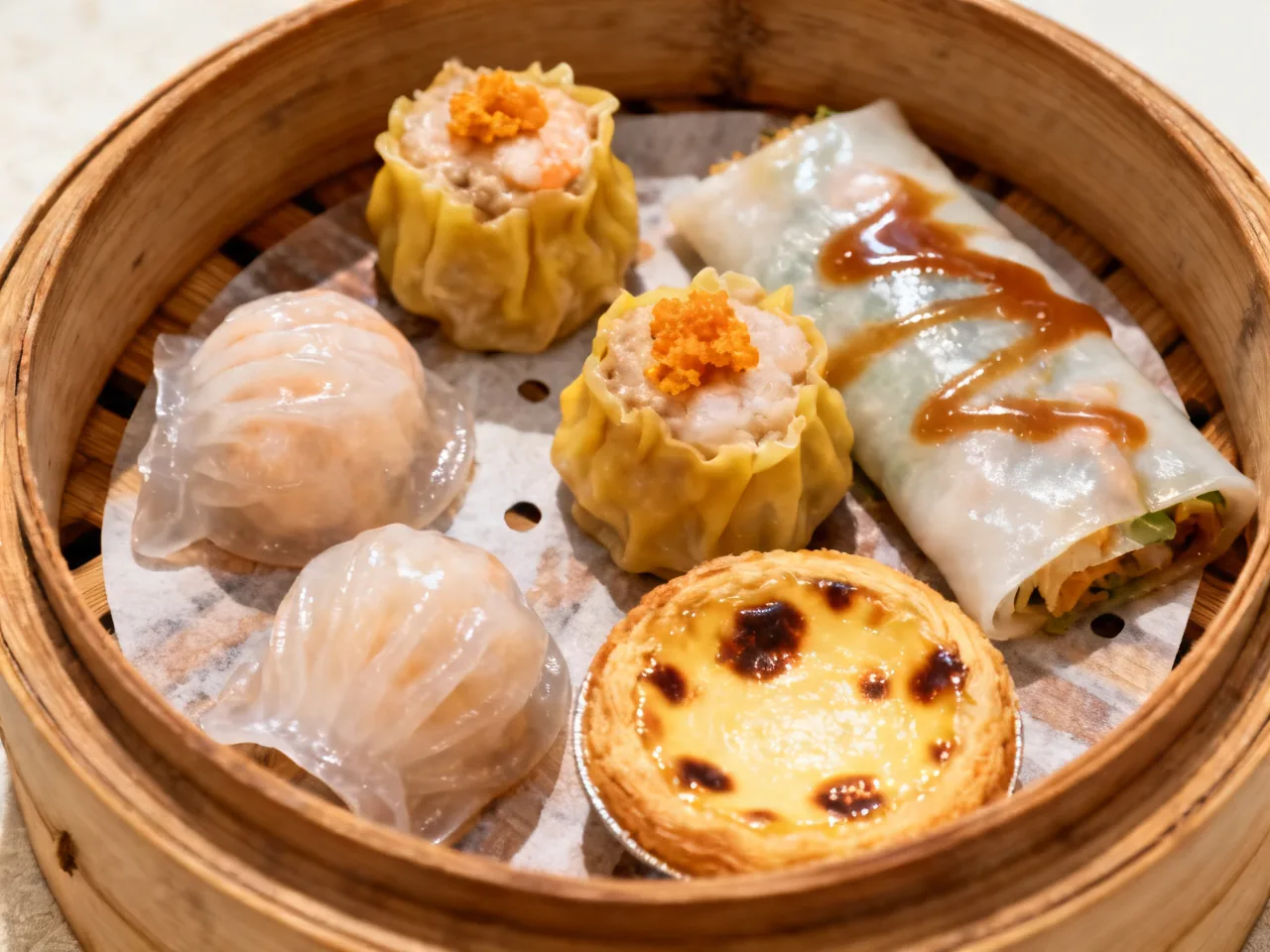
The dim sum is the main event. Classics: har gow (translucent shrimp dumplings), siu mai (pork and shrimp topped with crab roe), char siu bao (fluffy buns filled with honey-glazed pork), cheung fun (rice noodle rolls with shrimp or pork), turnip cake (pan-fried until golden), egg tarts (flaky or shortcrust pastry with egg custard).
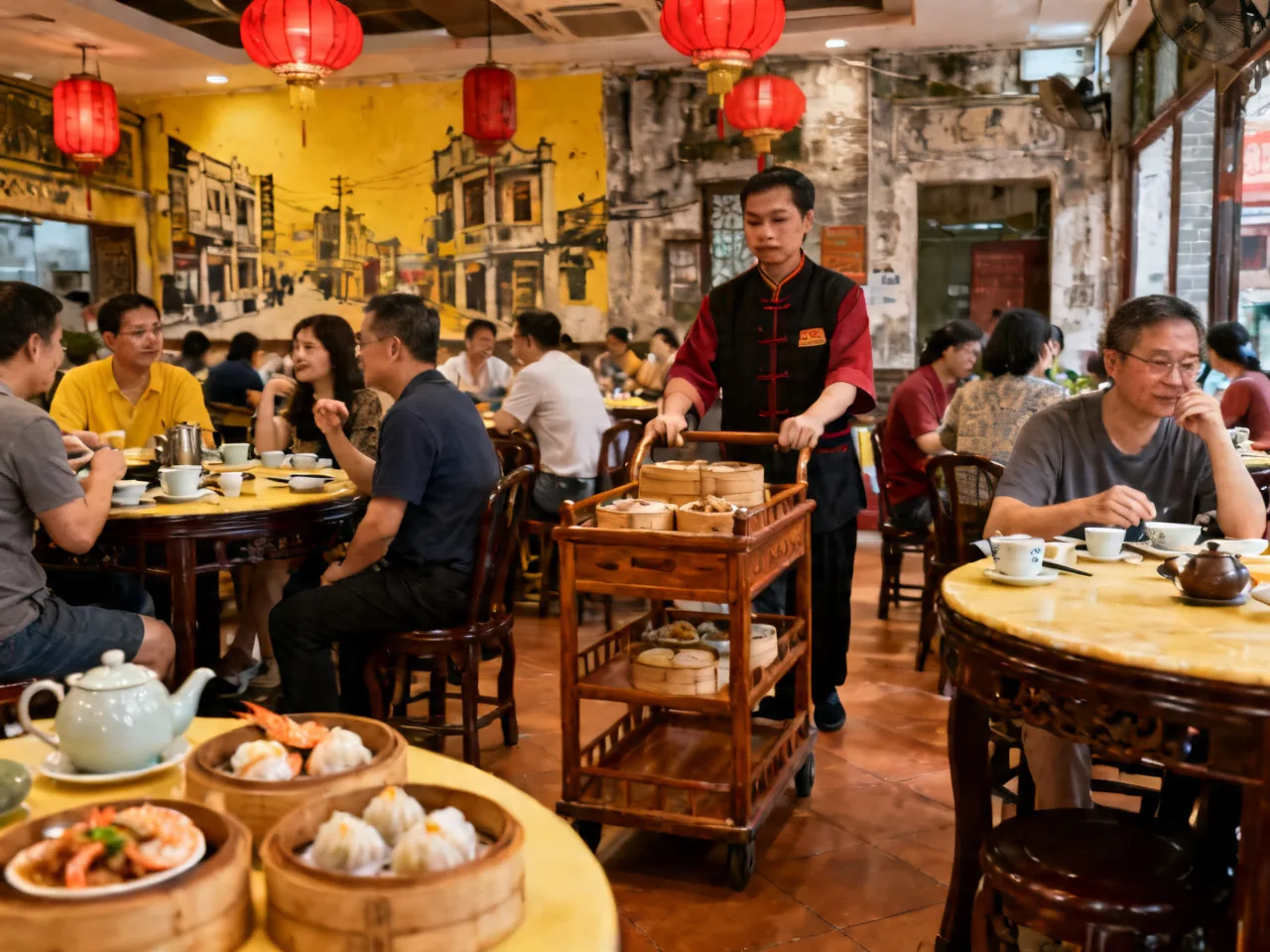
Old-style teahouses use carts; newer ones use menus. These are two very different experiences.
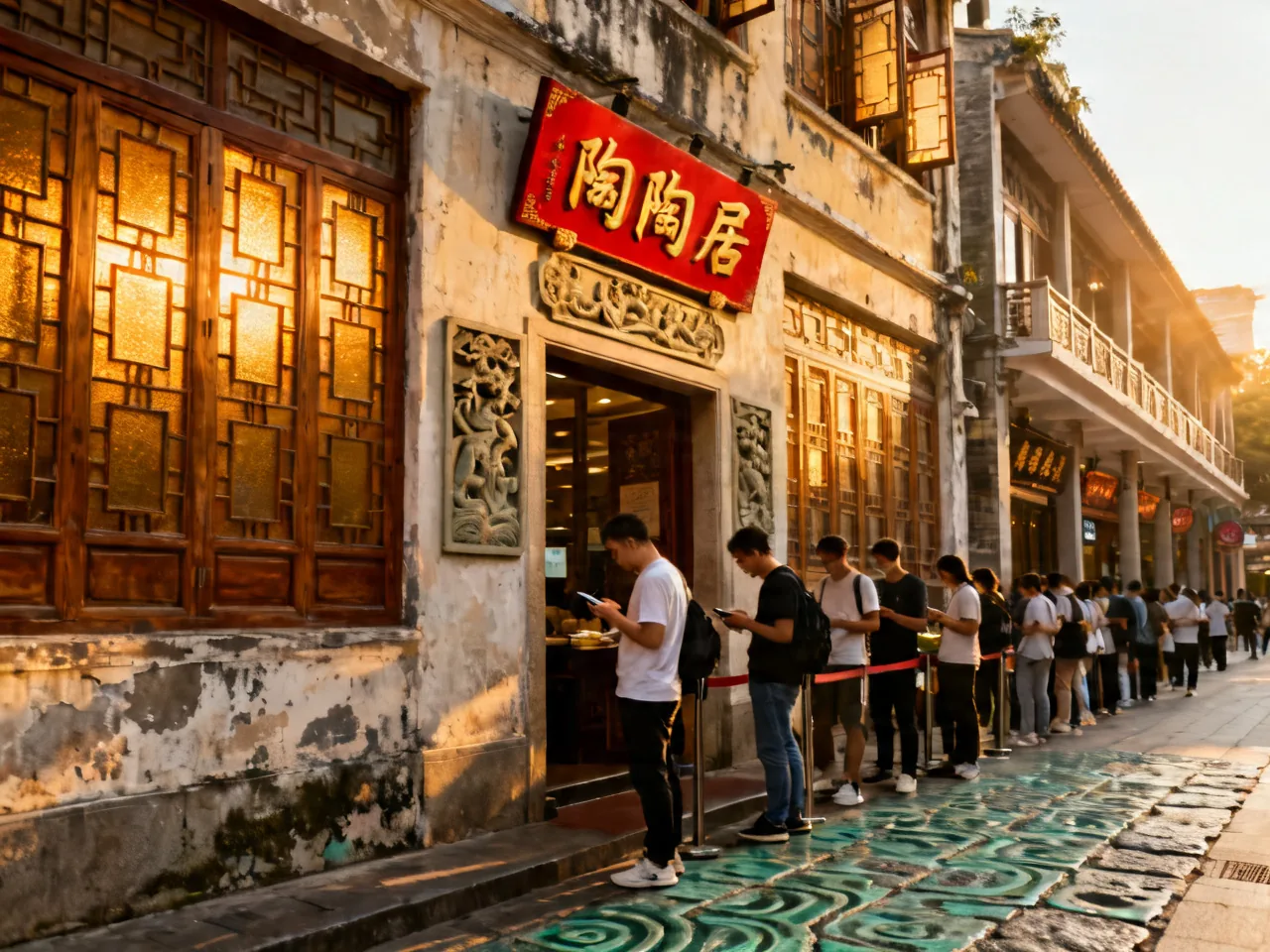
Cart service: servers wheel trolleys between tables loaded with dim sum. You flag down what you want; they stamp your order slip to keep count. It’s lively and unpredictable — sometimes you wait half an hour for the dish you want, sometimes it appears the moment you sit down. Old Guangzhou institutions like Taotao Ju and Lianxiang Lou still use carts.
Menu ordering: modern teahouses switched to paper or tablet menus, with the kitchen producing everything to order. More efficient, but you lose the pleasure of the hunt.
I prefer the cart system. Not just for the atmosphere — for the uncertainty. Not knowing what the next trolley will bring is part of the experience.
Timing matters for Cantonese morning tea.
Authentic morning tea starts at six or seven in the morning and runs until two or three in the afternoon. The earlier you go, the more you feel old Guangzhou — retired elders, grandparents with grandchildren, middle-aged men with newspapers. After ten, younger people and tourists fill the room; it gets louder, but that quiet morning feeling fades.
A few etiquette details worth knowing: when someone pours your tea, tap two fingers lightly on the table as thanks — this gesture reportedly originated as a secret signal used by a Qing dynasty emperor traveling incognito. When a steamer basket is empty, flip the lid upside down to signal it’s done. When asking for the bill, say “màaih dāan” — not the Mandarin “mǎi dān.”
Guangzhou is the origin point, but Hong Kong, Shenzhen, and Foshan all have their own styles.
Guangzhou picks:
- Taotao Ju (Dishifu Road): century-old institution, cart service, har gow and char siu bao are the signatures; book ahead on weekends
- Lianxiang Lou (Dishifu Road): strongest old-Guangzhou atmosphere, affordable, cart service, opens at 7am
- Dim Dou Dak: reliable chain, excellent cheung fun and egg tarts, good for first-timers
Hong Kong picks:
- Yung Kee (Central): the benchmark for char siu in Hong Kong
- Tim Ho Wan (Mong Kok/Causeway Bay): Michelin one-star, worth the queue; flaky egg tarts and har gow are essential
Budget: ¥50-80 per person at Guangzhou institutions; HK$150-250 at Hong Kong teahouses.
Practical Notes
- Best time: weekday mornings 7-9am for the most authentic atmosphere; weekends are busier
- Reservations: essential at Guangzhou institutions on weekends — call a day ahead
- Must-order: har gow, siu mai, cheung fun, egg tart — the essential four
- Tea cover charge: most Guangzhou teahouses charge ¥5-10 per person, includes tea
- Dress code: none — morning tea is an everyday occasion
Related Reads
- The 8 Great Cuisines of China
- Spellbound at First Bite: A Stranger’s Descent into Chengdu’s Heat
- Street Steam: The Real Pulse of Chinese Cities
- The Peppercorn Dossier: Sichuan’s Flavor Map Through a Botanist’s Eyes
- 10-Day East China Five-City Loop