中国で都市を移動するとき、慌てないための緩衝をどう取っているか
I am from Australia, and one of the things I admire most about traveling in China is the efficiency of intercity transport. High-speed trains are punctual, stations are dense, and the information systems are clear. In theory, you can divide one day into many small blocks: coffee in one city in the morning, a museum in another city in the afternoon, and a hotel in a third place at night. At first, I was fascinated by that efficiency too. I thought that if connections technically worked, I should pack my itinerary as tightly as possible. But after doing several transfers, I realized that for foreign travelers, the most valuable thing is not maximizing every minute. It is leaving yourself a buffer in which you do not panic.
By buffer, I do not mean only “adding thirty minutes.” I mean traveling in a way that honestly acknowledges reality. The reality is that I am not a local commuter. I need more time to read signs, confirm carriage numbers, pass security, and judge exits. I may lose a few seconds while switching languages, and I may miss the most convenient transfer route because I am visiting a station for the first time. Admitting that does not mean I am incapable. It means I am willing to design my itinerary according to my real condition. The more efficient China’s transport system is, the more I feel I should assess human limits honestly.
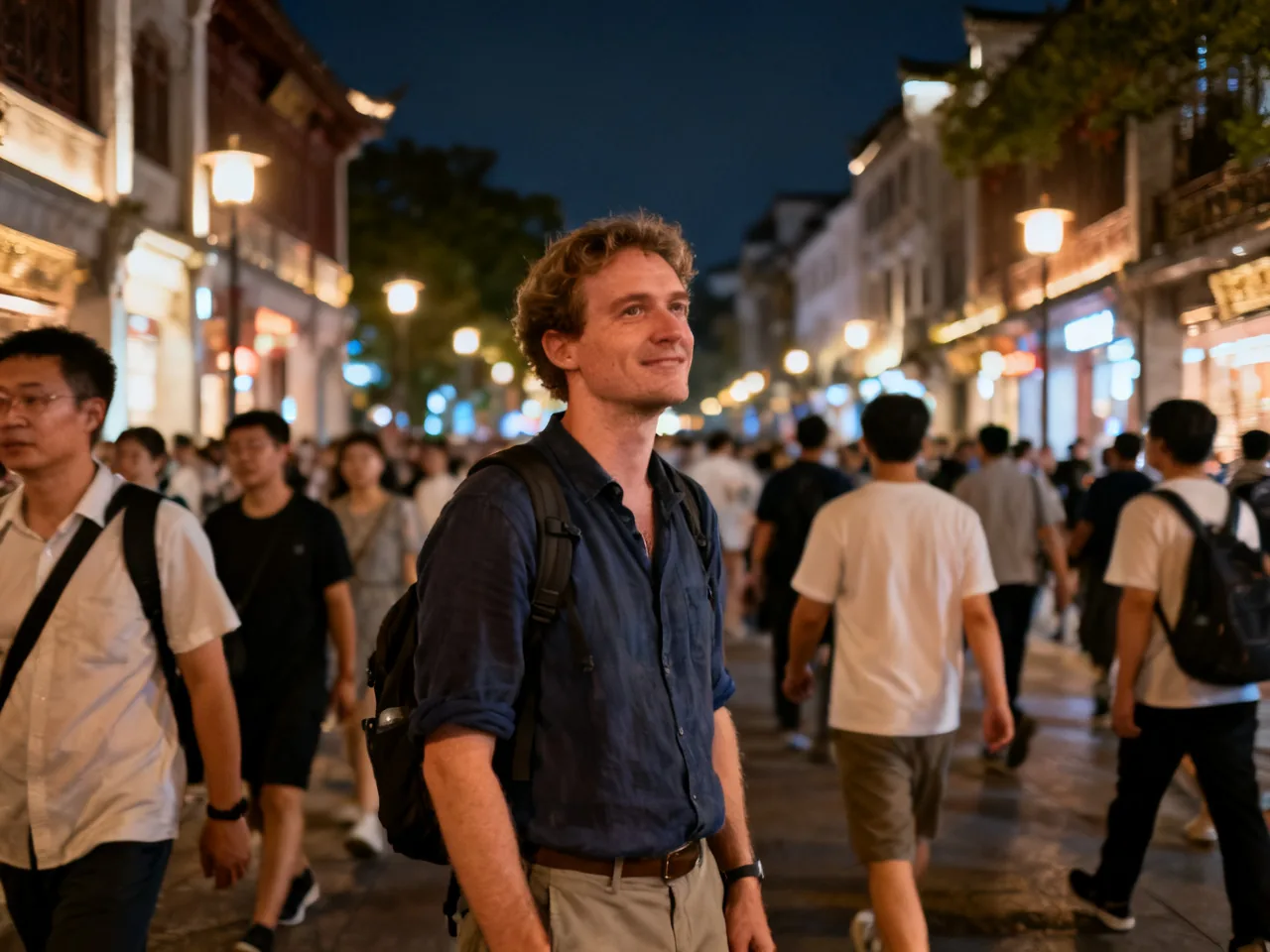
I learned this lesson deeply on a trip from Nanjing to Suzhou. My plan was to check out at noon, visit a museum, go to the railway station, and after arriving in Suzhou still make an evening reservation for a classical garden. On paper, everything fit. But that day the Nanjing metro was crowded, switching lines with luggage took longer than expected, and there was also a queue at the museum security check. I still caught my train, but mentally I had already entered a state of being chased by time. Once I reached Suzhou, I should have been enjoying the scenery, but instead my mind kept calculating whether I could still make the next segment. After that, I began to reflect: even if a plan is technically possible, it is not truly reasonable if it leaves no room for the traveler to breathe.
Later, I adjusted my city-change logic. First, I stopped stacking checkout, sightseeing, station transfer, and hotel check-in into the same high-intensity window. Second, whenever a new station was involved, I automatically increased the buffer instead of assuming I would find the perfect route immediately. Third, I tried not to schedule any “must be exactly on time” activity within the first hour after arriving in a new city, because that is when minor delays, small navigation mistakes, and little distractions happen most easily. This may sound conservative, but in practice it allowed me to see more and remember more.
I also realized that buffer is not only for transport. It is for the body and for judgment. Sitting on a high-speed train for two hours may not look tiring, but for a foreigner, continuously tracking station announcements, checking translation apps, saving hotel information, and processing a new station layout all create hidden fatigue. In the past, I would go straight to a famous area for photos as soon as I arrived. Later, I preferred to reach the hotel first, put down my luggage, drink water, and check the surroundings before deciding where to go next. That order is not wasteful at all. It actually makes me sharper when I head out again.
In Xiamen, I had a very successful example of this approach. I deliberately left nearly two hours between my train arrival and my first formal attraction. The train was on time and hotel check-in was smooth, so on the surface it looked as if I had “wasted” an empty period. But because that empty period existed, I was able to calmly eat a bowl of satay noodles nearby, reorganize my backpack, confirm my ferry ticket for the next day, and even discover a quiet and safe walking route behind the hotel. Later that night, I returned with almost no stress because I had already learned the area. That extra layer of confidence is something an over-packed itinerary rarely gives you.
Now when I plan intercity travel for myself, I follow a few principles very strictly.
- Do not stack multiple “must be on time” steps into the same half day.
- When a new station, a new city, and a new hotel appear in the same sequence, the buffer should increase noticeably.
- Use the first hour after arrival for low-risk tasks such as check-in, hydration, and learning the neighborhood.
- If a plan works only when every step goes exactly right, it is usually not stable enough.
- Buffer is not laziness; it preserves your attention for the parts truly worth experiencing.
China’s ability to move people between cities is extraordinary, but I increasingly feel that good travel is not about competing with the system on speed. It is about using the system’s efficiency to protect your own rhythm. Whenever I review an itinerary, I revisit materials such as arranging the rhythm of high-speed rail city changes, how to use the first hour after arrival, and designing buffers for solo travel. They remind me that a mature city transfer is not one where you always move at top speed. It is one where even a small deviation does not collapse your whole day’s mood and judgment.