China's Breakfast Map: Morning Flavors from Eight Cities
I have a habit: in every new city, my first meal is always breakfast.
Not the hotel buffet — I walk into the streets and find wherever the locals are lining up. Breakfast is a city’s most honest face — no plating, no gimmicks, just flavors passed down through generations.
Shanghai: The Four Heavenly Kings
Shanghai’s classic breakfast combo is called “The Four Heavenly Kings”: da bing (baked flatbread), you tiao (fried dough sticks), ci fan tuan (sticky rice rolls), and doujiang (soy milk).
Da bing is baked against the wall of a barrel-shaped oven — sweet or savory. The savory version has scallions and sesame seeds, crispy on the outside with flaky layers inside. You tiao — cut into segments and stuffed inside da bing, classic pairing.
Ci fan tuan: sticky rice wrapped around a you tiao, pork floss, salted egg yolk, or pickled mustard greens. Fist-sized, keeps you going until lunch. Pair with a cup of fresh doujiang (sweet or salty — your call), and that’s a perfect Shanghai morning.
Wuhan: “Guo Zao” Culture
In Wuhan, breakfast is called “guo zao” (过早). This isn’t casual — Wuhan takes breakfast more seriously than almost any city in China, rivaled perhaps only by Guangzhou.
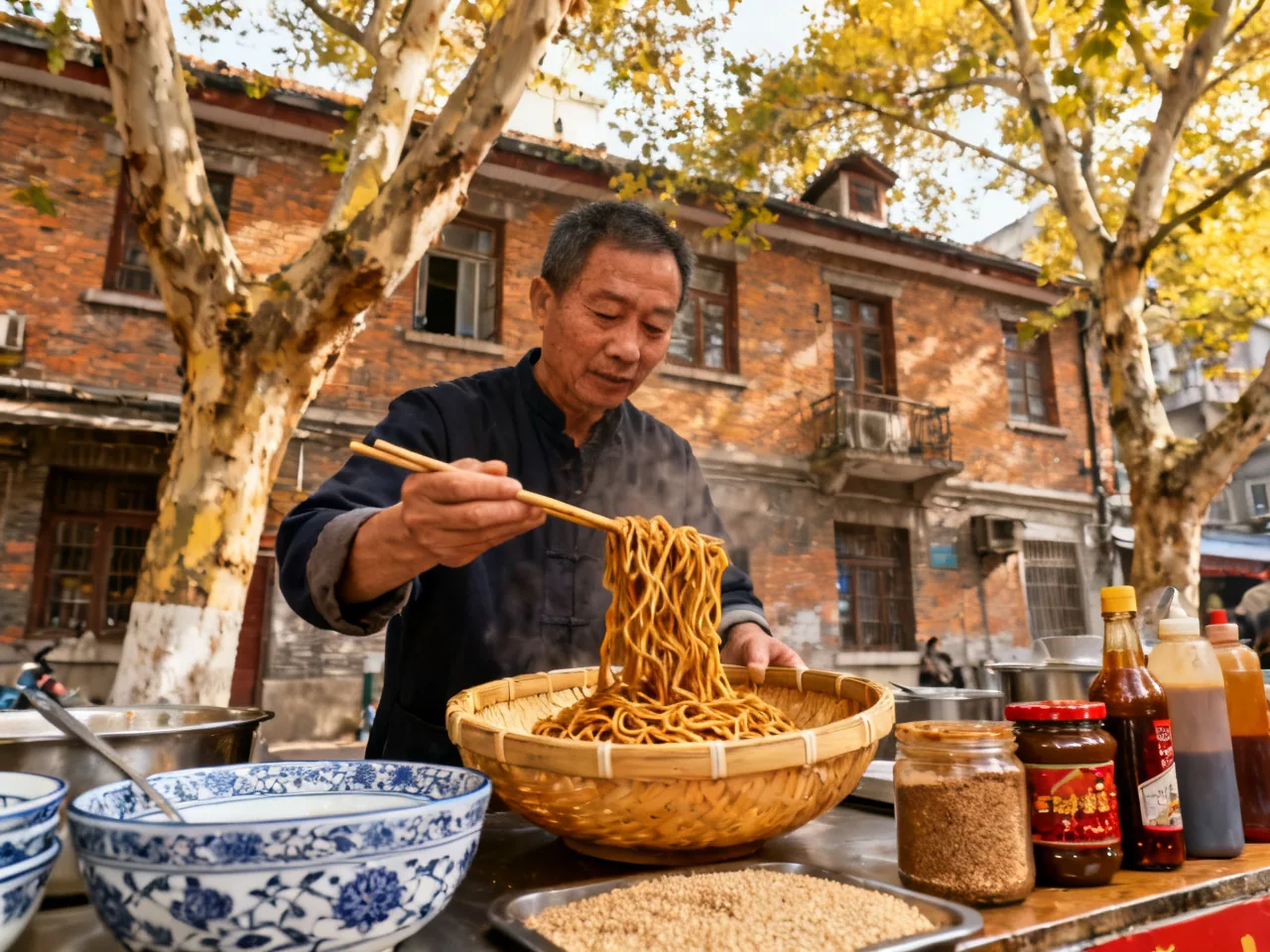
Re gan mian (hot dry noodles) is the undisputed king. Alkaline noodles tossed with sesame paste, soy sauce, vinegar, chili oil, scallions, and pickled beans. Rich, heavy, ¥7 a bowl — eaten standing on the sidewalk.
Dou pi is Wuhan’s other treasure — not tofu skin, but a thin crepe made from rice batter and egg, stuffed with sticky rice and diced meat, pan-fried until golden on both sides. Crispy outside, glutinous inside, complex layers.
Guangzhou: The Morning Tea Ritual
Cantonese morning tea isn’t just eating — it’s a social ritual.
“Yat zung leung gin” — one pot of tea, two or three baskets of dim sum — can stretch from 7 AM to noon. You pick steamer baskets from a cart or check items on a paper slip. Har gow (shrimp dumplings), siu mai, cheung fun (rice noodle rolls), char siu bao (BBQ pork buns), phoenix claws (chicken feet), egg tarts… options are overwhelming.
My suggestion: start with har gow (the benchmark for any dim sum place), cheung fun (silky rice noodle rolls), and char siu bao (sweet-savory BBQ pork buns). Add more as you go.
Xi’an: Carb Heaven
Xi’an breakfast is a carb lover’s dream.
Rou jia mo: A baked bun stuffed with braised, chopped meat — crispy shell, ¥5–8 each. Note: Xi’an’s rou jia mo may be completely different from what you’ve tried elsewhere — crispier, thinner bread, finer-chopped and more deeply seasoned meat.
Hu la tang (spicy soup): Not the Henan version — Xi’an’s is thicker, with beef balls, potato chunks, cabbage, and glass noodles, topped with a spoonful of chili oil. Pair with a mo (bread), torn and soaked.
Changsha: No Spice No Life
Changsha people want spice even at breakfast.
Mi fen (rice noodles) is the core: round or flat noodles, topped with shredded pork or sour-spicy sauce, plus a spoonful of chopped chili. The rhythm matters — slurp the noodles, sip the broth.
Tang you ba ba is the sweet option — glutinous rice dough fried golden then coated in caramelized sugar. Crispy outside, chewy inside, pure sweetness with every bite.
Chengdu: Slow Morning
Chengdu people don’t rush their mornings.
Chao shou (Sichuan wontons) with red oil — thin skin, tender filling, the combination of chili oil, crushed peanuts, and sesame turns a simple bowl into something layered and complex.
Dan hong gao is a nostalgic Chengdu street breakfast — egg batter in small iron molds, filled with sweet (cream/sesame) or savory (pork floss/shredded potato) fillings, folded and served. ¥2–3 each.
Beijing: Capital Flavors
Dou zhi’er — if you’re brave enough. Fermented mung bean juice with a sour, pungent taste that makes most non-Beijingers flee. But old-school Beijingers genuinely love it. Paired with jiao quan (small fried dough rings) and pickles, it’s the most authentic Beijing breakfast.
Chao gan’er is another test: a thick, starchy sauce of pork liver and intestines, eaten with steamed buns. Actually better than it sounds.
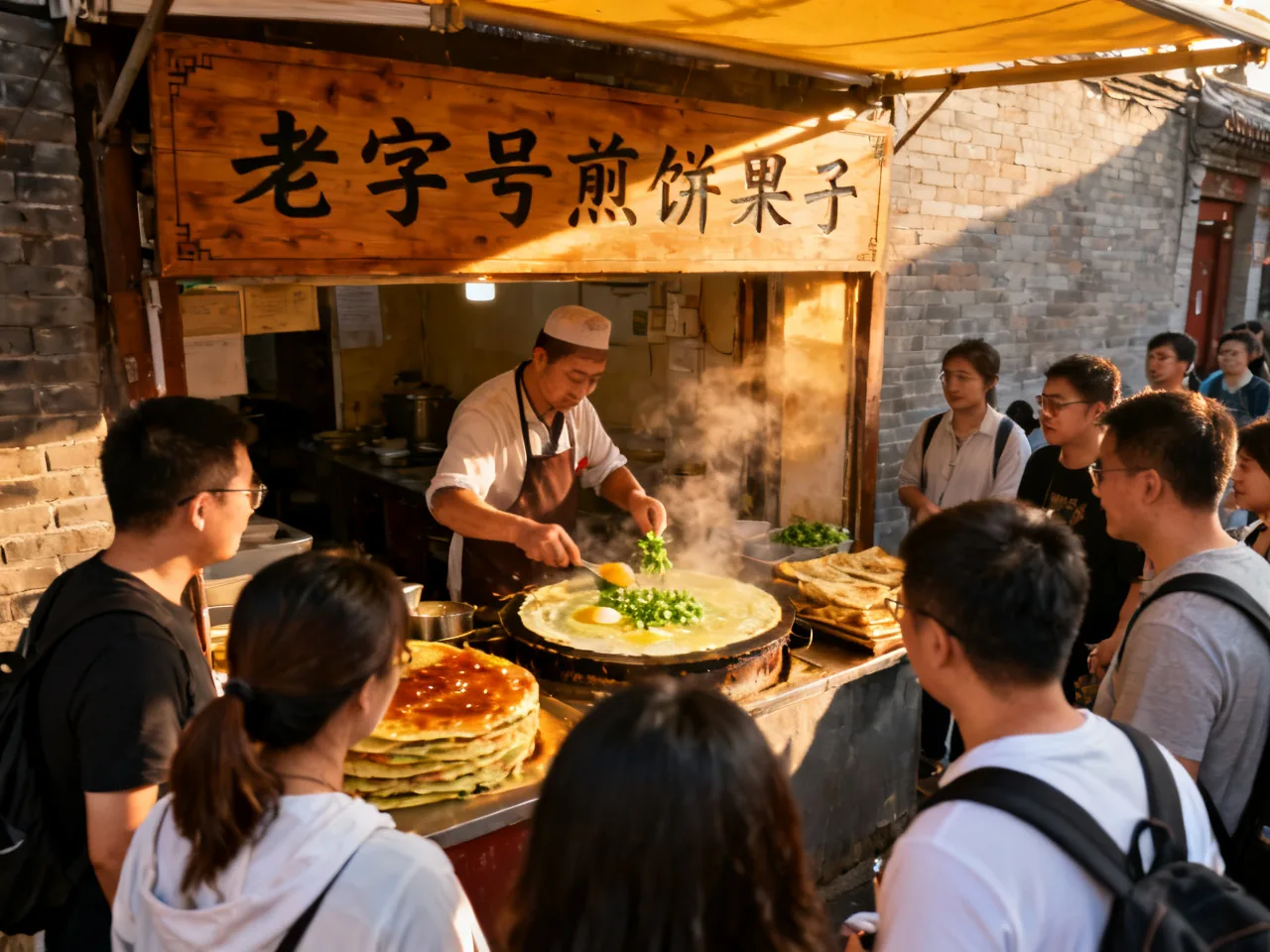
Playing it safe? Jian bing guo zi (crepe with egg, crispy cracker, and sauce) is the universal safe choice — loved everywhere in China.
Xiamen: Southern Fujian Style
Sha cha mian: Noodle soup based on shacha (satay-like) sauce, with self-selected toppings — pork liver, squid, tofu, duck blood. Rich seafood flavor.
Peanut soup: Peanuts slow-simmered until soft, thick and mildly sweet. Can be drunk alone or with you tiao dipped in. Extremely simple but memorably good.
Every city’s breakfast is a miniature local history. To plan an eating-focused trip, Weekend Escapes from Chengdu makes a good starting point. For more Chinese food culture, Hot Pot Ordering Guide and Ten Chinese Street Snacks are must-reads.
外链: Wikipedia — Chinese Cuisine