オフィスビルのロビーで出前を待ちながら、近くに立っても早く受け取れるとは限らないと初めて分かった
The first time I waited for takeout in the lobby of an office tower in Shanghai, I assumed the most efficient strategy was to stand as close to the entrance as possible. It was a humid afternoon. Air-conditioning spilled outward through the glass doors, and the floor mat by the entrance had curled slightly from so many shoes passing over it. Along one side of the lobby stood a temporary takeout shelf crowded with plastic bags, paper bags, and coffee carriers; now and then a box of noodle soup released a trace of steam and scallion smell. On the other side were the turnstiles and elevators, layered with card-swipe sounds, footsteps, and delivery riders repeating into their phones, “I’ve arrived, come down and get it.” The main lunch rush had just passed, but waves of people were still coming downstairs for pickups. As a foreigner only beginning to understand the small habits of Chinese office-building life, it seemed obvious to me that if I stayed right by the door and close to the rider, I would spot my own order first and get it fastest.
I discovered very quickly that I had chosen exactly the most obstructive place to stand. I was staring at the message on my phone saying the rider was about to arrive, and without thinking I planted myself by the door, leaning forward slightly so I would not miss anything. Within less than two minutes, people coming in behind me were already squeezing around my body at an angle. Some had just come back from smoking outside. Some were carrying folders to register at the reception desk. One rider holding several orders in both hands nearly collided with me the moment the door opened. A receptionist glanced over and, in a very polite voice, said only, “You can wait at the side. Just don’t block the entrance.” The sentence was gentle, but it made me step away immediately. And those few steps were enough to make me realize that in this kind of office lobby, the most important thing when waiting for takeout is not being physically closest to the rider. It is staying off the line that everyone else is required to pass through.
Once I moved to the side, my view actually became clearer. There was usually a kind of unofficial waiting zone near the wall, the takeout rack, or a pillar—close enough to observe, but not blocking the entrance or pressing into the turnstiles. From there, I could see riders entering, read the numbers on the bags, and check my phone at the same time, without being physically pushed by the current of the door. I watched for a while and noticed that people familiar with the place almost all behaved this way: they came downstairs, stood to the side, checked the name or final digits, and stepped forward only when they confirmed the order was theirs. If the rider was still sorting bags, nobody crowded into a ring around him. People left enough space for him to set things down, read out numbers, and finish organizing. I realized that the rhythm of waiting for takeout in an office lobby is not “whoever gets closest wins.” It is that everyone steps back a little, and that in turn makes both information and foot traffic move more smoothly.
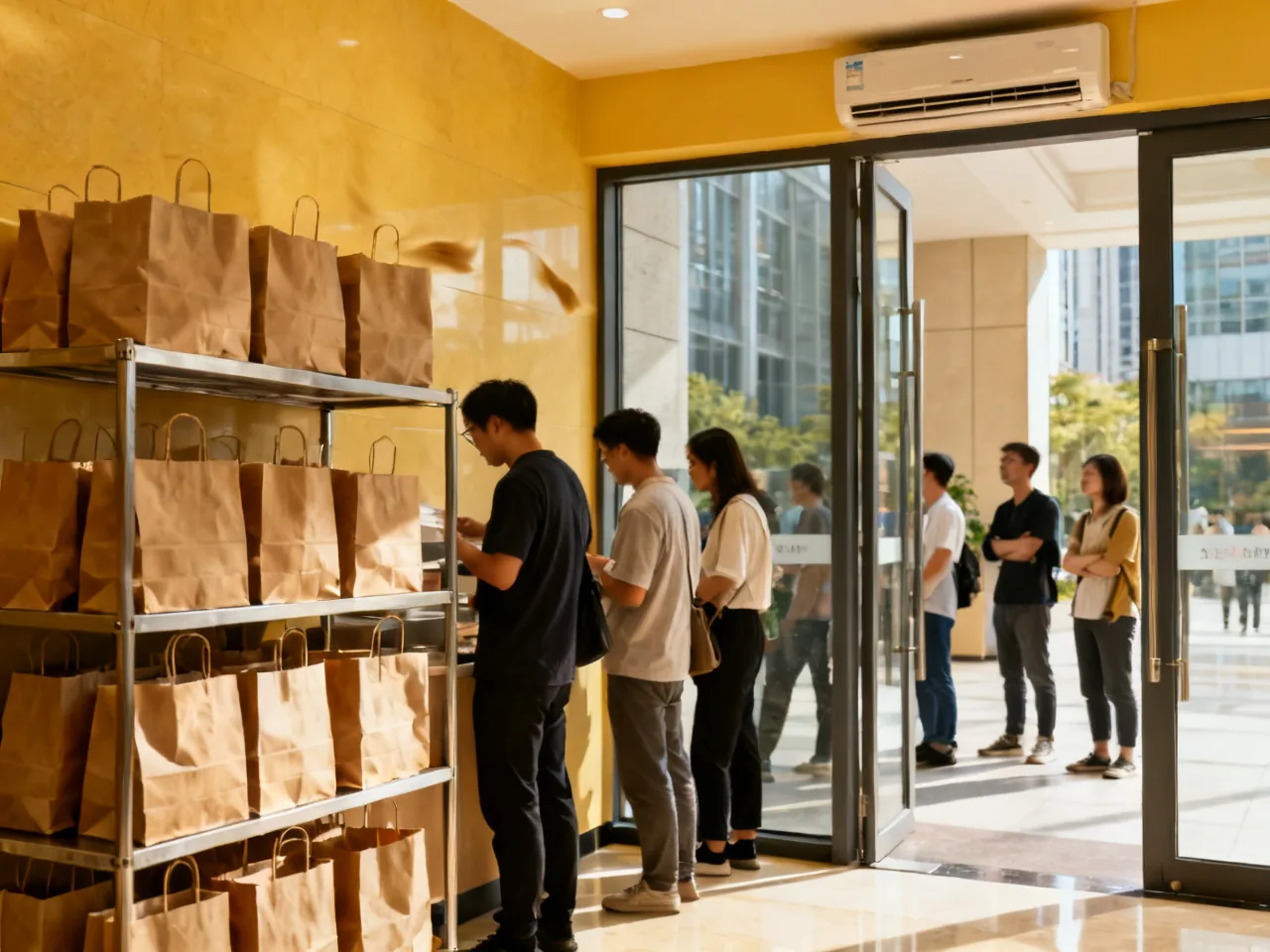
Later I noticed that much of the apparent chaos around office-lobby takeout is not caused by too many people, but by too many people assuming that “it’s fine if I block things just for a moment.” One person waits in the crack of the doorway. Another stands directly in front of the takeout shelf checking their phone. A third person gets their meal and then remains in place opening the straw, checking the chopsticks, and seeing whether a sauce packet is missing. Very quickly, the space knots up. By contrast, lobbies that run smoothly usually depend on a set of tiny default gestures: people who receive their meal step away immediately before checking it; people still waiting leave the center open for riders just coming through the door; if reception tells them to stand to the side, they do not argue; and if there are many bags, riders often separate orders by floor or company before calling them out. Nobody has formally trained everyone in this system, but many people already know that the building is not there to serve only their single order.
Once I watched a rider place more than ten takeout bags on a rack and lower his head to search for one particular order. Several people around him all leaned forward at the same time, and suddenly nobody could see clearly while he himself had even less room to sort. Only after the receptionist said, “Everyone step back a little,” did the scene loosen again. That was when I understood it completely: standing closer does not necessarily make things faster. Very often it does the opposite. The more tightly you press in, the harder it becomes for the rider to call out numbers. The more you occupy the front, the harder it becomes for your own bag to emerge from the pile. Especially in China’s dense office-building environment, efficiency often comes not from each person fighting for position, but from everyone together leaving enough operational space for the process to work.
I later learned a few very simple methods: open the pickup information on my phone before going downstairs instead of searching for it at the entrance; once in the lobby, first determine whether the order is self-pickup from the rack or handoff from the rider; if I cannot find it immediately, do not plant myself in the center but step aside to recheck; and after receiving it, leave the main passage at once and move toward the elevator side or a corner before checking for missing items or utensils. None of these actions are complicated, yet they have made every pickup much smoother for me. More importantly, they shifted my perspective from the narrow question of how I could get my own lunch fastest toward the fuller question of how I could get it without making the whole lobby messier.
Following the same way of reading a scene, [中国写字楼里的中午节奏] and 中国公共空间里的站位感 also reinforce this habit from other angles.
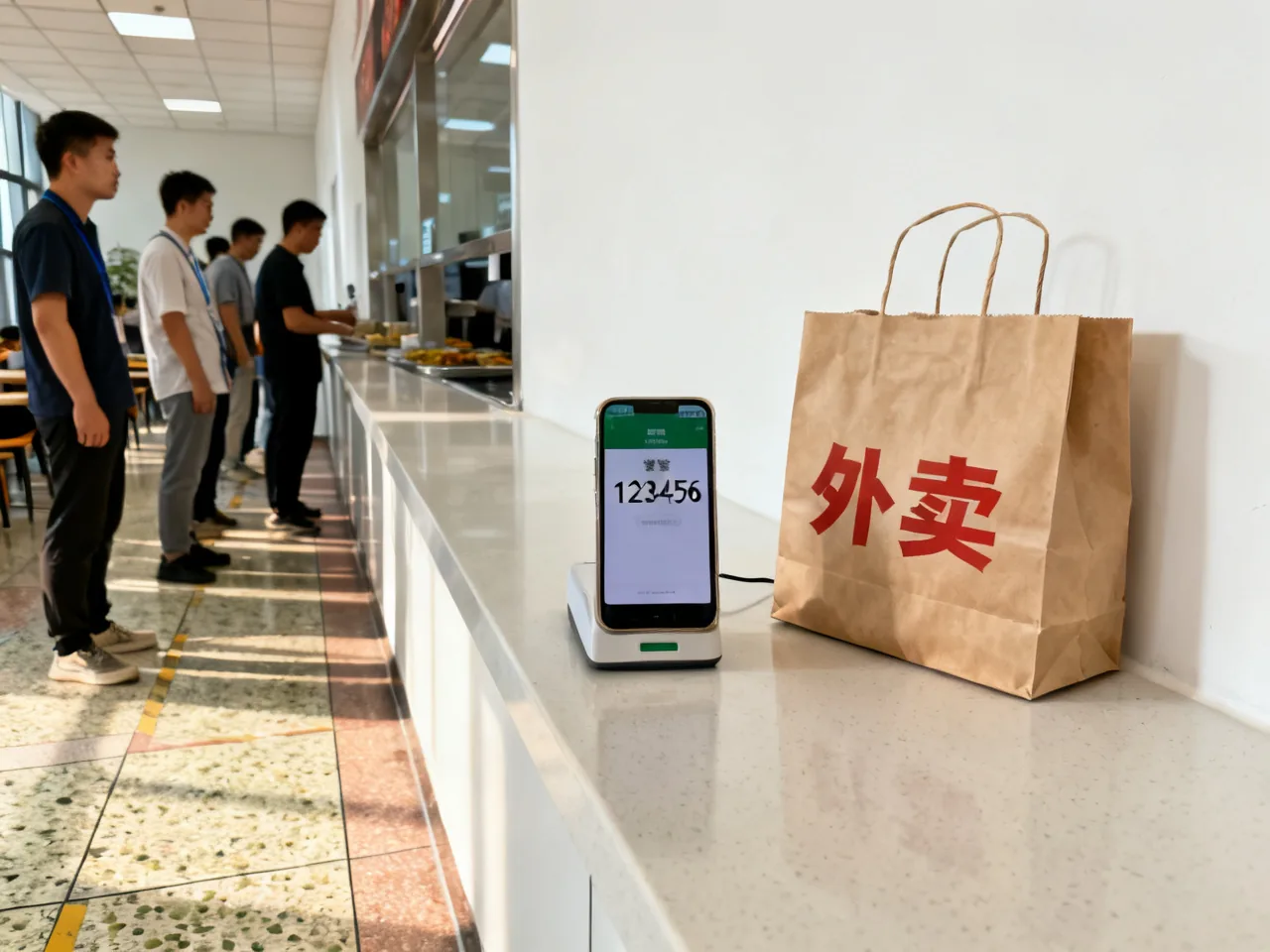
Now, if a foreign friend starting work in a Chinese office tower asks me what rule about waiting for takeout is easiest to overlook, I would say it is that one sideways step. Do not block the door. Do not block the rack. Do not block the rider’s hands as he places the bags down. Standing a little farther away does not mean falling behind. Very often it means you have understood the flow correctly. To me, this tiny act of waiting for takeout in an office lobby reveals something larger about everyday public space in China: everyone wants speed, but real speed does not come from shoving yourself into the front. It comes from knowing when to clear the center. Since learning to stand to the side and watch the numbers from there, I make fewer pickup mistakes and feel less irritated. In the end, what I learned was not only a food-collection trick, but a very practical urban instinct: in crowded places, leaving room for the process is often more effective than fighting to leave room only for yourself.