チベット・ラサ巡礼の旅:ポタラ宮と大昭寺
At 3,650 meters above sea level, Lhasa’s air is thin but its sunlight cuts like a blade. First-timers often oscillate between awe and breathlessness — and that tension is exactly what makes this city unforgettable.
Before You Go
Many travelers picture Lhasa as a spontaneous getaway, but the reality is more bureaucratic: you need a Tibet Travel Permit on top of your Chinese visa or ID. Mainland Chinese citizens apply with their national ID; visitors from Hong Kong, Macau, Taiwan, and abroad need additional permits. Apply through a licensed travel agency at least 15 days in advance — more during peak season (May–October). I learned this the hard way when I nearly got turned back at Chengdu airport on my second trip.
Altitude sickness is the other wildcard. On arrival day: no shower, no exercise, even if you feel fine. I’ve watched fit twenty-somethings spend their first night in agony, and seen a woman in her fifties climb Potala without breaking a sweat. Bodies are unpredictable at altitude. Bring Rhodiola or altitude sickness pills, and give yourself at least half a day to acclimatize before doing anything strenuous.
Potala Palace: Beyond the Postcard
Potala Palace tickets are strictly limited — 850 visitors per session, two sessions daily. Book online through the official channel three days ahead. I recommend the afternoon slot: the light hits the red-and-white walls from the west, giving the facade far more depth and texture than morning shots. The guided route takes about an hour and is fixed, but don’t rush it. Linger in each hall and let the smell of centuries of yak-butter lamps settle around you.
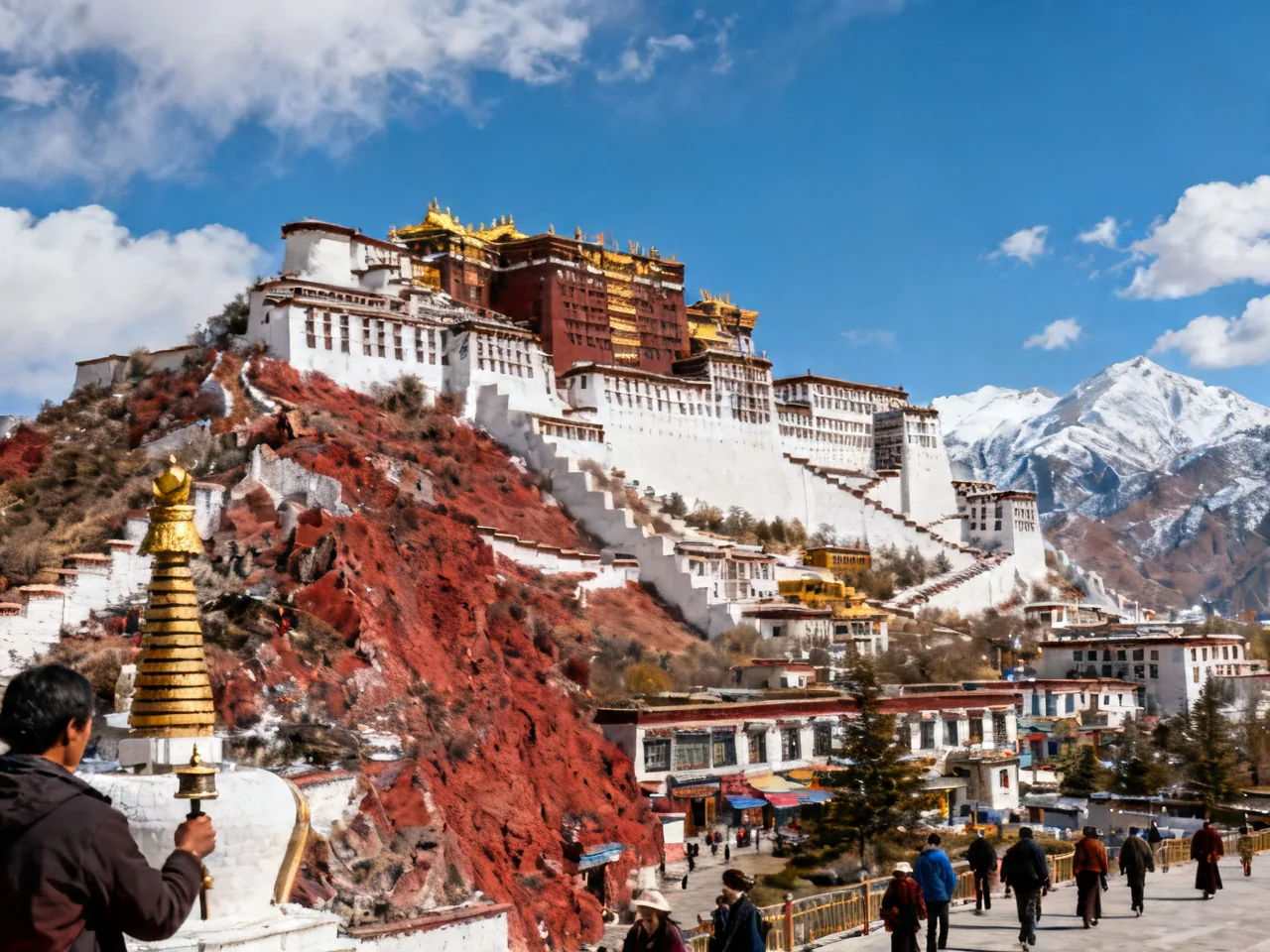
Photography is banned inside and enforced seriously. Honestly, putting the phone away made me see more — the intricate thangka paintings, the jewel-encrusted stupas of past Dalai Lamas, the coral and turquoise pressed into ancient walls. These things need eyes, not lenses. After the visit, sit a while in the square below and watch the pilgrims. Some have been prostrating their way here for months.
Jokhang Temple & Barkhor: Faith as Daily Life
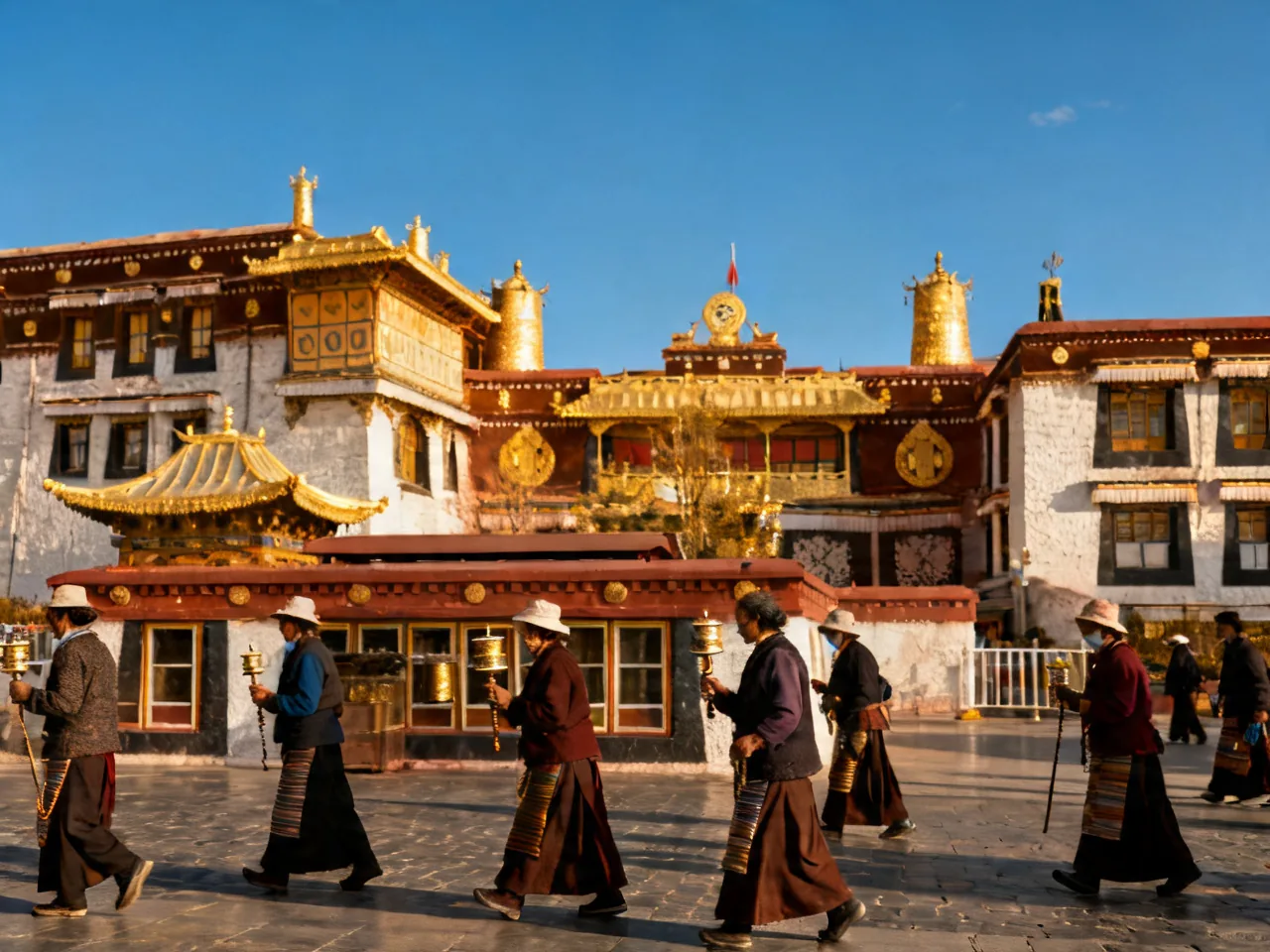
If Potala is Lhasa’s landmark, Jokhang Temple is its heartbeat. Every morning, the square in front fills with pilgrims prostrating themselves — the rhythmic thud of foreheads on stone mixing with the metallic spin of prayer wheels creates a soundscape unlike anything in any other city. The first time I stood there, I genuinely didn’t know what to do with myself.
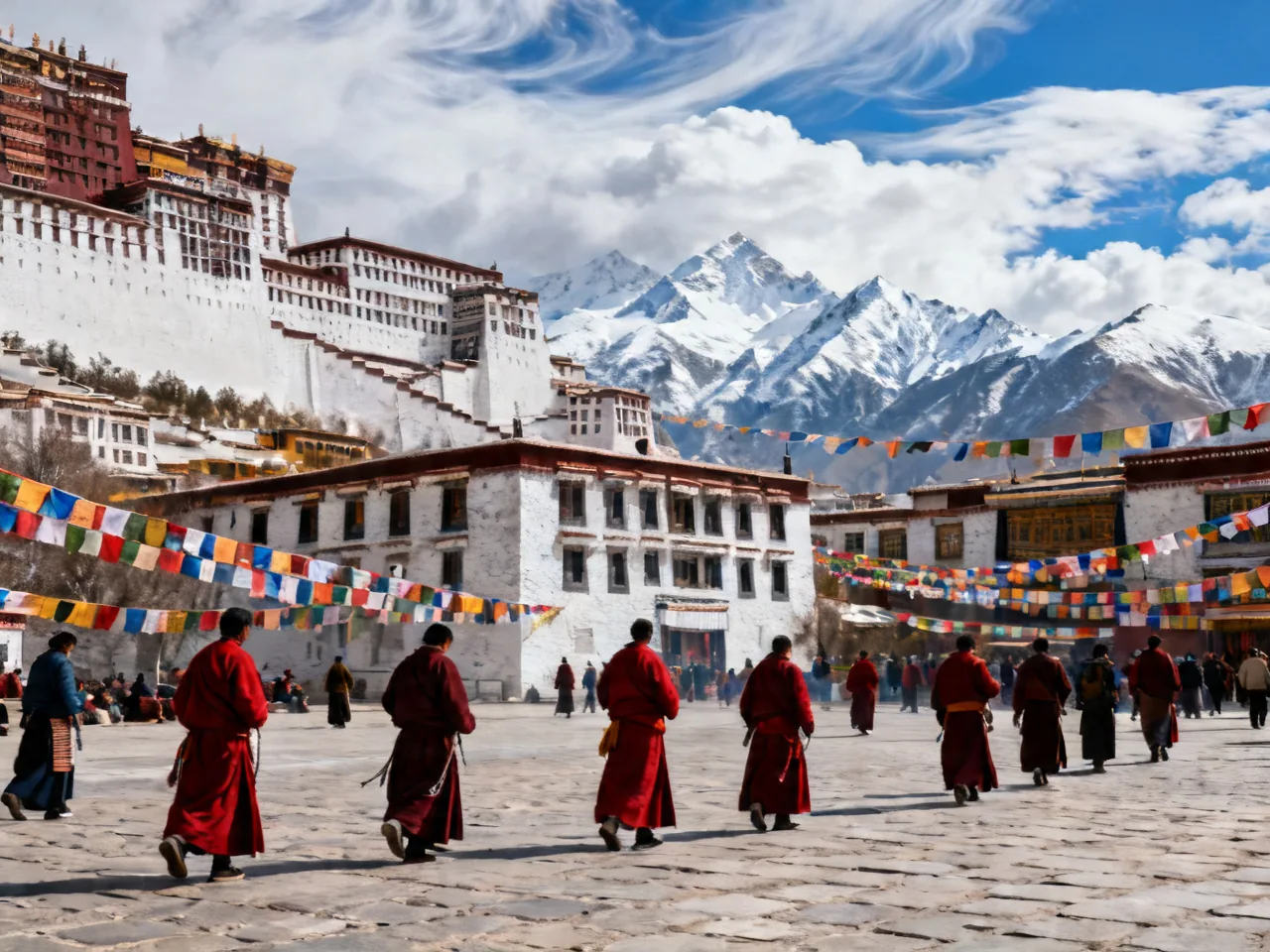
The temple’s centerpiece is the Jowo Rinpoche, a 12-year-old-likeness statue of Shakyamuni considered the most sacred object in Tibetan Buddhism. The queue of worshippers never stops. Go when the doors open at 8am — fewer crowds, and you catch the quiet aftermath of the monks’ morning prayers. Barkhor Street circles the temple as Lhasa’s oldest kora (circumambulation route) and best market. Quality varies wildly: Tibetan incense, thangkas, wool fabric, yak-bone jewelry. Browse several stalls before buying anything.
Where to Eat & Sleep
Tibetan food deserves serious attention. Sweet tea houses are the local social hub — a cup costs a few yuan, and paired with tsampa or fried dough, you can sit for hours. There are several old-school tea houses near Barkhor; find a corner, order a pot, and let the Tibetan conversations wash over you. For proper meals, yak hot pot and Tibetan curry are the moves. Don’t skip butter tea — the first sip is a shock, but by the third cup you’ll understand why people at altitude can’t live without it.
For accommodation, I’d pick a Tibetan-style guesthouse near Barkhor over any chain hotel — the prices are comparable, but waking up to the sound of chanting and watching pilgrims from your window is something no five-star property can replicate. Read reviews carefully online and choose a well-rated courtyard guesthouse; most have heating and hot water, so basic comfort isn’t a concern.
Before You Leave
A few half-day trips worth adding: the debating courtyard at Sera Monastery (around 3pm, monks argue Buddhist doctrine with theatrical intensity — genuinely one of the most striking things I’ve seen anywhere), the early-morning quiet of Drepung Monastery (almost no tourists, feels like a different world), and Namtso Lake if your schedule allows — though note it sits even higher than Lhasa, so altitude sickness risk increases.
Lhasa is not a place you can tick off a list. Come here, and the thin air, the fierce light, and the devotion visible on every street corner will quietly shift something in how you see the world — but only if you slow down enough to actually be present.
Related Reads
- 10-Day East China Five-City Loop
- Lijiang Old Town: Naxi Culture & Snow Mountain Views
- Zhangjiajie Glass Bridge & Tianmen Mountain Guide
- Guilin Li River Scenic Tour Complete Guide
- Spring Bloom Map: China’s Most Beautiful Flower Fields