Почему я начал спокойно держать телефон в руке: уроки повседневной безопасности, которые я усвоил на улицах Китая
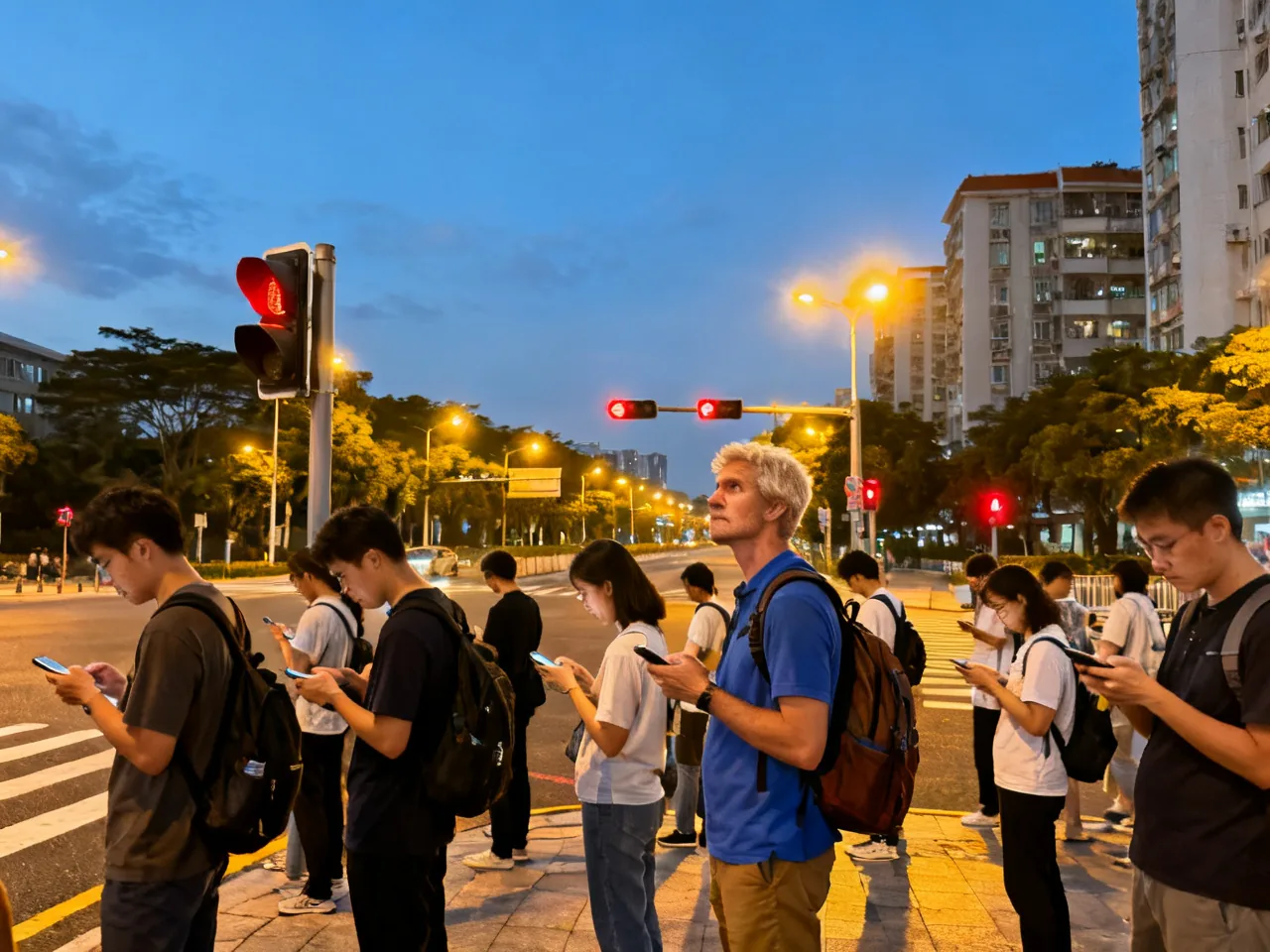
After spending late nights on streets in many countries, I had trained one gesture into a reflex: glance at my phone, put it away immediately, zip the pocket, and press my hand against it once more to make sure it was still there. The first time I slowed that gesture down in China happened on a very ordinary evening in Shenzhen. It was 6:40 p.m., and I was waiting at a traffic light in Futian. Heat from the daytime sun still floated above the asphalt. Office workers in shirts shuffled toward the edge of the crosswalk while scrolling short videos, two students in uniforms looked down at their messages, and a takeaway shelf outside a corner coffee shop held more than a dozen drinks lined up neatly. I was holding my phone, yet I felt more tense than anyone around me.
I used to believe in a blunt logic of safety: the more you hide your things, the safer you are; the more visibly alert you are, the less likely trouble becomes. But in some Chinese cities, I gradually realized that what relaxed me was not that “everyone was careless.” It was that public space carried a very clear sense of order. That order was not an abstract slogan. It showed up in repeatable small details at intersections, mall entrances, metro security lanes, and convenience store counters: lights stayed bright, people kept moving, routes were clear, cameras were visible, staff and security were never far away, and the way other people used their phones looked natural rather than panicked. I did not suddenly become bold. I simply began learning how to read the environment.
First I Learned to Read the Flow of People, Not the Phone
The young man crossing with me wore a gray suit. He carried a laptop bag in his left hand and held his phone in his right, sending voice messages with the calm tone of someone continuing a meeting outside the office. When the light turned green, nobody lunged forward wildly, and nobody suddenly burst out of the crowd in a strange movement. E-bikes had their own direction, pedestrians had their own pauses, delivery riders slipped through openings, yet most people still seemed to understand one another’s boundaries. To me, that boundary awareness mattered, because many forms of street risk do not appear from nowhere. They usually come with chaos, loss of control, sudden pushing, and a break in rhythm that leaves you no time to react. At that intersection, the dominant feeling was predictability.
I later gave myself a first standard of judgment: when most movements in a space feel continuous rather than disruptive, I relax more. By continuous, I mean people are not constantly interrupting one another but moving with a default sequence, like the queues at metro doors, the flow on escalators, or the switching rhythm at traffic lights. It sounds small, but for a newcomer from abroad, it convinced me more than any promotional slogan. Your body knows first. It senses whether everyone is separately defending themselves, or whether a layer of everyday rules is quietly holding the scene together.
The Second Thing That Relaxed Me Was Presence, Not Surveillance Focused on Me
I once waited for a friend outside a mall in Longhua. It was 8:20 p.m. Children rolled around on skateboards in the plaza, several middle-aged women danced near a speaker, a milk-tea shop had a pile of fresh pickup orders by the door, and a security guard stood beside the automatic entrance looking neither tense nor indifferent. He was not staring at anyone in particular. He functioned more like a stable coordinate, reminding you that the space was being looked after. Later, I walked into the corridor near the restroom. A cleaner slowly pushed her cart, people queued by the elevators, and the service desk stayed lit. I typed replies on my phone in my hand and, for the first time, did not instinctively scan over my shoulder every few seconds.
That feeling of people being present became crucial to me in Chinese cities. It was completely different from oppressive surveillance. For a traveler, what matters more is whether you can easily see normal working people nearby: shop staff, security guards, receptionists, cleaners, delivery riders, parents, and people simply waiting for someone. These seemingly unrelated figures create a public life with healthy density. When there are too few people, I actually put my phone away faster. But when there are enough people, and everyone appears busy living an ordinary life, I relax noticeably. Safety does not always come from emptiness. Very often it comes from the steady presence of normal people.
Metro Stations and Malls Taught Me the Value of an Easy Exit
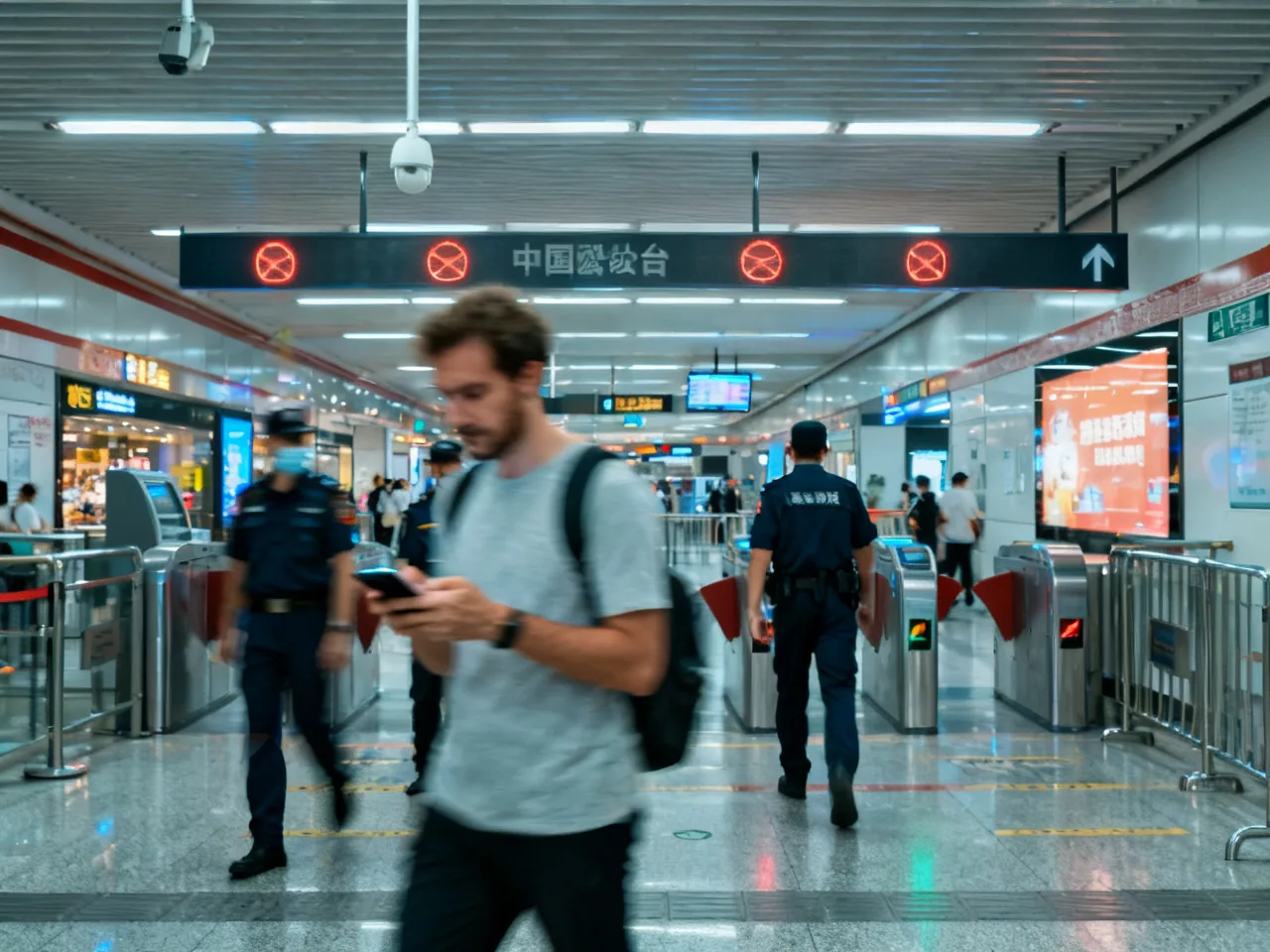
What changed me was not one dramatic act of bravery but many small confirmations. In Shenzhen metro stations, for example, I gradually found I could keep my phone in my hand while checking route maps instead of switching the screen off in panic. The reason was not that I had lost caution. It was that there was security screening, station staff, clear directional signs, constant passenger flow, and people near the gates whom I could ask if needed. Even if I made a wrong turn, it would not become a disaster. I could simply turn around, check the sign again, or ask one quick question. That kind of environment—where mistakes are easy to correct—is what I mean by an easy exit.
I think this is how many safety judgments should be made. Instead of asking only, “Could something happen?” ask, “If I lose focus for a second, would the situation immediately spiral into something unmanageable?” In many Chinese public spaces where I feel more at ease, the answer is often no. Holding your phone in your hand does not mean facing risk alone. Around you are routes, rules, staff, and a moving crowd that all reduce uncertainty. That is why I often tell first-time visitors to China to begin with the clearest environments: major metro stations, chain malls, bright convenience stores, and street corners with visible staff. Learn your judgment there first, then carry that judgment into more complicated settings.
The Caution I Still Keep Is Habit, Not Fear
That said, I do not want to turn this into a simplistic story claiming that China means you never need caution. That would be unrealistic and unnecessary. Even now, there are situations in which I automatically raise my alert level: very empty side streets late at night, roads thinned out by heavy rain where cars move too fast, moments when my phone battery has dropped to five percent, times when I am dragging luggage while searching for an exit, or when someone stays unusually close to me without any clear reason. I still pull my bag to the front, move toward brighter areas, step inside a shop for a moment, or decide not to use my phone yet. Those habits have not vanished. They have simply changed from all-day tension into targeted responses to specific scenes.
I understand that change this way: I moved from abstract fear to concrete judgment. In unfamiliar cities, I used to carry one blurred command in my head—be careful of everything. The problem with that command is that it can also block safe information from reaching you. Now, on some Chinese streets, I look more specifically. Is there steady foot traffic? Are nearby shops still open? If something feels off, can I immediately step into a bright place? Are staff visible? Do other people use their phones in a tense way or a natural one? These questions help more than simply asking, “Is this place dangerous?” because they force you to observe reality instead of submitting to old habits.
The Specific Scenes That Truly Relaxed Me
The first scene is a still-busy intersection just after rush hour: strong lighting, open storefronts, continuous foot traffic, and people stopping and moving without colliding into one another. The second is a passage connecting malls and office towers, where I can check my phone for a restaurant and still see security guards, directional signs, and other office workers nearby. The third is the zone between metro security and the platform, where the function of the space is clear and almost everyone is moving toward an obvious destination, which makes personal boundaries surprisingly legible. The fourth is outside convenience stores or at café seating areas, where I often choose to stop and answer messages because the space is open without being isolated.
If you are visiting China for the first time, you might ask whether the answer is simply crowds. My answer is no. Crowds are only part of it. What matters more is that the place is busy without being chaotic, bright without being harsh, active without becoming unreadable. Some areas are lively but have tangled routes, dense temporary stalls, and vehicles competing with pedestrians for the same space. In those places, I would not keep my head down over my phone for long. What truly reassures me is never a single indicator but a combination: order, lighting, the ability to ask for help, and the ability to exit easily. You can treat that as a small exercise in reading Chinese cities for yourself.
While adapting to these rhythms, I often read other people’s accounts too, especially observations about everyday movement and public order. Pieces like this related look at everyday urban life and this experience of finding rhythm on Chinese streets are worth reading before you head out. They did not judge the city for me. They helped me learn how to judge it for myself.
What Truly Changed Me Was Reaching the Same Conclusion Across Many Days
If it had happened smoothly only once, I might have dismissed it as luck. But later, in cities like Shenzhen, Guangzhou, and Hangzhou, I kept reaching similar conclusions over many days in a row. At 7:30 in the morning, people were already queuing calmly outside coffee shops. At noon, when I checked navigation in a mall corridor, the people around me continued on their own paths without intentionally pressing too close. At night, after exiting the metro, I could reply to messages with my phone still in hand and still spot convenience-store lights, property-security booths, or small open shops within a short distance. It was exactly this repetition—not one special evening, but the same pattern again and again—that slowly wore down my tension. Safety often does not arrive through one dramatic moment. It arrives when a series of ordinary moments repeatedly shows you that excessive defensiveness is no longer necessary.
Later, I even began explaining this method of judgment to friends visiting China for the first time. I tell them not to begin with the oversized question, “Is this city safe?” Instead, ask something more precise: Is the place where I am standing well lit? Is there moving foot traffic? Can I see staff nearby? Is there somewhere I could immediately pause if needed? Once your question becomes specific, many answers surface by themselves. That is also what reassures me most on Chinese streets: not a mystical feeling, not a slogan-like guarantee, but a layer of everyday order that can be checked by your own eyes and body.
After the light changed and I crossed, I met a friend who works in Shenzhen for coffee. She slid an iced Americano toward me, noticed that my phone was still in my hand, and laughed: “So you finally stopped shoving it back into your pocket every ten seconds?” I laughed too, because I knew I had not simply become relaxed. I had finally understood that safety is not only about hiding your valuables. It also means reading the environment, reading the crowd, and reading the rules. When I left the café after nine, the pavement had cooled a little, several floors in the office tower next door were still lit, some people were waiting for ride-hailing cars, and others were walking home with children. I held my phone naturally to follow the map, without that tight feeling in my chest. Not because I believed the world had no risks, but because, for the first time in a foreign country, I had learned where caution actually belongs.