Beijing in 3 Days: A First-Time Route Without Rush
Many first-time visitors land in Beijing and try to squeeze the Forbidden City, the Great Wall, the Temple of Heaven, hutongs, and Sanlitun into two days. The plan looks efficient on paper, but in real life it turns into security lines, subway transfers, and collapsing in the hotel at night. A better plan starts with one simple truth: Beijing is not a necklace of attractions. It is a very large city. Palaces and museums need patience, hutongs need time on foot, and outlying sights need realistic transport buffers.
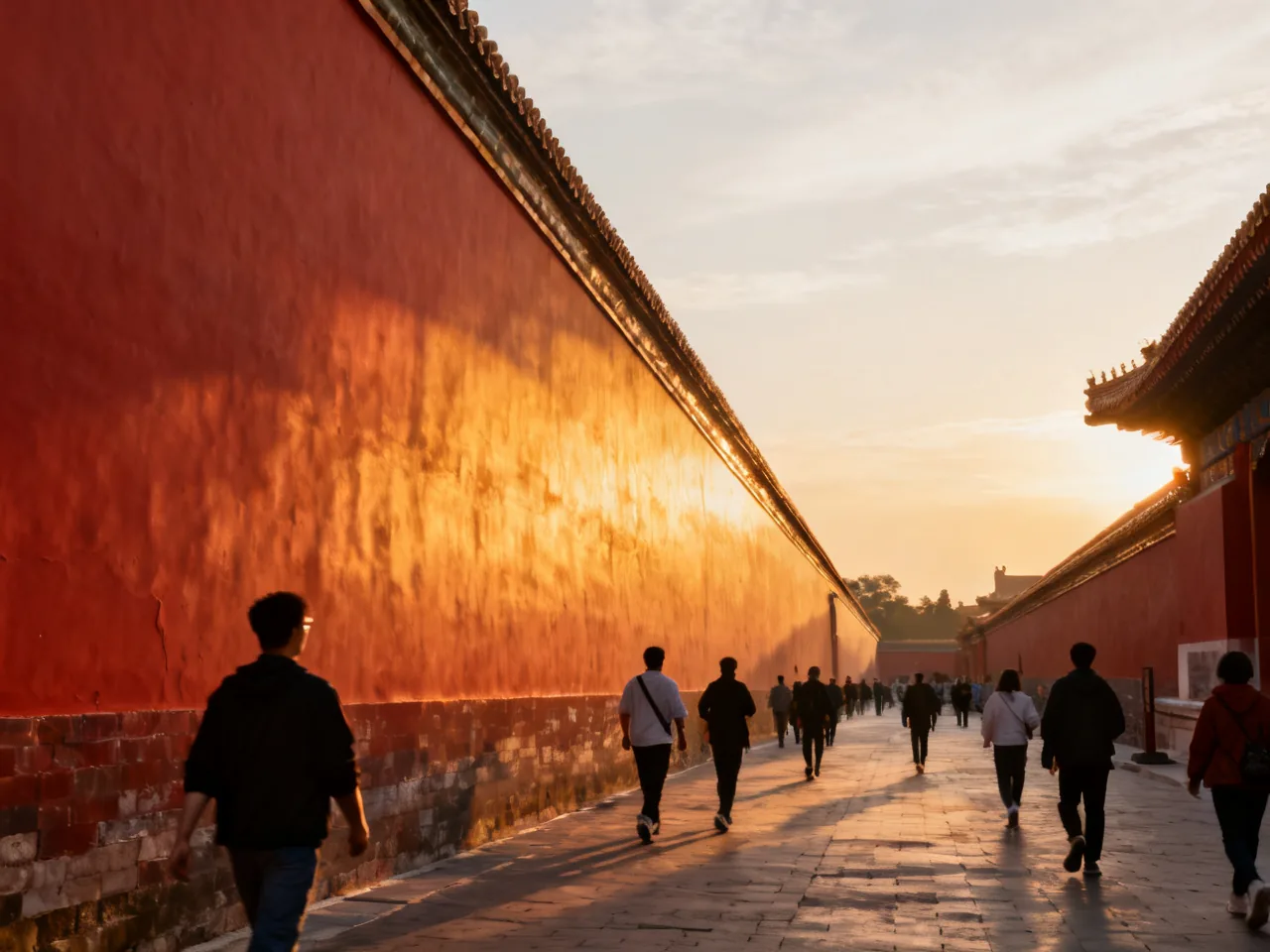
On day one, do not chase the highest attraction count. Start by understanding Beijing’s central axis. Enter the Forbidden City as close to opening time as possible and spend your best energy on the most demanding site. In the afternoon, climb Jingshan for the city view, then move toward Shichahai or a quieter hutong section. The logic is simple: the morning handles imperial scale, the afternoon shifts to neighborhood scale, and your pace becomes naturally calmer instead of mechanically rushed.
Day One: Palace First, Neighborhood Later
If you stay near Dongcheng or Wangfujing, avoid cross-city movement on the first day. The key to the Forbidden City is not seeing every hall. Focus on three things instead: spatial order, color, and crowd rhythm. The central axis gives you the clearest impression of imperial Beijing, while side halls and smaller exhibitions are where you should pause only when your interest is real. On a first trip, there is no need to compete with museum-maximizing travelers.
Jingshan acts like a rhythm switch in this route. Inside the Forbidden City you mostly experience fragments. From the hilltop, the full geometry of the axis suddenly makes sense. After that, head into a hutong area, but do not optimize for viral cafés. Choose a lane where you can move slowly, hear bicycle bells, notice plants near courtyard gates, and watch people sitting in the sun. What relaxes first-time visitors in Beijing is often not a bigger attraction, but this sudden shift into a smaller human scale.
My advice is to return to your hotel area before dinner instead of adding one more major stop. The most common first-day mistake in Beijing is turning the route into a test of stamina. In reality, days two and three need your energy even more.
Day Two: Give the Great Wall a Full Day
The Great Wall should never be treated as a half-day filler. No matter whether you choose Badaling, Mutianyu, or another established section, the time cost is shaped not only by the site itself but also by assembly, transfers, ticketing, and the unpredictability of the return trip. That is why day two should be dedicated to this single experience. If you come back late, the rest of the journey stays intact. If you return early, you simply have an easy dinner near your hotel.
First-time visitors to China sometimes worry that spending a full day on one out-of-town site is inefficient. I think the opposite is true. When the Great Wall becomes the main theme of the day instead of a quick add-on, the memory becomes far more coherent. Beijing itself is already dense and monumental. The open air, mountain lines, and wind on the Wall create the contrast that keeps the entire three-day trip from feeling like a pile of buildings.
One practical recommendation for this day: do not book a dinner that depends on strict timing or long waits. You may not know exactly when you will return to the city, so a flexible meal plan is wiser. Even a simple bowl of noodles near the hotel often feels better than racing to a famous restaurant with a fixed idea in your head.
Day Three: Leave Space for Contemporary Beijing
Day three works well when you shift your lens from imperial heritage to present-day urban life. Spend the morning in an area such as Guozijian or around Yonghe Temple, where walking and observation matter more than checklists, then move to a more contemporary commercial district in the afternoon. The point is not to claim that you have seen both old and new. The point is to understand that Beijing is not frozen inside a Ming-Qing narrative. It also has a fast, practical, hybrid side.
If this is your first trip to China, I would deliberately keep day three flexible. The first two days already carry the heaviest highlights, so the last day should allow changes: buying gifts, sitting in a café to sort photos, or simply slowing down are all valid choices. Beijing is not the city where you should squeeze the final half-day to its absolute limit, because airport transfers, stations, and cross-city movement can already consume more energy than expected.
Following this logic also helps explain why some Beijing trip reports seem to cover fewer places yet feel more complete. It is not laziness. It is because this city needs white space. On a first trip to China, what usually makes you want to come back is not the number of boxes you checked, but the fact that the city’s scale never defeated your rhythm.
For related reading on the site, continue with another Beijing city-walk article and a route-planning piece for China travel. If you keep only one rule from this guide, let it be this: three days in Beijing is not too short, as long as you refuse to turn it into a sprint.