Как заказывать хого и не ошибиться: ошибки, которых стоит избежать новичкам
First-time hot pot diners make the same mistake: ordering too much.
Everything on the menu looks interesting, so the table ends up piled with uncooked ingredients, and half gets packed to go. Hot pot isn’t a buffet — it’s a dining experience that requires pacing.
Choose Your Broth First
The broth is the foundation. Get it wrong and nothing else saves the meal.
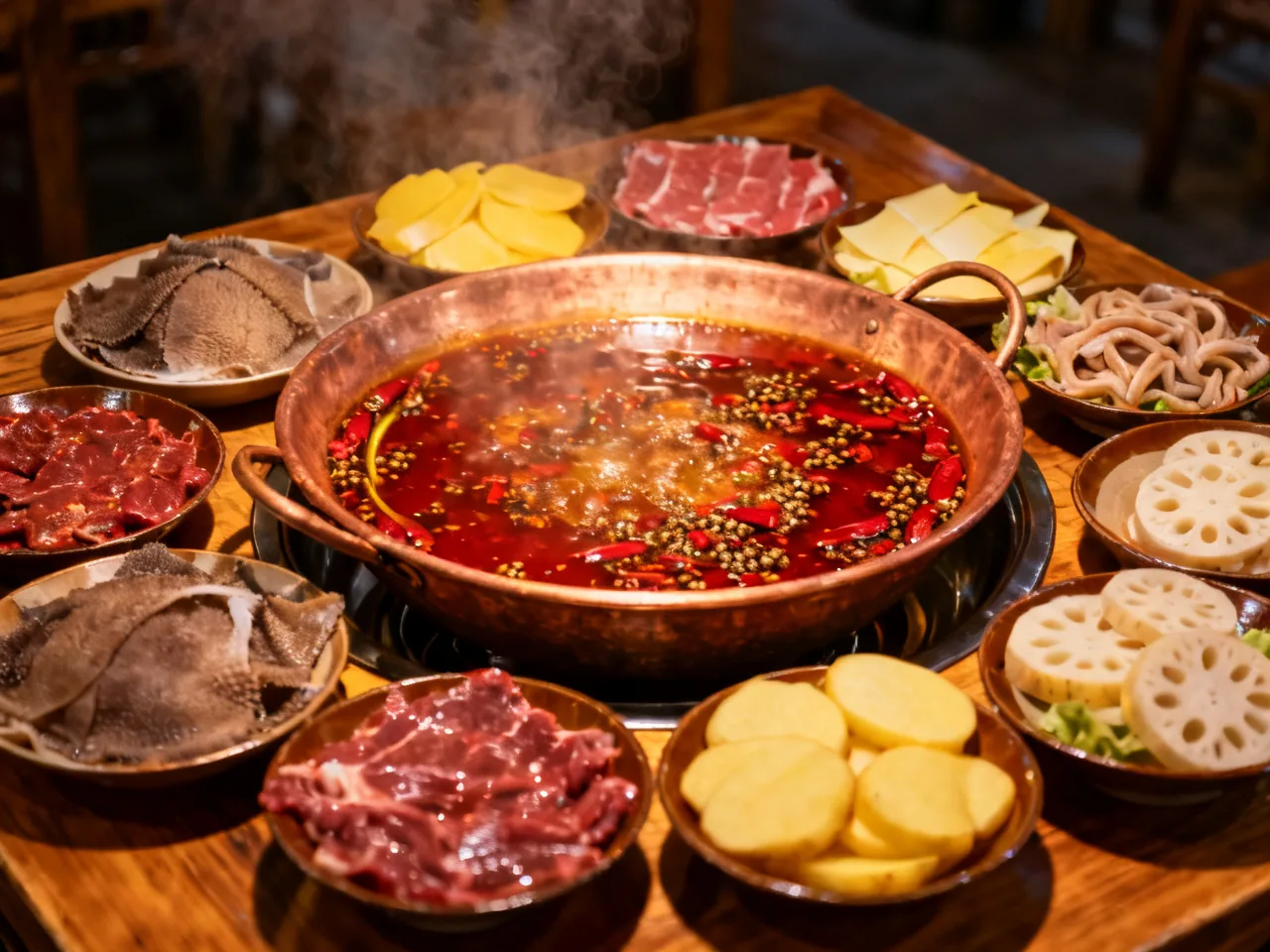
Chongqing/Sichuan red broth: Mala — the combination of Sichuan peppercorn and chili. If your spice tolerance is moderate, order “mild” or “medium.” Don’t go straight to “extra spicy” — it’s serious.
Clear/bone broth: For those avoiding spice or wanting to taste the ingredients themselves. Northern-style lamb hot pot (copper pot) typically uses clear broth.
Yuanyang (half-and-half): Half red, half clear — good when the table has mixed spice preferences.
Tomato/mushroom broth: Popular “light spice” options in recent years, tangy-sweet or umami-rich. Good for first-timers.
Must-Order vs Skip
Must-order (almost never disappoints):
- Maodu (牛百叶, beef tripe): The soul of hot pot. Blanch 7–10 seconds, crispy and tender.
- Duck intestines: Blanch 5–8 seconds, springy texture, much better than it sounds.
- Thinly sliced beef/lamb: Blanch 10–15 seconds, silky smooth.
- Tofu/frozen tofu: Absorbs the broth, pairs with everything.
- Wide sweet potato noodles: Essential for finishing — they soak up all the flavor.
Skip on your first visit:
- Brain (脑花, pig brain): Polarizing texture.
- Yellow throat (黄喉, pig aorta): Timing-sensitive; too hard if over-cooked.
- Mixed offal platters: Try one type first before committing to a platter.
How to Make Your Dipping Sauce
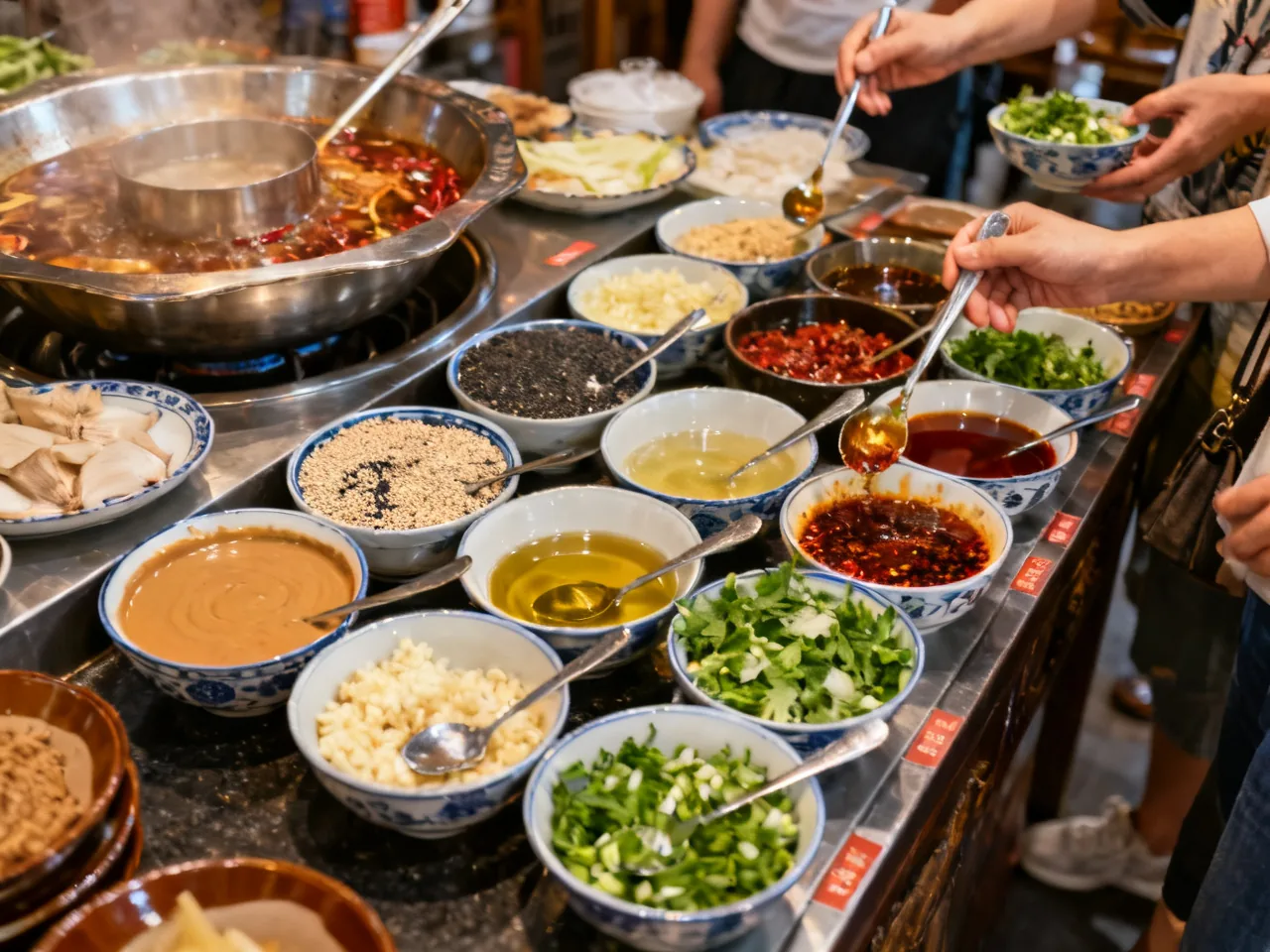
The dipping sauce is your personal canvas. Common base formulas:
Sesame paste bowl (northern style): Sesame paste + fermented tofu + chive flower paste + a little sesame oil. Classic with lamb hot pot.
Oil bowl (Sichuan/Chongqing style): Sesame oil + minced garlic + scallions, sometimes a splash of vinegar. Cuts the spice from red broth.
Universal formula: Sesame oil base + minced garlic + scallions + a little soy sauce + add chili or sesame paste to taste.
Blanching Times
| Ingredient | Time |
|---|---|
| Beef tripe | 7-10秒 7–10 sec |
| Duck intestines | 5-8秒 5–8 sec |
| lamb | 10-15秒 10–15 sec |
| 虾滑/鱼丸 Shrimp paste/fish balls | 2-3分钟 2–3 min |
| Tofu | 3-5分钟 3–5 min |
| Wide noodles | 5-8分钟 5–8 min |
These are reference times; actual time depends on how vigorously the broth is boiling. For tripe and duck intestines, err on the shorter side — overcooking makes them tough.
Price Reference
Per-person cost varies widely by city and tier:
- Street-level shops (Chongqing/Chengdu): ¥50–80/person
- Chain brands (Haidilao, Xiabu Xiabu): ¥100–150/person
- Premium hot pot: ¥200+/person
Haidilao is famous for its service — free snacks and nail art while waiting, staff who tie your hair back and put a protective bag over your phone. About 30% pricier than average chains, but worth experiencing at least once.
After hot pot, your clothes will smell — this is universal and expected. Don’t schedule anything requiring formal attire afterward.
For a completely different side of Chinese food, China’s Breakfast Map covers eight cities’ morning meals. For more food culture background, How a Tea Nation Fell for Coffee and A Block of Tofu’s 2,000-Year Journey are both worth reading.