Когда мостовая улицы Поцзыцзе только заблестела, я перестал устраивать гонку с Чаншей и временем
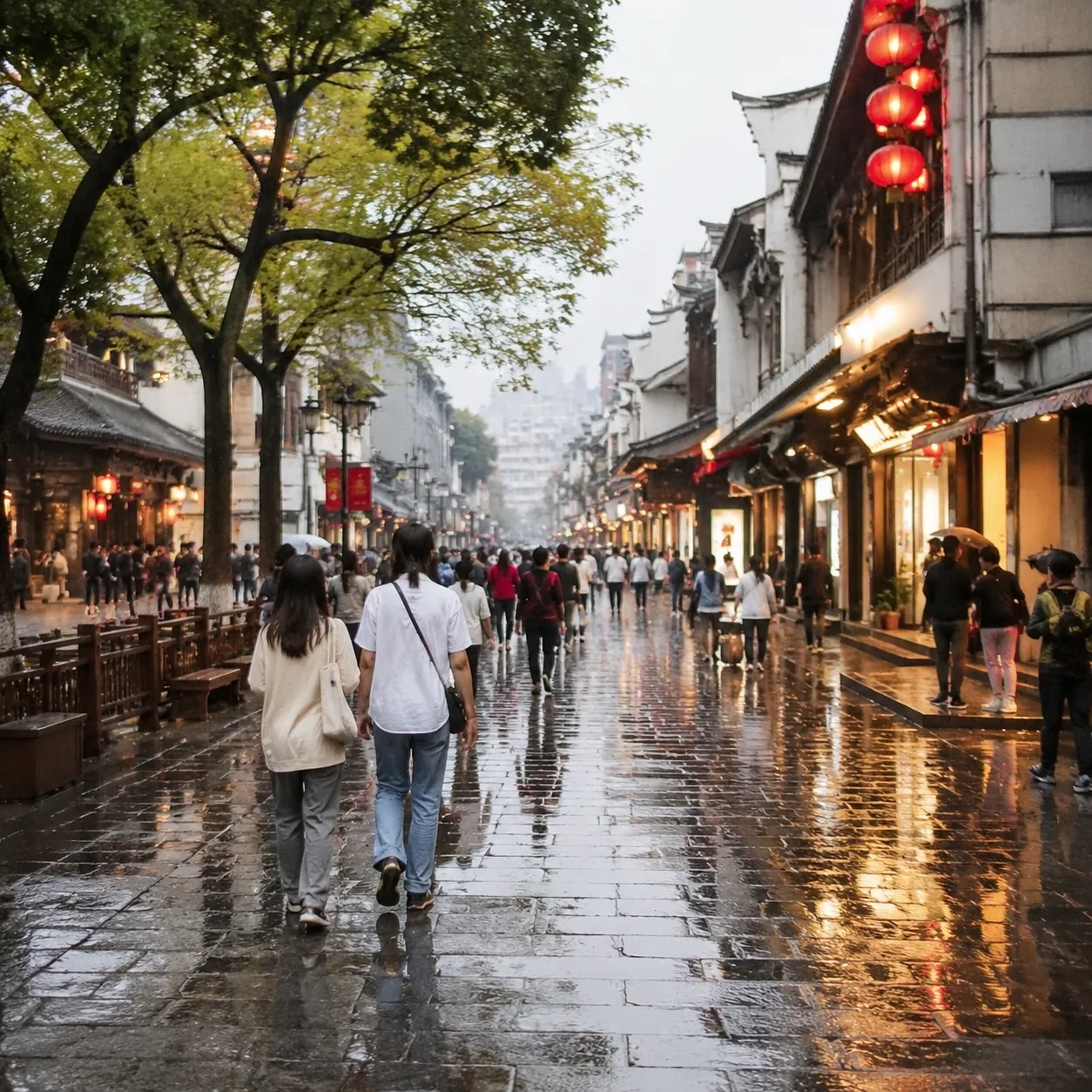
Changsha after rain is made for slow walking. Not the quick walk of checking off sights one by one, and not the hurried walk of eating one meal before rushing to the next stop, but a walk that lets your pace slow with the shine of wet pavement, the gaps in the crowd, the steam at shop doors, and the reminders from clerks. When the rain has just stopped, the signs on Pozi Street look softer than usual, stone slabs and asphalt both reflect light, umbrellas are not fully folded away, and the air carries a mixed smell of chili, fried food, sweet drinks, damp wood, and rainwater. This kind of Changsha is not meant for staring only at a navigation arrow. It is more like a street you need to listen to while walking.
Starting from Pozi Street, it is better not to decide what to eat immediately after leaving the metro or reaching the intersection. After rain, the crowd has a particular rhythm: some people have just come out of restaurants, umbrella holders take more space, delivery riders go around puddles, tourists pause under signs for photos, and clerks call numbers or remind people where to line up. If you walk too fast, the crowd may push you toward a place you did not really choose. Stand aside for a minute or two first. Notice which side moves more smoothly, which storefront is crowded only because people are taking photos, which queue is real, which alley entrance has standing water, and which eaves can shelter you for a moment.
The liveliness of Pozi Street is not one single kind of liveliness. There is the liveliness of tourists and the liveliness of locals who already know their routes; there is the liveliness created by large illuminated signs and the liveliness made by wok sounds inside small storefronts. Walking here after rain means learning to separate sounds into layers. The outer layer is traffic, voices, and camera sounds. The middle layer is clerks calling “move inside,” “watch the step,” or “line up this way.” The inner layer is oil popping in pans, scissors cutting stinky tofu, and cup lids snapping shut. If you can hear these layers, your pace naturally slows, and it becomes easier to avoid unnecessary congestion.
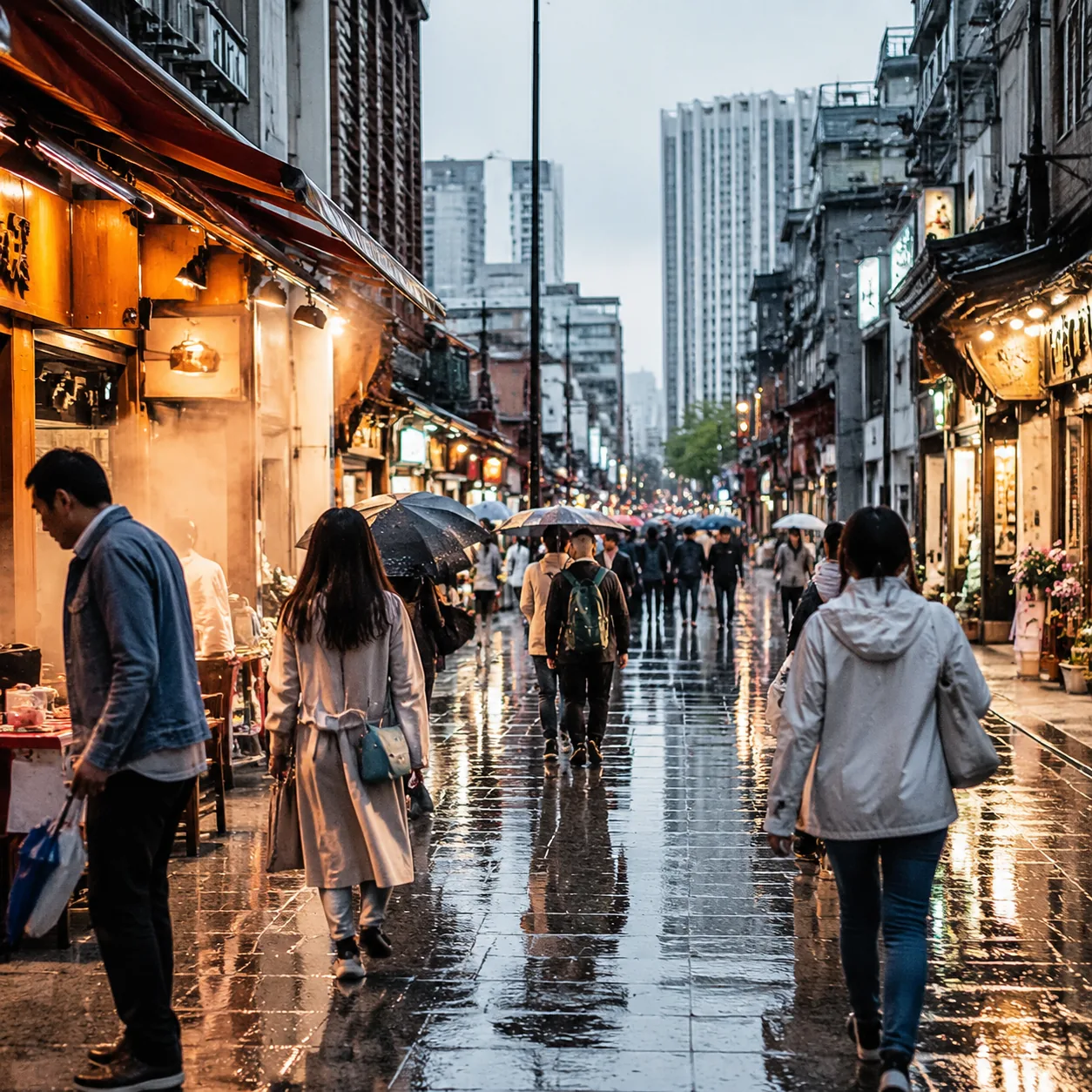
Alley entrances are some of the best places to pause in Changsha after rain. The main street has many lights and people, but an alley entrance can change the smell within one or two steps. One moment there are sweet drinks and fried snacks; after turning in, you may find rice-noodle broth, damp walls, old residential buildings, charcoal from skewers, and washed plastic stools. Do not rush through just because the alley is narrow. First look at the ground, because rainwater can make oil stains, fallen leaves, and step edges more slippery. Then look above: old air-conditioning units, dripping awnings, and low signs may require a slight detour. Finally watch the flow of people. If someone is carrying hot soup out of the alley, give them a full path.
After rain, Pozi Street and the surrounding alleys also call for a quieter phone. Many people film while walking, and once the lens is raised, they forget the ground underfoot. In fact, the best photos are often not at the most crowded front angle but from the side: an umbrella leaning by a doorway, a clerk wringing out a wet cloth, a burst of white steam from a pan, half a red sign reflected on the ground, or a delivery rider in a raincoat waiting for an order at an alley mouth. Take the photo, then put the phone away and keep watching the road. Rain makes the city more beautiful, but it also makes it easier to slip. Photos can be selected later; a fall happens instantly.
The reminders from clerks at snack shops deserve attention. Changsha snack shops move quickly, especially after rain when customers gather again, and clerks constantly manage queues, number tickets, takeout, dine-in orders, delivery pickups, and people sheltering from rain. One clerk may remind you to order before lining up; another may say this side is for pickup, not queueing; someone may warn that the ground is slippery; someone may tell you to add chili yourself or eat something while it is hot. These comments sound ordinary, but they can save you many detours. Do not stare only at menu prices, and do not pretend not to hear just because you do not understand. Pause, watch what others do, and follow the process.
If you do not handle spicy food well, say so early in Changsha snack shops after rain. Rainy weather makes people crave hot, strong flavors, and what is in the pan, bowl, or dipping sauce may become more fragrant and more intense. When ordering, say “less spicy,” “mild,” or “chili on the side.” If you cannot eat chili at all, do not only say “no spicy”; confirm whether the soup base, sauce, or seasoning powder contains chili. Clerks are usually busy, so the simpler and clearer you are, the better. You can write one sentence on your phone: I cannot eat very spicy food; please use less chili and keep the sauce separate. Showing this to the clerk is more effective than repeatedly explaining at a noisy doorway.
After sitting down in a snack shop after rain, the first thing is not to open chopsticks immediately but to check the area around your feet and table. The stool may have just been wiped, the floor may still be wet, and your bag should not be placed where it can be stepped on or splashed. Many small shops are tight, and people carrying bowls need space to pass. Fold your umbrella properly, and do not point the umbrella tip toward someone else’s legs. When hot soup, hot oil, or hot noodles arrive, let the person serving them put everything down steadily before moving anything. Changsha’s everyday warmth works because everyone inside a small space cooperates: clerks move fast, and customers stay steady.
Around Pozi Street, it is easy to buy too much food. After rain, when you smell the aroma and see others holding stinky tofu, sugar-oil baba, fried skewers, tea drinks, and rice noodles, every item seems worth trying. The benefit of slow walking is that it gives your stomach time to judge. Do not buy too much at the first stop. Share one portion, walk ten minutes, then decide on the next item. Humid air after rain makes heavy oil and strong chili more likely to make you thirsty and tired. Carry water, or choose a drink that is not overly sweet. A truly good snack route does not cram every famous shop into one evening; it lets you keep walking comfortably after eating.
Crowds after rain can suddenly thicken and then suddenly loosen. When the rain has just stopped, everyone who was sheltering comes out together, and the street feels like a gate has opened. Ten or twenty minutes later, some people enter shops, some head to the metro, some continue taking photos, and gaps appear again. While walking slowly, you do not need to compete with the first wave. Wait under an eave, or enter a less famous shop for something small. When pavement reflections become clearer, umbrellas become fewer, and delivery riders return to a normal rhythm, continue toward the alleys. Travel is not a race, especially after rain. Those who know how to wait often see more details.
The colors of Changsha after rain are worth watching slowly too. After daytime rain, old walls look darker, leaves brighter, and water beads hang from the edges of plastic sheets at stalls. After night rain, red and yellow signs fall onto the ground, are broken by footsteps, and reassemble in the next puddle. Pozi Street’s liveliness is often described as a taste memory, but after rain it is first a visual memory. Do not point the camera only at shop names. Look at the shoes of people in line, paper bags dampened by rain, water on a clerk’s hand, and mud on the anti-slip mat by the door. The most truthful parts of a city often sit in these less advertised corners.
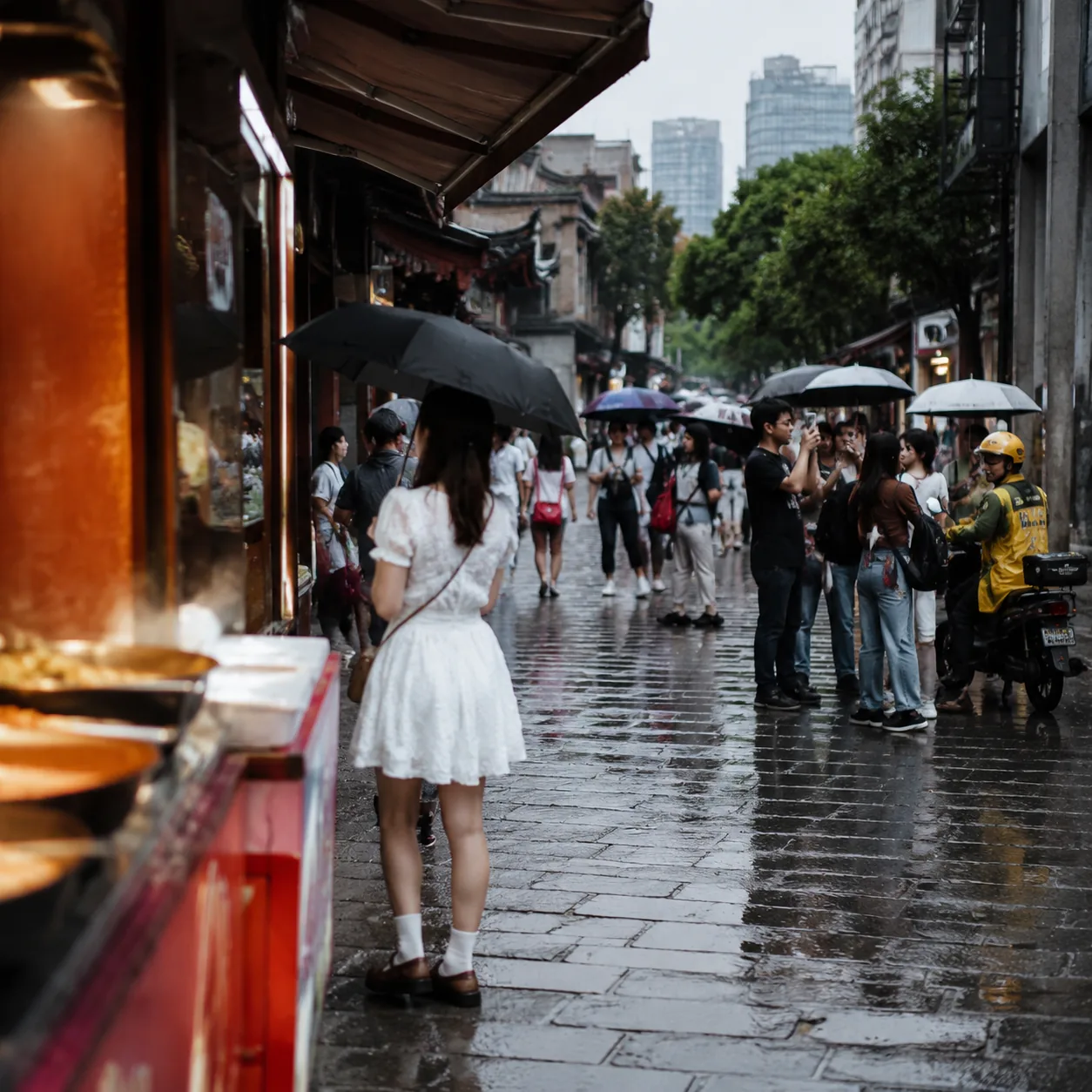
Walk a little deeper into the alleys, and the sounds become closer to daily life. On the main street, tourists discuss which shop is more famous. In the alley, a resident may ask the owner whether noodles are still available, a clerk may remind a regular that the road is slippery, a child may be called back after stepping in water, and a delivery rider may place a helmet on a stool to wipe off rain. These sounds do not require deliberate searching, as long as your earphones are not too loud. For a slow walk after rain, leave one ear for the street. If you hear someone behind you carrying something hot, make room. If you hear an electric scooter bell, move aside. If a clerk says there are seats inside, then decide whether to enter.
After rain, be honest about your energy. Humidity, spice, crowds, and long periods of standing can tire you faster than expected. Do not force yourself to eat until full and walk until your feet hurt just because you are in Changsha. Around Pozi Street, there are many places to pause briefly. Even standing for five minutes in a corner that does not block the way, organizing your umbrella, tissues, trash, phone, and water, can make the second half of the walk much more comfortable. If your feet are already wet, change socks or return to the hotel early. Feet soaked by rain can blister easily if you keep walking.
Be patient with trash too. Snack streets easily create moments when you are holding paper bowls, bamboo sticks, cups, and plastic bags while searching for a place to throw them away. After rain, the area around bins may have standing water and crowds, so do not toss things from a distance. Put bamboo sticks into a paper bag, finish drinks before discarding cups, and do not pour oily soup into roadside drains. Many storefronts have their own collection bins or trays, so first watch clerks’ gestures and signs. You will notice that how one person handles trash affects the steps of many people behind them. Slow walking is not only about looking slowly; it is also about carefully dealing with the traces you leave.
If it has rained and may rain again, keep the itinerary flexible. Do not turn every shop into a target that must be reached. Think of the route as several short sections: from the main street to an alley entrance, from the alley entrance to a small shop, from the shop to the next eave, and from that eave decide whether to head to the metro or continue wandering. Then, if rain returns, you will not feel embarrassed or rushed. Changsha rain sometimes arrives quickly and stops quickly. Ten minutes spent sheltering is not wasted. You may happen to hear a clerk chatting with a regular, or notice a snack on the menu that you had missed before.
While walking slowly, communication with clerks can be simple. A nod, a thank you, a request for less chili, returning a used tray to the designated place, and pushing the chair back when leaving are enough. Do not expect every shop to slow its rhythm for tourists, and do not feel ignored simply because a clerk speaks quickly. Work intensity on a snack street is high, and after rain clerks must also manage wet floors, queues, and delivery orders. Their reminders are often meant to make movement safer and faster. It is fine if you understand only half; if you are willing to observe, you can keep up.
Pozi Street is not an isolated street. Together with surrounding alley entrances, small squares, mall entrances, and old storefronts, it forms an area that can unfold slowly. You can walk one lively section first, then turn into a quieter side alley; eat something hot first, then find a drink; photograph the signs first, then look down at their reflections in water. The best order after rain is often not the order written in a guide but the order your body tells you: where it is not slippery, where it is not crowded, where the smell feels right, where a clerk says seats are available, and where wind from an alley feels comfortable.
When it is time to leave, do not look only for the nearest metro entrance. After rain, pavement and crowd flow can change what “nearest” means. The nearest entrance may have a queue, standing water, or slippery steps, while one slightly farther away may move more smoothly. The same applies to ride-hailing: do not call a car at the most congested storefront. Walk to a wider, better-lit place where cars can stop briefly, then confirm the pickup point. Put away your umbrella, jacket, packed snacks, and phone properly; do not carry hot soup while answering the driver and searching for the car. The last few minutes of leaving a snack street often require more steadiness than arriving.
The memory left by a slow walk through Changsha after rain may not be which shop tasted best. It may be the moment a Pozi Street sign trembled in water, a clerk at an alley entrance reminding you to be careful because the ground was slippery, steam from a bowl of noodles fogging your glasses, strangers making room for someone carrying soup, or the sudden smell of sugar and oil while you waited under an eave for rain to stop. Such memories are small, but they last. They are not as tidy as a popular checklist, yet they help you truly remember the warmth of a city.
So when you visit Pozi Street after rain, loosen the plan a little. Bring tissues, wear shoes that can handle wet ground, keep battery in your phone, leave room in your stomach, and leave space in your pace. Slow down at alley entrances, detour around puddles, listen carefully when clerks remind you of something, confirm the process before queueing, and confirm the spice level before ordering. Changsha’s charm is not only in its liveliness, but also in the moment after that liveliness has been washed by rain. Then the crowd begins to flow again, lights spread again, snacks steam again, and the city feels like a table freshly wiped clean, waiting for you to sit down steadily and walk through slowly.