5-дневный тур по древней архитектуре Шаньси
70% of China’s surviving above-ground ancient architecture is in Shanxi. If you’re curious what miracles wood and stone can create, Shanxi is the only answer.
Why This Route
Shanxi has China’s highest density of ancient architecture — from Tang Dynasty timber structures to Liao-Jin temples to Ming-Qing courtyard mansions, spanning over 1,000 years. The Datong–Yingxian–Wutaishan–Taiyuan–Pingyao route strings together Shanxi’s architectural highlights. Five days gives you a living textbook of Chinese architectural history.
Day-by-Day Itinerary
Day 1: Datong
Afternoon: Yungang Grottoes (¥120) — one of China’s three great grottoes, carved during the Northern Wei (from 460 AD), with 50,000+ Buddha statues across 51 main caves. Cave 20’s open-air Great Buddha (13.7m tall) is Yungang’s icon — full-faced, serenely smiling, with clear Gandhara (Indo-Greek) artistic influence, showing what Buddhist art looked like when it first entered China from the Western Regions.
Evening: Datong Ancient City Wall (free to climb) — Ming Dynasty walls restored to full integrity, bikeable around the perimeter (~7km). Inside the city, Huayan Temple (¥50) has the Liao Dynasty Bhagavat Sutra Hall with Liao-era painted sculptures — national treasure-level artifacts.
Day 2: Yingxian Wooden Pagoda & Hanging Temple
Morning: Datong to Yingxian (~1.5 hours) for the Wooden Pagoda (¥50) — the world’s tallest and oldest surviving pure-timber structure, built in the Liao Dynasty (1056 AD), 67.31m tall (~20 stories), entirely mortise-and-tenon jointed without a single iron nail. Looking up from below, you’ll feel awe at ancient engineering. Currently no climbing allowed (structural preservation) — exterior viewing only.
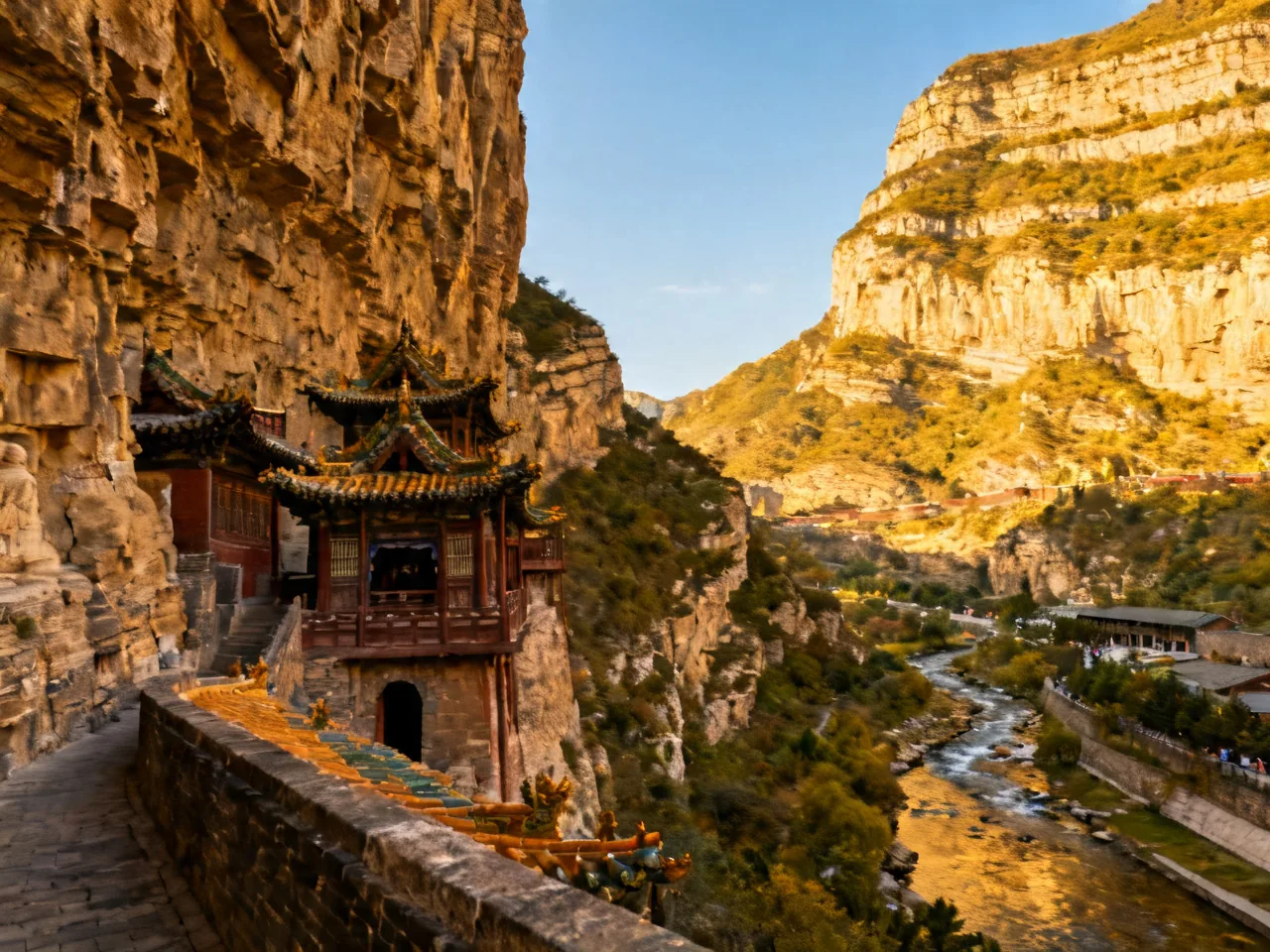
Afternoon: Hanging Temple (¥125 including climbing fee) — a temple built on Hengshan’s cliff face, ~50m above ground, supported by wooden beams inserted into rock. Buddhism, Taoism, and Confucianism coexist here, sharing a cliff for 1,500 years. Walking the suspended wooden walkway and looking down will make your legs wobble.
Day 3: Mount Wutai
From Datong to Mount Wutai (~3.5 hours, ticket ¥135). Wutai is the foremost of China’s four sacred Buddhist mountains, bodhimanda of Manjusri. Temples are densely packed; key visits:
- Foguang Temple (separate trip, ~30km from Taihuai Town) — one of China’s oldest surviving Tang Dynasty timber buildings (857 AD). When Liang Sicheng and Lin Huiyin discovered it in 1937, they were moved nearly to tears. An architecture pilgrimage site.
- Xiantong Temple — Wutai’s largest and oldest temple, founded in the Eastern Han. The Bronze Hall is a Ming Dynasty all-copper structure.
Day 4: Wutai → Taiyuan → Pingyao
Morning: Wutai to Taiyuan (~3 hours), visit Jinci Temple (¥80) — an ancient architectural complex southwest of Taiyuan, founded in the Northern Wei. The Song Dynasty painted clay maidservant statues in the Holy Mother Hall are masterpieces of Chinese sculpture — each maidservant has a different expression and posture, lifelike as real people. Zhou Cypress (3,000-year-old tree) and Nanlao Spring are also must-sees.
Afternoon HSR to Pingyao (~40 min). Evening: explore Pingyao Ancient City (free entry, all-in-one ticket ¥125 for attractions) — China’s best-preserved Ming-Qing ancient city, walls, streets, shops, and residences virtually unchanged from centuries ago.
Day 5: Pingyao & Departure
Morning: Rishengchang Draft Bank (on the pass) — China’s first draft bank (precursor to modern banks), founded in 1823, with branches nationwide at its peak — the starting point of Chinese financial history. Then climb Pingyao City Wall — 6km perimeter, well-preserved, overlooking the entire ancient city from above. Afternoon: depart.
Practical Notes
Best season: April–October. Shanxi winters are very cold (-10 to -20°C); Wutai is snowed in during winter.
Budget: ~¥3,000–5,000 per person for 5 days (excluding intercity transport). Shanxi prices are moderate; accommodation ¥150–400/night. Pingyao’s in-city guesthouses are characterful.
Bottom Line
Shanxi is China’s open-air museum of ancient architecture — other provinces record history in photographs; Shanxi records it in buildings themselves.
Related Reads
- 10-Day East China Five-City Loop
- Lijiang Old Town: Naxi Culture & Snow Mountain Views
- Zhangjiajie Glass Bridge & Tianmen Mountain Guide
- Guilin Li River Scenic Tour Complete Guide
- Spring Bloom Map: China’s Most Beautiful Flower Fields