В Синьцзяне проще всего снять эффектные кадры, но по-настоящему решают, пойдёт ли маршрут гладко, именно пустые отрезки дороги
When foreign creators write about China’s northwest, the first word the camera usually grabs is vastness. Xinjiang especially invites that instinct: long roads, huge skies, open mountain lines, and dramatic changes in light can overwhelm the frame immediately. But if public material of this kind is reduced to “Xinjiang is enormous,” the most valuable layer is quickly lost. What truly makes a Xinjiang route work is never only the scenery. It is the large amount of emptiness between scenes—the emptiness of the road, the emptiness of pauses, the emptiness needed for physical recovery, and the emptiness that allows viewers to accept changes in scale gradually.
When Travel Notes rewrites this kind of foreign creator material, the layer most worth adding is not more dramatic vocabulary such as breathtaking, epic, or otherworldly. It is the translation of emptiness into route logic. Great northwestern landscapes in China do not forbid density, but whenever density is pushed too hard, both the body and attention lose their breathing space. The value of a third-person reported format lies precisely there: it can take videos that appear to be only about giant scenery and turn them into articles about usable rhythm.
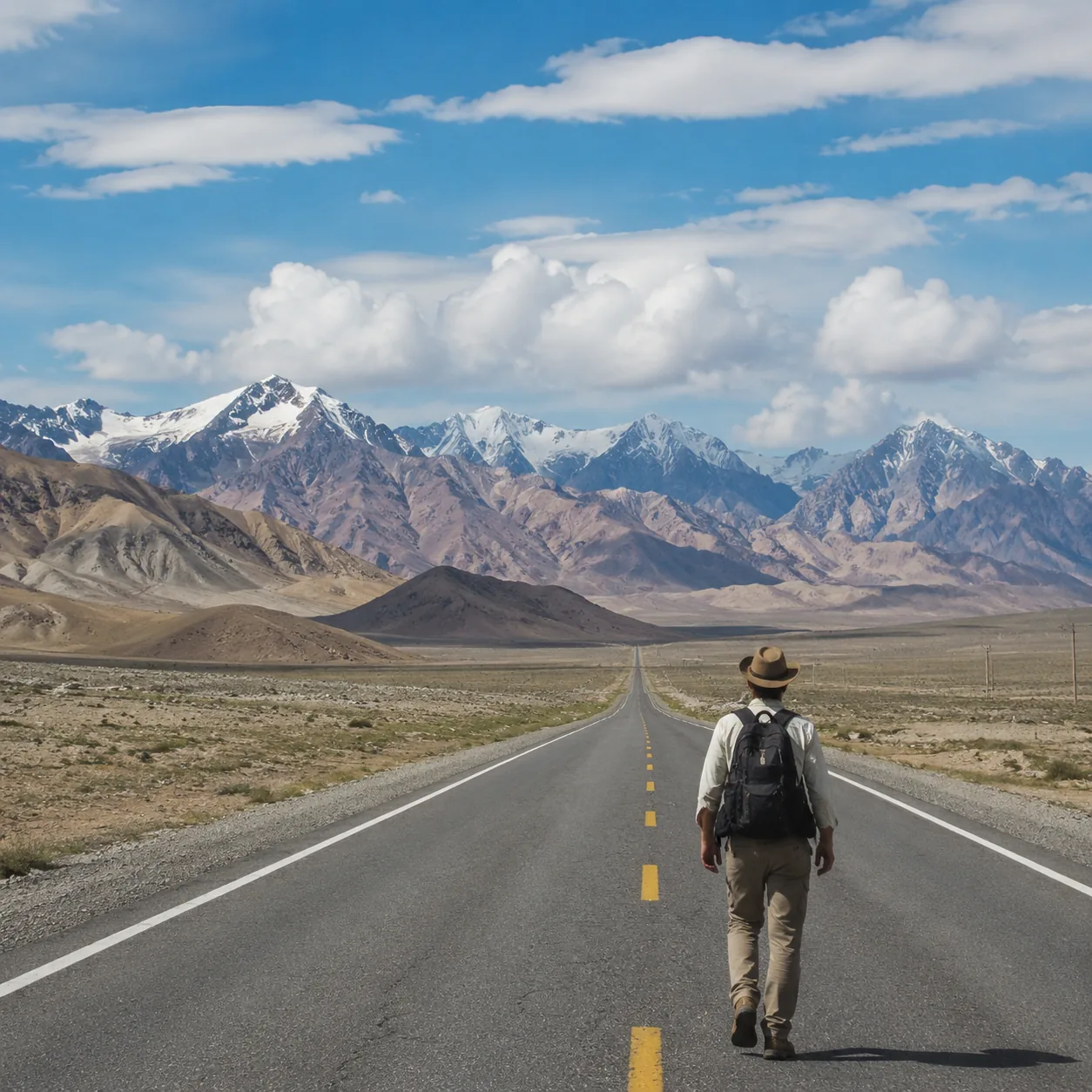
Why Xinjiang Is So Often Filmed as a Place That Feels Far Away at First Glance
Xinjiang has intense visual force, and foreign creators can hardly resist filming its distance first. The mountain lines are distant, the roads are distant, and even the horizon itself feels distant. Many locations do not offer much detail in the first second. They push the viewer away through scale before anything else happens. That is one reason Xinjiang differs so sharply from many Chinese city narratives. Urban content often begins with too close, too dense, too complex. Xinjiang begins by handing the viewer distance.
But if that distance is handled poorly, it turns into a threshold. An ordinary viewer may be pulled in by beauty without understanding how to enter that beauty in practice. If a foreign creator’s public material stops at “this is incredibly vast,” Xinjiang remains trapped as a distant wish. But once movement rhythm, stopping habits, route switching, and energy management appear inside the material, the audience can move from I wish I could see this to I am starting to understand how this trip would work.
What Deserves to Enter a Reported Article Is How a Northwestern Route Avoids Becoming One Endless Breath
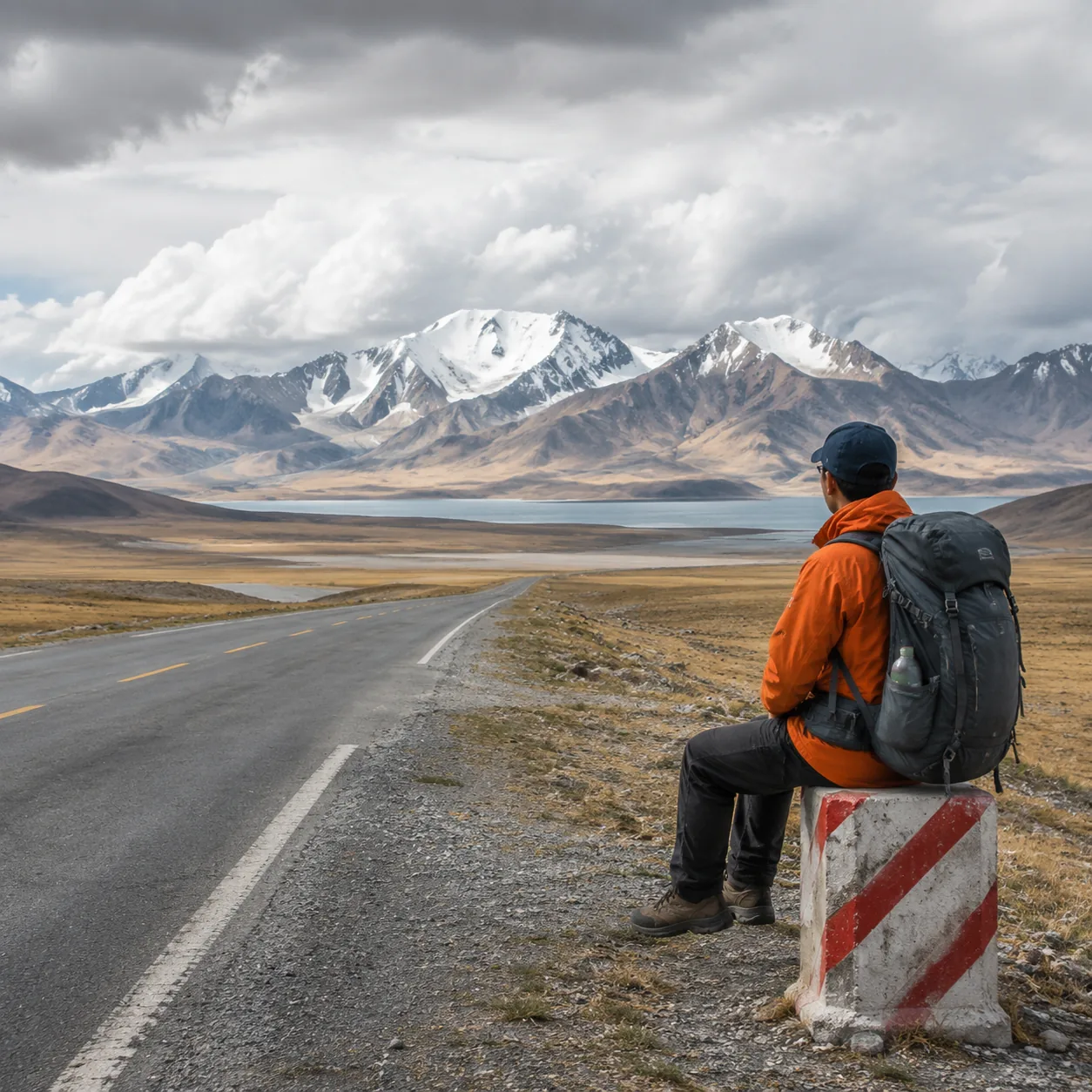
China’s northwest is very easily miswritten as one continuous high-intensity spectacle: everything large, everything dramatic, everything worthy of stopping for immediately. But a mature route observation should not work that way. The greatest risk of grand landscapes is not that they are insufficiently beautiful. It is that they tempt people into treating every segment with identical force. What Xinjiang most deserves is a clear explanation of when to move quickly, when to pause, and when the long road itself should be treated as content rather than a mere bridge to the next checkpoint.
This is exactly the element in foreign public material most worth transforming for Travel Notes. Not because creators know how to say something looks cinematic, but because the moment they show a long road, a mountain line opening slowly, or a pause before evening, they have already revealed the most important truth of a northwestern route: movement itself is part of the landscape.
For Travel Notes, the Most Important Layer to Add in Xinjiang Writing Is Scale Adaptation
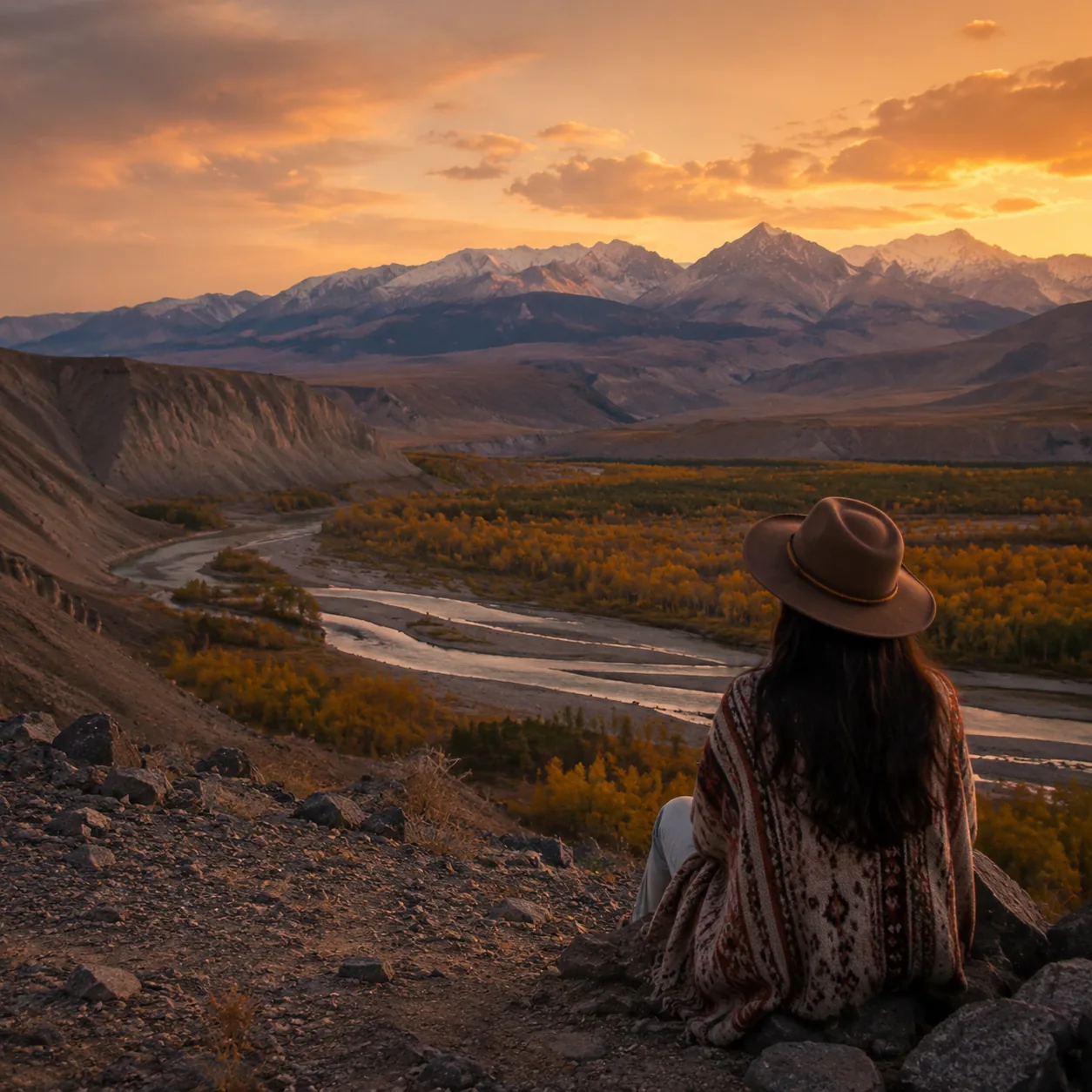
Many travel articles assume that once readers see a grand landscape, excitement will happen automatically. China’s northwest often works differently. During the first days, newcomers more often feel the fatigue of scale before they feel mastery over it: long drives, eyes pulled constantly toward distance, and photographs that collapse into a simple wow without knowing what comes next. If Travel Notes can write scale adaptation into the article, the result becomes much more useful than ordinary scenery prose. It can explain the best intensity for entering on day one, when not to become greedy for too many stops, which evenings should be reserved for large views, and how to treat the blank stretches of a route as part of the experience itself.
That is also why foreign-creator material about Xinjiang should not be flattened into a ranking of the most beautiful places. Its real power lies not in the list, but in sequence. What to see first, what to hold until later, how much blank space to leave, and which movement segment should function as a buffer—once these things are made clear, the northwest ceases to be merely too far, too large, and too impressive. It becomes a route a reader can genuinely understand.
Public Source Notes
Public source note:
- Rewritten from publicly visible foreign-creator angles on Xinjiang and China’s northwestern landscapes, focusing on how vast scenery becomes a route.
- No wholesale reproduction is used; the emphasis is on route logic and scale adaptation.