На автовокзале уездного городка в Китае я научился сначала смотреть, куда идёт толпа, и только потом искать перрон
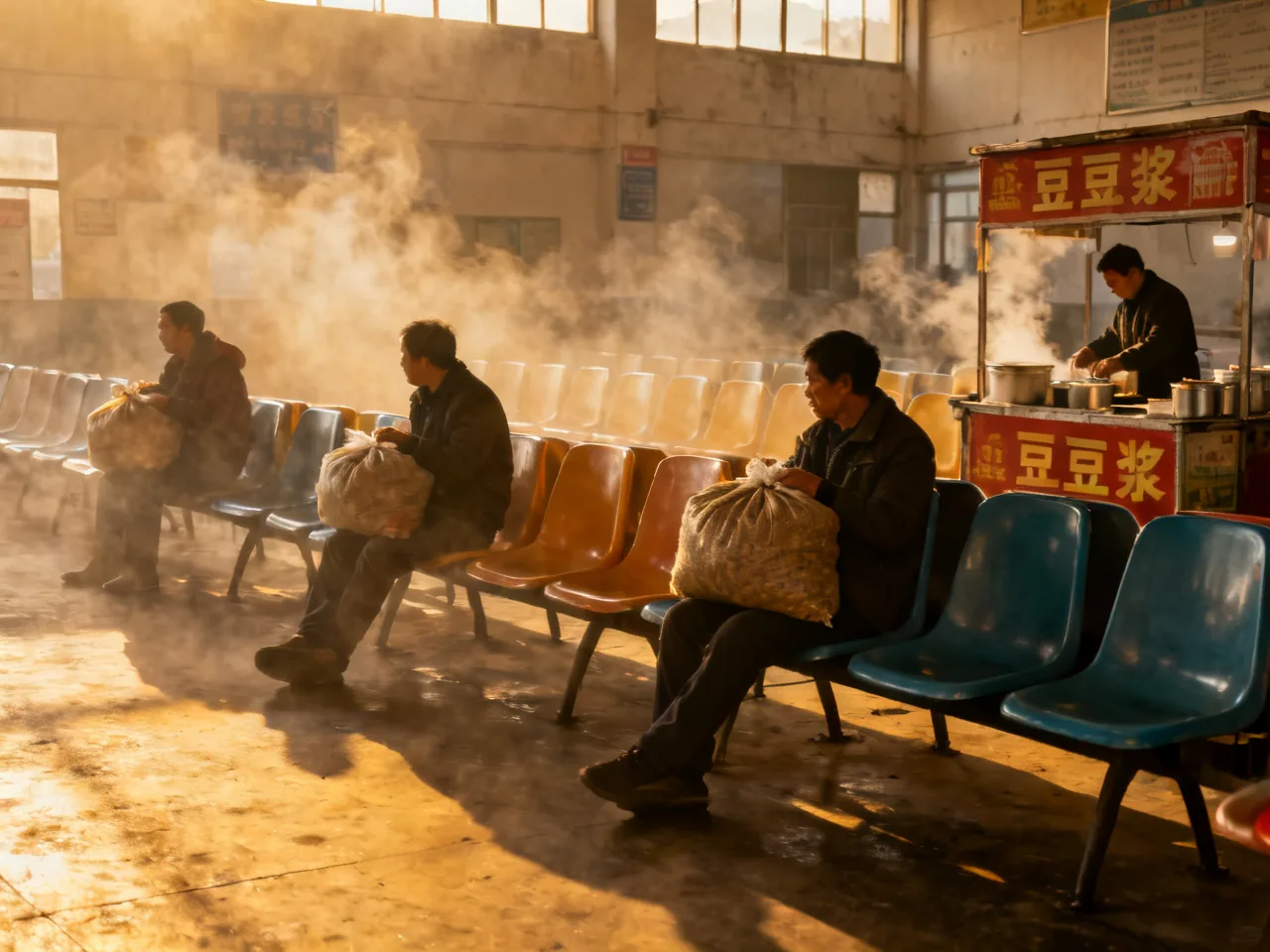
The first time I took an early bus alone at a county bus station in China, it was on a misty morning. Daylight had not fully arrived yet. The tiles outside the waiting hall still held a little dampness. A small stand selling soy milk and tea eggs was already sending up white steam. On the plastic chairs sat older people with woven bags, younger travelers with backpacks, and several others with jackets hanging over their shoulders as they looked down at their phones. That morning I had assumed that a smaller-town bus station would feel easier than a big-city one, with a looser process—just check the route, wait for the time, and get on. But once I actually stepped inside, I quickly realized that places like this, precisely because they look understated, often have a rhythm you need to read with your eyes first.
What caught my attention first inside the waiting hall was not the announcement system, but the direction of human movement. Some people stayed seated. Some lined up at the ticket counter. But a smaller cluster would suddenly lift their bags and stride toward a side passage the moment an announcement ended. A sign for the boarding check area hung there, though it was not in the middle and was easy for a first-time visitor to miss. I made a very typical outsider’s mistake: I focused only on the route and departure time on the electronic screen and did not first observe how people familiar with the station were actually moving. So when the announcement called my destination, I instinctively walked toward the main entrance and almost followed a group of people who were heading out rather than toward boarding. Just as I stopped and looked around, a driver standing nearby taking a quick sip of soy milk lifted a hand toward the side and said, “Boarding is over there, not at the front.”
That one reminder made me understand immediately that in a county bus station, the most important thing is not to read every sign exhaustively, but to identify which group of people is carrying out the same task you are. Many public spaces in China work this way. Signs are useful, of course, but the most efficient information is often also hidden in people’s physical behavior. Who stands up first, who shifts their luggage into their hand, who leaves a gap for someone else to pass, who starts moving toward a certain corner after the announcement instead of staying seated—these signals can be faster than written instructions. When I followed those people to the side boarding gate, a short line had already formed naturally. Nobody was loudly enforcing order, yet people still kept bulky luggage close to themselves so the passage remained clear, held their ticket and ID ready instead of digging through bags at the window, and stepped two paces forward after being checked so the next person could come up smoothly.
I often think back to the driver’s gesture because it was so brief, yet it pulled me out of that anxious feeling of not understanding the place again. What impressed me about the county bus station was not a cold system forcing people into line, but something more like a small order everyone had already practiced into habit. The announcements were not gentle. The plastic chairs were not comfortable for long. The air carried diesel, the sweetness of soy milk, and the damp smell left in coats from the early morning. Yet inside exactly this kind of ordinary, slightly rough environment, you could see a very practical kind of cooperation. People might not go out of their way to guide you, but when you are obviously facing the wrong direction, someone will often use the simplest possible sentence to move you back onto the right track.
Later, when I took buses in other counties and townships, I stopped staring only at the screen the moment I entered the station. I would stand still for two minutes first, identify which people seemed to be traveling on the same route, and watch which direction bodies turned when an announcement came on. If the ticketing, waiting, and boarding areas were not clearly grouped together in obvious signage, I trusted the answer given by human flow even more. This is not blind imitation. It is a very suitable way to judge an unfamiliar environment: first watch how the system operates through people, then decide where to place yourself. For foreigners, this method is especially practical because it does not require understanding every word immediately, and it does not force you to ask many questions at once. It simply asks you not to rush into motion before taking one look at what the experienced people are doing.
Following the same way of reading a scene, [中国小城旅行观察] and [外国人第一次坐中国交通工具的经验] also reinforce this habit from other angles.
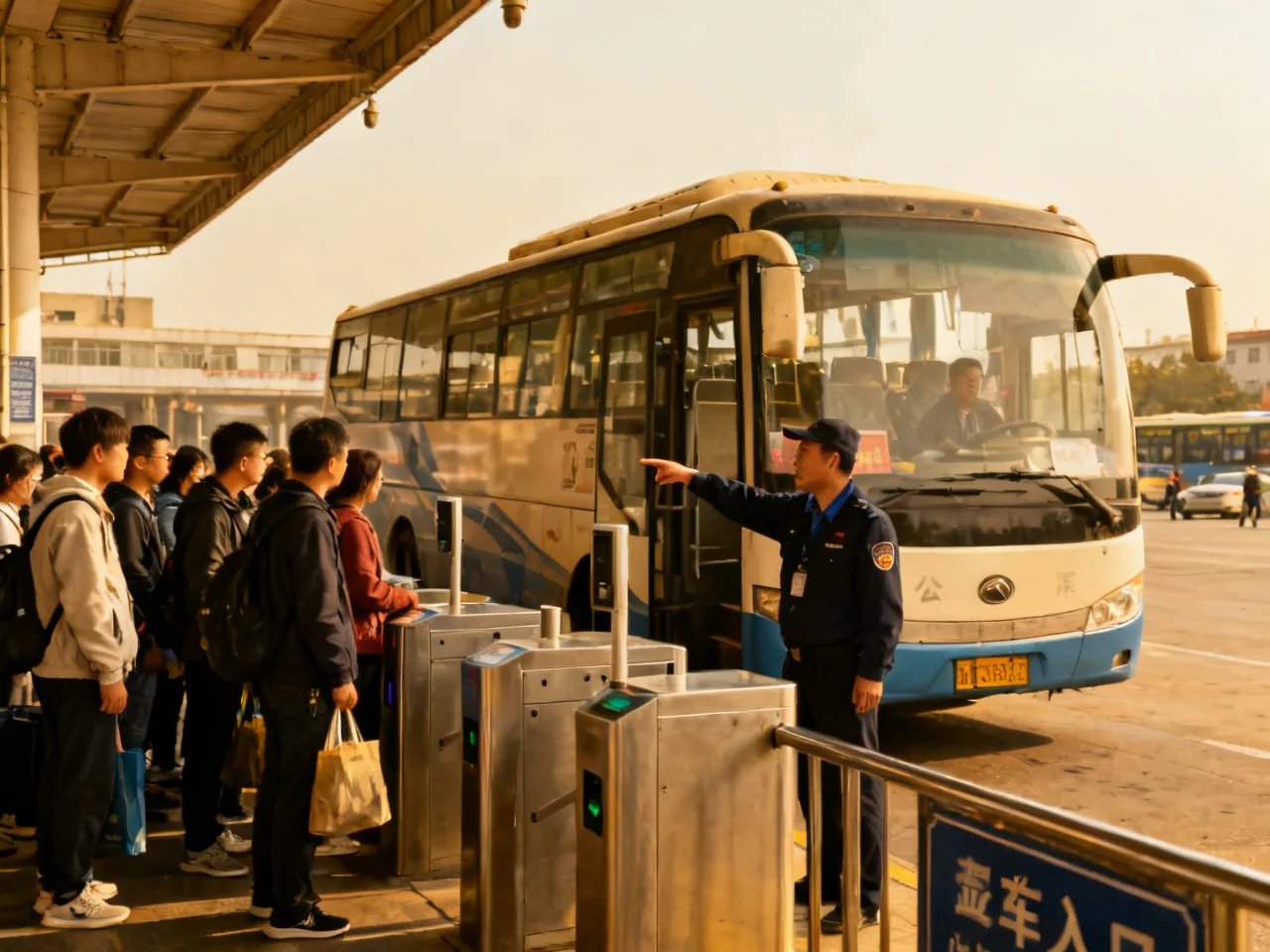
Another change was that I stopped treating county bus stations as merely a looser, more casual version of larger terminals. They certainly are not as bright and polished as high-speed rail stations, and they do not have the layered guidance system of an airport. But they are not chaotic. They simply rely more heavily on a few pieces of shared tacit knowledge: knowing that an announcement often means it is time to stand; knowing not to leave large bags across the center of a passage; knowing that the boarding gate may sit off to the side; knowing that asking a driver one quick question can sometimes be faster than staring blankly at a screen. Now if a friend newly arrived in China asks me what is most worth learning in a place like that, I would say not station vocabulary first, but the skill of watching where a crowd is going. Because what really helped me that morning was not how many words I managed to read. It was that I finally began to see how people there were making an ordinary bus station function.