После урока китайского языка в младших классах в Пекине автор наконец понял, почему дети всегда сначала учат счётные слова
At 9:05 in the morning, in a lower-grade language classroom in Beijing, a light spring rain had just passed. Outside the window, the rubber playground still reflected a thin wet shine. I was sitting by the door in the last row, watching the teacher place an apple, a plush puppy, and a blue schoolbag on the front desk one after another. As she wrote “one apple, one puppy, one schoolbag” on the board, some children in the front row quietly read along. Their voices were short, but surprisingly even.
I had always felt that measure words were one of the most difficult parts of Chinese for foreigners. Why is a book counted one way, a sheet of paper another, and a fish yet another? If you look only at the rules, measure words really do seem like little pieces flying in from different directions. But when this class began, the teacher did not start with abstract rules. She started with looking, touching, pointing, and saying. She held up the apple and asked, “What is this?” The children answered, “An apple.” Then she asked, “How many?” They answered, “One.” Only after that did she ask, “One what?” At that point, the door to measure words opened almost by itself.
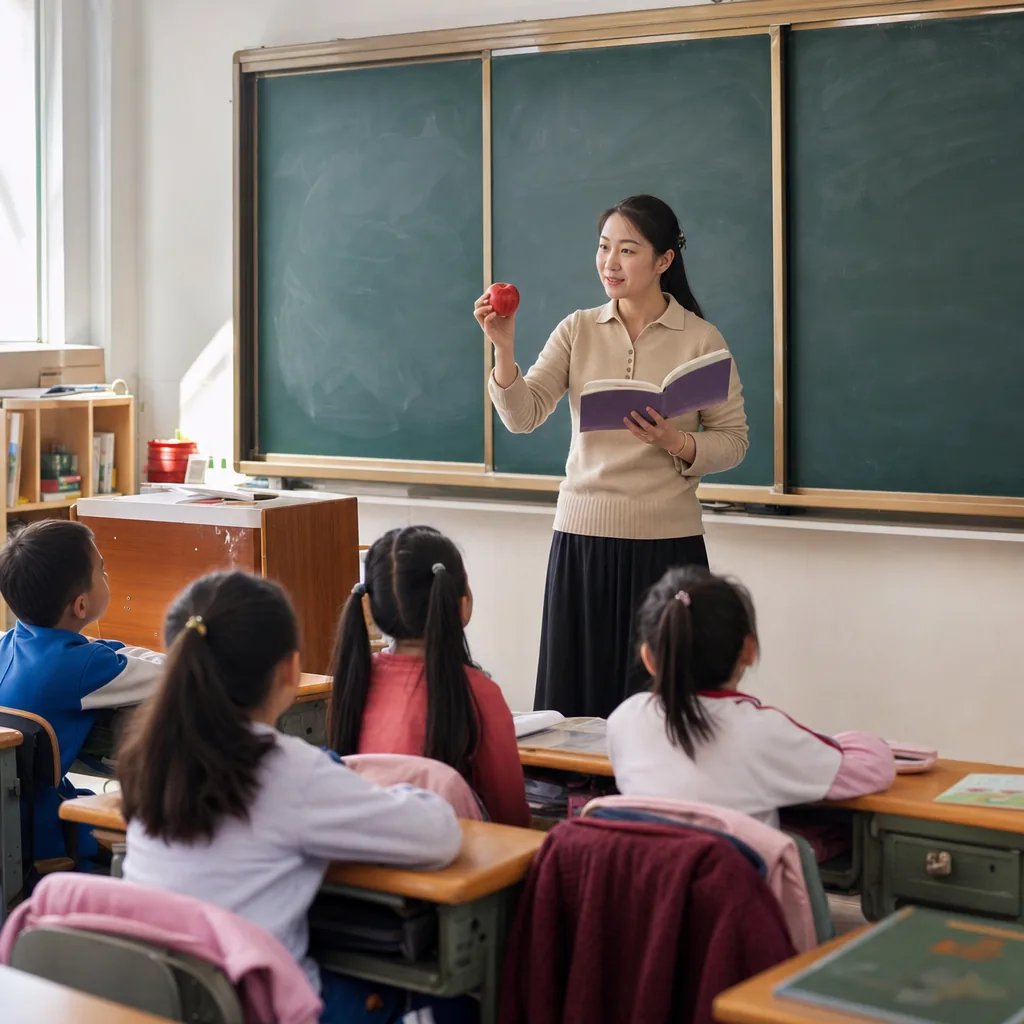
What moved me most was not the knowledge point itself, but the way the children learned it. A boy in a uniform vest said “one puppy” while tucking his hands to his chest like little paws. A girl said “one sheet of paper” while flattening her hand in the air as if she were actually holding the edge of a page. To adults, measure words can feel like grammar. In children’s hands, they feel like shape, weight, and outline. At that moment, I finally understood that children learn measure words early not only because exams require them, but because Chinese uses these small words to teach you how to see things.
Why Measure Words Matter So Much for Foreign Kids
First, they make your sentence sound more like Chinese. If you say “I have book” or “There is apple on the table,” people may still understand. But once you say “one book” and “one apple” the Chinese instantly sounds more natural.
Second, they tie real objects to language. A child sees a schoolbag and remembers “one schoolbag.” A child sees a fish and more easily remembers “one fish.” A child sees a road and slowly gets used to “one road.” This is not dead memorization. It is tying language to what is in front of you.
Third, they reduce translation-style Chinese. Many foreign children first build a sentence in English inside their heads and then carry it over into Chinese. Measure words force you to pause and begin organizing things in a Chinese way instead.
Fourth, they are perfect for story-based memory. You can remember “one umbrella,” “one ticket,” and “one pair of pants” through different mini-scenes instead of dry matching exercises.
Fifth, they improve listening speed. When you hear someone say “one cup,” “one piece,” or “one strip,” your brain starts predicting what may come next, and listening becomes easier very quickly.
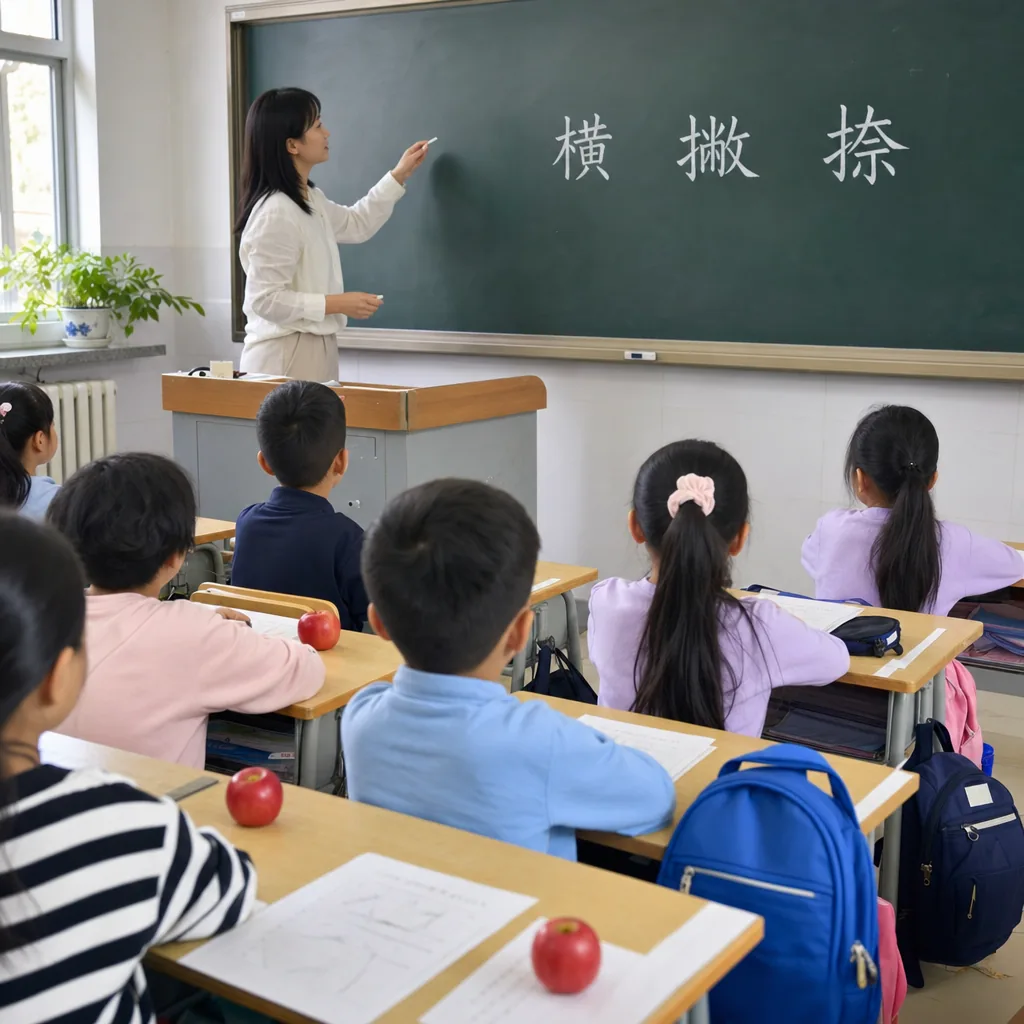
After class, I met the teacher again in the hallway. She was putting the apple back into a bag, and the paper rubbed softly as she folded the top. I asked why lower-grade children practice measure words so early and so often. She smiled and answered with one simple sentence: “Because children first need to see things clearly, and then Chinese follows.” That line helped me more than any long explanation. Measure words, I realized, are not an extra detail. They are part of the small frame Chinese uses to observe the world.
If you are a foreign child just starting Chinese, do not try to memorize dozens of measure words at once. Start with five common ones: one person, one book, one cat, one sheet of paper, and one cup of water. Then give each one a tiny scene. A book on the desk. A cat by the playground. A sheet of paper handed out in class. A cup of water after lunch. This kind of memory is much stronger than memorizing a chart by itself.
By the time class ended, the rain outside had stopped completely, and the shallow water near the playground was slowly catching the sunlight. As the children walked out with textbooks in their arms, they were still murmuring “one book, one sheet of paper, one dog.” I suddenly felt that these words are taught early not because they are difficult, but because they are so close to daily life. Chinese often does not begin by asking you to think about big ideas. It begins by asking you to notice the apple on the desk, the schoolbag in your hand, and what the world in front of you actually looks like.
If you want one more story about real Chinese around a school gate, you can also read school-gate Chinese story.