Waiting Outside a Shanghai Primary School, I Finally Understood Why “Have You Eaten?” Is Not Really About Food
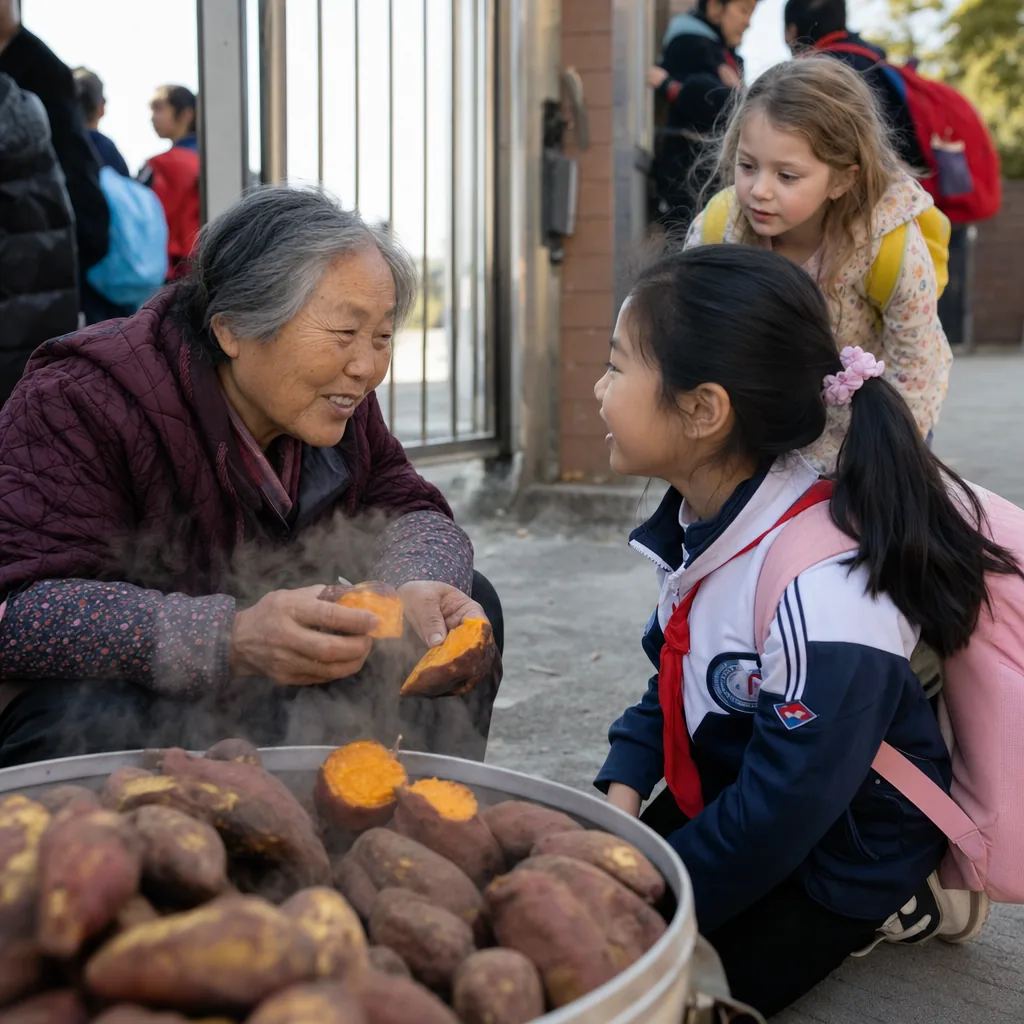
At 4:10 in the afternoon, I was standing under the plane-tree shadows outside a primary school in Shanghai, holding a bottle of mineral water that still felt cold in my hand. Children with square schoolbags poured out of the gate like a small tide. Near the entrance, a grandmother in a light gray jacket picked up her granddaughter and split open a roasted sweet potato she had just bought. Steam rushed out at once. Then I heard her smiling at another child and asking, “Have you eaten?” I froze for a second, because the child was literally holding half a sausage.
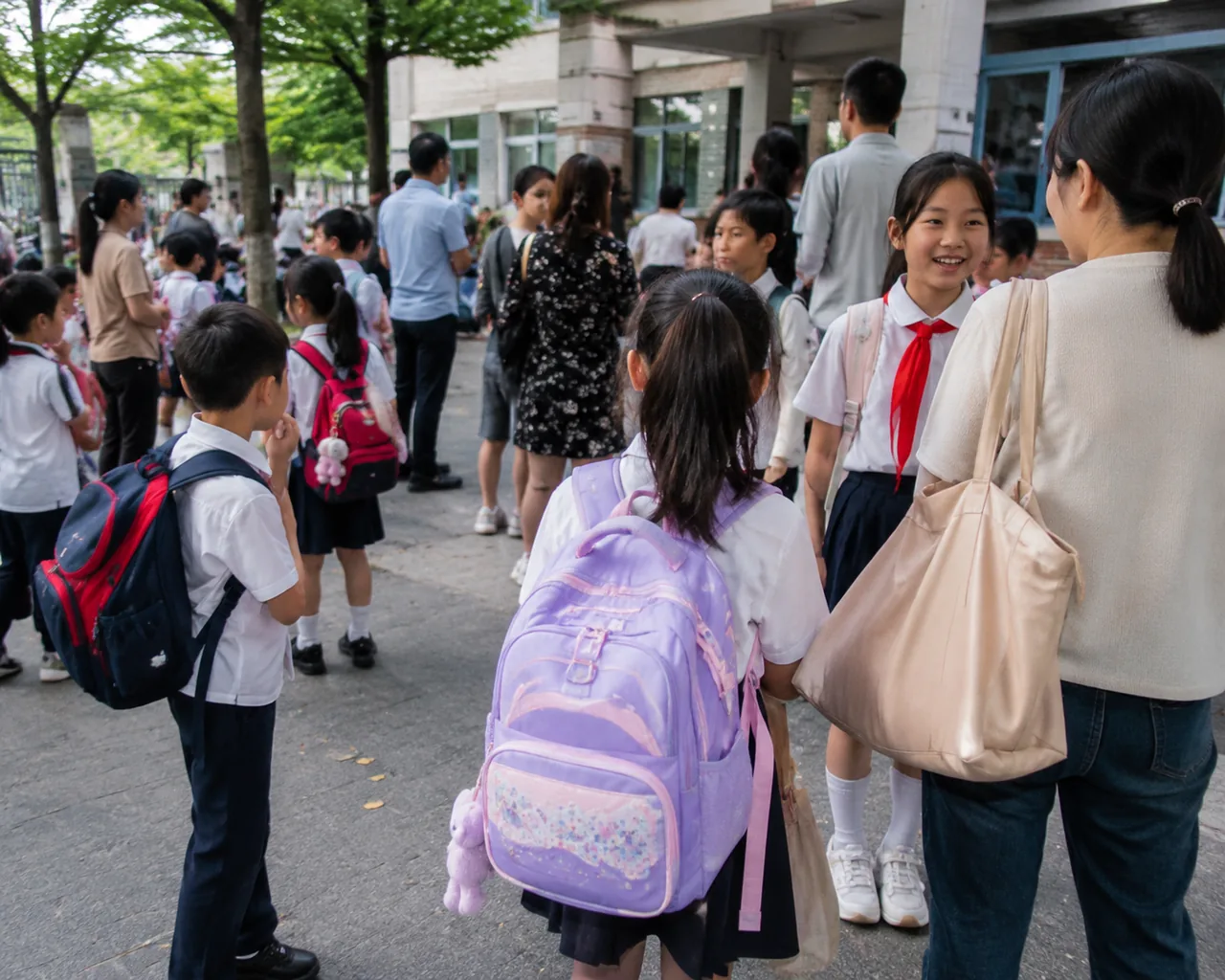
At that time, I was still stubbornly attached to word-for-word translation when learning Chinese. I believed every word had to match a precise meaning. So my first reaction was not warmth. It was analysis. Was this a question about dinner? A reminder? Did the child still need to eat again before going home? While I was making it more complicated than it was, a little girl who looked like she was in third grade noticed my confusion. She looked up at me, then at the grandmother, and smiled so hard her shoulders pulled in. In very slow Chinese, she said, “Sometimes this is not asking about food. It means asking if you’re doing okay.”
That sentence pulled me back into real life. Chinese has many expressions that seem to ask one thing on the surface while actually reaching for connection first. It is not as neat as a direct English “How are you?” and not as standard as classroom dialogues. It feels more like the steam from the sweet potato, the roasted skin breaking in the grandmother’s hands, and the children shouting, “Slow down, slow down,” while squeezing through the gate. Once you stand in a scene like that, you realize Chinese sometimes does not begin with information. It begins by softening the distance between people.
I stayed there on purpose and listened longer. A father asked his son, “Are you cold?” and draped a jacket over his shoulders before the boy even answered. A grandmother asked, “Do you have a lot of homework?” but what came first in her voice was concern. A little boy greeted his classmate’s mother with “Hello, Auntie,” before saying how he had done in math that day. For foreign children learning Chinese, these details matter a lot. They teach you that learning Chinese is not only about memorizing meanings. It is also about learning what kind of atmosphere a sentence belongs to, who says it to whom, and what their face looks like when they say it.
How I Practiced After That
Later I gave myself a very simple method. I did not start by memorizing ten new sentences. I started by remembering three kinds of expressions I heard most often near school gates. The first was greeting language, like “You’re here,” “School’s over,” and “Walk slowly.” The second was caring language, like “Are you cold?” “Are you tired?” and “Are you hungry?” The third was polite language, like “Thank you, Auntie,” “Sorry to trouble you,” and “Goodbye.” These expressions look short, but once you can use them, you stop sounding like someone who can only answer textbook questions.
Later still, I realized that the hardest part for many foreign children is not “I can’t speak.” It is “I want to get everything exactly right.” But many Chinese expressions are not exam entrances. They are life entrances. You do not need to produce a perfect paragraph right away. You can first learn to say “thank you” when someone picks up your pencil case from the floor, “I’ll borrow this for a second” when a classmate lends you an eraser, and “Hello, teacher” when the teacher enters the classroom. These sentences are small, like pebbles, but pebbles are exactly what help you cross a river first.
Five Small Tips Foreign Kids Can Use Right Away
One: Learn to hear tone before chasing literal meaning. If someone asks, “Have you eaten?” or “Are you tired?” they are often showing care. You do not need to dissect it like a reading-comprehension exercise.
Two: Let short sentences win first. Expressions like “Hello,” “Thank you,” “I got it,” and “Let me try” are more useful at the beginning than memorizing long passages.
Three: Watch who is speaking to whom. The same sentence can feel different when it comes from an elder, a classmate, or a shopkeeper.
Four: Remember Chinese through scenes, not only through vocabulary lists. Put “walk slowly” at the stairwell, “line up” at the cafeteria door, and “hello, auntie” at the school gate in your mind. You will remember faster.
Five: Don’t shrink back when you make a mistake. The most alive part of a language often grows in that tiny moment of awkwardness after you speak.
When I think back on that afternoon now, what I remember most is not that I learned a language fact. I remember the specific softness of the school gate: backpack straps tapping against uniforms, sweet-potato skin lifting lightly in the wind, and a child running ahead before turning back to shout, “Grandma, hurry up.” Chinese often becomes truly useful not when you explain it perfectly, but when you finally understand it inside a scene like this.