Я научился в Китае определять безопасность по свету в круглосуточных магазинах, выходам из метро и направлению людских потоков
When people hear someone say that China feels safe, their first reaction is often to interpret it as a vague general statement, as if it only means “public security seems good here.” But for me as a foreigner, the real growth of safety never came from a slogan. It came from a chain of extremely concrete, almost trivial observations. If I arrive at an intersection at night, is there a convenience store with lights still on nearby? After leaving a metro station, do people continue forward and disperse naturally, or do they vanish immediately into dark side alleys? If a street looks quiet, is it quiet because the order is stable, or because there is genuinely nobody around? If I need to hold my phone to check navigation, does that action look natural within the rhythm of everyone else around me? Eventually I realized that what I learned in China was not how to “believe in safety” abstractly. I learned how to read the small signals that create it.
The first time I really noticed this was on a perfectly ordinary weekday evening in Shenzhen. I had just come out of the metro. It was already dark, but not very late, and a wave of office workers had just spilled out into the street. A convenience store near the intersection was brightly lit. One person was buying water, another was picking up a parcel, and a delivery rider had stopped his bike at the side and was looking at his phone. I only meant to check my own map, but in the few seconds before I did, I suddenly realized that my tension was almost gone. It was not because the area was “busy.” It was because every visible cue was telling me the same thing: this was a readable environment, a place where I could pause, orient, and retreat if needed. The convenience store was a bright node, the metro exit was a clear fallback, and the pedestrian flow was coherent. I came to strongly agree with the logic in building safety from daily details first, because it helps foreigners judge real scenes far better than any vague claim ever could.
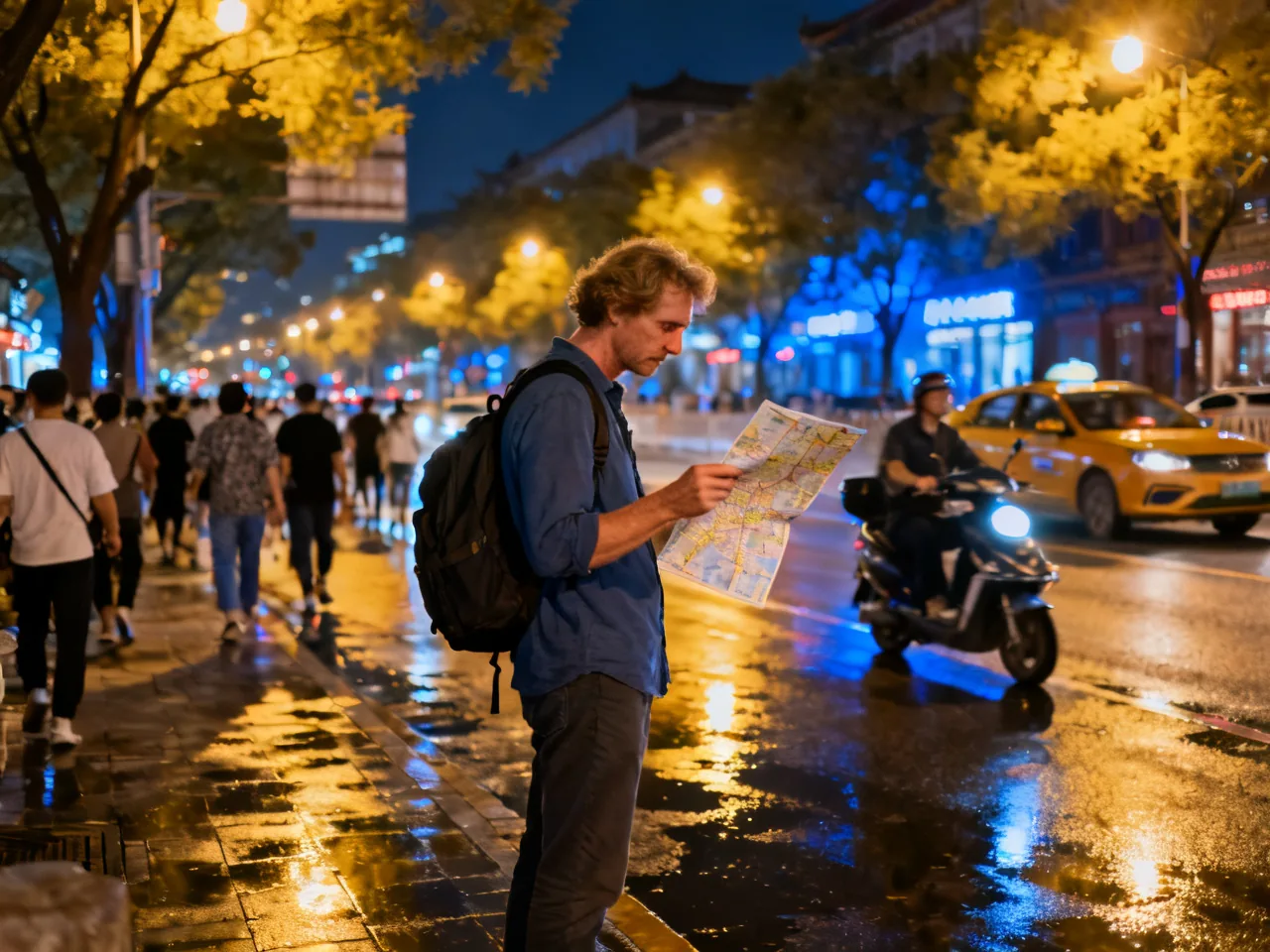
Later, I deliberately turned that kind of observation into a regular habit. When I leave a metro station at night now, I no longer walk while immediately staring down at the map. I look up first and scan: which side has steadier light, which side still has open shops, which route has a natural stream of people moving forward, and where I could stop to reorganize information if I realized I had misjudged the direction. This habit feels very close to something I later learned in other cities too: check whether the environment is already supporting you before deciding how to move. For foreigners, this reduces a lot of pointless bravado. You do not need to act like you understand everything, and you do not need to pretend that everything is easy. You only need to keep yourself inside a space that is easier to read.
I also slowly discovered that convenience-store lighting has a very special function for me in Chinese cities. It is not because convenience stores are somehow magically safe. It is because they often signal several useful conditions at once: people, payment, water, a place for a short pause, staff presence, and usually stable lighting. If you are on an unfamiliar street at night and suddenly feel your judgment starting to scatter, moving yourself toward that kind of node often makes the whole situation smaller. I have done this in Chengdu, Hangzhou, and Shenzhen. Sometimes I actually go in and buy water. Sometimes I buy nothing and simply pause near the entrance for ten or fifteen seconds to reorganize the route. It sounds tiny, but for me it has almost become an automatic stabilizing program for night walking in China.
Another signal I rely on heavily is whether pedestrian flow feels natural. Some places are not especially bright, but if people are moving steadily, at a normal pace, and their attention feels ordinary rather than tense, I become much calmer. By contrast, if a place looks physically well built but everyone is rushing through, almost nobody is stopping, and there are no lit shops or pause points at all, I become more cautious. A sense of safety is not decided by one factor. It is a conclusion formed by several kinds of information layered together. Lighting, exits, shops, pedestrian flow, road cleanliness, and whether intersections are easy to read all influence me at once. Over time, I also came to understand why layered confirmation is steadier than single judgment matters so much.
If foreign friends ask me now what exactly I look for when walking alone at night in China, I give a very concrete answer. First, look for bright nodes such as convenience stores, metro exits, pharmacies, or still-open restaurants. Then check whether pedestrian flow is continuous instead of so scattered that you cannot read it. Then check whether your retreat path is clear, especially whether you can naturally return to the metro or a main road. Next, read your own condition. If you are already tired, thirsty, or irritated, do not force yourself into side streets that demand extra judgment. Finally, do not interpret safety as “I must be fearless.” Real maturity is keeping yourself inside environments you can still read clearly. None of these methods sounds like a slogan, but they are much closer to the real sense of safety I built while living and traveling in China.
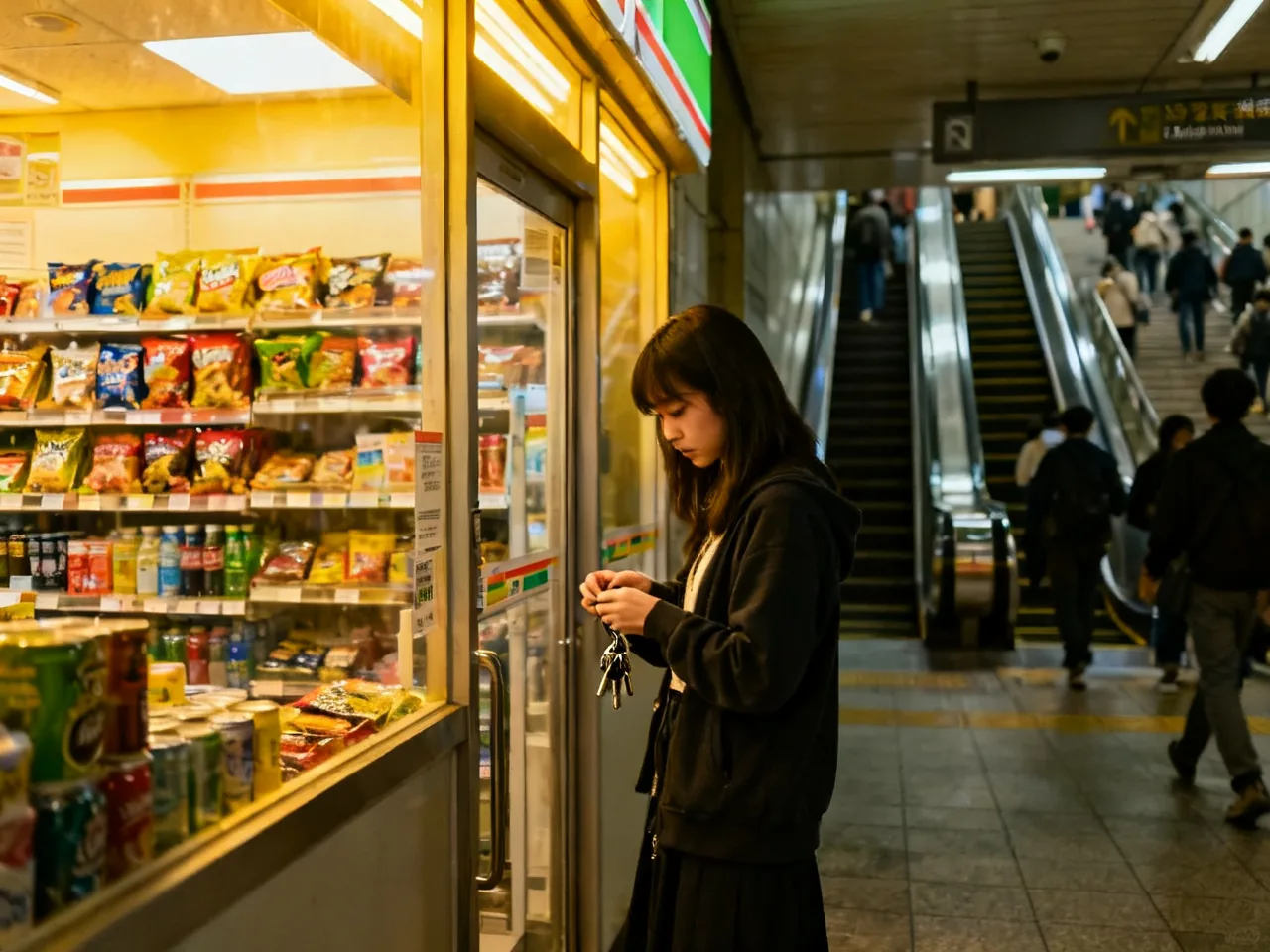
Looking back now, what I am most grateful Chinese cities taught me is exactly this kind of ordinary reading ability. Not every road has to be tested bravely, and not every night has to be passed through by courage alone. Very often, seeing that convenience-store light, remembering that metro exit, and following that natural current of pedestrians is already a mature act. You are cooperating with a city’s order instead of fighting your own anxiety. I think that is the real reason I gradually came to feel so much calmer at night in China.