九月の金秋草原:中国で最も美しい秋はここから始まる
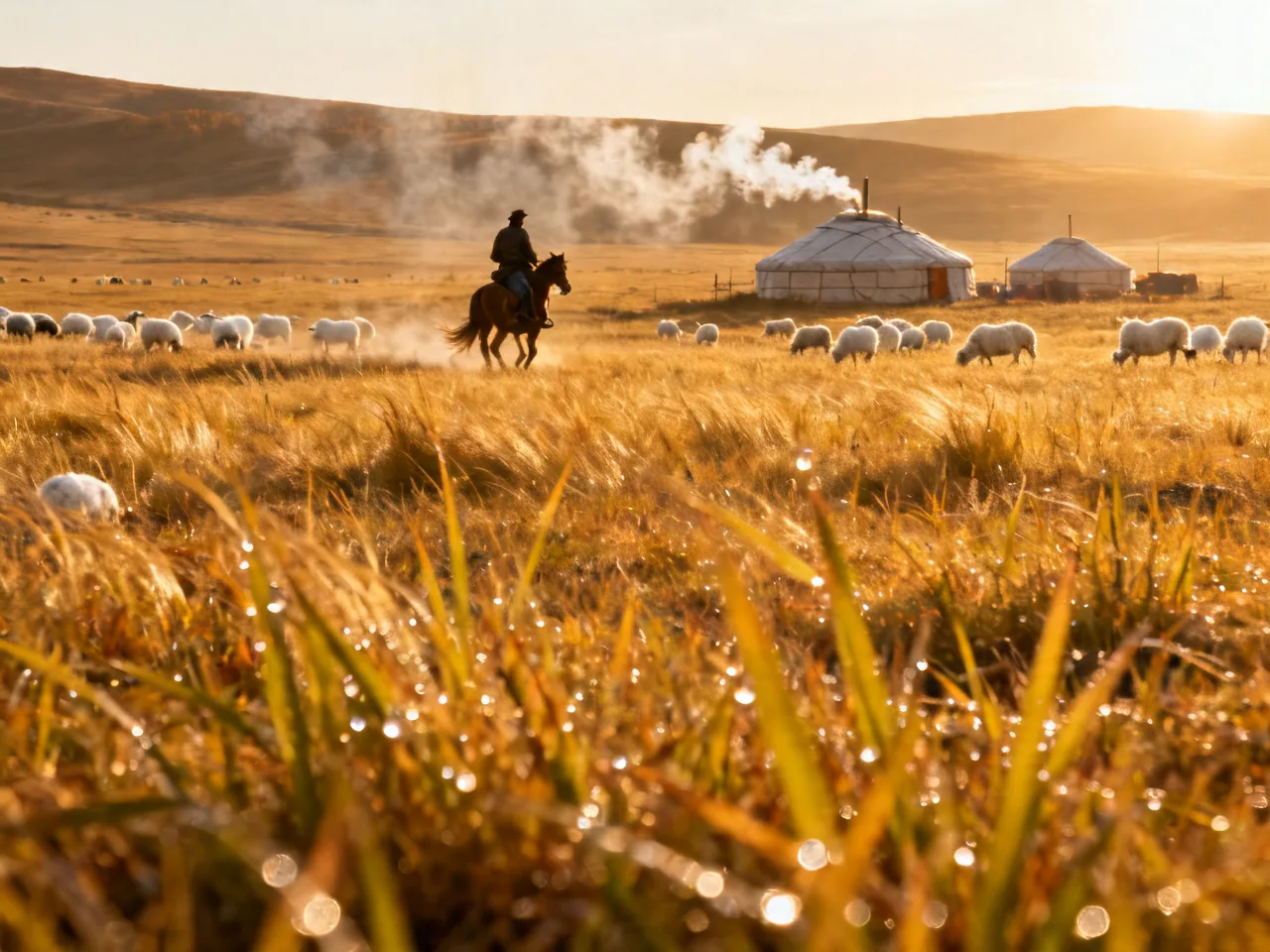
In September, while Chinese cities still cling to summer’s last breath, the grasslands of Inner Mongolia and Xinjiang have already dressed themselves in autumn gold. This isn’t the manicured fall foliage of city parks — it’s wild, horizon-stretching, take-your-breath-away gold.
Why September Is Peak Grassland Season
July and August are peak tourist months — tour buses everywhere, crowded yurt camps, inflated prices. September is different. Half the crowds vanish, the grass transitions from green to gold, herders begin their autumn migration, and the whole landscape looks like an oil painting.
The temperature is perfect too: 15-22°C during the day, 5-10°C at night. A light down jacket is all you need — comfortable for daytime horseback riding, warm enough for stargazing.
Hulunbuir: The Classic Grassland Experience
Hulunbuir, in northeastern Inner Mongolia, is China’s largest grassland. In September, it presents three layers of color: golden grass, white birch forests, and a sky so blue it looks photoshopped.
Must-Visit Spots:
-
Moergele River Known as “the most winding river under heaven,” it curves thousands of times across the grassland. At sunrise in September, thin mist rises from the water against golden grass — a photographer’s paradise.
-
Ergun Wetland One of Asia’s largest wetlands. In September, the birch forests turn golden. From the hilltop viewing platform, rivers wind through the wetland in layers of color so rich even a phone camera produces stunning shots.
-
Heishan Head The best base for horseback riding. The ranches here are large with well-trained horses, suitable for beginners. Riding through golden grasslands costs about ¥100-150/hour (~$14-21).
How to Get There: Fly to Hailar Dongshan Airport (direct flights from Beijing/Harbin), then hire a car or self-drive. Off-peak September pricing: about ¥600-800/day (~$85-115) including driver.
Wulanbutong: The Closest Autumn Grassland to Beijing
Wulanbutong is just a 5-hour drive from Beijing (in Chifeng, Inner Mongolia). The September scenery here differs completely from Hulunbuir — instead of endless flat grassland, it’s a “mashup” of rolling hills, birch groves, streams, and meadows woven together.
Best Photography Spots:
- Hamadam Morning mist plus herders driving sheep at dawn — a frequent subject of award-winning photographs.
- Wucai Mountain In late September, the entire hillside turns into four colors: red, yellow, orange, and green.
- Princess Lake A small lake surrounded by birch trees, its surface mirror-still at dawn.
Admission: ¥120 (~$17), valid for unlimited entry over three days.
Kalajun, Xinjiang: Grasslands Meet Snow Mountains
If you want grasslands and snow-capped mountains in the same frame, Kalajun is the only answer. This alpine meadow in Ili Prefecture sits against the Tianshan snow peaks. In September, the golden grassland contrasts with fresh snowfall on the mountains — the combination of gold and white feels almost unreal.
Special Experiences:
Stay in a Kazakh herder’s yurt, eat hand-grabbed lamb with milk tea, and listen to them sing at night Ride horses over Kerdening Valley, where snow spruce forests meet the grassland edge In mid-September, witness the seasonal migration — thousands of sheep moving from summer to autumn pastures, a spectacular sight
How to Reach: Fly to Yining Airport, then drive 3 hours to Tekes County. Hire a car — transport within the scenic area is limited.
Practical Tips
What to Wear: September grasslands have big temperature swings (up to 15°C difference). Pack a light down jacket, a windproof shell, and waterproof hiking shoes. A t-shirt plus jacket works for daytime.
Where to Stay: One night in a yurt is enough for the experience (honestly, not very comfortable). Spend other nights in town hotels or guesthouses. Off-season September rates: ¥200-400/night (~$28-57) gets you something nice.
Food Notes: Grassland cuisine is heavily meat-based (beef and lamb) with limited vegetable options. Bring some fruit and snacks if needed. Do try hand-grabbed lamb — it’s so fresh there’s zero gamey taste.
Altitude Awareness: Hulunbuir and Wulanbutong are low altitude (600-1,200m) — no altitude sickness concerns. Kalajun sits at 2,000-3,000m; most people are fine, but avoid strenuous activity on the first day.
Related Reads
- Spring Bloom Map: China’s Most Beautiful Flower Fields
- Summer Escapes: Plateaus & Islands
- Huangshan Sea of Clouds & Welcome Pine: Beautiful in All Seasons
- Best Autumn Foliage Spots in China
- 10-Day East China Five-City Loop