私が中国で助けを求めることを覚えたのは、無力だったからではなく、ここでの反応の速さがあまりに誠実だったからだ
Lead
When I first arrived in China, I carried a stubborn kind of travel pride: if I could solve something alone, I should; if a map app existed, I should not ask; if I could guess, I should keep quiet. Later, I realized that this habit of “toughing it out” was not impressive in Chinese cities. It was often inefficient, and sometimes even less safe. What finally helped me relax was not becoming more independent, but learning to trust that in many real situations, if I asked politely, clearly, and quickly, people often responded with honesty, speed, and practical kindness.
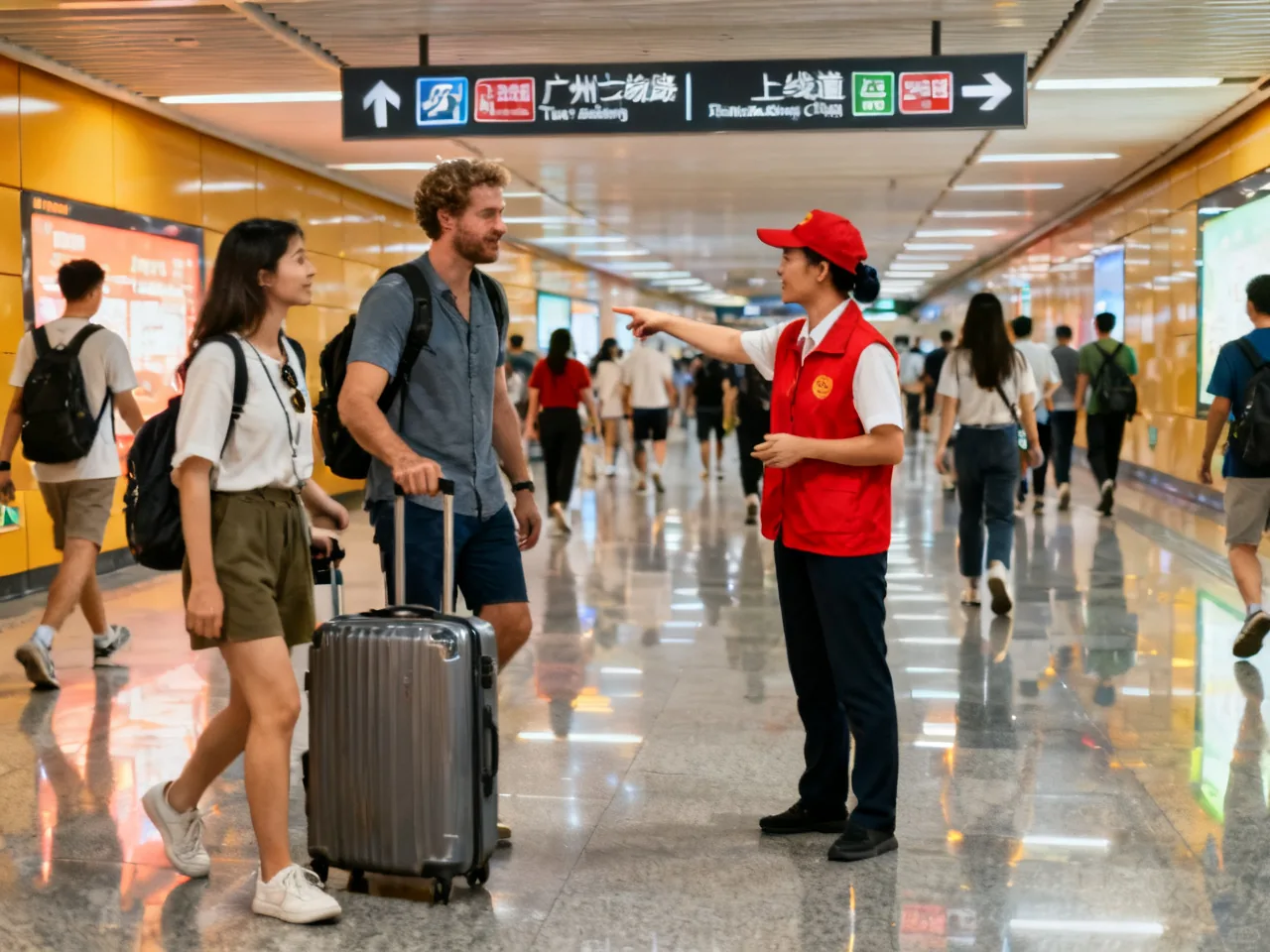
That turning point happened in Guangzhou. At 10:47 a.m., I was dragging a medium suitcase from high-speed rail to metro, standing in the middle of a long transfer corridor. Overhead, signs layered in every direction; around me, people moved in a steady current; the air smelled faintly of air-conditioning and transit dust, and the wheels of my suitcase kept trembling over the floor seams. For the third time, I wondered if I had gone the wrong way again. The old version of me would have pretended to stay calm and walked another five minutes. That day, I stopped and admitted something simple: I needed help.
Scene One: In the Guangzhou Metro, I Realized Asking for Help Is Also a Safety Skill
I looked around before speaking. I did not stop the very first passerby. Instead, I watched for who seemed most appropriate to ask. This later became one of my most useful urban survival habits in China: not everyone is equally convenient to approach, but there are almost always some people who are better first options than others.
I usually prioritize four kinds of people:
- People in uniforms or with visible roles, like metro volunteers, security staff, station attendants, or service desk employees;
- People with fixed positions, like shop clerks behind a counter or staff near ticket gates;
- People who do not seem rushed, such as someone waiting, standing aside with a phone, or just stepping out of a shop;
- People who clearly fit the environment, like commuters who move through the station with confidence and obvious familiarity.
That day I spotted a metro volunteer in a red vest standing by the transfer split, holding a small flag, with the calm face of someone who had answered “which way is Line 3?” a thousand times. I walked over and said, “Hello, sorry to bother you. I’m trying to get to Line 3 toward Airport North. Is it this way?” I deliberately made the question specific. Instead of asking, “How do I go?” I asked, “Is my understanding correct?” This makes it easier for the other person to answer quickly and reduces the effort required to reconstruct your situation from zero.
She barely hesitated. She glanced at the station name on my phone, pointed ahead, and added, “Go straight first, turn left when you see the blue sign, and the escalator is right there. Don’t follow that group in front—they’re going to Line 2.” That extra sentence—“don’t follow that group”—was the key. A map can give you a route. A person on site gives you dynamic information: which flow of people is going elsewhere, which path is faster right now, which exit not to take by mistake. That is one reason I became much more willing to ask in China: help here was often not just theoretically correct, but immediately usable.
I followed her directions and reached the right platform in less than three minutes. The relief I felt was very specific. It was not only “I found the way.” It was the realization that I had long treated asking for help as exposing weakness. But here, it felt more like mature judgment: in an unfamiliar environment, quickly using reliable information sources around you.
I later told this story to a friend who had lived in Guangzhou for years. He laughed and said, “Now you finally act like someone who lives here. Asking is better than guessing.” The sentence was simple, but it reminded me of those small actions that slowly help a person fit into daily order in China. Reading signs, lining up, preparing QR codes, asking one timely question—none of these are trivial. Together, they create the feeling of moving smoothly through a city.
Scene Two: A Milk Tea Shop Taught Me to Find an Anchor Before Finding a Route
The second moment that truly changed my habits happened on an afternoon that was not dangerous, yet could easily become confusing. I was in Yuexiu District after rain. The leaves on the roadside trees were still wet. Three or four people stood beneath a bus stop sign. A delivery rider had parked on the sidewalk, droplets still clinging to his helmet. I was trying to walk to a small restaurant recommended by a friend. The map said twelve minutes, but in many older Chinese neighborhoods, “twelve minutes” on screen does not always mean “right there” in reality. Overpasses, underpasses, corners, construction barriers, and temporary closures can create subtle but frustrating differences between the blue route on your phone and the actual street beneath your shoes.
I had already circled one intersection twice and still could not find the small lane I was supposed to cut through. This time, instead of staring harder at the map, I stepped into a milk tea shop on the corner. The air-conditioning was strong. As soon as the door opened, the sweetness of tea and warm tapioca separated me from the damp air outside. Behind the counter was a clerk in her twenties sealing drinks. I waited until she finished what she was doing, ordered a basic jasmine milk tea first, and only then showed her my phone and said, “Sorry to bother you. I’m trying to get to this place, but the map keeps bringing me here. Do I need to go around from behind?”
This became my second principle: if you ask a shop clerk for help, respect the rhythm of their work first. It does not always mean you must buy something, but it does mean reading the situation—how busy they are, whether there is a line, whether your timing is reasonable. If someone is rushing to finish orders and you suddenly put a phone in their face, that would be stressful in any country. But if you wait a few seconds, signal politely, and keep the question concise, people are usually much more willing to help.
She looked at my phone and answered immediately: “Yes, you can’t pass from here. Go into the small lane on the right side of our shop. Don’t enter the parking lot. Follow the wall, then turn left at the end. There’s an entrance that isn’t very obvious.” And as if that still was not enough, she leaned out from behind the counter and physically pointed at the turning direction. Then she added, “If you see a rice noodle roll stall, you’re almost there.”
That answer stayed with me because she did not give me an abstract route. She gave me an anchor-based route: the lane, the wall, the parking lot, the rice noodle stall. This style of direction is deeply urban and deeply practical in China. Many places are remembered less by exact street numbers and more by “walk until that stall,” “pass that shop,” “turn at that bridge,” or “go under that overpass.” If you are willing to listen to this on-site language, you enter the local logic of space much faster than if you trust GPS alone.
I did find the restaurant, behind an unremarkable doorway exactly as she said. The glass door was slightly fogged from kitchen steam. Inside, two tables were already full, and the owner moved quickly between the stainless-steel counter and customers. Looking back at the route I had just taken, I felt unexpectedly certain: in China, asking for directions often does not interrupt reality—it reconnects you to it.
Scene Three: A Taxi Driver Taught Me More Than a Route—He Taught Me Risk Judgment
Another time, it was evening—not very late, but fully dark. I had finished dinner in a neighborhood I did not know well and needed to get back to my hotel. A friend had suggested walking fifteen minutes to the metro and riding two stops, but I was tired, carrying a laptop and a small shopping bag, so I took a taxi instead. The driver was a man in his fifties, with a local accent, a tiny good-luck charm hanging in the car, and the radio turned down very low.
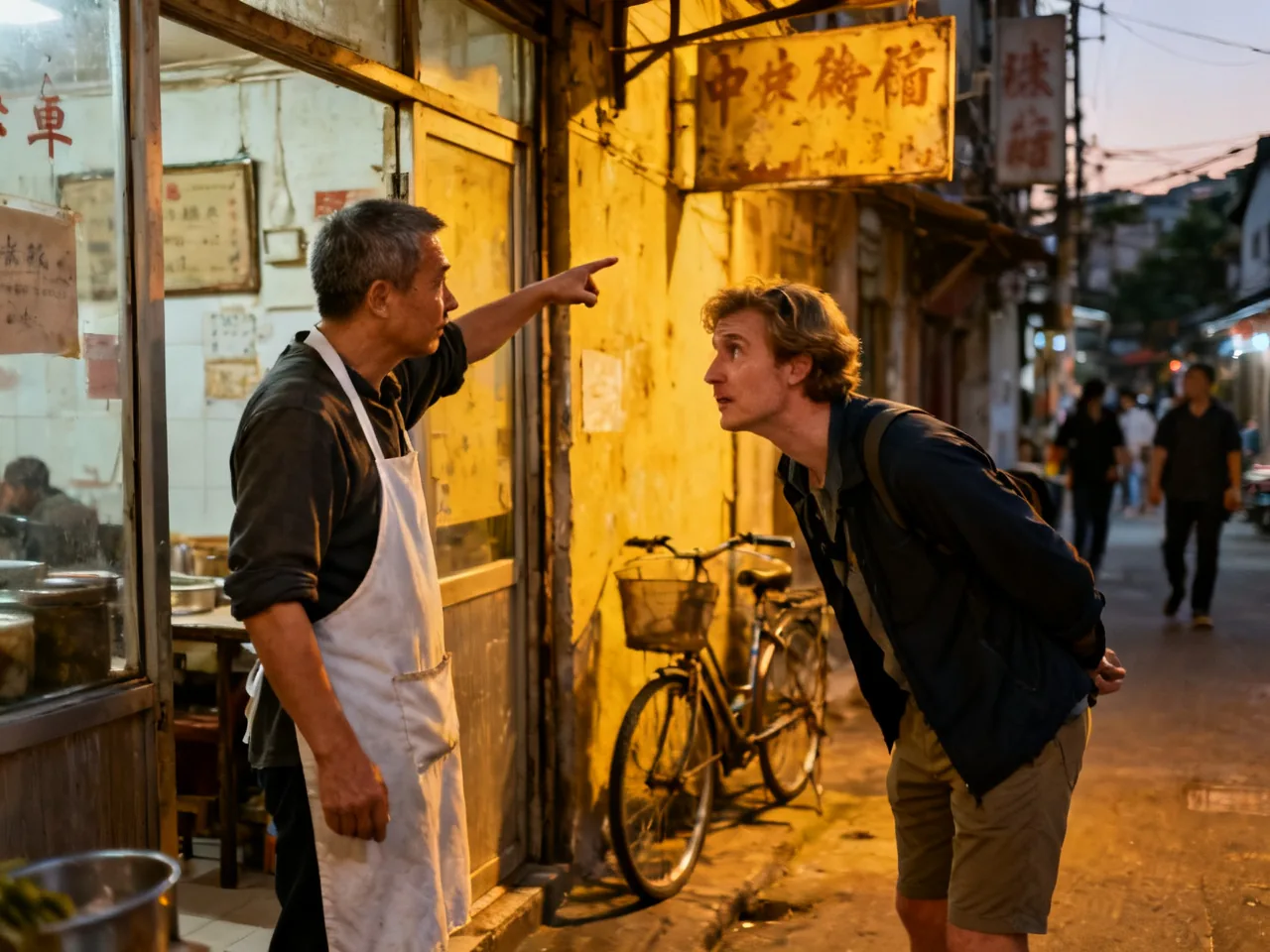
On the way, I casually asked, “Driver, is it generally okay to walk alone around here at night?” I meant it as small talk, but he answered seriously: “Main roads are usually fine. Areas near malls and convenience stores are generally okay too. Just don’t save a few minutes by taking one of those dark construction-side roads with nobody around.”
That sentence later became one of my core rules for judging night walks. The sense of safety China gave me was never a blind belief that “everywhere is automatically fine.” It was a concrete sense of everyday order:
- steady lighting;
- small businesses still open;
- visible people who belong to the environment—delivery riders, guards, convenience store staff, cleaners;
- a flow of people that continues without feeling chaotic;
- clear exits and obvious main roads;
- and nearby people you could ask for help if needed.
This reminded me of the specific calm I once felt while walking back to a hotel alone at night in China. Real safety rarely comes from slogans. It comes from whether you can quickly identify support systems in the environment. The driver’s advice helped me stop treating “Should I walk?” as a courage test and start treating it as situational judgment.
More importantly, I found that once you are willing to ask, many risks get reduced before they even fully form. For example:
- before leaving a restaurant, you can ask the staff which route to the metro is brighter and simpler;
- at a hotel front desk, you can ask which entrance is most direct when returning at night;
- before a taxi starts moving, you can confirm whether the main road is the better option;
- with mall security, you can ask whether another exit is closed in the evening.
These are small questions, but together they transform a strange city from “everything I must handle alone” into “a place where I can borrow someone’s experience for one minute.”
The Practical Method I Developed for Asking for Help in China
If I had to compress years of experience into a practical method, these are the suggestions I would give any foreign traveler visiting China for the first time, or anyone just beginning to adapt to the rhythm of Chinese cities.
Observe First, Then Ask
Do not panic and grab the nearest person. Read the environment first and choose the right person. My usual order is: staff > clerks > fixed-position workers > unhurried passersby.
The More Specific the Question, the Better the Reply
Instead of asking, “How do I get there?” ask: “Is this the correct exit for this place?” “Do I go down the escalator first for Line 3?” “Is this route convenient to walk at night?”
Give the Other Person an Anchor
Show the Chinese address, station name, or shop name on your phone. Or mention the landmark you just passed. Chinese cities are large and information-dense; visual anchors help a lot.
A Few High-Frequency Phrases Matter More Than Long Sentences
- Hello, sorry to bother you.
- May I ask how to get to…?
- Is it this way?
- I want to go here.
- Thanks for the trouble.
- Thank you.
Especially “sorry to bother you” and “thanks for the trouble”—they make your request sound much softer and more natural in Chinese. That subtle social distance management feels closely related to how one small phrase can smooth human interaction.
Neither Romanticize Help Nor Feel Ashamed of It
Not everyone is free, and not every answer will be perfect. Sometimes people may not understand you, give unclear directions, or you may explain poorly yourself. That is normal. The important thing is not perfection. It is knowing you can initiate a brief, clear connection when needed.
Asking Is Not Surrendering Yourself—It Is Using the Environment Wisely
This point matters a lot. Some people worry that speaking up will make them seem dependent, too foreign, or unable to cope alone. My experience has been the opposite: in China, people who know how to ask often build better boundaries faster, because they understand when to rely on personal judgment and when to borrow on-site knowledge to cover blind spots.
Ending Reflection: After Learning to Ask for Help, I Actually Became Better at Traveling Alone
Looking back, what I truly learned in China was not just a few useful Chinese phrases, and not merely a set of travel tricks. I learned a more mature way of moving through a place alone: not mistaking independence for silence, not mistaking dignity for stubbornness, and not mistaking safety for isolation.
I still check signs first, think first, and plan routes first. But when information becomes fuzzy, when my energy drops, or when the environment suddenly gets complicated, I no longer treat “asking one question” as failure. I treat it as timely, clear-headed decision-making.
If someone asked me now what most contributes to a sense of safety and belonging in China, I might not begin with skyscrapers, metros, or convenient payment systems—important as those are. I might begin with something more human: very often, when you stand at a corner, on a platform, or at a shop entrance, if you are willing to ask politely, someone will seriously receive your question.
And after learning to ask for help in China, I felt for the first time that I was actually more capable of going far on my own.