重慶火鍋は理解なんて要らない、ただ座ればいい
Most travel guides will tell you “Chongqing hotpot is spicy,” slap on a photo of a nine-grid pot, throw in a few memes, and call it a day. But if you actually sit down in some alley near Jiefangbei, staring at that churning cauldron of crimson oil, you’ll realize the word “spicy” doesn’t even begin to cover it.
Let’s Start With Something Controversial
Chengdu hotpot and Chongqing hotpot are not the same thing. I know many people lump them together, and even some Chengdu locals will say “they’re basically the same.” But to a Chongqing native, that statement hits about as hard as telling an Italian that pizza and bread are basically the same.
Chongqing hotpot uses a pure beef tallow base — that heavy, wall-coating fat that clings to the rim of your bowl when it cools. It’s the soul of the entire pot. Chengdu hotpot leans toward vegetable oil, smoother and gentler, built for leisurely dipping. Neither is better, but they are genuinely different paths. The first time I had a beef tallow base at an old shop in Chongqing’s Nan’an District back in 2019, I lifted my chopsticks and watched the oil drip down a piece of tripe. I still remember that image.
The Nine-Grid Isn’t Decoration
First-timers often assume the nine-grid pot is just for aesthetics. It’s not.
The nine-grid divides the pot into nine zones. The center square has the fiercest flame and highest oil temperature — it’s reserved for tripe and duck intestine, the kind of ingredients that need the “seven up, eight down” flash-cook technique. You grip them with chopsticks, dip them in and out of the boiling oil seven or eight times, and they’re done in about fifteen seconds — crispy and tender. The surrounding squares run progressively cooler, suited for tougher cuts: aged meat slices, yellow throat (aorta), and brain. The corner squares are the gentlest — drop in a block of blood curd or tofu and let it simmer.
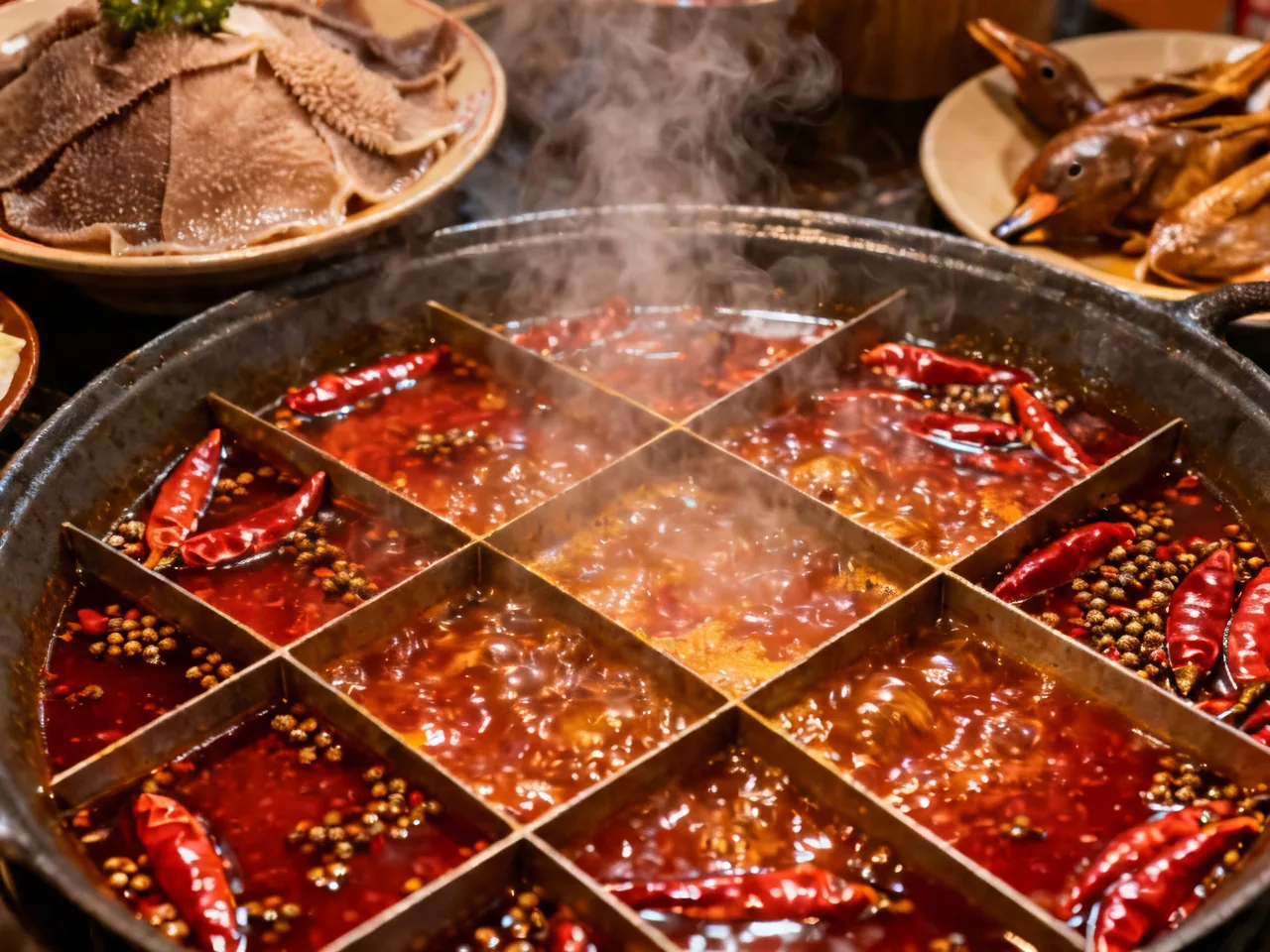
This system wasn’t invented as a marketing gimmick by some restaurant. It evolved naturally among dock workers eating hotpot along the Jialing River. In the 1920s and 30s, porters at Chongqing’s Chaotianmen Dock earned meager wages and couldn’t afford good cuts of meat, so they threw cattle offal — tripe, aorta, duck blood — into a communal pot. The nine-grid division let different people share one pot, each cooking in their own square without interfering with anyone else.
What I Learned in Ciqikou
In the winter of 2023, I found a hotpot place on a side street near Ciqikou Ancient Town that had no sign. Well, “no sign” isn’t quite right — it had a faded red cloth with three brush-painted characters reading “Old Hotpot,” hanging on a half-open iron gate.
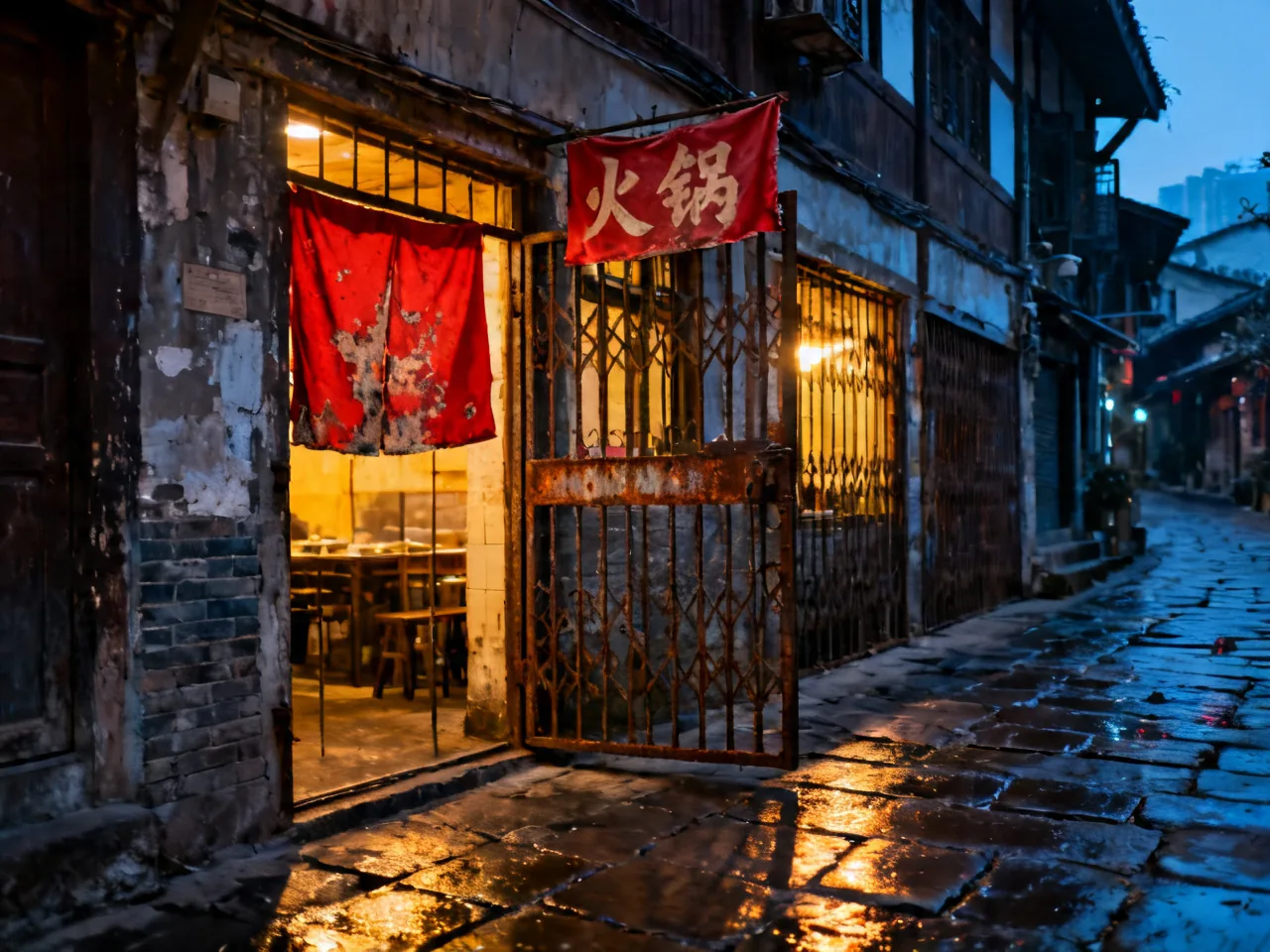
Inside, there were only six tables, and the owner — a woman in her fifties — ran both the front and the kitchen alone. When the pot base arrived, the surface was blanketed with a thick layer of dried chilies and Sichuan peppercorns, so red it looked almost black. I thought to myself: I might not survive this level of heat.
But the secret of Chongqing hotpot isn’t about “how spicy” — it’s about the layers of spice. The first hit is the scorched fragrance of dried chilies. Then the richness of beef tallow coats your tongue. Then the numbing tingle of Sichuan peppercorn spreads from the tip of your tongue to both cheeks. And finally, a lingering sweetness — yes, hotpot has a sweet aftertaste, like drinking fine tea. The owner saw me sweating profusely and brought over a bowl of ice jelly, saying “Take your time, no rush.” It was brown sugar flavored, and the icy sweetness perfectly countered the burn in my mouth.
The Dipping Sauce Is Another Battlefield
In northern China, the hotpot dipping sauce station offers twenty-plus condiments — sesame paste, chive flower sauce, fermented tofu, minced garlic, sesame oil, chili oil… You can mix your own signature blend. But in Chongqing, there’s only one correct answer: a dish of sesame oil with minced garlic.
A small dish of sesame oil, crushed garlic spread on top, and maybe a touch of oyster sauce or cilantro. That’s it. The sesame oil isn’t there for flavor — it’s there to cool down food fresh from the boiling oil and to form a protective film on your tongue that slows the capsaicin burn. It’s functional, not pretentious.
I once watched a tourist hesitate at the dipping sauce station in a Chongqing hotpot restaurant for five minutes before mixing a bowl of sesame paste. The Chongqing woman at the next table glanced over, said nothing, but I could read her expression perfectly — it roughly translated to “whatever makes you happy.”
The Real Hotpot Happens at 1 AM
Chongqing is a city that doesn’t sleep — at least not when it comes to eating. At 11 PM, you’d think places would be closing up, but that’s when the lines actually start forming outside hotpot restaurants. At one or two in the morning, on the streets near Guanyinqiao in Jiangbei District, the steam from hotpot restaurants mingles with streetlights, making the whole block look like it’s smoking.
This isn’t tourism marketing — it’s daily life for Chongqing residents. Taxi drivers coming off the night shift, young people fresh from KTV, programmers who just finished overtime — they all find a hotpot place to sit down late at night. Order a mandarin duck pot (half red oil, half clear broth, for friends who can’t handle the heat), get a few plates of tripe and duck intestine, crack open two bottles of Shancheng beer, and this meal can stretch from 1 AM to 3 AM.
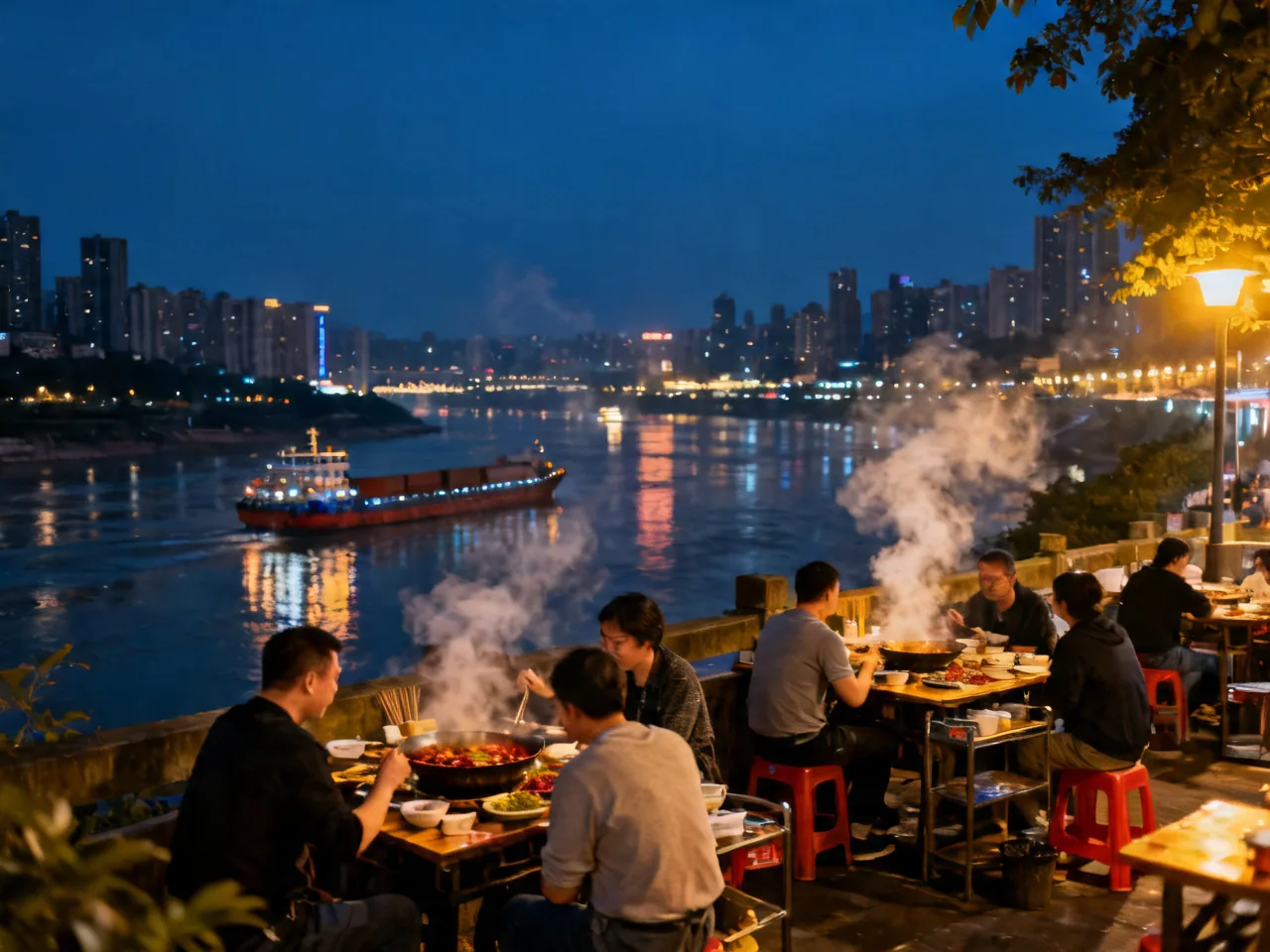
Once I ate at an open-air hotpot place on Nanbin Road until 2:30 AM, with the Yangtze River right across from me. Occasionally a cargo ship’s lights would sweep across the water. At the next table, four middle-aged men were playing drinking games, loud enough for the whole street to hear, but nobody found it noisy — in Chongqing, that’s just the soundtrack of late-night dining.
Some Honest Words for First-Timers
Don’t order “mild spicy.” Chongqing’s “mild” is roughly equivalent to “extra spicy” in other cities. If you genuinely can’t handle heat, just order a mandarin duck pot and eat from the clear broth side. Nobody will laugh at you.
You must order tripe. It’s the soul ingredient of Chongqing hotpot. Fresh tripe flash-cooked in red oil for about fifteen seconds, dipped in sesame oil and garlic — that crunch is something no other food can replicate. Duck intestine follows the same logic, but watch the timing — more than twenty seconds and it turns tough.
Brain isn’t for everyone, but if you’re willing to try, place it in the gentlest corner of the pot and let it simmer on low heat for five or six minutes. The texture is creamy, almost without any gamey taste, like a savory custard. With a bit of garlic and scallion, it’s the most underrated ingredient at a Chongqing hotpot table.
One last thing: after hotpot, your clothes will smell like it for at least two days. That’s not a downside — it’s a badge of honor.
Related Reads
- The 8 Great Cuisines of China
- Spellbound at First Bite: A Stranger’s Descent into Chengdu’s Heat
- Street Steam: The Real Pulse of Chinese Cities
- The Peppercorn Dossier: Sichuan’s Flavor Map Through a Botanist’s Eyes
- 10-Day East China Five-City Loop