初めて中国の団地の門の前で人を待ち、門の脇に立って門禁にぴったり寄らないことを学んだ
The first time I stood outside a Chinese residential compound gate at night waiting for a friend to come down and let me in, I thought I was already being considerate. It was fairly late. The lights at the entrance were bright, the small screen on the access machine flashed softly, and every now and then there was a clear electronic beep. A delivery tricycle was parked nearby, and two food couriers were looking down at their phones to confirm building numbers. As a foreigner, I had already been living in China for a while by then, and I felt I had learned quite a few everyday habits about not causing inconvenience. So when I approached the door, my instinct was to stand as close to it as possible. I thought that if my friend opened it, I could enter immediately, delay no one, and avoid looking awkward or uncertain at the entrance. Looking back now, that was exactly where my mistake began.
I stood almost pressed against the door, one hand holding my phone ready to reply to a message and the other unconsciously adjusting my backpack strap. It was the kind of access gate residents could open by swiping a card, using facial recognition, or entering a code: transparent in the middle, metal-framed at the sides, and quick to swing open. At the time, I was thinking only from my own perspective. I was waiting for someone, not entering yet, so as long as I did not wander around, I thought I was fine. What I had completely failed to realize was that at an access point like this, politeness does not mean standing as close to the door as possible. It means leaving room for the door’s movement, for the flow of people entering and exiting, and for the resident using the system. While I was standing there with complete confidence, the door suddenly opened from inside and a resident almost walked straight into me.
The resident was not angry. He simply froze for half a second and instinctively shifted aside. I was the one who panicked first. I stepped backward quickly, but in doing so I moved into the middle instead of actually clearing the path. It was in that slightly awkward moment that the security guard nearby spoke up. If you are waiting for someone, he said, stand a bit to the side and do not stay right in front of the door. I nodded immediately, apologized, and moved over. The reminder was extremely simple and carried no scolding tone at all, yet it made the issue instantly clear. I had thought I was minimizing inconvenience, but in fact I was occupying the single most important space at the entrance. For people who pass through that gate every day, that kind of positioning makes the whole movement clumsy.
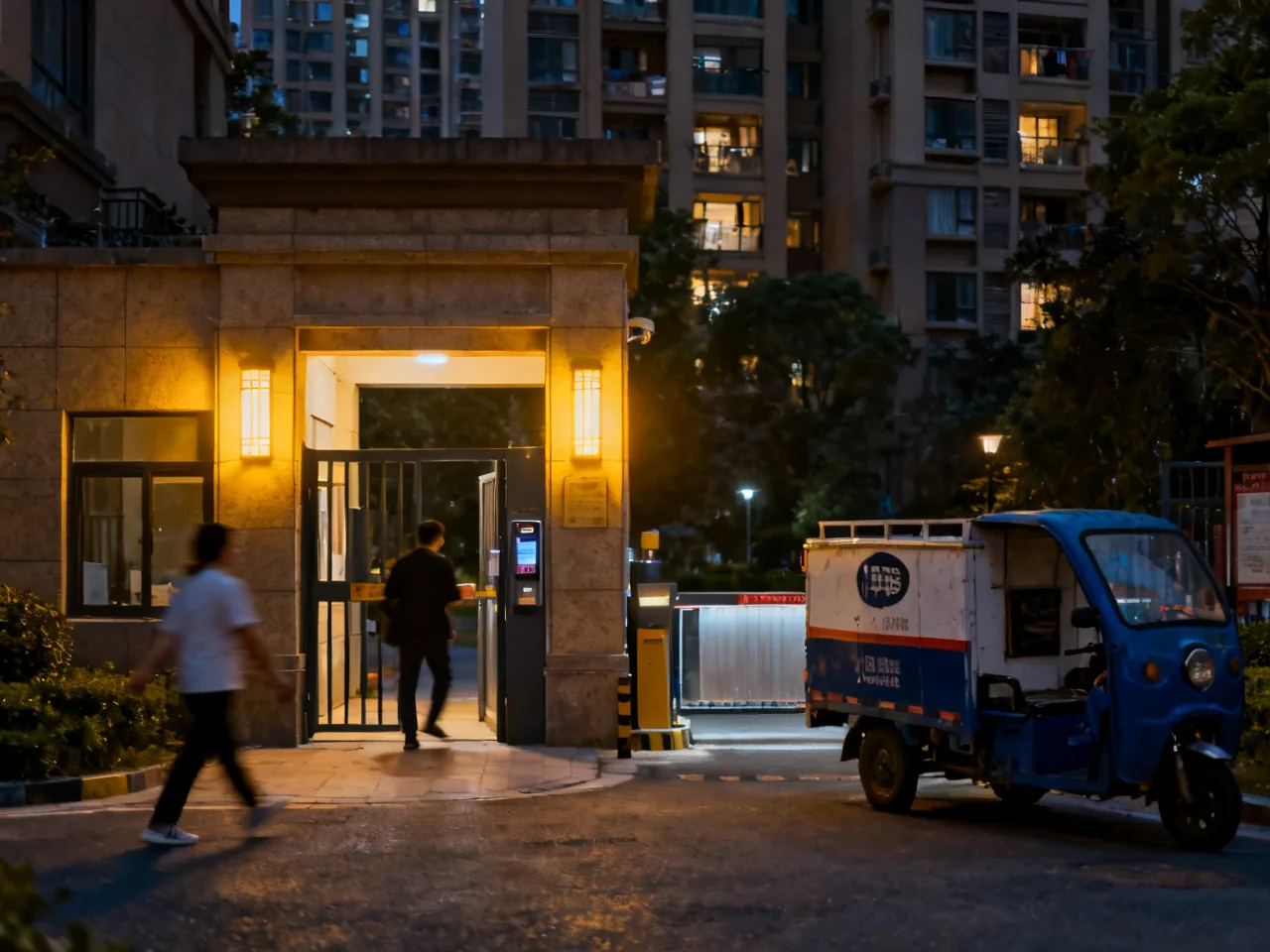
Once I moved to the side, the whole scene looked different to me. From a resident’s point of view, the person opening the gate needs to approach the sensor area first. After the door unlocks, some people walk straight in, while others turn to steady a child, pull a shopping trolley, or hold the door for someone behind them. If a person like I had been is stuck directly in front of the opening, both entry and exit require an extra sidestep. That sidestep is only half a step, but in a place in China that gets used constantly throughout the day, half a step is enough to break the rhythm. The area in front of a compound access door is not a private waiting zone. It is a transitional space where people pause briefly and then move again. Where you stand determines whether others can pass smoothly or have to first pass around you.
Not long after that, my friend sent a message saying he was coming down. This time I did not move back toward the door. I stayed near the wall at the side, leaving the area directly in front of the entrance and the access sensor clear. In just a few minutes, I watched several different kinds of movement pass through: someone swiped a card while continuing a phone call, someone slowly pushed an e-bike forward, and one woman carrying two heavy grocery bags moved through the opening almost without breaking stride once the door unlocked. Because I had moved aside, all of these actions looked remarkably smooth. And it was in those few minutes that I first realized something important: many everyday spaces in China do not come with detailed written instructions for how to wait, but regular use creates a default position that people understand. Your job is not to show eagerness by moving closer. Your job is to notice why that open space needs to remain open.
When my friend came down, he opened the gate for me casually. As I walked in, I glanced back at the spot where I had been standing before and almost laughed. It looked so obviously like a place where no one should linger: the door swings through it, residents exiting look through it first, and anyone opening the gate needs access to the control area nearby. If no one had corrected me, I might have continued standing there in the sincere belief that I was being cooperative, without realizing I was creating a small but constant obstruction. Very often, the biggest mistake an outsider makes is not deliberate rudeness. It is assuming that one’s own version of politeness is automatically universal.
I have encountered similar situations many times since then. Whether waiting for a delivery rider to be let into a building, waiting for a friend to swipe into a compound, or standing by while a courier gets access, I now first look at the direction the door opens, the route residents naturally take, and where the sensor or keypad is located before deciding where I should stand. Sometimes shifting by only half a step changes everything: other people no longer need to slow down because of you, and you no longer become flustered the moment the door opens. This kind of lesson rarely appears in travel guides because it is too small to seem worth mentioning. Yet if you live in China for any length of time, you realize that precisely this kind of “too small to write down” spatial awareness determines whether you seem awkwardly stuck in a place or already know how to cooperate with it.
I have also come to appreciate the sense of proportion in the guard’s wording. He did not say something stiff like, “Don’t stand here,” nor did he scold me as if I were being childish. He simply told me to shift half a step to the side. That half-step matters. It did not drive me away; it showed me how to remain in the scene correctly. I could still wait for my friend. I could still stay near the entrance. I could still be ready to go in the moment the door opened. I just needed to give up the central passage and the door’s movement path. For a foreigner learning the unwritten rules of everyday life in China, that kind of correction is extremely valuable because it teaches not an abstract principle but an immediately usable position.
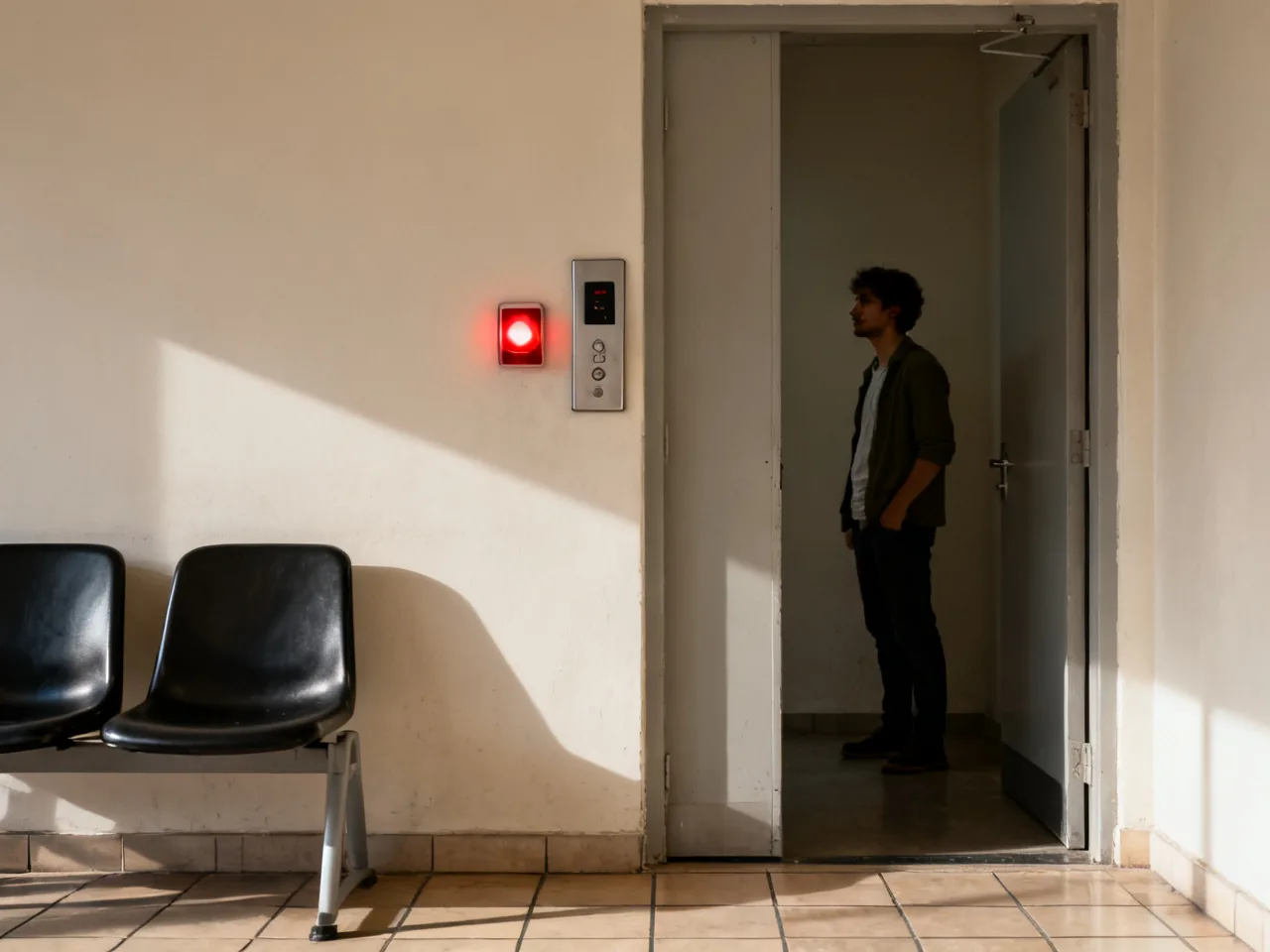
Now whenever I wait for someone outside a residential compound gate in China, I think back to that night. What it taught me was not just “don’t stand right up against the door,” but a broader awareness of public thresholds. Some places look like mere passageways, yet in reality they carry a chain of continuous movements for many different people. Some forms of politeness look like moving closer, but real grace is often a matter of leaving a gap. A great deal of order in China is maintained not through loud correction and not always through signs on the wall, but through the repeated daily choreography of where people stand, how they turn, when they yield, and how they open a door. That night, I stood in the wrong place, and because of that, I understood for the first time that leaving others a smooth path is also a way of giving yourself a more dignified one.