中国の贈り物の作法
Last Chinese New Year, I stood in a shopping mall on Nanjing Road in Shanghai, clutching a gift list and sweating bullets. The list read: boss, landlady, girlfriend’s parents, colleague with a newborn. What each person needed, what was taboo, how to wrap it — every detail mattered. That’s when I realized gift giving in China isn’t about spending money; it’s precision social engineering.
China’s gift-giving calendar is far busier than you might expect. Chinese New Year is the biggest season, usually kicking off one to two weeks before New Year’s Eve. During the 2024 Spring Festival, one e-commerce platform reported gift box sales exceeding 18 billion yuan — nuts and baijiu accounted for nearly half. The Mid-Autumn Festival ranks second, with mooncake boxes as the default, though insiders pair them with tea or hairy crab vouchers. Dragon Boat Festival gift sets have also become increasingly elaborate, ranging from traditional pork zongzi to abalone versions, priced anywhere from dozens to thousands of yuan.
Beyond holidays, several key occasions demand gifts: visiting patients (fruit baskets, health supplements), attending weddings (red envelopes — amounts must be even numbers, never containing 4), seeing newborns (baby clothes, red envelopes), and visiting someone’s home for the first time (fruit, milk, or local specialties). The first time I visited my girlfriend’s family, I brought a case of imported milk and two pounds of cherries. Her mother beamed with delight. I later learned that cherries hold a status among Chinese mothers-in-law roughly equivalent to diamonds in Western proposals.
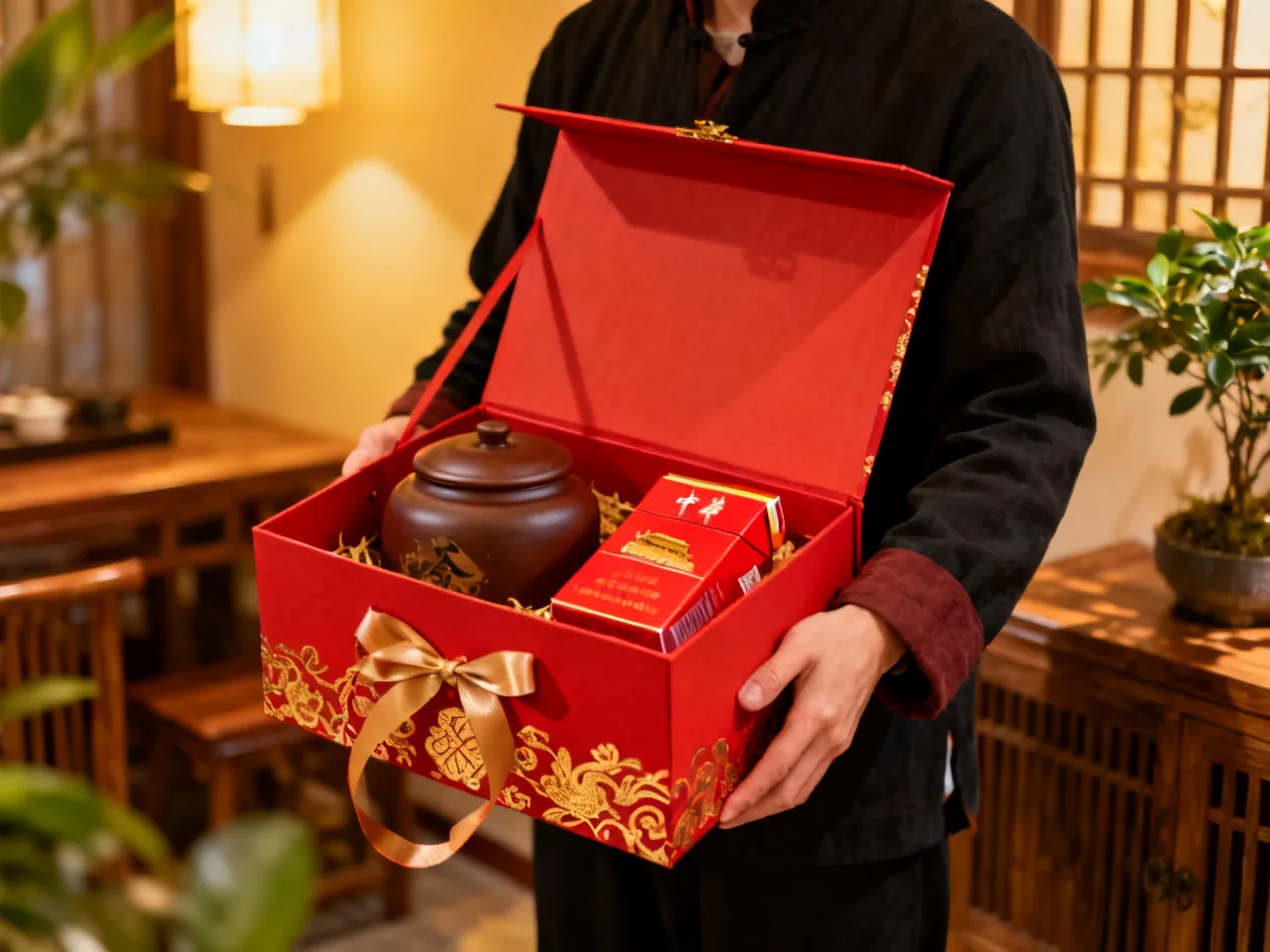
For elders, health-related gifts never miss: bird’s nest, ginseng, massage devices. My colleague spent 1,200 yuan on a neck massager for his father-in-law last year and rocketed from the bottom to the top three on the “son-in-law rankings.” Gifts for bosses require the most finesse — too expensive looks calculating, too cheap looks careless. Tea is the safe bet: a box of Longjing or Pu’er priced between 200 and 800 yuan strikes the right balance of respectability without overstepping.
Gifts for friends are more relaxed, but unspoken rules still apply. For a friend who just moved, a dinnerware set or potted plant works well. For someone who appreciates traditional Chinese culture, a fine set of the Four Treasures of the Study or handmade tea ware makes a great choice. For children, school supplies win more parental approval than toys — and that reveals the hidden logic of Chinese gift giving: the gift isn’t just for the recipient, but must also make everyone around you think you “get it.”
Clocks (zhōng sounds like “funeral rites”), umbrellas (sǎn sounds like “separation”), pears (lí sounds like “parting”) — these are the “deadly trio” of gift giving. A French friend of mine once carefully selected a beautiful mantel clock for his first visit to a Chinese friend’s home; the host’s expression changed instantly. White and black wrapping paper should also be avoided, as both colors are associated with funerals. Red and gold are the safest wrapping colors, consistent with the deep cultural significance of Chinese red.
Numbers matter too. Red envelope amounts avoid 4 (sounds like “death”) and odd numbers, favoring 6 (smooth sailing), 8 (prosperity), and 9 (longevity). Wedding red envelopes are typically 666, 888, or 1,314 yuan (meaning “one life, one world” — i.e., forever). According to Wikipedia’s entry on red envelopes, numerical symbolism in red envelope culture has persisted for over a thousand years.
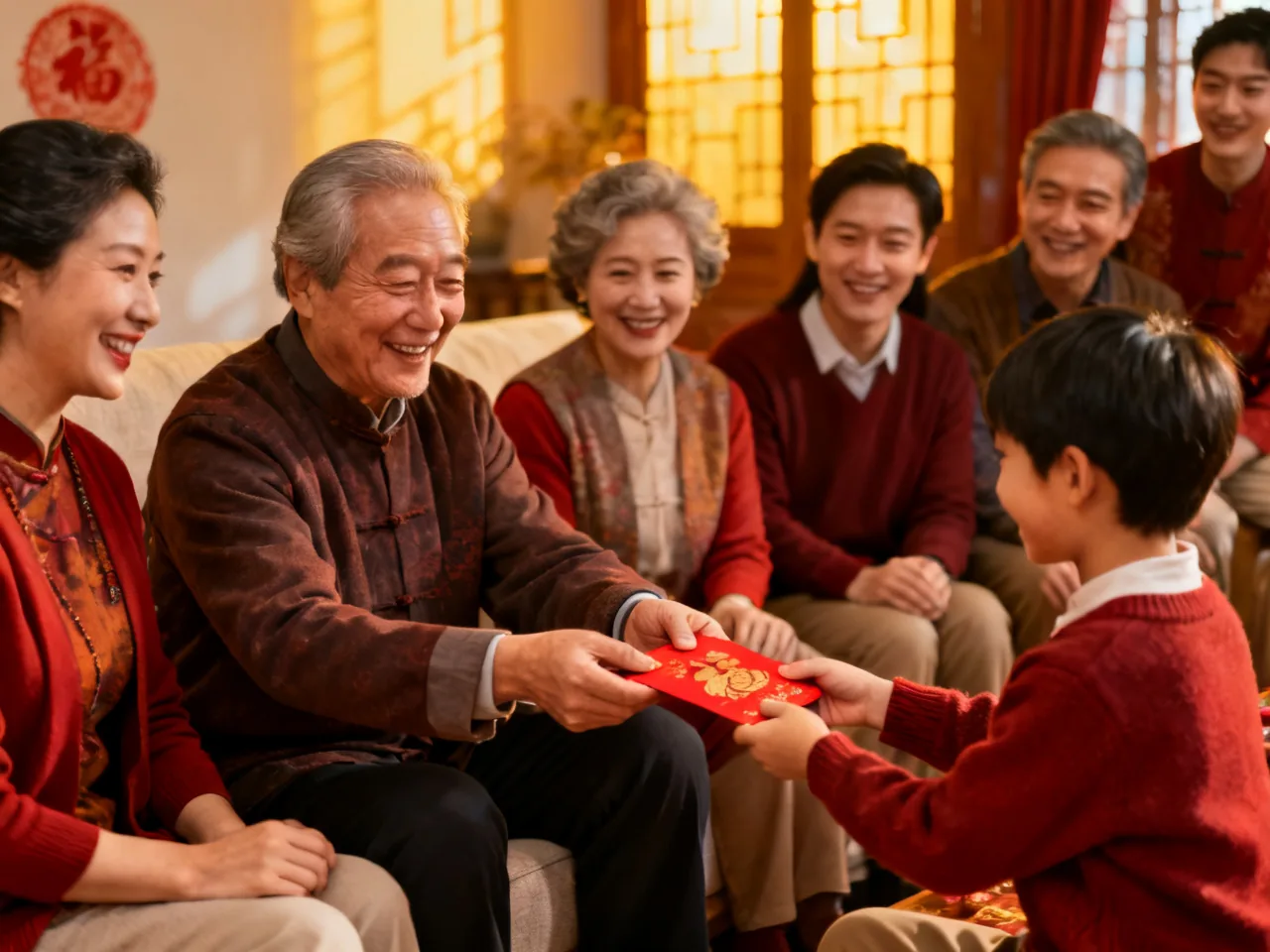
Chinese people usually don’t unwrap gifts in front of the giver — this isn’t coldness but courtesy, meant to spare the giver any embarrassment over the gift’s value. When someone gives you a gift, the correct response is to accept it with both hands, say “you’re too kind,” and set it aside. Don’t panic if your gift is initially refused; the Chinese practice of ritual declining means the giver insists, the recipient demurs, and after two or three rounds both parties appear well-mannered.
One more invisible rule: receiving a gift means you must reciprocate, and the return gift should be slightly higher in value than what you received. This isn’t one-upmanship but a way of maintaining relational balance. The Chinese call this lǐ shàng wǎng lái — “courtesy demands reciprocity.” Through this back-and-forth, the web of social bonds is woven layer by layer.
If you’re just visiting briefly, don’t stress too much. Bringing a specialty from your hometown when visiting someone’s home is sufficient — chocolate, wine, or local handicrafts all work. Remember to use a red or colorful bag, never white. If someone treats you to a meal, sending a small red envelope afterward via WeChat or treating them to a return meal are both appropriate responses.
Even Chinese people find gift giving exhausting. But look at it from another angle: behind every gift is an unspoken message — “I care about you.” Once you understand that layer, you’ve truly grasped the art of gift giving in China.