灯彩工房での一時間:光もまた「作られる」ものだと初めて気づいた
I used to assume that the most attractive part of lantern art was the nighttime moment. Of course it is beautiful when illuminated: colors glow, outlines soften, and the whole space suddenly acquires a festive mood. But what truly helped me understand Chinese lantern craft was not standing outside at night and looking up. It was entering a workshop during the day and seeing the still-unlit frames, paper, silk, thread, and handmade tools resting quietly on tables. In that moment I realized that lantern craft is not simply decoration with light inside. It is first a craft of structure, material, and imagination.
The instructor held up an unfinished lantern frame for us to see. It was only a set of thin strips bent into the shapes of petals, fish tails, or rounded bodies, yet it already contained the outline of life. She explained that in lantern-making, the first concern is not color, but whether the form can stand properly, whether it feels stable when carried, and whether it will appear too heavy once lit. That surprised me, because visitors are usually drawn first to the liveliness of the finished object and do not see this earlier logic at all. If the structure is poor, no amount of decoration can save the lantern.
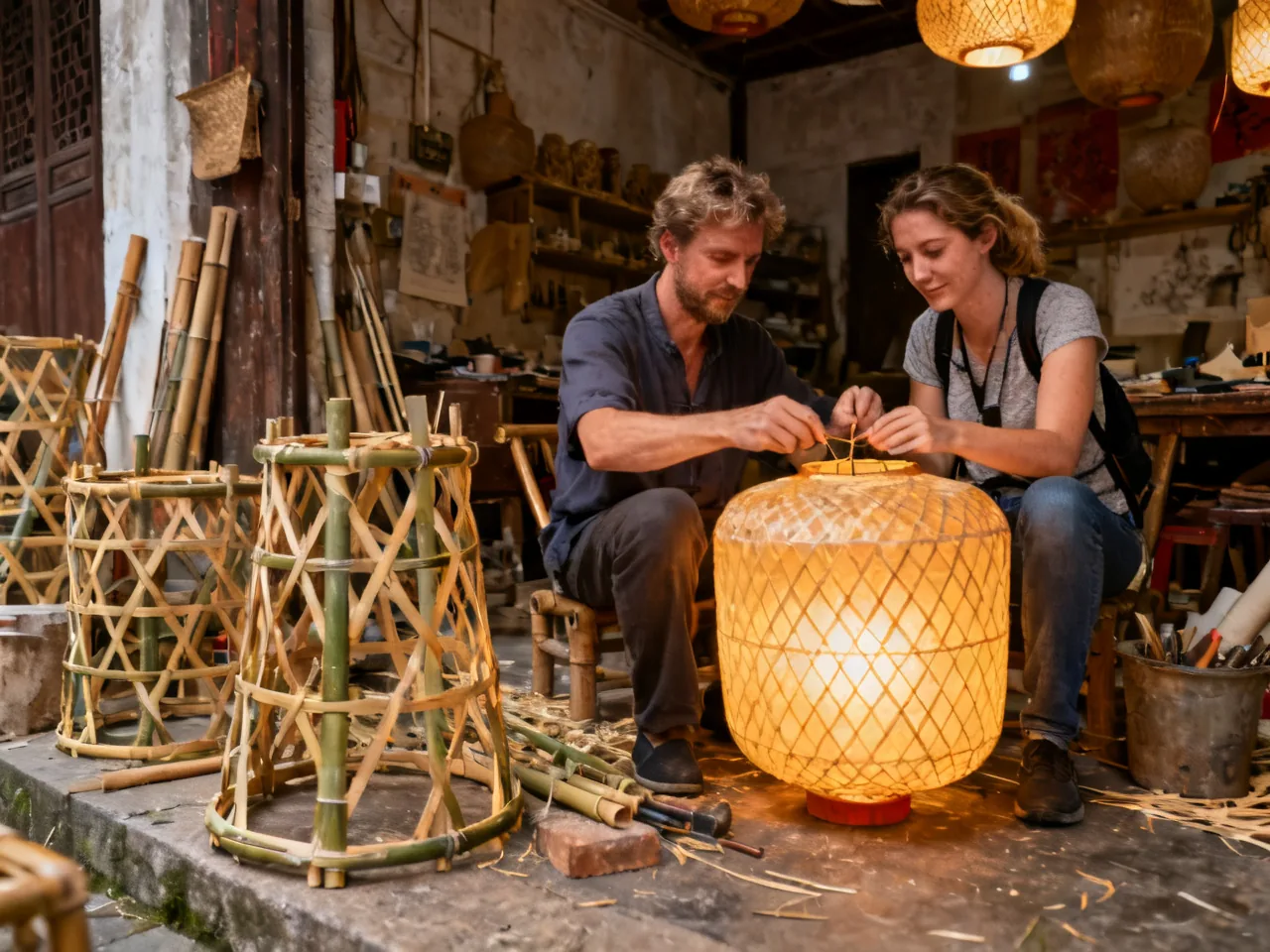
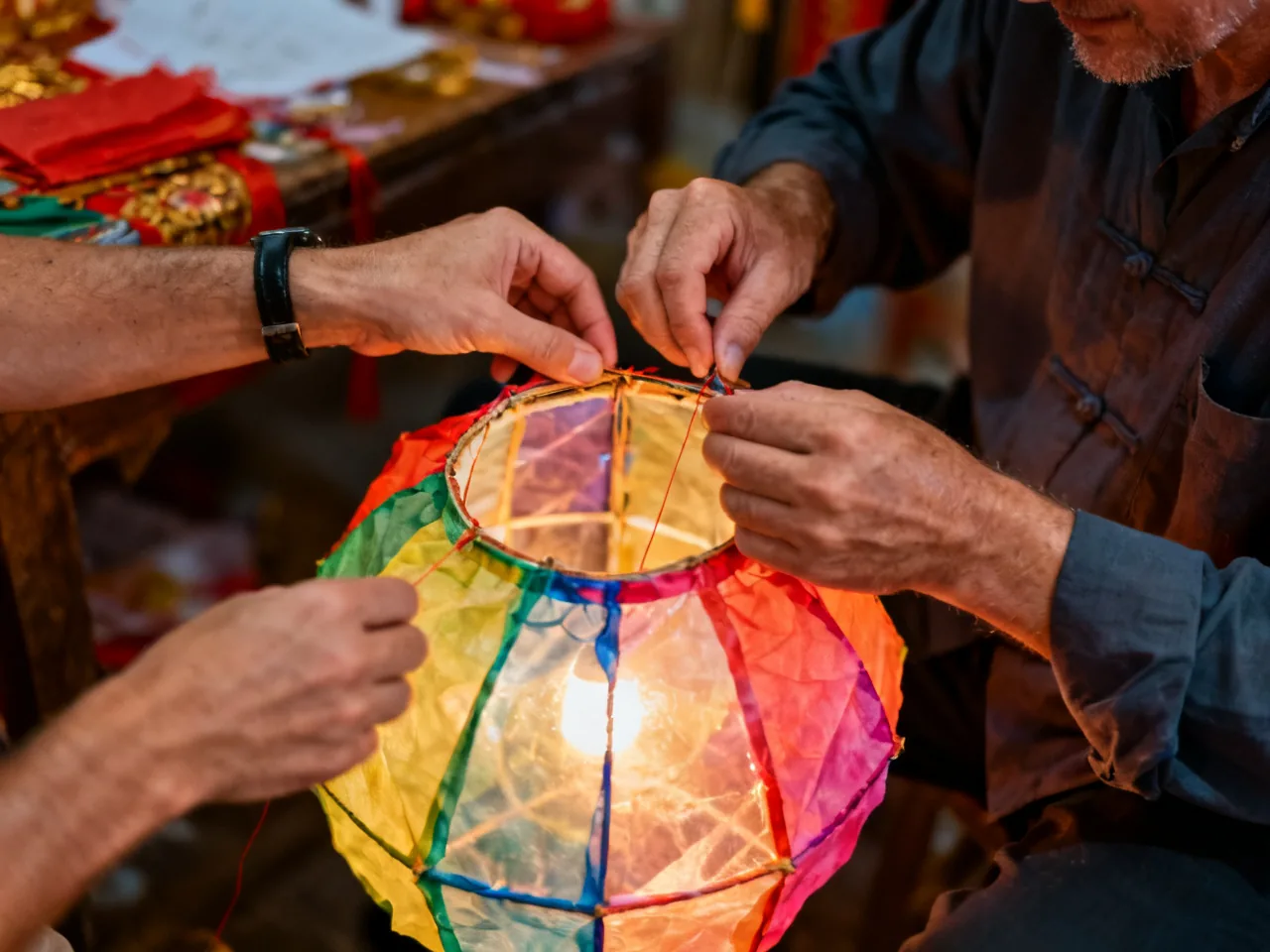
I tried making a relatively simple small lantern. It was not complicated, but it was enough to show me why this craft is not easy. First the frame must be secured, then the paper cut and glued, the edges wrapped, and only after that can decoration begin. None of these steps can be rushed. If the paper is mounted too loosely, the surface wrinkles; too tightly, and it may tear. If the thread is not gathered well, the outline looks rough. I had assumed the point of this kind of experience was merely to make a pretty souvenir with my own hands, but as I worked, I increasingly understood the word the instructor kept repeating: proportion.
What moved me most was that even before a lantern is lit, it is already preparing to glow. In daylight, you see frame, surface, and handmade traces. Once illuminated, all that preparation turns into a soft visual effect. The transformation feels magical. It made me think that lantern craft is not simply putting light inside a container. It is giving light a personality through craftsmanship. A round lantern feels gentle, a fish-shaped lantern feels lively, and a flower lantern looks like a festival smile. I realized that light is not abstract. Through folk craft, it can become local, emotional, and narrative.
Because I come from Mexico, I naturally compare Chinese lantern craft with festive decoration traditions from home. Mexico is also exceptionally good at using color and public space to create celebration. Whether in Day of the Dead decorations, papel picado, or temporary visual structures in street festivals, there is a strong sense of participation and joyful intensity. We also know how to make a place come alive. But Chinese lantern art feels more oriented toward a delicate and lingering aesthetic of light. It does not aim only for excitement. It also cares about elegant contour, soft illumination, and the gentle way auspicious motifs are carried forward.
This comparison taught me a great deal. Mexican festive visuals often seize your attention immediately and pull you into the atmosphere at once. Chinese lantern craft wraps around you more gradually. Its beauty does not always rush toward you in the first second. Often it is only after looking a while that you notice how balanced the frame is, how restrained the color is, and how the image on the surface and the light behind it complete each other. One leans more toward outward festive energy; the other toward a more subtle order of illumination. I love both, but they are undeniably different.
If a foreign traveler asked me which Chinese folk craft is best experienced in the day and remembered at night, I would probably recommend lantern art. It divides making and viewing into two layers: by day you learn to respect structure, and by night you finally understand the effect of light. By the time I carried my small lantern out of the workshop, evening was beginning to fall. The lantern was far from perfect, and the edges still showed a beginner’s hesitation. Yet when the light inside came on, I felt a very sincere burst of happiness. Not because it was so refined, but because for the first time I had seen with my own eyes that light really can be crafted, layer by layer, by human hands.