砂漠の発電所:中国西部の太陽光版図
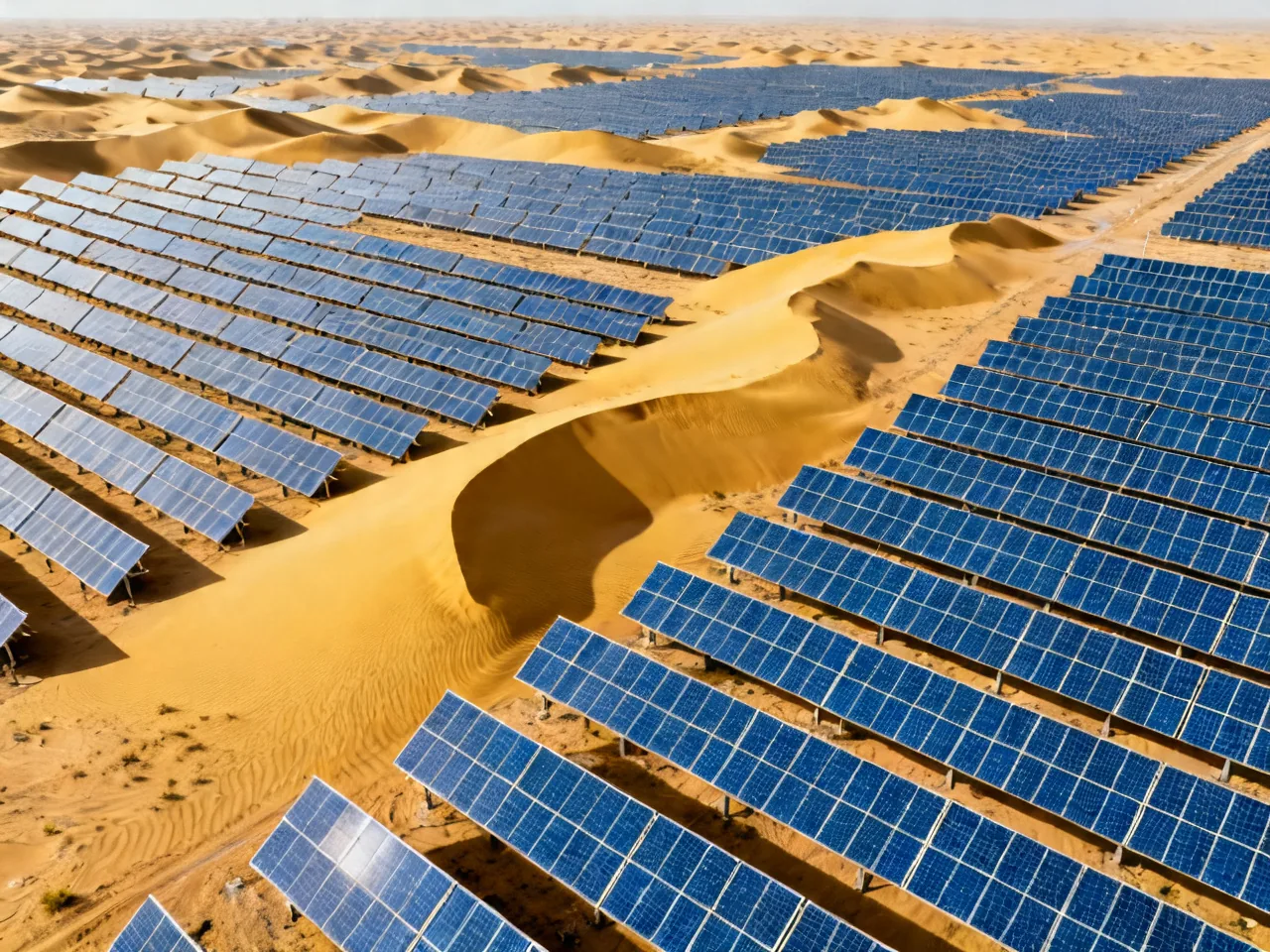
In Inner Mongolia’s Kubuqi Desert, there’s a solar panel array the size of 500,000 basketball courts.
That’s not a metaphor. The Kubuqi Desert solar base covers 800,000 mu of land with an installed capacity of 8 GW — the world’s largest single solar installation. Standing on an elevated platform nearby, blue photovoltaic panels stretch to the horizon, alternating with yellow sand dunes in a landscape that looks extraterrestrial.
The solar energy layout in western China centers on four provinces: Inner Mongolia, Xinjiang, Gansu, and Qinghai. By the end of 2024, their combined photovoltaic capacity hit roughly 213 GW — about a quarter of China’s total.
| Province | Solar Capacity | Key Feature |
|---|---|---|
| Inner Mongolia | ~83 GW | |
| Xinjiang | ~62 GW | |
| Gansu | ~38 GW | Jiuquan base (10→20 GW) |
| Qinghai | ~30 GW |
Behind these numbers is a key prerequisite: the west is vast, sparsely populated, and sun-drenched. Xinjiang and Qinghai receive over 3,000 hours of sunshine annually — double what the Yangtze River Delta gets. Cheap land and abundant sunlight make these regions ideal for solar deployment.
2024 was a watershed year. China added 277 GW of solar capacity, bringing its total to 886 GW — surpassing all other countries combined.
That number is abstract. To put it differently: 886 GW is roughly equivalent to the photovoltaic capacity of 400 Three Gorges Dams.
Investment in western provinces also surged. Renewable energy investment across the four western provinces exceeded $50 billion in 2024, with solar accounting for 65%.
The power is generated in the west, but the users are in the east — two to three thousand kilometers away.
The solution: Ultra-High Voltage (UHV) transmission lines. State Grid has built 16 UHV lines with a combined capacity exceeding 300 GW, specifically designed to carry clean power from western provinces to eastern demand centers — Shanghai, Zhejiang, Guangdong, Jiangsu.
In the early days, solar curtailment rates in Xinjiang and Gansu exceeded 30% — power generated but wasted because there was no way to move it. By 2024, thanks to UHV lines and energy storage, curtailment dropped below 5%.
In 2024, Qinghai’s grid ran on 100% clean energy for 35 consecutive days — not a single watt from coal or natural gas. This set the world record for a provincial-level grid operating entirely on clean power.
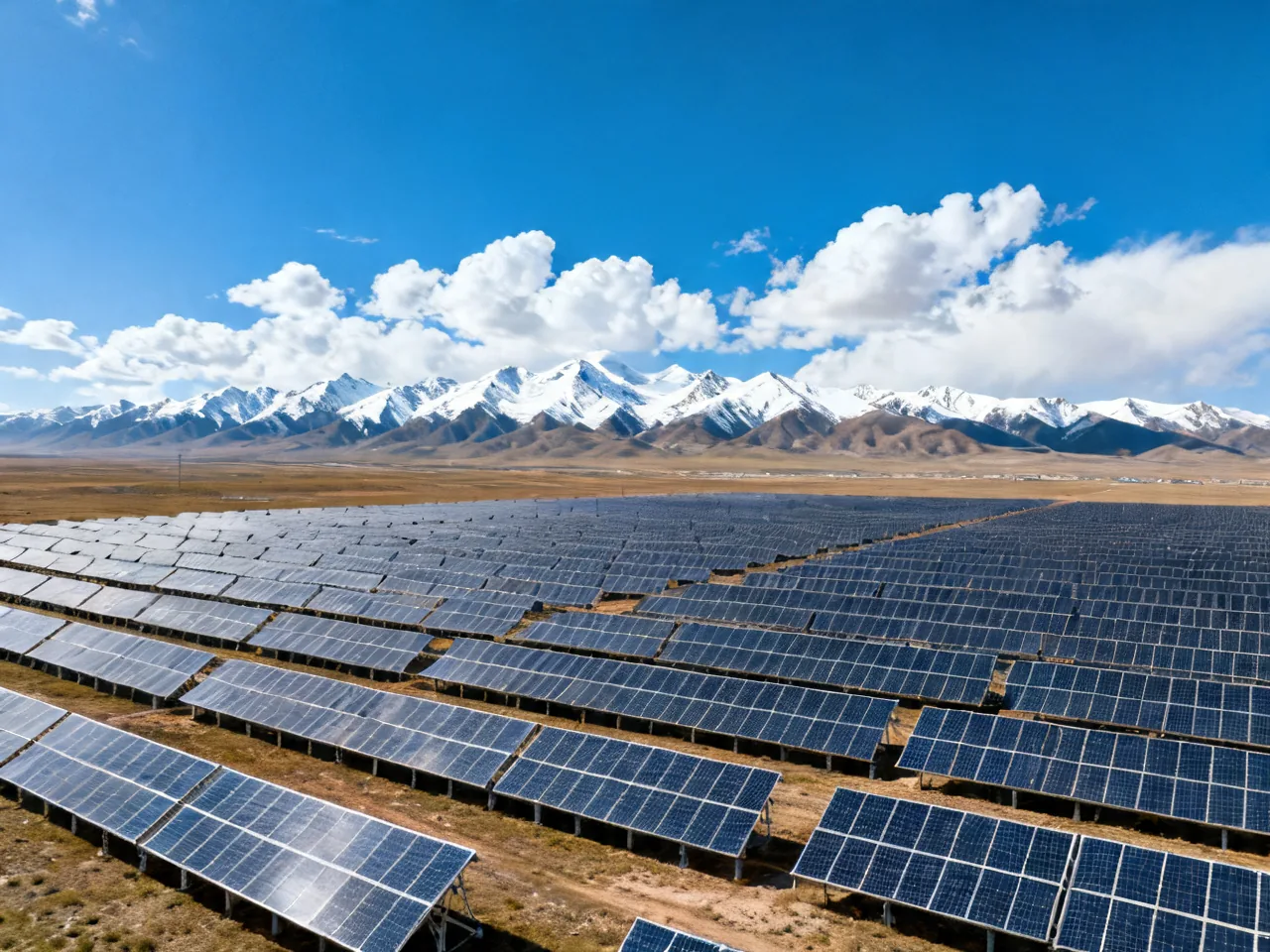
Qinghai didn’t achieve this on solar alone. The Longyangxia hydropower station acts as a “balancer” — when daytime solar generation exceeds demand, hydropower output drops; when the sun sets, hydro ramps up. This solar-hydro complementary model keeps the grid stable.
The model was later adopted by Gansu and Sichuan provinces.
The National Energy Administration approved three batches of desert, gobi, and wasteland renewable energy base projects totaling 455 GW. These are concentrated in Inner Mongolia, Xinjiang, Gansu, and Qinghai.
For context: 455 GW is roughly double the entire installed solar capacity of the United States, currently the world’s second-largest solar market. And this is just one of China’s incremental plans.
The 14th Five-Year Plan targets 1,200 GW of combined wind and solar by 2030. At the current pace, that target will likely be met ahead of schedule.
As a traveler, if you ride the Qinghai-Tibet Railway or the Lanzhou-Xinjiang High-Speed Rail, the most striking new landmarks outside your window aren’t buildings — they’re vast blue solar arrays unfolding across the desert.
Around Qinghai Lake, in the Gobi near Dunhuang, along the Hexi Corridor from Lanzhou to Jiayuguan — large-scale solar farms are visible everywhere. Some even have observation platforms set up for passersby to take photos.
Solar energy in western China isn’t a future plan. It’s already happening right in front of you.