ドラゴンボートはレースだけではない:ある外国人が端午節を理解するまでの3年
My first impression of the Dragon Boat Festival was a zongzi. Specifically, a bamboo-leaf-wrapped triangular object my Guangzhou colleague handed me that I had absolutely no idea how to open. I spent two full minutes unwrapping it, getting sticky rice everywhere, while my coworkers laughed themselves under the table. That was June 2022, my first year in China, still a long way from truly understanding Duanwu.
Year One: Zongzi, Confusion, and a Three-Day Holiday
The Dragon Boat Festival is one of China’s four major traditional holidays, falling on the fifth day of the fifth lunar month, usually around June. For freshly-arrived me, it initially meant three things: three days off, eating zongzi, and dragon boat races on TV. But “eating zongzi” alone was enough to keep me busy for a while.
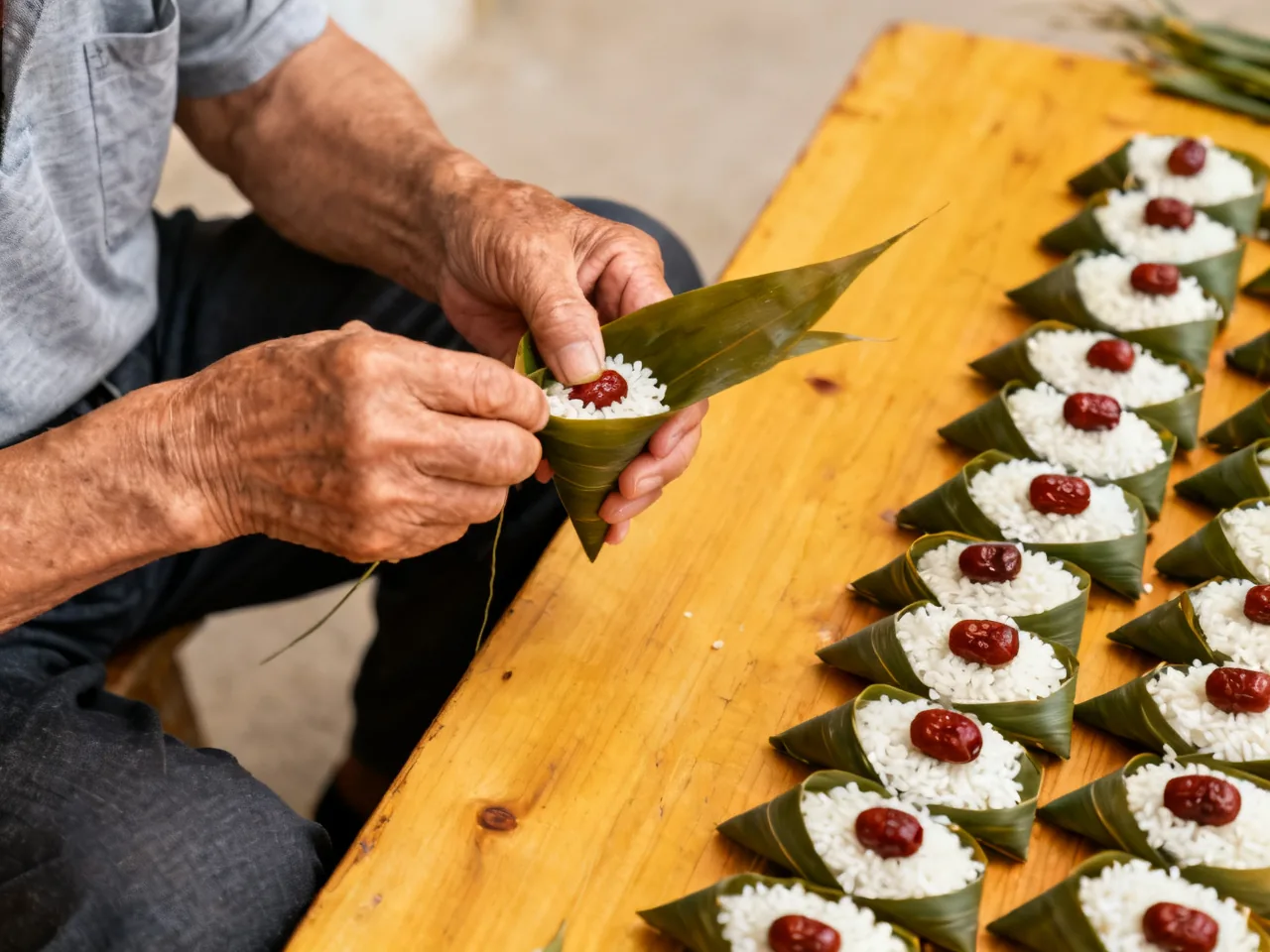
I was hooked on zongzi from the first bite. But I quickly discovered the zongzi universe was far more complex than imagined. My Guangdong colleague’s version was savory meat zongzi — sticky rice stuffed with pork belly, salted egg yolk, mung beans, and shiitake, rich and umami, one practically a meal, around 8-15 RMB at market. Then my Zhejiang friend said: “Try Jiaxing meat zongzi, soy sauce flavor, 7 RMB each, sold at train stations.” Next came my northern colleague with honey date and red bean paste ones — sweet! The sweet-vs-savory zongzi war is every bit as fierce as all north-south food battles, perfectly mirroring the eternal sweet-south-vs-salty-north culinary debate.
IMAGE_PLACEHOLDER_1
Final count: during that Dragon Boat holiday I consumed eleven zongzi, four flavors. The first day back at the office I needed to run three kilometers to digest. But those zongzi taught me something important: in China, food is never just about filling your stomach — it’s cultural code, regional identity, family memory. Behind every style of zongzi lies a place’s story.
Year Two: Qu Yuan, Mugwort, and a Whole System of Rituals
By my second Duanwu, I decided to do proper homework. First: who exactly does this festival honor? Answer: Qu Yuan, a poet and statesman from the State of Chu during the Warring States period. In 278 BCE, when Chu’s capital fell to Qin, Qu Yuan, overcome with grief, walked into the Miluo River clutching a stone. Local people raced boats to save him — too late — so they threw rice into the river, hoping fish would eat rice instead of his body. That’s the origin legend of dragon boats and zongzi. I found it rather dark the first time, but Chinese friends explained: Qu Yuan has been commemorated for over 2,000 years not for how he died, but for his poetry “Li Sao” and his loyalty — “The road ahead is long; I shall search high and low” remains a life motto for Chinese people today.
Year two also revealed another side of Duanwu: mugwort. Around the festival, nearly every household hangs a bundle of mugwort or calamus by the door. Walking through old Hangzhou neighborhoods, the air carries an herbal fragrance. At wet markets, mugwort goes for 3-5 RMB a bunch, every auntie carrying one. Mugwort and calamus supposedly repel mosquitoes and evil — the fifth lunar month was historically called “poison month” due to hot, humid weather breeding insects and disease. Many Duanwu customs — hanging mugwort, wearing sachets (stuffed with medicinal herbs, 10-30 RMB each), drinking realgar wine — were actually ancient public health measures. Chinese people are remarkably good at packaging pragmatism as romantic ritual.
Year Three: Get on the Boat!
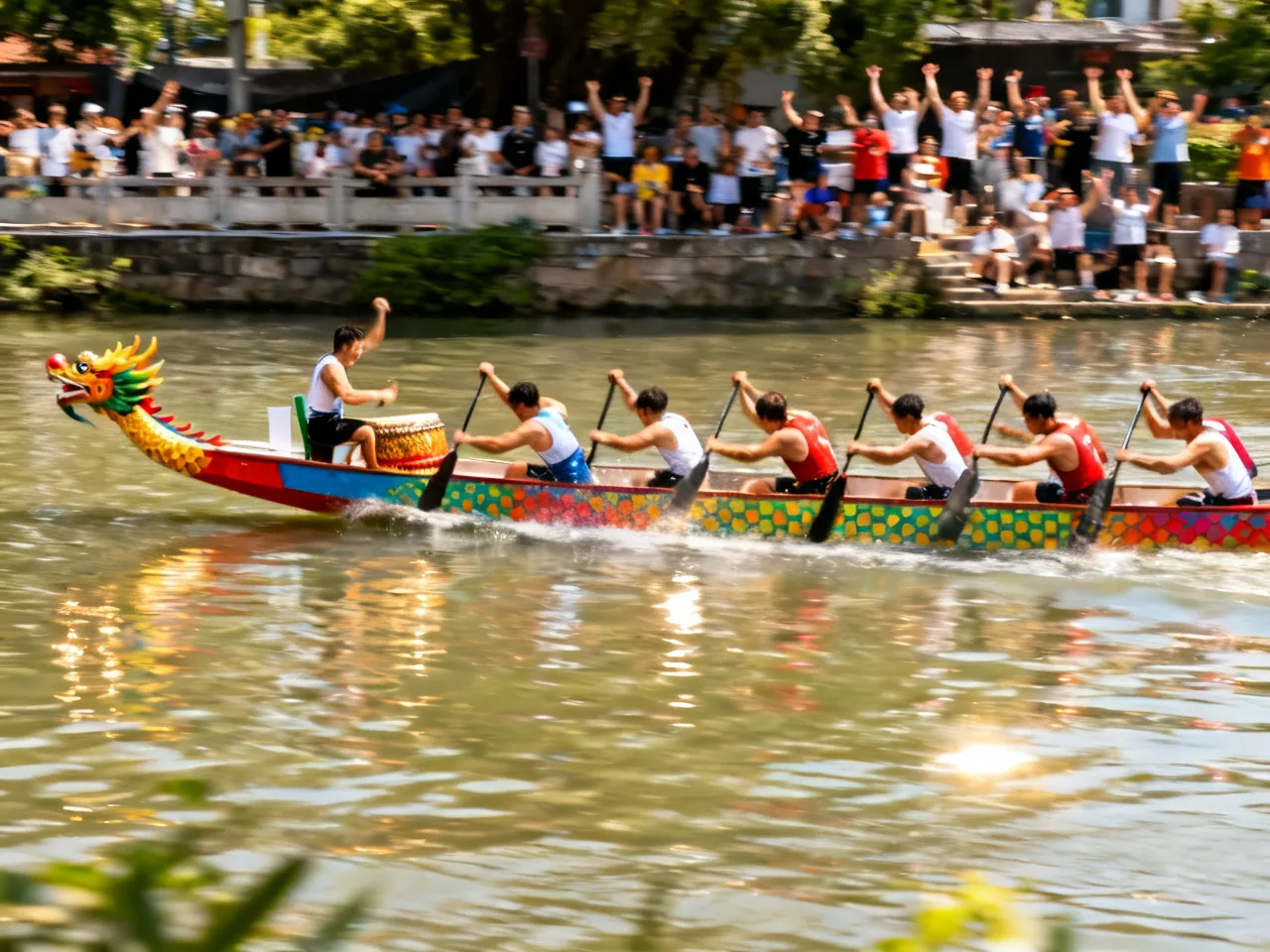
Year three, I finally did something I’d always wanted — joined a dragon boat race. Not as spectator, but as a paddler. I joined an amateur dragon boat team in Guangzhou, training on the Pearl River every weekend. A standard dragon boat is about 12 meters long, seating 20 paddlers plus a drummer and helmsman. The drummer is the soul — their rhythm dictates everyone’s speed and power. Me, a 185cm foreigner, was placed in the middle because “you’re strong but your rhythm is off, the middle position won’t affect the whole team.”
IMAGE_PLACEHOLDER_2
Training was tougher than imagined. After each two-hour session, my palms were blistered, my back couldn’t straighten. But the moment twenty people chant in unison and paddles slice the water simultaneously — there’s an indescribable feeling of collective power. Our coach, a Guangzhou local in his fifties, said: “Dragon boating isn’t one person’s thing — it’s a whole village’s thing.” In traditional Guangdong villages, dragon boat racing symbolizes clan honor. A month before Duanwu, villages “raise the dragon” — dig out boats preserved in river mud, wash, repair, repaint. On raising day, the entire village turns out with firecrackers blazing, ceremony no less grand than a mini Olympics opening.
In Foshan, dragon boat culture reaches its zenith. The Diejiao race is especially famous — boats must navigate hairpin turns in alley-narrow waterways, demanding extreme skill, earning the internet nickname “dragon boat drifting.” Foshan’s love for traditional culture is admirable — from Yingge Dance to dragon boats, living intangible heritage thrives here. And the carved dragon heads on the boats remind you of the Chinese dragon’s central place in this civilization — the dragon symbolizes power, nobility, and good fortune, so a dragon boat is never just a boat — it’s a cultural symbol.
Not Just a Chinese Festival
Interestingly, dragon boating has spread worldwide. Over 85 countries and regions now have the sport, with the International Dragon Boat Federation holding annual world championships. At the 2010 Guangzhou Asian Games, dragon boating became an official event. My hometown hosts races every summer too — though nothing like China’s scale, the spirit of water-borne competition is universal. Except our boats lack carved dragon heads and firecrackers, which somehow feels incomplete.
After Three Years
Three years on, Duanwu is no longer just “that zongzi festival” to me. It’s a story about loyalty, memory, collective strength, and seasonal change. Every May, when supermarkets start selling zongzi, pharmacies hang mugwort, and drums echo across the Pearl River, I know I’m no longer that foreigner who couldn’t unwrap a zongzi. I’m a participant with deep respect for Chinese culture. Next Duanwu, I’m getting on the boat again.