高速鉄道の駅で方向を見失ったけれど、旅は失わなかった
The first time I took a Chinese high-speed train alone to another city, what made me nervous was not the speed or even the language, but direction inside the station. I carried a small backpack, held my passport and ticket information, and stood in front of the station entrance while streams of people moved forward in an orderly way. I thought following the crowd would naturally bring me to the platform, but I soon learned that every step inside the station required my own decision.
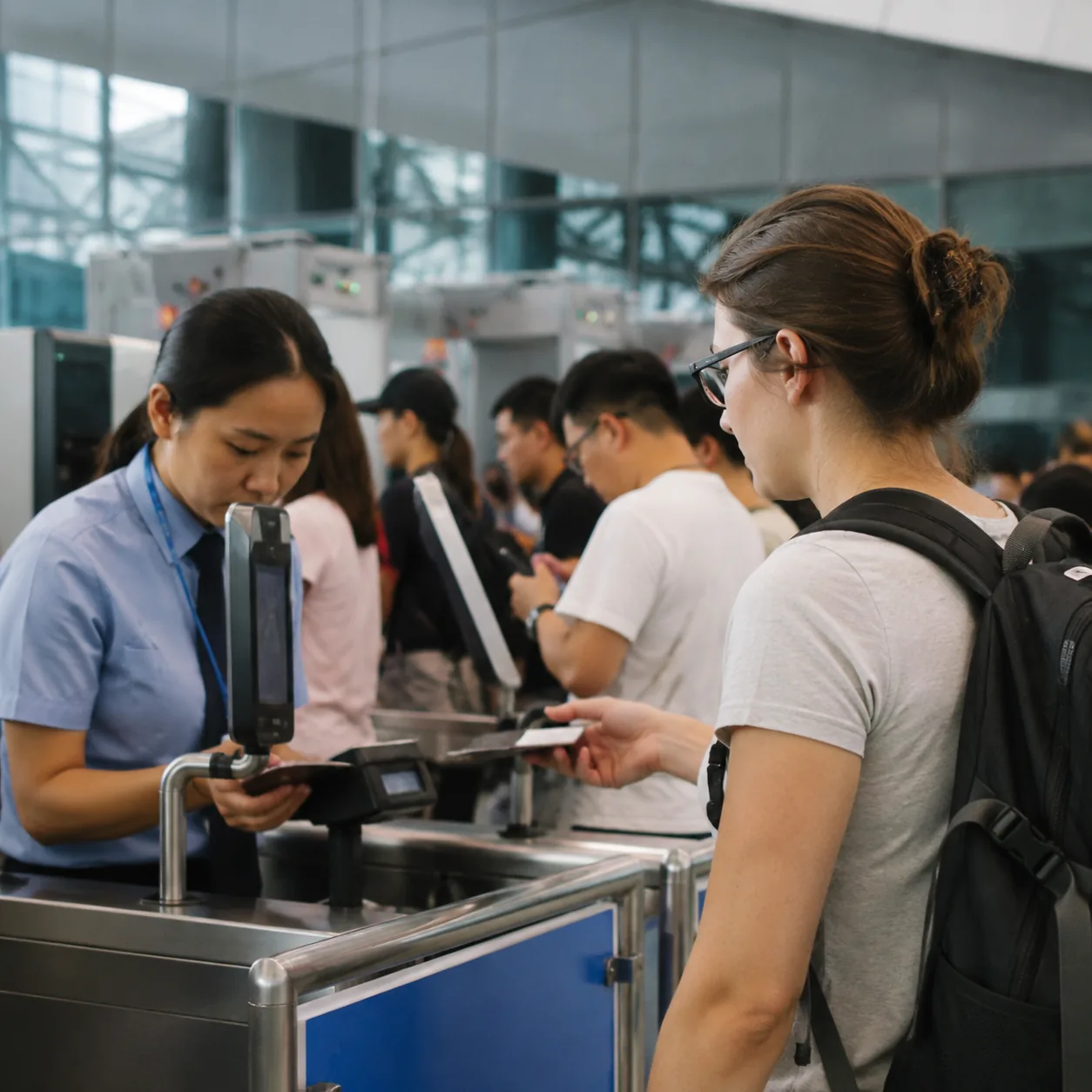
Outside the entrance there were several lines, with security channels and real-name verification machines nearby. Some passengers scanned ID cards, others showed phones to the staff, while I, as a foreign visitor, handed over my passport. The staff checked my document, looked at the screen, and nodded me through. I relaxed for a second and thought the hardest part was finished, but the part that would make me lose my way had only just begun.
After security, I entered a huge waiting hall. The ceiling was high, the lights were bright, rows of seats stretched across the floor, and electronic screens hung in the distance, constantly showing train numbers, terminal stations, ticket gates, and status updates. I knew I needed to find my train number, but there was so much information and so many Chinese place names that I watched several cycles and still worried I had read the wrong line.
My ticket information said I was going to Nanjing South, with a gate number beside the train number. Once I found the matching number, I felt a little steadier. Yet the hall did not have only one direction to follow. There were gates on the left, more gates on the right, and signs in the middle pointing to restrooms, convenience stores, and hot water. I walked halfway, then turned back to look at the screen again, as if checking that the size of the hall had not swallowed my plan.
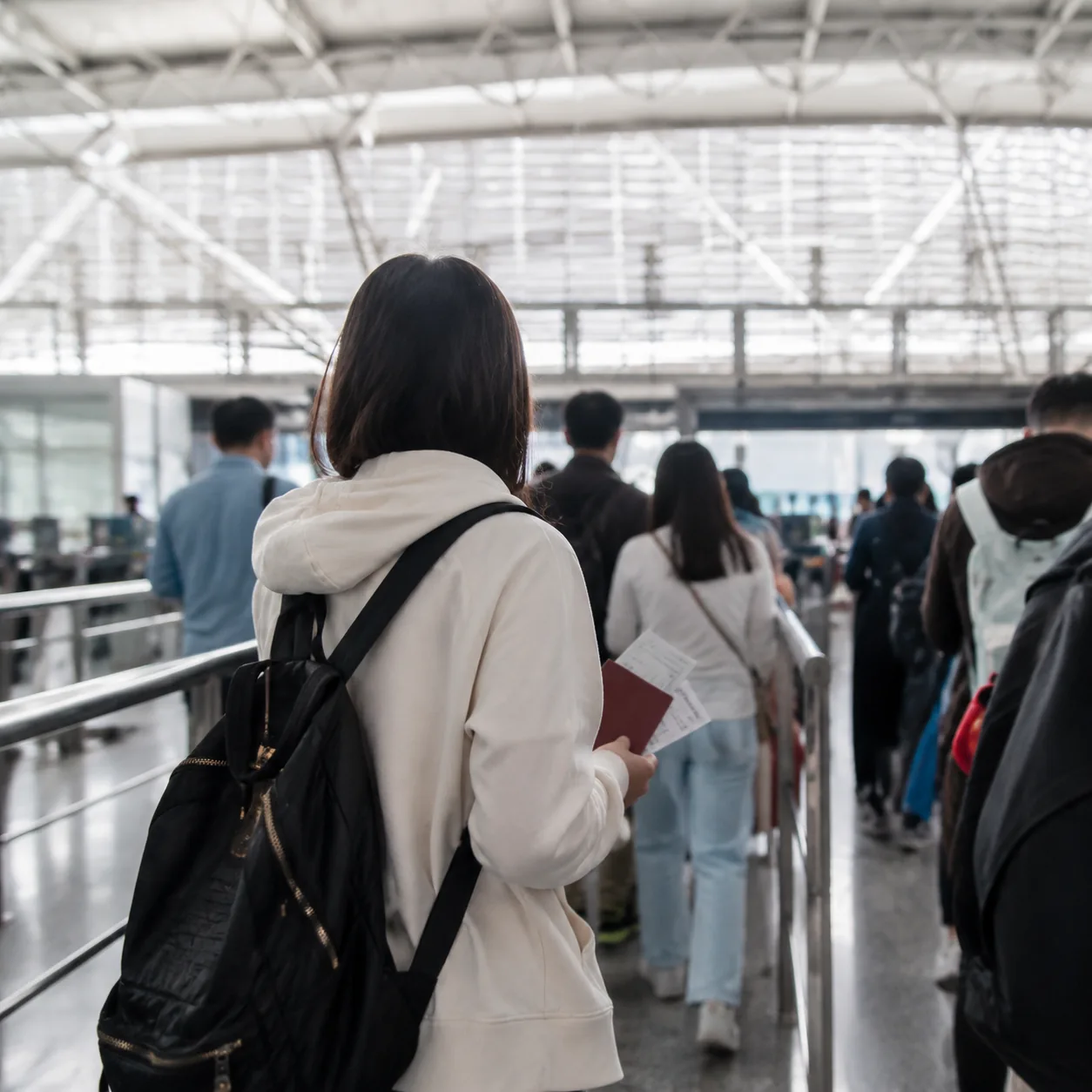
My first mistake was treating the gate number and the platform direction as the same thing. I saw an arrow pointing toward a nearby number and followed it. There were many people on the way, announcements echoed through the hall, and I could not understand every sentence, so I caught only the occasional sound of a train number I recognized. A few minutes later, I saw a long line at the gate ahead, but the screen above it showed a different train.
At that moment I did not panic immediately; I simply stood beside the line and froze. I opened the order page on my phone, looked up at the small screen above the gate, then looked down at my phone again. The numbers were different, and the destination was different too. I finally understood that I had walked the wrong way. Strangely, I was not completely lost. I could still see the hall, the seats, and the shops, but I did not know which way I should return.
I tried to walk back the way I had come, but the flow of passengers kept changing my direction. Some people came out from the gate, others rushed forward with suitcases, and one family stopped in the middle of the walkway to adjust a child’s jacket. After I moved around them, I found myself in another area, under signs for other gates. I began to sweat a little, not because it was hot, but because the departure time was getting closer.
I saw a uniformed staff member standing near a passage and went to her. I turned my phone screen toward her and pointed at the train number and gate. I used only a few simple Chinese words: “This, where?” She looked at the train number, checked the time, and then pointed behind me in another direction. She did not scold me. She spoke clearly and used gestures to show that I should return to the center of the hall first, then go to the right.
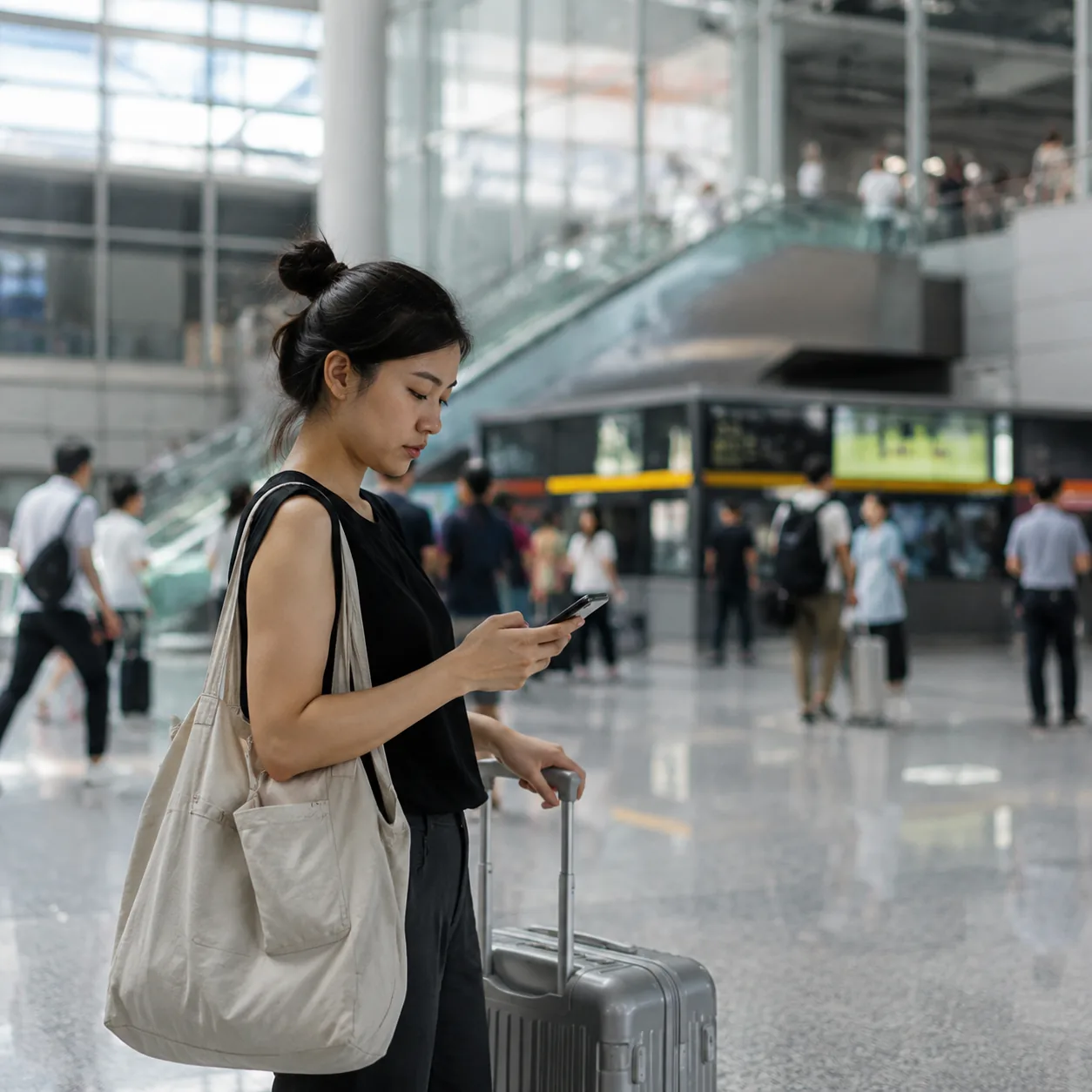
Her reminder gave me a sense of route again. I followed the direction she indicated, first finding the central electronic screen in the hall, then confirming my train number from there. The status of my train had changed to ticket checking, and the gate number was clearly displayed. I suddenly understood that in a station this large, the electronic screen was not just background; it was part of the route. Staff were not only a last resort, but people who could help me locate myself again.
As I walked toward the correct gate, my steps became faster, but my mind became clearer. I no longer blindly followed the crowd; instead, I checked the overhead signs every short distance. When I reached the gate, the train number, destination, and time on the screen finally matched my phone. There were many people in line, but the line moved quickly. When it was my turn, I showed my passport and ticket information to the staff, and after checking them, she let me pass.
After passing the ticket gate, I thought I could go straight down to the platform, but there was another split in the path. The left and right sides led to different platform numbers, and there was an elevator beside the stairs. I stopped, looked at the sign on the wall, and then checked the direction arrows on the floor. Before, I would have felt embarrassed to stop, as if everyone knew the way except me. That day I learned that stopping to confirm saves more time than walking wrong.
When I finally reached the correct platform, the train was already there, long and still, with attendants standing near the doors. There were carriage number signs on the platform, and I spent a little more time finding my carriage. The whole process did not include a dramatic movie-style run or an exaggerated near-miss. It was simply a foreign traveler in an unfamiliar system, checking, going wrong, being reminded, and adjusting again.
After boarding, I put my bag away and sat by the window, only then feeling my body relax. When the train started moving, the platform outside slowly slipped backward. I thought about my confusion in the hall and realized it was not a failure, but part of the journey. Travel does not always begin at a scenic spot. Sometimes it begins at an entrance, an electronic screen, a ticket gate, and one wrong turn.
After that experience, I gained a more concrete understanding of Chinese high-speed railway stations. They are often large, but the information is usually complete. They can pressure someone unfamiliar, but they are not designed to make people lost. Entrance, security, waiting hall, electronic screen, ticket gate, platform—each step has its own logic. If I am willing to slow down a little, that logic gradually becomes visible.
I also understood better why many local passengers looked so natural. They were not born better at traveling than I was; they were familiar with the repeated details. They knew the electronic screen should be checked for train number and gate, that people would suddenly gather once ticket checking began, and that platform and carriage numbers still needed another confirmation. What I saw as speed was really experience.
As a foreigner, what I needed most in that station was not perfect Chinese, but the willingness to admit I might have read something incorrectly. If I was willing to ask, to show my phone information clearly to the staff, and to return to the electronic screen to check again, the situation became manageable. The most frightening part of being lost is not taking the wrong direction, but pretending that I have not.
When I thought about it later, the staff member’s gesture was very important. She did not give me a complicated explanation. Instead, she first directed me back to a place where I could judge again: the central electronic screen in the hall. For someone who is lost, the most useful help is not always listing every step, but returning him to a point where the whole picture can be seen. At that moment, I was not being pushed along; I was taking back my route.
The experience also changed how I planned trips. Before, I calculated the time from one city to another, but rarely counted movement inside the station. After that day, I treated entrance, security, screen checking, gate finding, and walking to the platform as part of the itinerary. They were not extra little inconveniences; they were real steps that determined whether I could depart smoothly.
If I arrive at an unfamiliar high-speed railway station again, I will first remember the train number clearly and then check the large screen, instead of staring only at the destination. I will confirm whether the gate has opened and pay attention to the numbering of different areas in the station. If I reach a gate and the screen does not match my ticket, I will not stubbornly join the line. I will step back immediately to a place where confirmation is easier.
I will also ask staff for help earlier. That does not mean I am not independent; it means I respect the information on site. Stations handle huge numbers of passengers every day, and staff are familiar with common mistakes. My question may look ordinary to them, but for me it can decide whether a trip goes smoothly. Some help during travel does not require complex expression; it only requires placing the correct information in front of the right person.
When that train arrived at Nanjing South, I no longer felt embarrassed about having lost my way earlier. As I got off, I saw another huge station, new electronic screens, new exit numbers, and new flows of people. I knew I might still walk the wrong way, but I also knew I could adjust. A sense of direction is not learned all at once; it is trained through repeated unfamiliar scenes.
Looking back now, I remember that experience more clearly than a perfectly smooth trip. It brought me into the live part of travel: not the line on a map, not the time in an order, but the signs in front of me, the people around me, the reminder from staff, and my own judgment. High-speed rail shortens the distance between cities, while the station reminds me that before arriving, I still have to learn how to read the present moment.
I lost my direction in that high-speed railway station, but I did not lose my trip. In fact, that short confusion made me trust my ability to adapt more. As long as the train has not left, as long as the information can still be checked, and as long as there is someone to ask, the route is not completely broken. It has only bent for a moment, waiting for me to see clearly again and continue forward.