唐代の朝食は「種類が多い」だけだと思っていた——朝市に立ち、鍋の縁と胡餅が一緒に湯気を立てるのを嗅ぐまでは
The sky had only just begun to turn pale from gray, and the street entrance was already warm. Not loud warm, but a warmth made of moisture, footsteps, and the sound of iron ladles striking pots. I entered the morning market behind a traveling merchant who always rolled his sleeves high. As we walked, he told me not to stare only at the stalls. First, he said, watch where people choose to stand. A half-circle had already formed around the hot soup vendor. Beside it, a man baking sesame flatbread was slapping rounds of dough against the inside wall of the oven, drawing back his fingers dusted lightly with flour. I had assumed the most striking thing about Tang breakfast markets would be sheer variety. But what truly held me in place was the layered feeling of different kinds of heat rising from the same street at once.
The longer I stayed in China, the more I felt that the hardest thing to write clearly about historical food is not the number of dishes, but how tightly food is tied to time, gesture, and moving crowds. This is especially true of the Tang period. You cannot simply say there was flatbread, porridge, and soup. That sounds like a menu. Real breakfast life depends on who stops first at the soup stall, who buys bread and keeps walking while eating, who is clearly in a hurry yet still turns back for one extra swallow of hot broth, and who rubs cold hands together in the steam before extending copper coins. Food is not an object placed alone for admiration. It becomes fully real only when street and people move around it together.
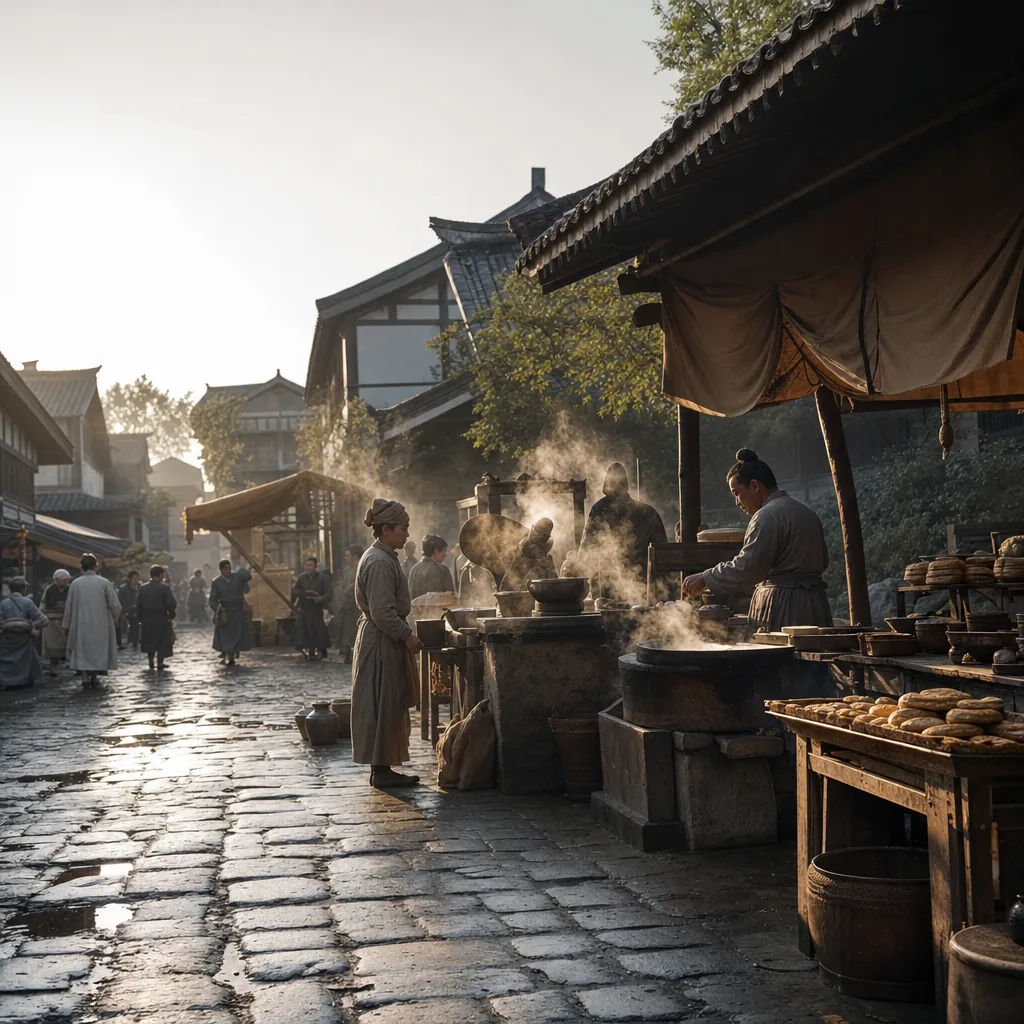
The traveling merchant who brought me in was surnamed Han. He walked fast, but he never rushed his words. He stopped before a large pot, did not buy anything yet, only lowered his head to smell the broth and then turned to tell me that in a morning market, soup must be smelled first and bread judged second. I nearly laughed when I heard it, because the line sounded like a rule and yet was so concrete. Soup tells you whether the street has properly awakened. Bread tells you whether the meal can continue moving with you. Tang urban life was crowded, quick, and full of outside merchants, so breakfast could not be only about sitting down slowly. Very often it had to serve the reality of adding one mouthful of stability while already in motion. That is why the breakfast stalls felt so intelligent to me. They understood that people were not stopping merely in order to eat. They were pausing inside movement to give the body one hot moment of balance.
Tang Breakfast Was Powerful Not Because It Was Rich, but Because It Could Catch People in Motion
I used to think that if an old breakfast market offered many options, that probably meant prosperity. But once I stood in a street like this, I realized that what mattered more was whether it could catch people properly. Some had only just left home and their stomachs were not fully awake, so they needed only a thin hot soup. Others had already walked half the street and needed a bread that could hold them for longer. Still others bought while asking nearby vendors about road conditions, weather, or when trade caravans were expected into the city. Breakfast stalls therefore did more than sell food. They formed a row of small points holding the city together at daybreak.
Later Han bought me a sesame flatbread just out of the oven. Its edge was still hot, and its surface carried the fragrance of sesame from a lightly cracked crust. He did not let me bite it immediately. Instead he drew me first toward the soup pot and said that only by smelling this before eating that would I understand why the market was not chaotic. He was right. Once I first caught the broth’s faint scent of scallion and meat and then bit into the dry aromatic bread, the whole structure of the morning suddenly became clear. One element pulled the body out of the cold. The other pushed it back toward the road. They were not competing. They were dividing the work.
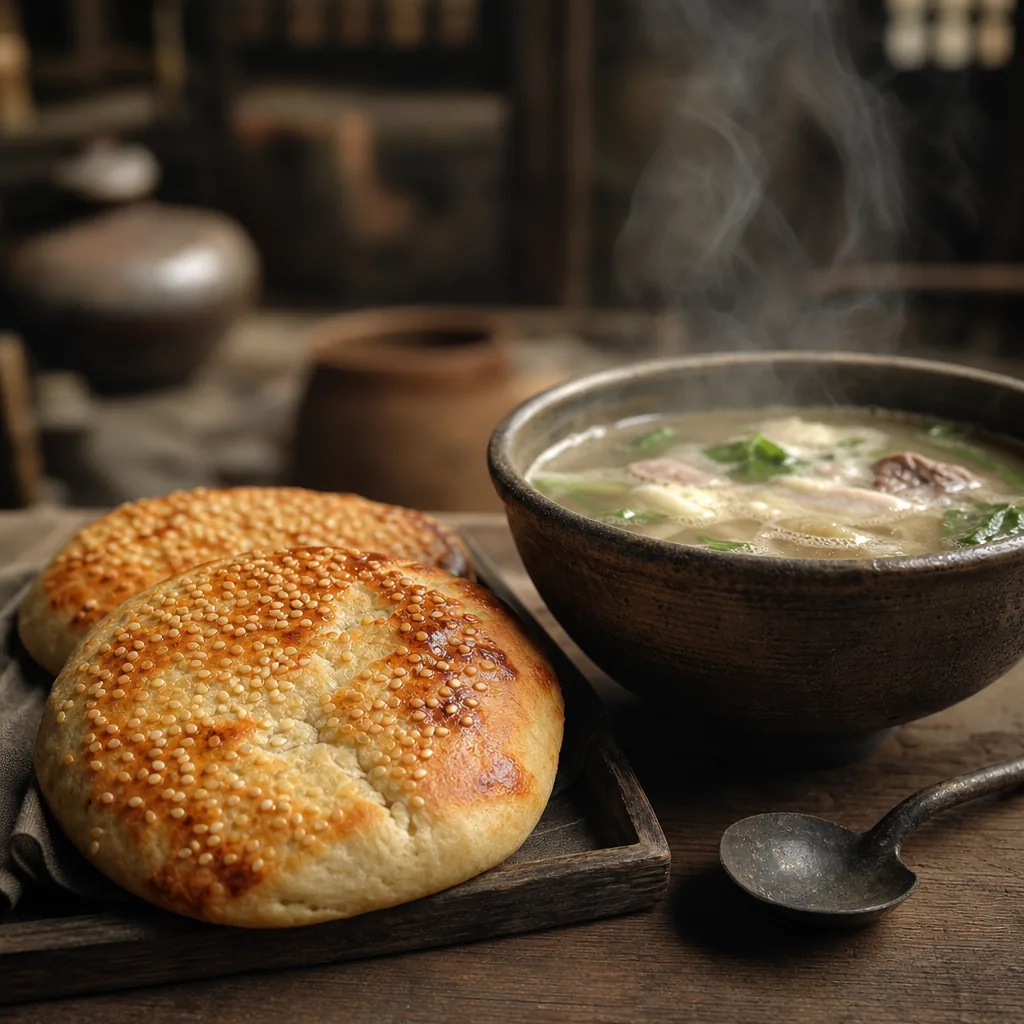
The Real Liveliness Was Not the Shouting, but How the Stalls Supported One Another
Many people write about old markets by emphasizing the cries of the vendors, as though louder meant more life. But the Tang morning market I felt that day did not win by noise. What was truly interesting was the almost wordless coordination between different stalls. In front of the soup sellers stood the people who wanted to warm their stomachs first. Near the bread sellers gathered those preparing to carry food onward. A little farther off, the hot porridge area felt like a half-beat slower space reserved for older customers. If you stood in the middle of the street and watched for a while, you would see that the crowd itself separated these zones naturally.
That made me suddenly think of the corridors and column lines in traditional Chinese architecture that guide the pace of movement. Food stalls may be temporary, yet they do something very similar. They create an entry for the hurried and a resting place for the slower. Perhaps this is one of the real signs of an old Chinese city reaching maturity. It is not that everyone is forced into the same cluster, but that people moving at different speeds can all find their own portion of heat on the same street.
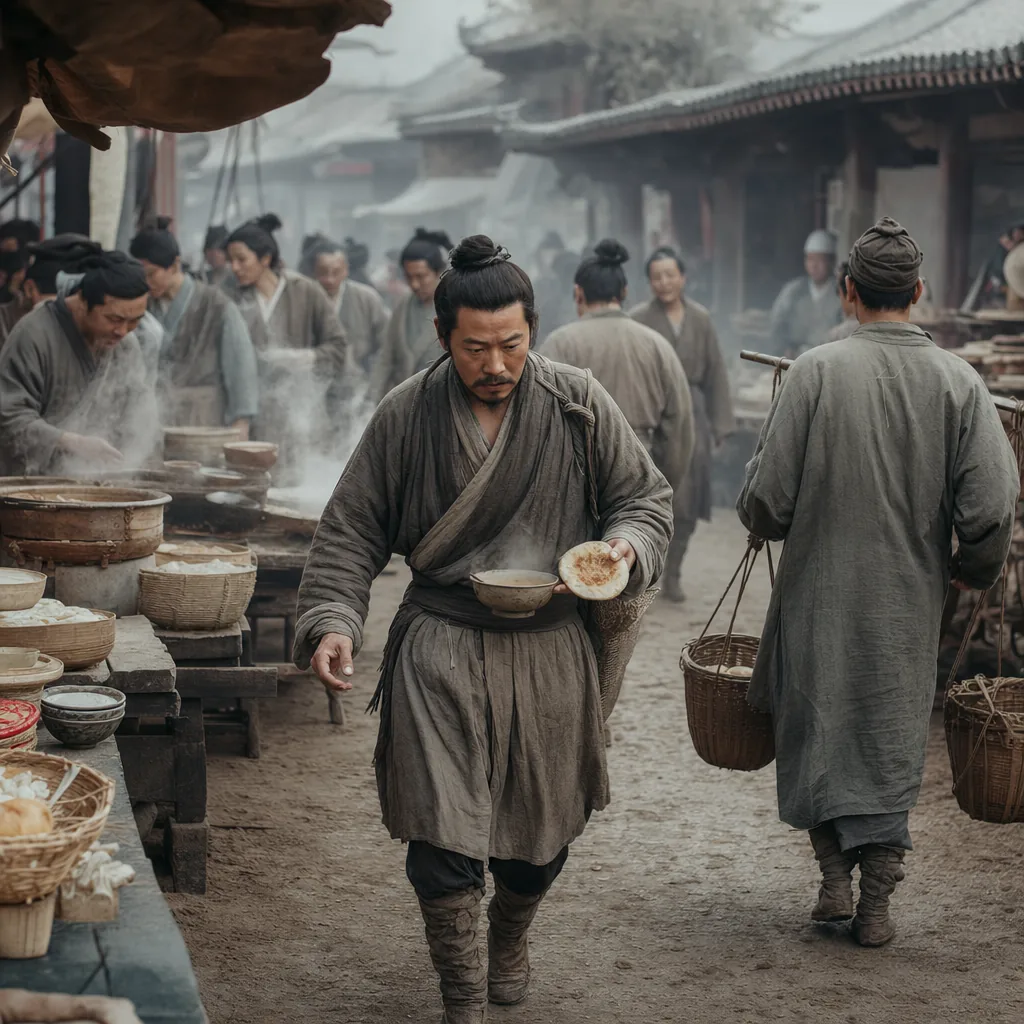
Later I stood by the side of the street watching a man with carrying poles hold a flatbread in one hand and raise half a bowl of soup with the other. He drank quickly, yet there was nothing clumsy about him. When he handed the bowl back, the load over his shoulders swayed once lightly, and he simply continued down the road. In that moment I understood why Tang breakfast remained so unforgettable to me. Not because it displayed many famous foods, but because it cared so accurately for the human morning. The body had not fully awakened, yet the road had already begun. The stomach needed one lift of heat before the feet could go on. That ability to understand bodily rhythm is more impressive than richness alone.