中国で初めて共用ランドリールームを使ったとき、洗濯という小さなことにも共有の秩序があると気づいた
On the third evening after moving into a long-term apartment building in Hangzhou, I carried a bag of clothes downstairs to find the shared laundry room. When the elevator doors opened, the hallway held a faint mix of detergent and damp fabric, and at the far end a small glass-doored room glowed with the blue-white lights of several washing machines. A simple usage notice was taped beside the door, and next to it stood a small table holding an empty detergent bottle someone had temporarily set down and two hangers nobody had claimed. I had assumed a public laundry room would be exactly the kind of place most likely to feel chaotic: would people have to queue for machines, what happened if someone’s load finished and they did not return, would the dryers be occupied forever, would my own clothes end up in the wrong place? Yet after standing there for ten minutes that night, I found myself noticing the opposite. In China, even a small shared scene as ordinary as doing laundry often runs on an understated but surprisingly stable social order.
It was almost nine o’clock. Four people were inside the laundry room. One young woman crouched in front of a machine watching the countdown while holding her phone, one earbud hanging from only one ear. A young man folded his dried bedsheet into a neat square and put it into a bag. In the corner, what looked like two roommates were quietly debating whether to add one more rinse cycle. What struck me most was that nobody treated the place as fully private, but nobody treated it as a space beyond consideration either. People spoke softly, removed their items quickly, and even when they had to place freshly washed clothes temporarily on the table, they tried to arrange them so that water would not drip everywhere. This was not something I learned by reading posted rules in advance. I learned it gradually by watching how other people behaved.
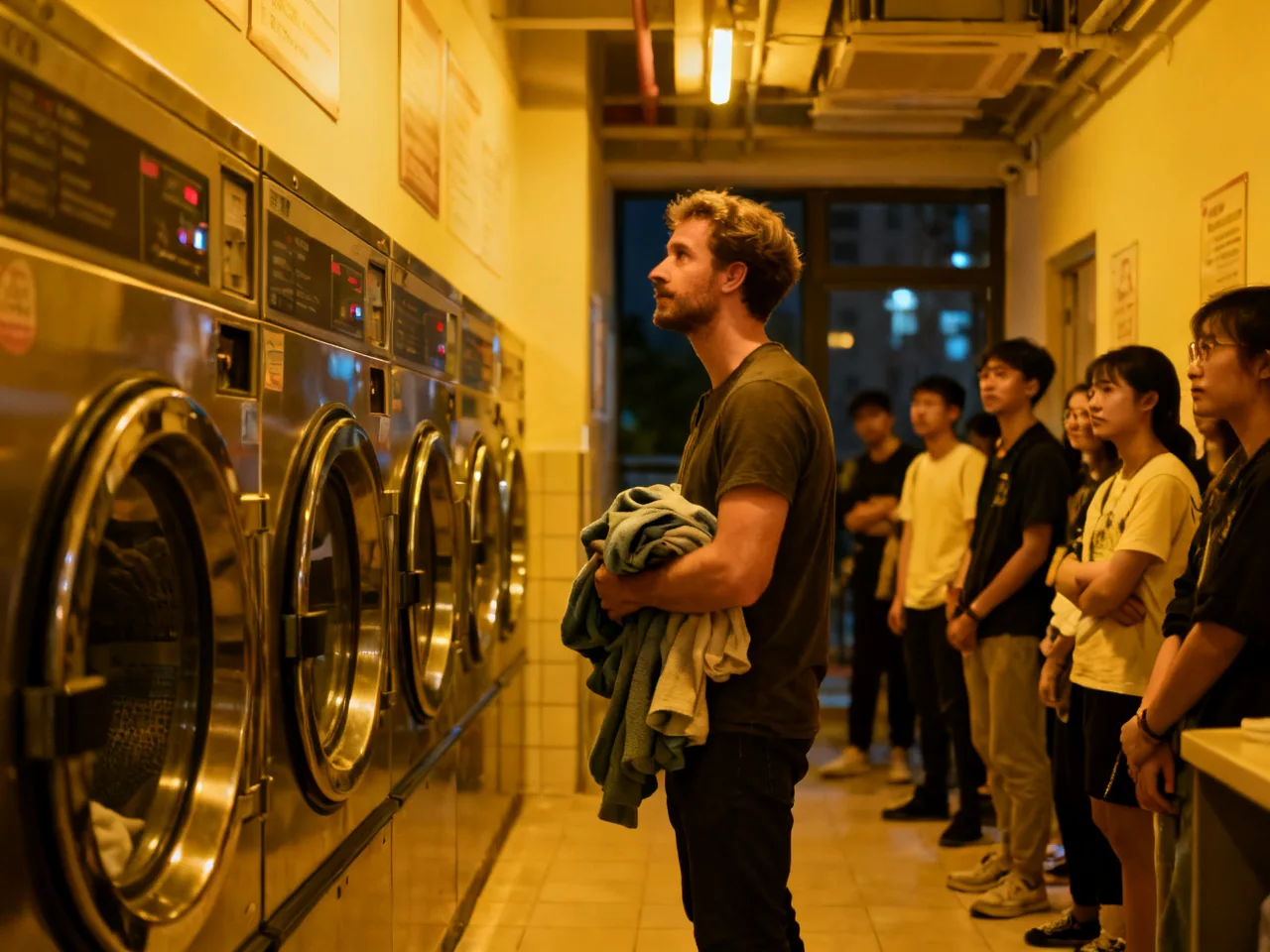
The first time I truly “got it wrong” came around ten that night. My dark load had finished, and I was slowly sorting things while replying to messages. By then someone was already standing a short distance away with a laundry basket, waiting for the machine. No one urged me verbally, yet that quiet waiting was already clear enough: in a shared laundry room, once a cycle ends, the expected rhythm is to clear the machine quickly, not to keep using it as your temporary wardrobe. I hurried to move the load into a dryer and free the washer. The other person only gave me a small nod, with no sign of irritation, but I understood something immediately. In this kind of space, the important courtesy is not dramatic apology. It is restoring the flow.
Over time I began to notice several very typical details. First, many people came back two or three minutes before a cycle finished instead of waiting until the machine stopped completely, because that took up less of other people’s time. Second, if someone truly could not return in time, others would usually move the finished laundry gently to a basket or table nearby rather than rummaging through it or scattering it carelessly. Third, detergent, sanitizer, and dryer sheets were privately owned, but there seemed to be a shared understanding that the public surface should not be left sticky or messy. Fourth, the evening rush was the easiest moment to tell whether someone was familiar with the place: experienced users moved without fuss, yet somehow always knew exactly when to leave and when to wait.
The feeling reminded me that much of everyday order in China is not maintained by rigid enforcement alone, but by a practical consensus of “do not make the next step harder for others.” A public laundry room is exactly like that. It does not have as many visible arrows and gates as a metro station, nor as explicit a numbering system as a restaurant queue, yet people still form a rhythm naturally: when your wash ends, you remove it; if I need the machine, I wait quietly; if you forget to return, I may move your items aside, but not too intrusively. For foreigners, this kind of order is not always easy to read at first because it is not fully written on the wall. But once you enter the rhythm, many shared spaces become far less intimidating than they first appear.
By the second week, my own habits had completely changed. I would first check which machine had the shortest remaining time before deciding whether to wash immediately. I prepared detergent and hangers in advance instead of searching through my bag at the public counter. If all the dryers were full, I simply went back upstairs and returned later rather than leaving a pile of damp clothes to occupy space. Once, a newly arrived international student asked me whether he had to stand beside the machine the whole time. I laughed and said no, but you should remember the timing and not leave the ending for someone else to handle. As soon as I said that, I realized I had already changed from the nervous observer at the doorway into someone able to explain the rhythm to another newcomer.
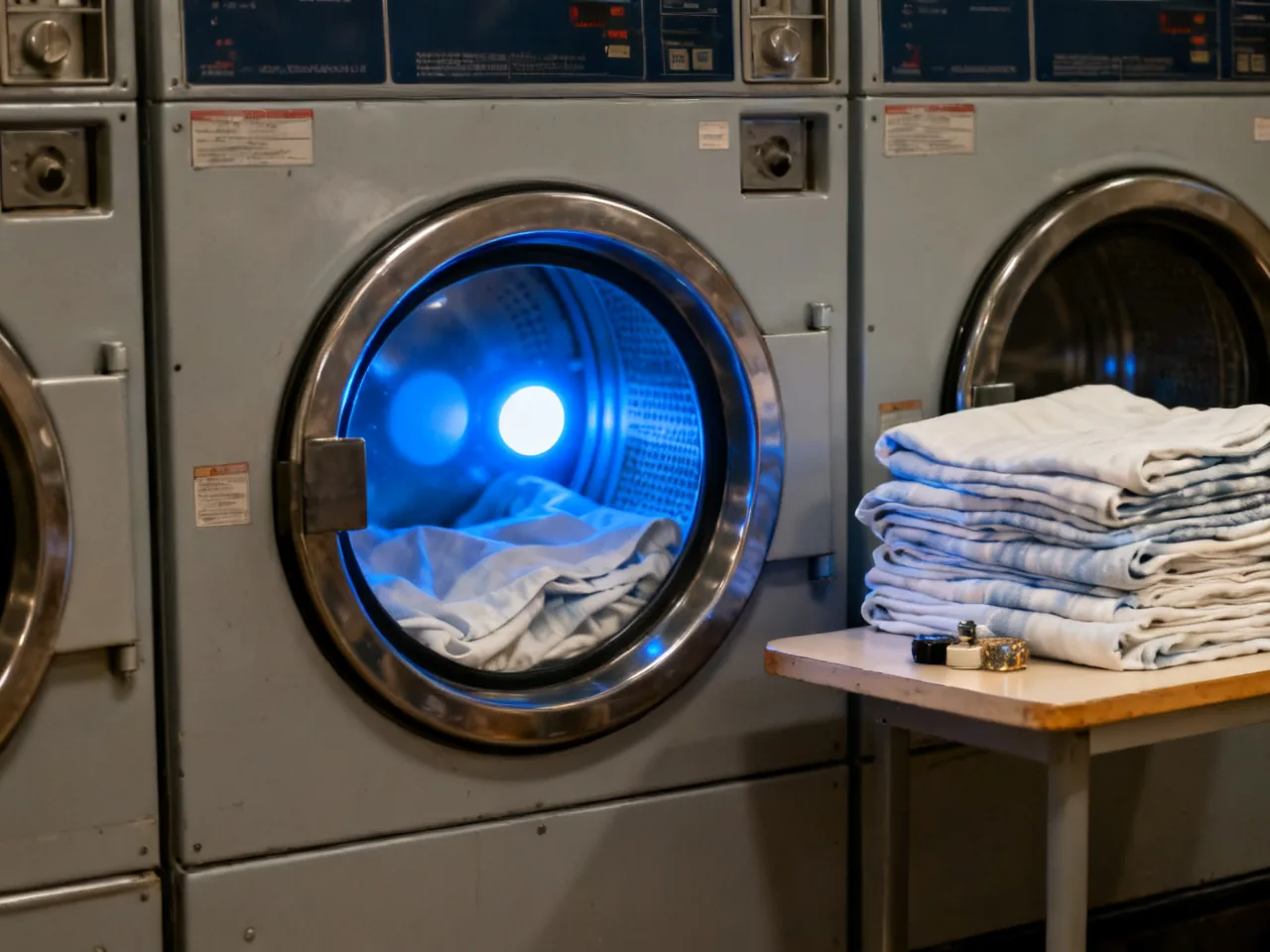
If someone asks me now what is most worth learning first in a Chinese public laundry room, I would not begin with which buttons to press or which detergent works best. I would say: learn to read the rhythm of sharing—when to move a little faster, when to wait quietly, when to help move something aside, and when not to touch too much. Washing clothes may seem tiny, but it reveals a great deal about how strangers cooperate inside a city. People do not need to talk much. Through repeated small actions, they turn a space that could easily produce friction into one that usually works with surprising ease. For me, that became one of the smallest yet most solid forms of everyday civility I learned while living in China.