重慶を超大都市と呼ぶのは簡単だが、初日の夜にどの階から始めれば慌てずに済むかを教えるのは難しい
One of the things Drew Binsky does especially well is pushing the first impression of a city to its limit. After arriving in China, Chongqing clearly fit that camera personality: immense population scale, hillside layering, rail lines through towers, and dense night views, each of which is already gripping on its own. Yet if his public material is reduced to “another foreign traveler got stunned by Chongqing,” the most effective part of the video is missed. Its real effectiveness lies not in exaggeration alone, but in the way it performs a psychological rehearsal for entering a truly enormous Chinese city.
If Travel Notes extracts only labels such as “one of the world’s largest cities” or “36 million,” the article risks shrinking into a slogan whose main function is to intimidate. But once the public video is read as an entry process rather than a list of superlatives, the meaning shifts. What the viewer is led into is a sequence: unfamiliarity, density, temporary disorientation, and then the gradual discovery of transport logic, slope logic, and places where the body can pause. For writing about Chinese cities, that method of entry has far greater long-term value than surprise alone.
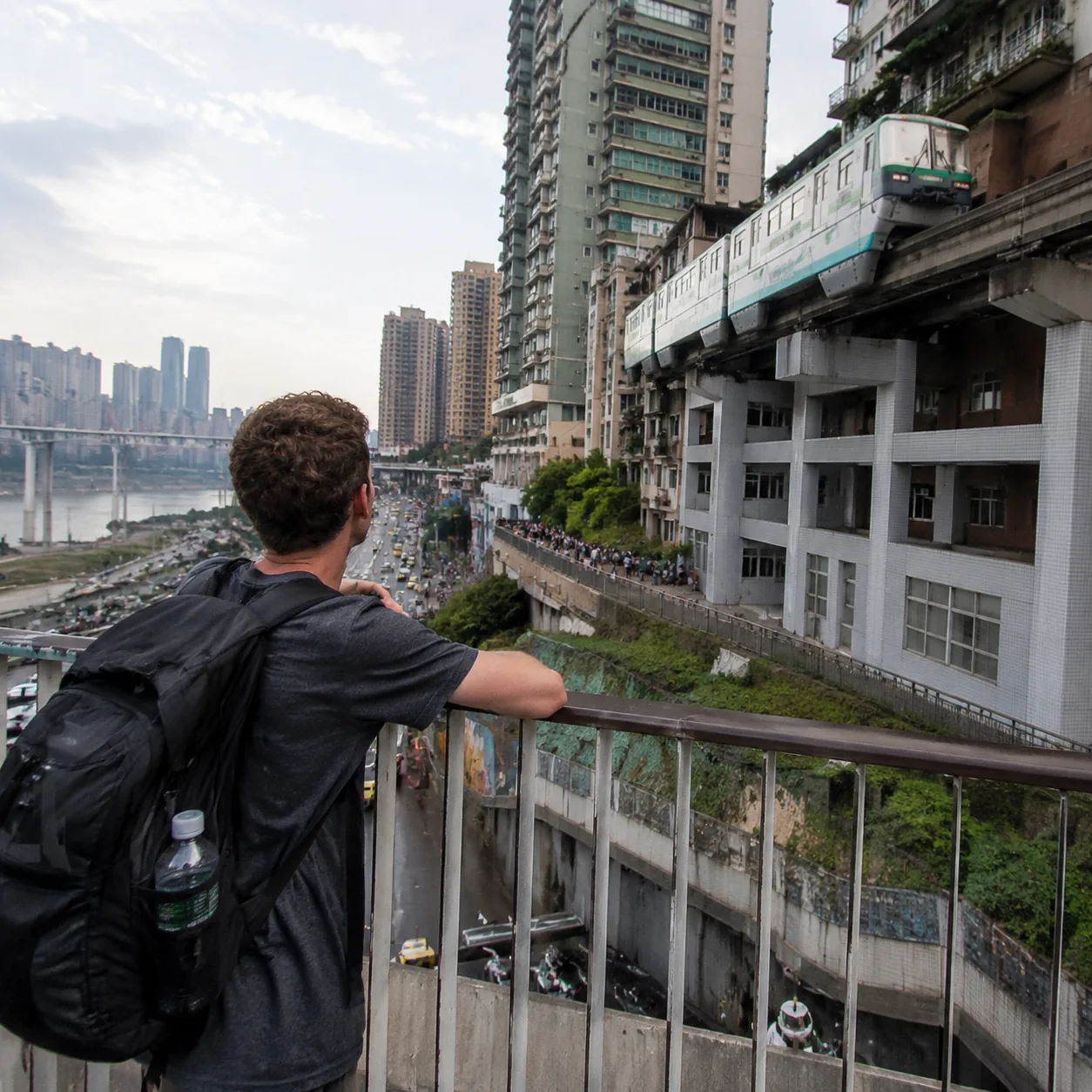
Why Drew Binsky’s Chongqing Angle Naturally Travels So Well
The emphasis in his public title is actually very clear. It is not “I visited some attractions in Chongqing,” but “I am entering an extremely large city.” The power of that frame is that it pulls the audience out of ordinary destination-viewing mode at once. People tend to judge attractions by whether they are beautiful. But the moment the subject becomes entering a mega-city, attention shifts almost automatically toward different questions: how does one move here, how does one orient, and how does one even determine which level of the city one is occupying?
Chongqing is perfectly suited to this frame because it is not a city that yields itself in one glance. Unlike many flatter cities where the relation between main roads, landmarks, and directions becomes readable on day one, Chongqing builds part of its charm on a repeated cycle of misjudgment and correction. A traveler thinks they have reached street level and suddenly finds another platform. A staircase that seemed merely vertical becomes the entrance to a food street. A night view that looked like a distant spectacle turns out, up close, to be held together by slopes, bridge openings, and corners.
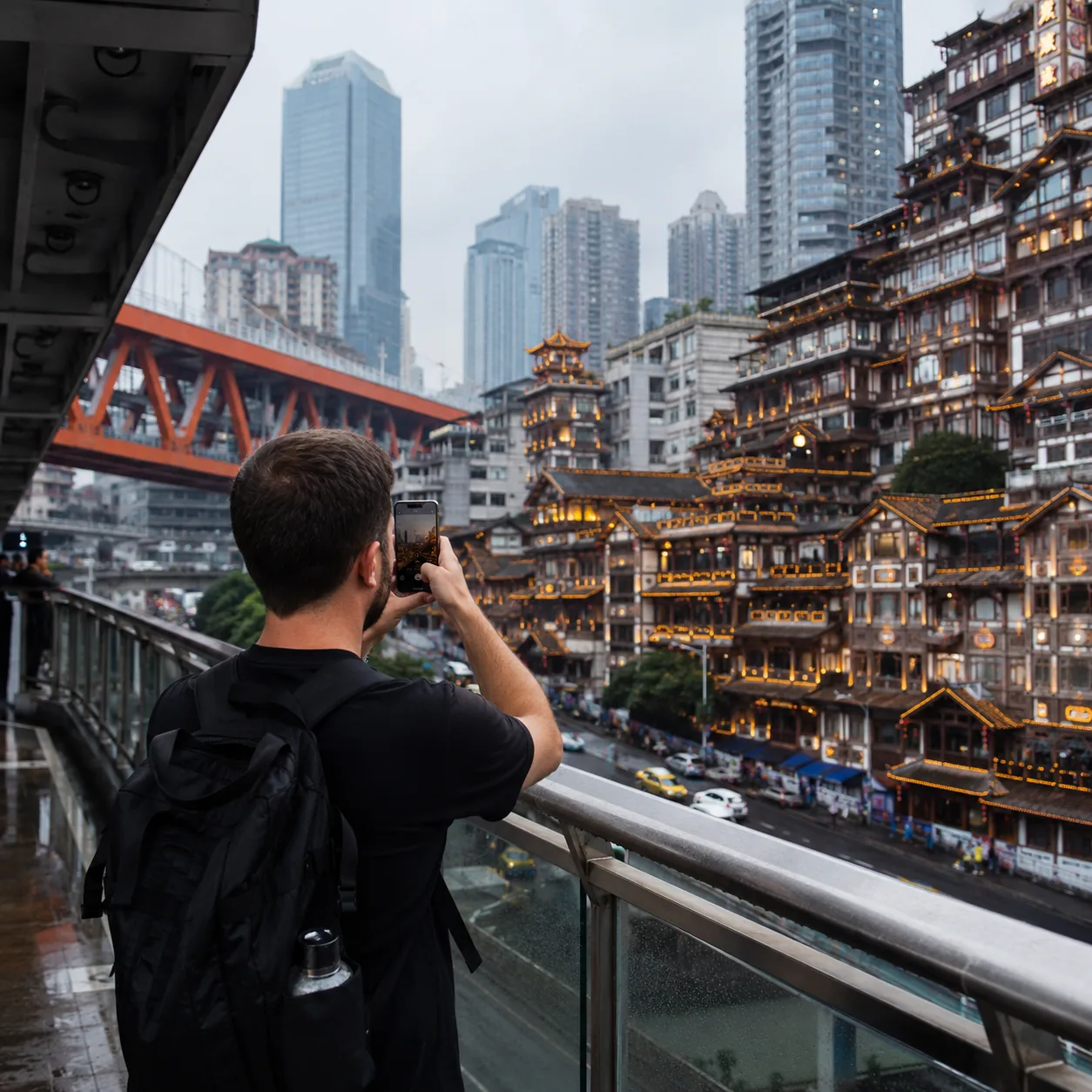
What Readers Should Learn from This Kind of Video Is Not the Drama, but the Willingness to Admit They Will Get Confused
The writer has long felt that the most useful thing major foreign creators bring to Chongqing is not the scale number they can quote, but the willingness to leave moments of confusion inside the frame. That is an important model for viewers. Many people coming to a major Chinese city for the first time are not most frightened by complexity itself. What frightens them is the second step: the moment confusion makes them suspect they are underprepared or simply not suited to this kind of place.
Once public video leaves that temporary loss of orientation visible, viewers begin to understand something crucial: in a place like Chongqing, short-term disorientation does not prove personal inadequacy. It is simply part of the entry process. That insight helps people treat confusion as a recoverable travel condition rather than a total failure. For Travel Notes, that is extremely valuable because it directly lowers the psychological threshold many readers feel toward China’s largest cities.
What Makes the Video Work Is That Density and Everyday Life Appear Together
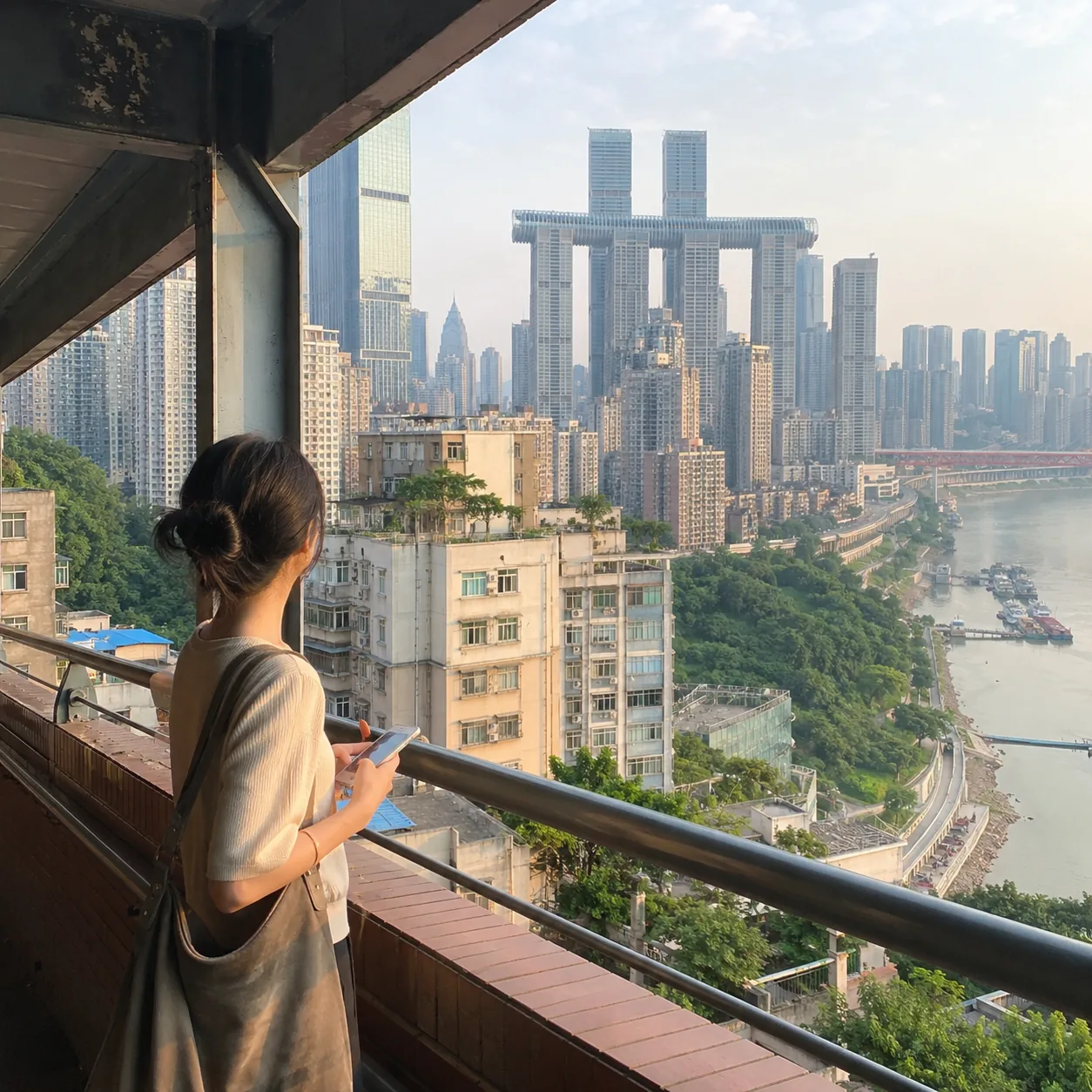
If Chongqing offered only high night views, it would still attract people, but the durability of its spread would be weaker. What really stabilizes this kind of video is the way it places density and daily life inside the same journey. One segment may focus on giant urban scale, and the next cuts to the metro, older streets, a panda park, ordinary food, and the body’s reaction to walking. What viewers end up receiving is not a poster, but the reality that people genuinely live like this every day.
This is precisely the layer third-person reported writing should restore. A Chinese mega-city that shocks people quickly becomes hollow if the writing stops at shock alone. But once the text explains how transport, food, lanes, and slopes make that shock durable, the article turns from a loud topic into route understanding. Drew Binsky’s public content is especially suited to this kind of transformation—not by reproducing each step, but by turning his “macro first, detail next” viewing method into an entry logic ordinary readers can actually use.
For Travel Notes, the Next Step Is Not to Keep Shouting “Big,” but to Keep Breaking Down “How to Enter”
What the writer looks forward to is not another article repeating that Chongqing is enormous, but a growing specificity about how one actually enters it: which kind of exit to judge first after arrival, which viewpoints belong in daylight and which should be saved for night, where hotpot belongs in the day, what kind of rest segment should accompany steep walking, and how a route that looks visually explosive can avoid physically exhausting the ordinary traveler.
If major foreign creators are responsible for bringing attention in, then Travel Notes’s task is to stabilize that attention. Drew Binsky has already completed the first move for many overseas viewers: showing that a Chinese mega-city can be looked at this way. If site articles continue by supplying the second and third moves—how to enter, where to pause, and how to make the route smoother—this kind of reported-format content will keep gaining operational value.
Public Source Notes
- Drew Binsky, “Entering the World’s Largest City (Chongqing, China)”
Public source used:
- Drew Binsky, “Entering the World’s Largest City (Chongqing, China)”
- Only a very limited amount of public cover imagery is used for explanatory reporting, not for wholesale reproduction.