中国人はなぜそれほど「面子」を気にするのか?
My first real encounter with the weight of “face” was at a friend’s wedding.
The bride’s father insisted on a five-star hotel banquet — thirty tables, ¥4,000 each, total bill over ¥120,000. His monthly salary was ¥8,000. He borrowed money for this. Not out of vanity — he was genuinely afraid his daughter would “lose face.”
What Exactly Is “Face”?
The English word “face” only partially covers it. Chinese “face” operates on at least two levels:
Liǎn (脸) — moral reputation. Keeping your word = “having liǎn.” Cheating or defaulting = “losing liǎn.”
Miànzi (面子) — social prestige tied to status. What car you drive, which neighborhood you live in, which university your kid got into, how many dishes you order when hosting — these compose your “miànzi.” This dimension is especially pronounced in Chinese culture.
The Dinner Table
The fastest way to understand “face” is to eat out with Chinese friends.
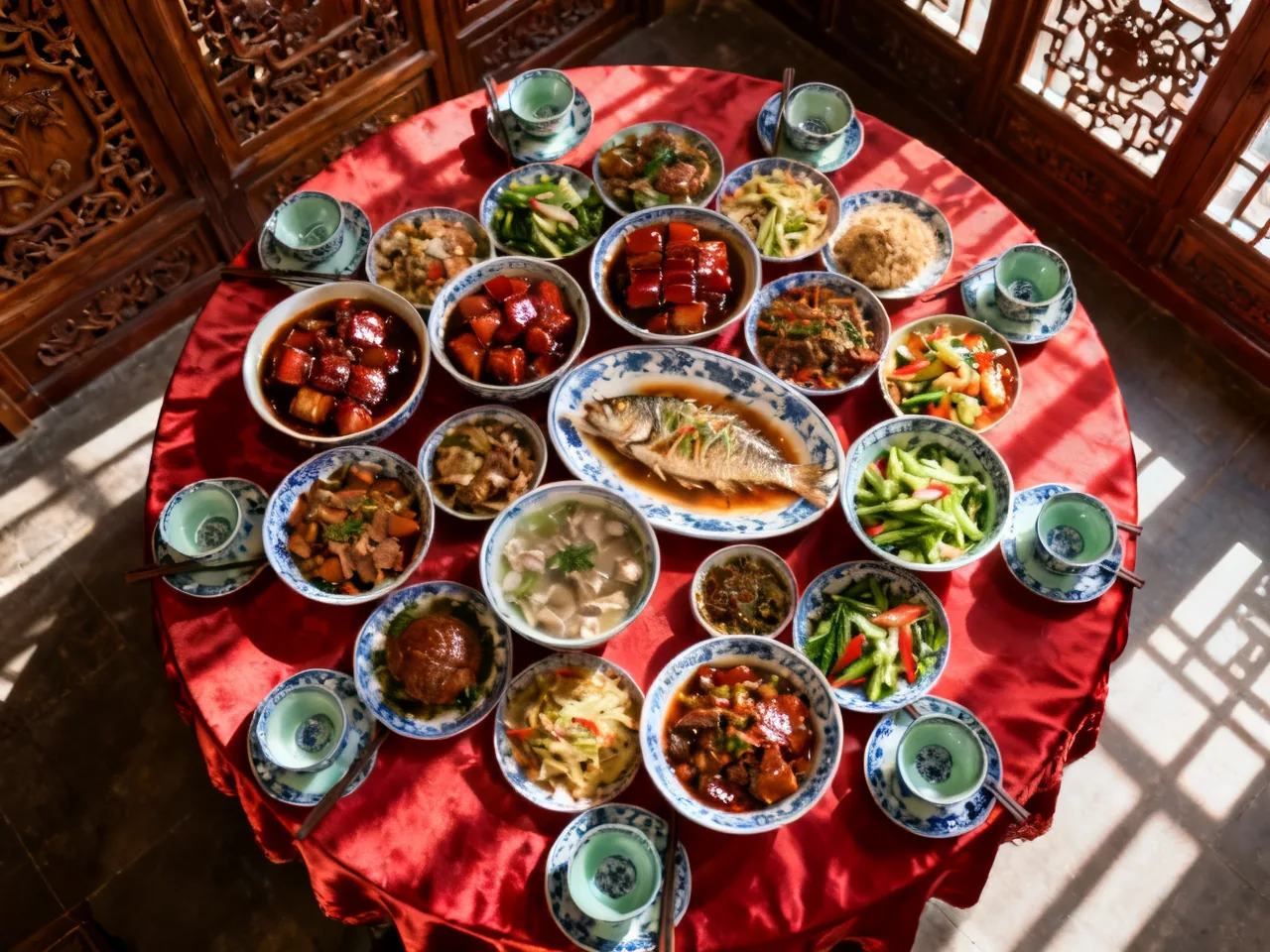
The host orders far more food than the table can finish — six people, twelve dishes. Leftovers are fine. Over-ordering signals generosity; under-ordering signals cheapness. This is why the government’s “Clean Plate Campaign” has been running for years.
Fighting over the bill is another face arena. Two people physically wrestling at the cashier — “Let me pay!” “No, I insist!” — this is genuine. Whoever pays “gives face.”
Historical Roots
“Face” is rooted in thousands of years of Chinese relationship society (关系, guānxi) — where trust was built on reputation rather than legal systems.
Your standing in the village determined whether you could borrow money, marry well, or find business partners. “Face” was the vehicle for this reputation mechanism.
Modern China has legal and credit systems, but the inertia of face culture remains enormous.
Traps Foreigners Fall Into
If you plan to live or do business in China, several face rules save real trouble:
1. Never point out someone’s mistake in public. Especially with their subordinates present — this is “making someone unable to step down from the stage,” the most severe form of “not giving face.” Raise issues privately.
2. Don’t just say “thank you” to compliments. The typical response is “哪里哪里” (not at all). A direct “Thank you, yes I am great” comes across as arrogant.
3. Gift value should match relationship depth. Too expensive creates pressure; too cheap signals disrespect. For more, see The Art of Gift Giving in China.
4. Don’t suggest splitting the bill. In Chinese social contexts, going Dutch signals you don’t care enough. Take turns hosting instead.
Are Young Chinese Rebelling?
Partially.
Post-90s and post-00s generations show more critical awareness. “精致穷” (jīngzhì qióng — “exquisitely poor”) was coined by young people mocking face-driven spending. More are accepting bill-splitting, rejecting status competition, even showcasing frugal lifestyles on social media.
But the underlying logic — caring about how others perceive you — is embedded during socialization. A Gen-Z Chinese person might not care about cars, but they care about their degree, job title, and curated WeChat Moments image. The vehicles change. The mechanism doesn’t.

Face is neither a flaw nor a virtue. It’s a social mechanism with thousands of years of history. As a foreigner, you don’t need to adopt it fully — but understanding it saves countless missteps. The simplest principle: leave people room, and never embarrass anyone publicly.
外链: Wikipedia — Face (sociological concept)