Парад костюмов национальных меньшинств: мяо, тибетцы и ицзу
Ethnic Minority Costume Tour: Miao, Tibetan & Yi
China has 55 ethnic minorities, each with unique traditional clothing. Miao, Tibetan, and Yi costumes are particularly stunning and impressive.
Miao Silver Costume
Miao silver jewelry costumes are the most magnificent ethnic attire in China, bar none. A complete set of Miao ceremonial silver weighs 15-30 jin (7.5-15 kg), including silver crown, neck rings, chest plates, bracelets, and waist belts. Crafting one set takes months.
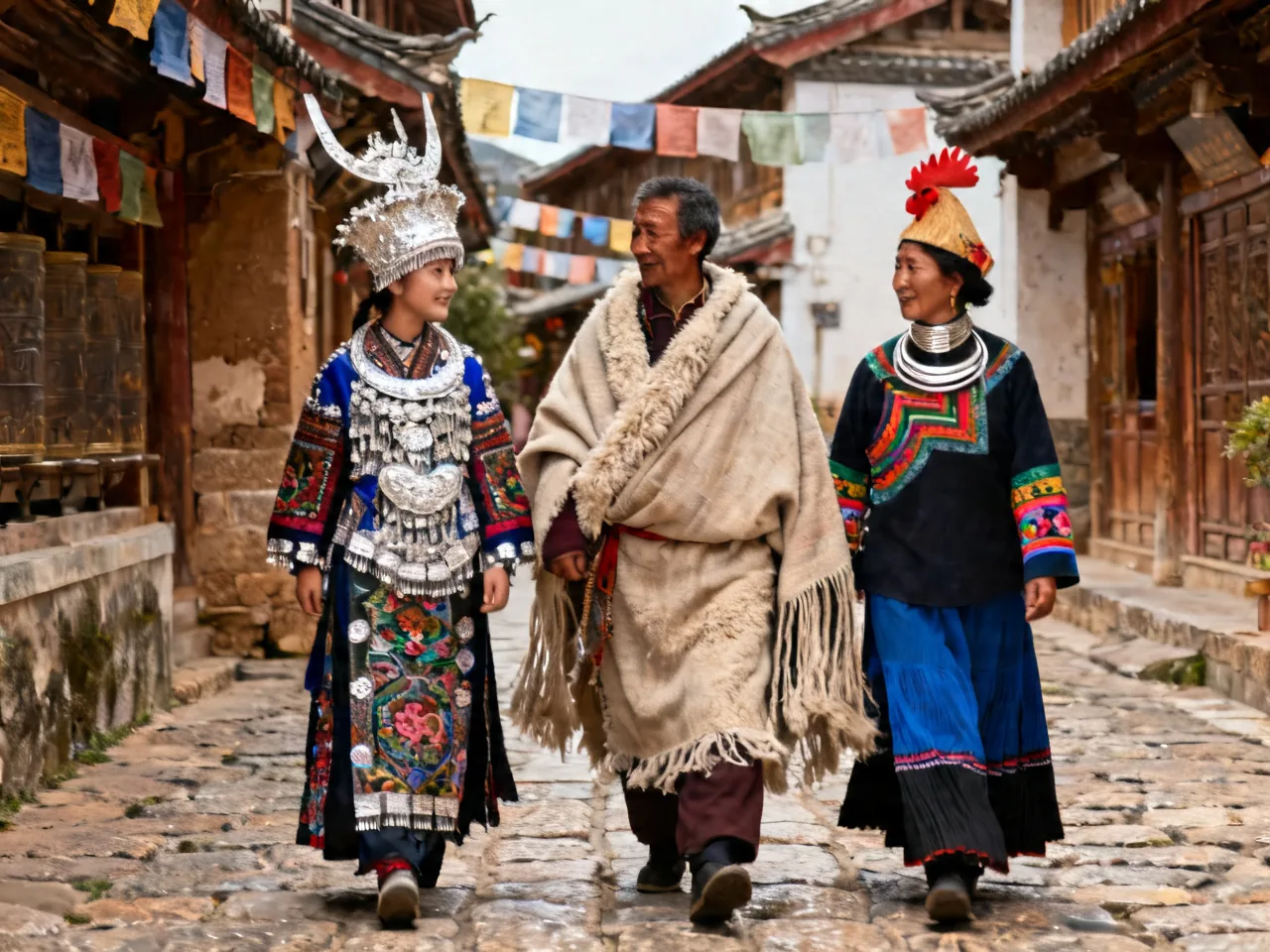
Where to see — Xijiang Thousand-Household Miao Village in Guizhou has nightly ceremonial song-and-dance performances. Leishan Miao New Year (10th lunar month) is the best time for silver costumes — every woman in the village wears full regalia.
Tibetan Costume
The Tibetan robe (chuba) is the iconic garment — a wide, long robe with one sleeve worn and the other draped over the shoulder or wrapped at the waist. Plateau temperature swings make this on-off flexibility practical. Tibetan women’s headdresses and waist ornaments feature turquoise, coral, and beeswax.
Where to see — everyday Barkhor Street in Lhasa has people in Tibetan robes. Shoton Festival (August) and Tibetan New Year are the most concentrated ceremonial dress occasions.
Yi Costume
Yi costumes use black as the base, accented with red and yellow embroidery and silver. Men wear the “hero knot” (horn-shaped topknot), women wear pleated skirts. The Torch Festival is the best time to see Yi ceremonial dress.
Experience and Purchase
- Miao silver — Kaili, Guizhou has silversmith villages for custom pieces. A handmade silver necklace costs ¥200-800.
Tips: When photographing ethnic costumes, ask permission first — especially in Tibet and Miao villages, where taking photos without asking can be considered rude.
Related Reads
- Spring Bloom Map: China’s Most Beautiful Flower Fields
- Summer Escapes: Plateaus & Islands
- Huangshan Sea of Clouds & Welcome Pine: Beautiful in All Seasons
- Best Autumn Foliage Spots in China
- 10-Day East China Five-City Loop