Лучший ночной маршрут в Гуанчжоу — обычно не самый шумный, а тот, что лучше всех знает, когда стоит присесть
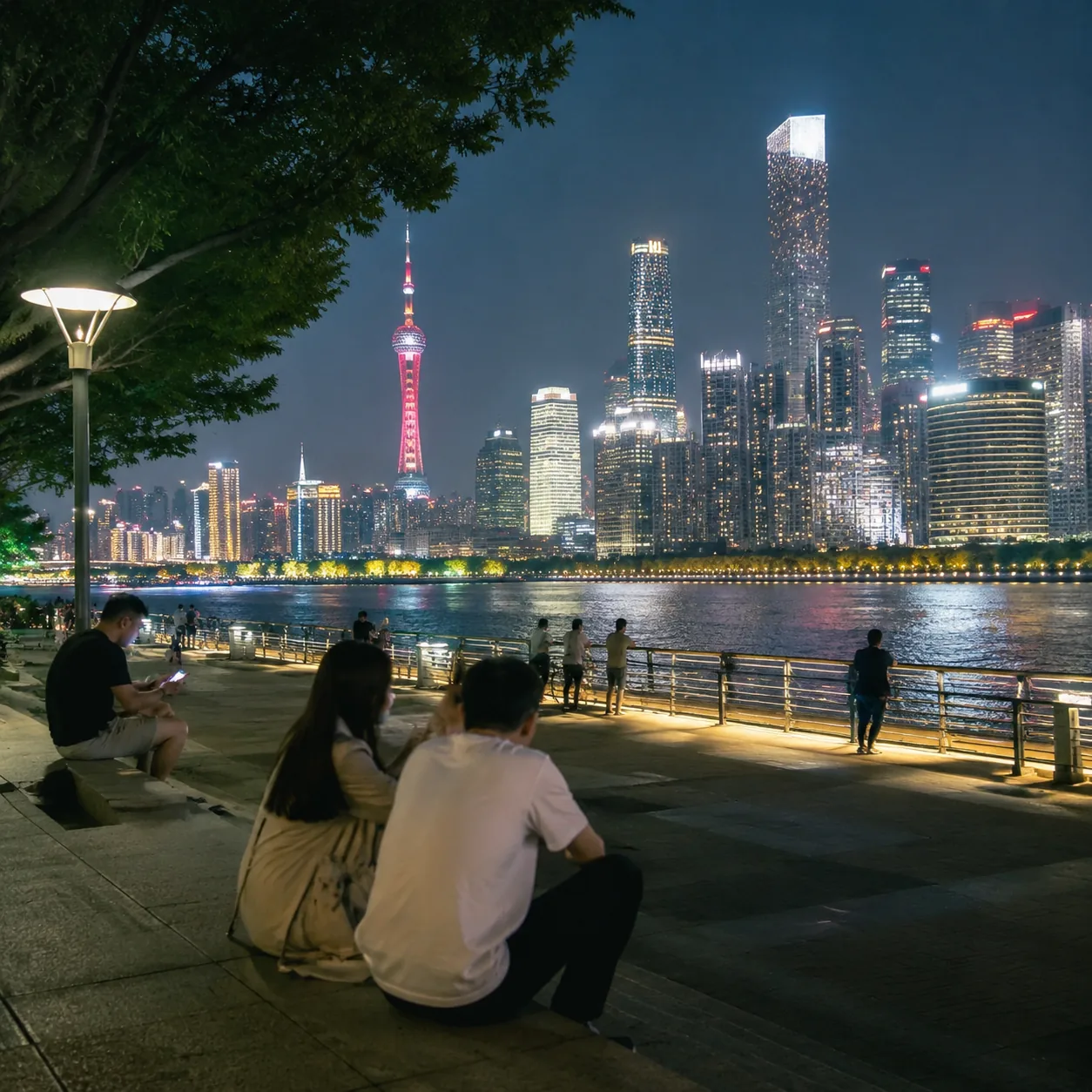
When outsiders write about Guangzhou at night for the first time, they almost always begin with one word: lively. That is not wrong. After dark, the crowd under the arcade streets, the plastic spoons hitting dessert cups, the warm yellow light below roast-meat signs, and the patient queues at late-night stalls all make a southern Chinese metropolis feel unusually alive. But Guangzhou’s most powerful night route does not simply keep pushing the traveler toward louder places. It behaves more like a line that teaches its own gear shifts: where to move faster, where to sit down, where to stand for a while and watch the crowd, and where one hot bowl should pull the entire day back into balance.
What is most easily underestimated about Guangzhou at night is that its structure does not keep rising toward one final climax. Many cities push the traveler toward the brightest, densest, most photographable point. Guangzhou is better understood as an elastic line. The opening section may belong to walking under city light, the middle to sitting down with something hot, and the later section to letting the night and urban noise return gently to the body. That is why Guangzhou’s night is not one explosive point. It is a process of repeatedly reorganizing rhythm.
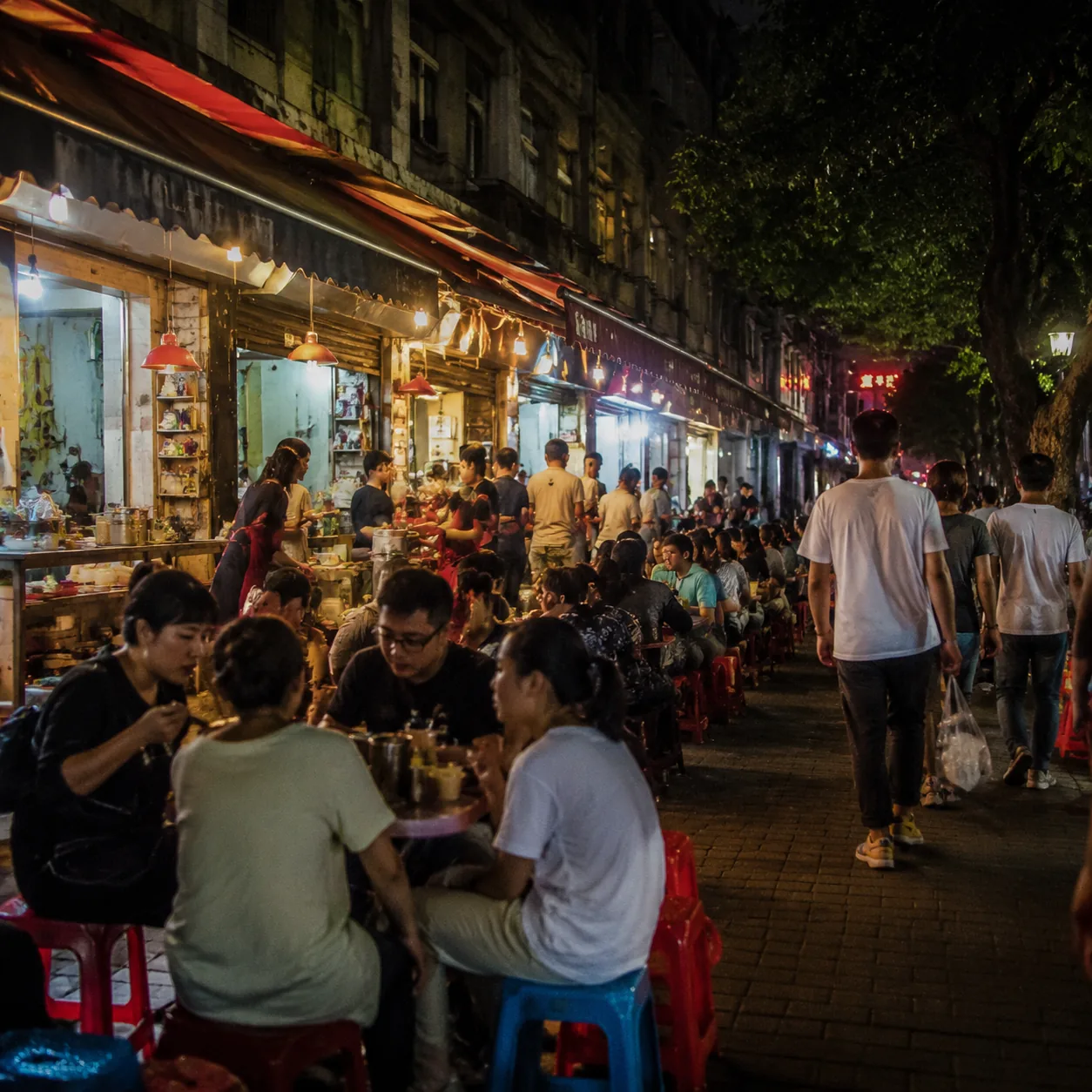
The Best Way to Write Guangzhou at Night Is Not Which Place Is Hottest, but Which Kind of Liveliness Matches Your Energy
Guangzhou offers many kinds of nighttime liveliness, and not all of them should be entered in the same way. Some are best observed while walking, like the flowing crowd under the arcade streets. Some are best experienced while seated, such as dessert shops and late-night food spots. Others are better watched from a little distance instead of being forced into physically. The easiest mistake for a first-time visitor is to treat every famous nighttime location as a task that must be fully consumed. That is how a smooth night route turns into an endurance test.
A mature Guangzhou night route should be treated more like a judgment about energy than a checklist of hotspots. The traveler needs to know whether this is the moment to keep walking or to sit down, whether the whole street should be completed or only the most vivid section should be taken. If Travel Notes wants to deepen foreign-facing public content, this is exactly the layer to make explicit, because the most valuable Guangzhou-night memory is not “I reached everything.” It is “I stopped at exactly the right place.”
Why Dessert Soups and Late-Night Meals Are Not Side Characters in Guangzhou’s Night
In many cities, a late-night meal is merely a supplement, something that happens after the attractions. Guangzhou works differently. Dessert soups and late-night meals feel more like transition devices in the route itself. A traveler may still carry some daytime momentum into the evening, but the moment they sit down—the spoon touching the bowl, chair legs brushing the floor, fans turning old air through the room—the body’s speed drops noticeably. It is exactly at that lower speed that one begins to see how the city continues to live at night.
This matters greatly for many first-time visitors to China. By day, the traveler may be reading maps, tracking direction, and constantly deciding what comes next. If nothing slows those actions down at night, the city begins to feel more and more crowded. Guangzhou is clever precisely because it does not require one tense mode of attention the whole time. Through food, seating, lighting, and street-edge pauses, it breaks the night into sections the traveler can actually receive.
Guangzhou’s Greatest Night Strength Is Not Brightness, but Residual Warmth
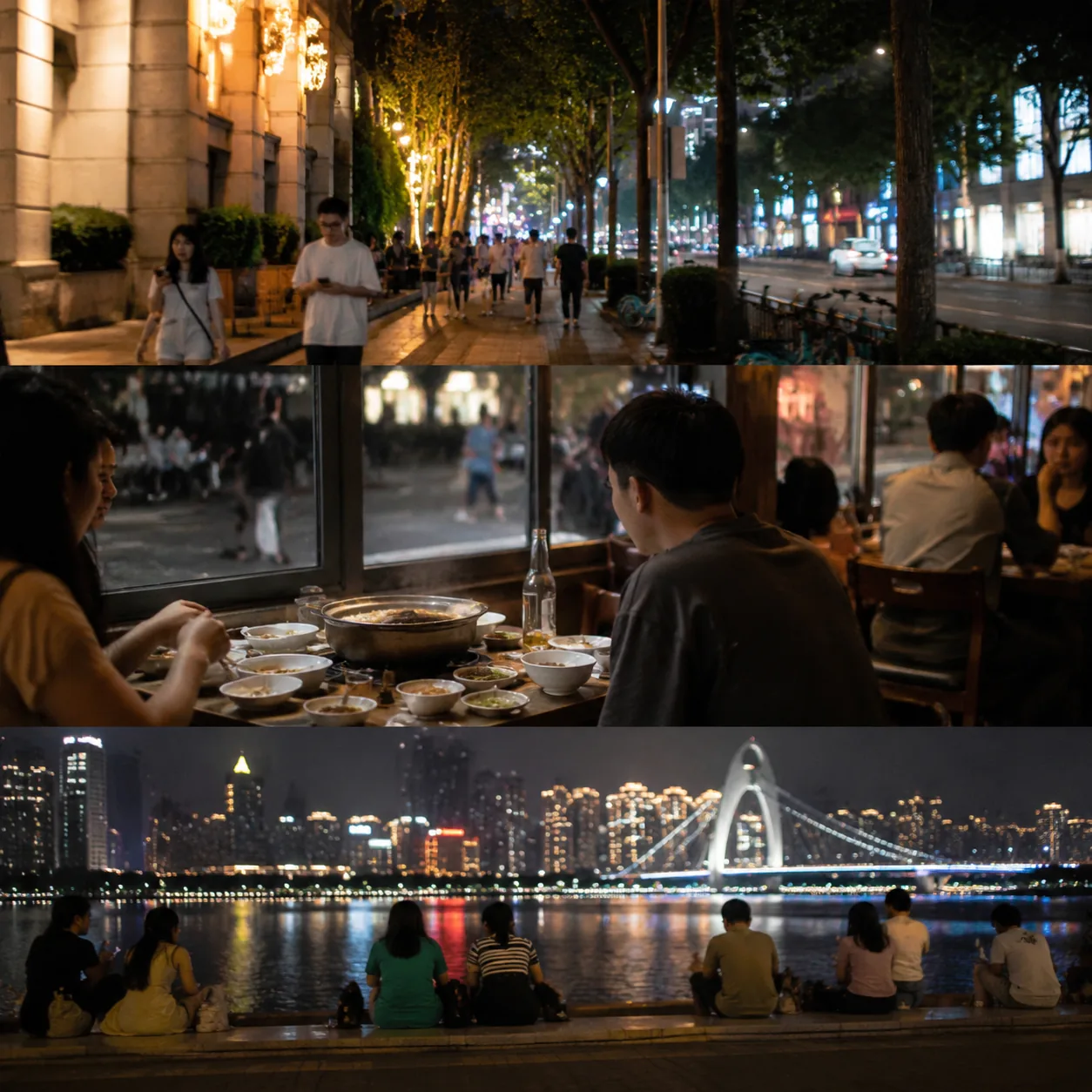
Some cities turn bright all at once, as if a stage light has been switched on in one violent motion. Guangzhou’s night rises more slowly. First there is a strip of light along one street, then the sweet air from a dessert shop, then the patient order-calling from a stall further behind. Its attraction lies less in force than in residual warmth. Streets walked in the day continue to echo at night, and smells first noticed in the afternoon return in a lighter form after dark. A night route like this cannot be captured fully by the phrase lively.
Because this residual warmth exists, Guangzhou is especially good for travelers who have already walked a great deal during the day but still want one more look at the city at night. It does not force the last reserves of energy into one final spectacular viewpoint. Instead, it lets the city reorganize itself at a lower speed. For Travel Notes, this ability—to continue receiving the traveler gently after dark—is exactly what deserves to be written out as the core value of Guangzhou’s night route.
What This Night Route Leaves Behind Is Not How Much Was Seen, but the Knowledge of When to Stop
What Guangzhou may ultimately teach at night is not more, but proportion. Not one more street, one more bowl, or one more checkpoint, but the gradual understanding that this is the right time to sit, that this section only needs to be walked to here, and that this city does not require constant pursuit. Once that sense of proportion emerges, what the traveler carries away is no longer a set of shop names and photographs, but a more mature urban judgment. That is the most durable part of Guangzhou’s night route.