Руководство по традиционным методам китайской медицины
TCM is far more than acupuncture and herbs — it’s a complete philosophy of life that views the human body as a microcosm, and health as the dynamic balance of yin and yang. Travel through China and you’ll find traces of this philosophy everywhere: in pharmacies, teahouses, and the elderly doing morning exercises in the park.
Two Thousand Years of Medical Tradition
TCM has a history of at least 2,500 years. The Huangdi Neijing (Yellow Emperor’s Classic of Medicine), compiled around the 2nd century BCE, is the foundational text of TCM theory and remains required reading in TCM colleges today. It introduced core concepts — qi, yin-yang, the five elements, and meridians — building a view of the body entirely different from Western medicine.
Zhang Zhongjing’s Treatise on Cold Damage (Eastern Han Dynasty) established the foundation of TCM’s pattern-differentiation approach to treatment. Li Shizhen of the Ming Dynasty spent 27 years writing the Compendium of Materia Medica, cataloguing 1,892 medicinal substances — it was translated into dozens of languages and influenced botany and pharmacology worldwide.
Core Concepts
Qi (气) — TCM holds that qi is the fundamental energy of life, flowing through the body’s meridians. The abundance and free flow of qi determines health; deficiency, stagnation, or rebellious qi all cause disease. Westerners sometimes translate qi as “life force” or “energy,” but it’s more complex — simultaneously material and functional.
Yin-Yang (阴阳) — Everything has two complementary aspects: cold/hot, deficient/excess, interior/exterior, still/moving. Health is the dynamic balance of yin and yang; disease is the result of imbalance. The goal of TCM treatment is not to eliminate pathogens but to restore balance.
Five Elements (五行) — Wood, fire, earth, metal, and water correspond to the five organs (liver, heart, spleen, lung, kidney), five emotions (anger, joy, pensiveness, grief, fear), and five flavors (sour, bitter, sweet, pungent, salty). These correspondences guide TCM diagnosis and treatment.
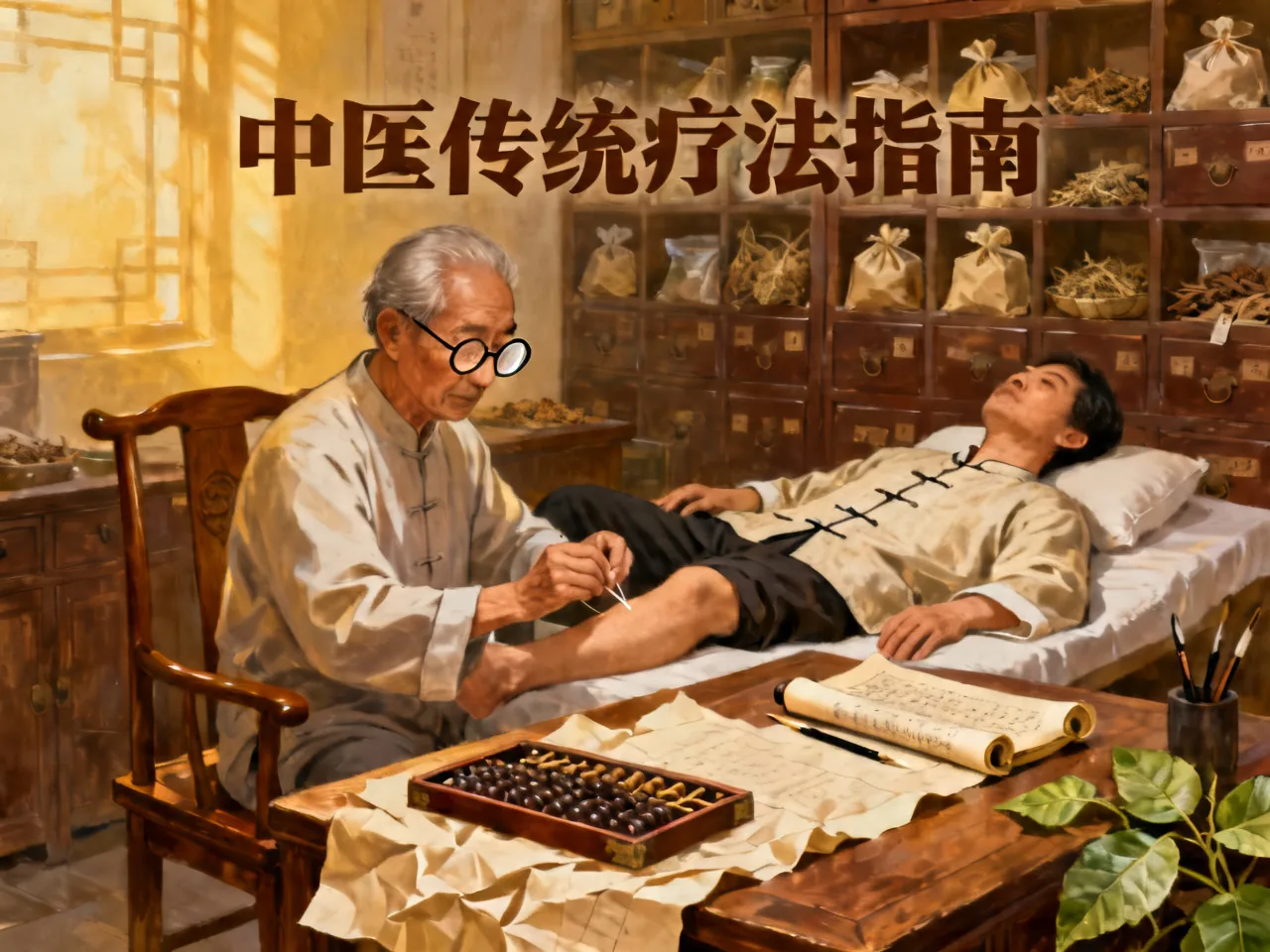
Meridians (经络) — The body has 12 primary meridians connecting the organs to the body surface, serving as pathways for qi and blood. Acupuncture and tuina massage regulate qi and blood by stimulating acupoints along these meridians. Modern anatomy has yet to find a structural correlate for meridians, but the clinical effects of acupuncture have been confirmed by extensive research.
Four Major Therapies
Acupuncture (针灸) — Hair-thin metal needles are inserted at specific acupoints to regulate qi and blood through meridian stimulation. A session typically involves 20–30 minutes of needle retention. The “arrival of qi” sensation — soreness, numbness, distension, heaviness — is described by most patients as comfortable rather than painful. The WHO recognizes acupuncture’s efficacy for chronic pain, migraines, insomnia, and anxiety.
Chinese Herbal Medicine (中药) — Herbal formulas typically combine 10–20 ingredients, decocted and drunk as tea. Common herbs include astragalus (tonifying qi), angelica root (nourishing blood), goji berries (nourishing yin), and ginseng (powerfully tonifying original qi). Modern TCM also offers granules, pills, and medicinal pastes for convenient daily use.
Tuina Massage (推拿) — TCM massage that stimulates meridians and acupoints through manual techniques to move qi and blood. Unlike Western massage, tuina has specific therapeutic goals and is commonly used for cervical spondylosis, lower back pain, and digestive issues. Tuina clinics are found on nearly every street in China, with one-hour sessions costing around 60–200 RMB.
Cupping (拔罐) — Glass or bamboo cups are suctioned onto the skin to promote local qi and blood circulation. The circular red marks left behind fade within a few days. When swimmer Michael Phelps appeared with cupping marks at the 2016 Rio Olympics, the therapy became widely known in the West overnight.
Experiencing TCM in China
Beijing Tongrentang (同仁堂) — Founded in 1669, China’s most famous traditional pharmacy with stores in 30+ countries. The flagship store in Beijing’s Dashilar district retains its Qing Dynasty décor. You can fill herbal prescriptions, buy patent medicines, and book a consultation with a TCM physician for pulse diagnosis.
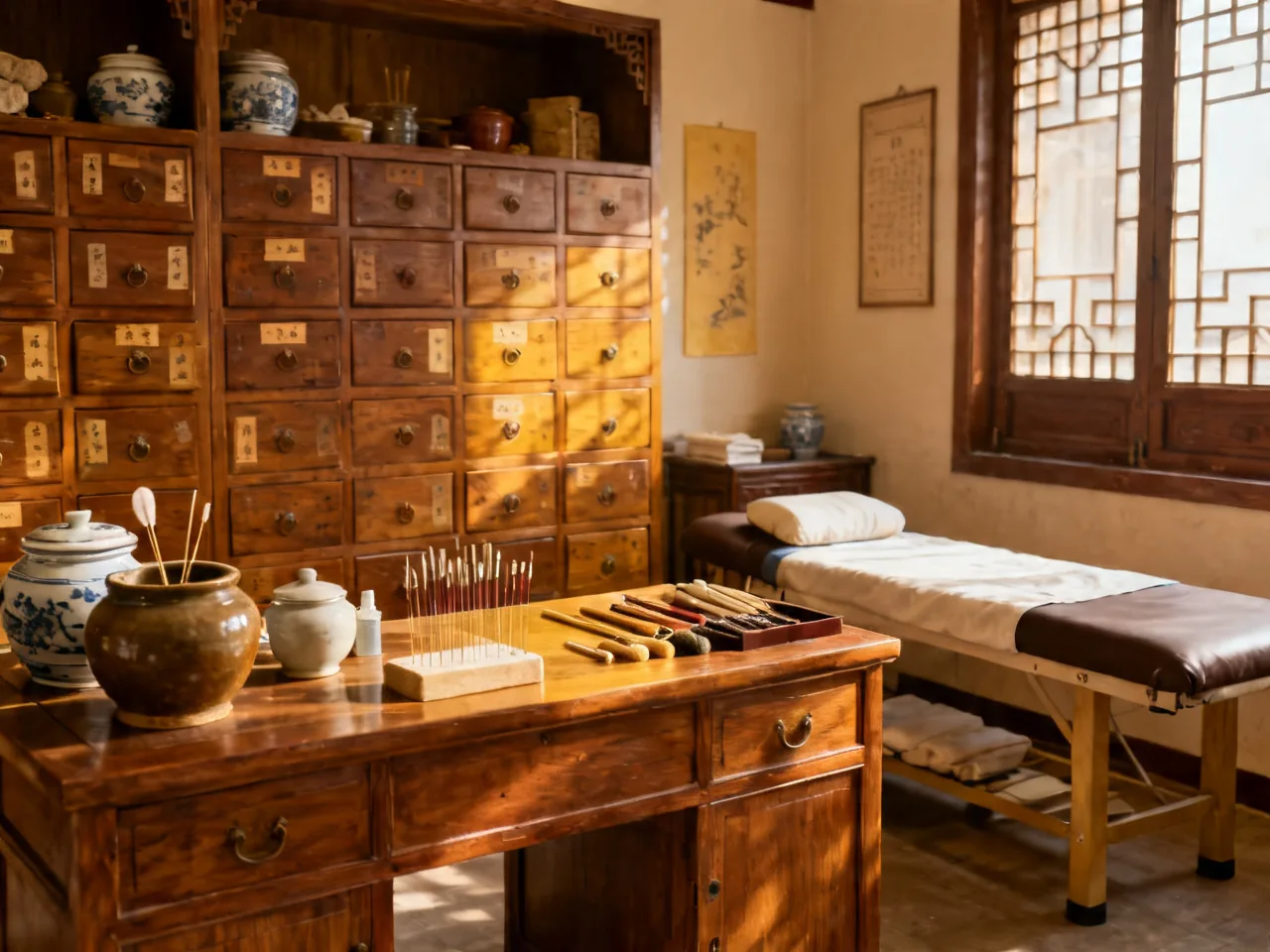
Shanghai Museum of TCM — Located within Shanghai University of TCM, it displays 2,000 years of historical artifacts, medicinal specimens, and medical instruments. English guides are available. It’s one of the best places to understand TCM history, and admission is free.
Qingcheng Mountain, Chengdu — A Taoist sacred site and important birthplace of TCM wellness culture. Taoist medicine clinics on the mountain offer acupuncture, tuina, and herbal baths. Receiving traditional therapies amid mountain forests is an experience unlike any other.
Practical Guide for Travelers
Language is no barrier to seeing a TCM doctor in China — many top-tier hospitals in major cities have English translation services in their TCM departments, and some clinics cater specifically to foreign patients with full English consultations. Registration fees run 20–100 RMB, with herbal medicine costs separate.
Pulse diagnosis (把脉) is the signature moment of a TCM consultation. The doctor places three fingers on the inside of your wrist, sensing the depth, speed, and strength of your pulse to assess organ function. A full pulse reading takes 3–5 minutes; the doctor may also examine your tongue coating and ask about your sleep and eating habits.
Many travelers bring Chinese herbs home. Goji berries, red dates, chrysanthemum tea, and Tieguanyin are both food and medicine — available in supermarkets and pharmacies at affordable prices, and generally fine through customs as dried plant products. For valuable items like ginseng and deer antler, check your destination country’s import regulations.
TCM promises no miracles, but it offers a different way of seeing the body — treating you as a whole rather than a collection of parts to be repaired separately. Even if you only step into a century-old pharmacy during your China travels and breathe in that air thick with the fragrance of herbs and wood, it’s a cultural experience worth having.
Related Reads
- Spring Bloom Map: China’s Most Beautiful Flower Fields
- Summer Escapes: Plateaus & Islands
- Huangshan Sea of Clouds & Welcome Pine: Beautiful in All Seasons
- Best Autumn Foliage Spots in China
- 10-Day East China Five-City Loop