Полный гид по зимнему туризму: лёд и снег
You’ve probably heard of Harbin Ice and Snow World. But China’s winter goes far beyond Harbin — from -40°C Mohe to +10°C Xishuangbanna, winter offers more variety than you’d expect.
The Northeast’s winter isn’t just “cold” — it’s a kind of cold you can’t understand until you’ve experienced it. But precisely because it’s cold enough, you get scenery found nowhere else.
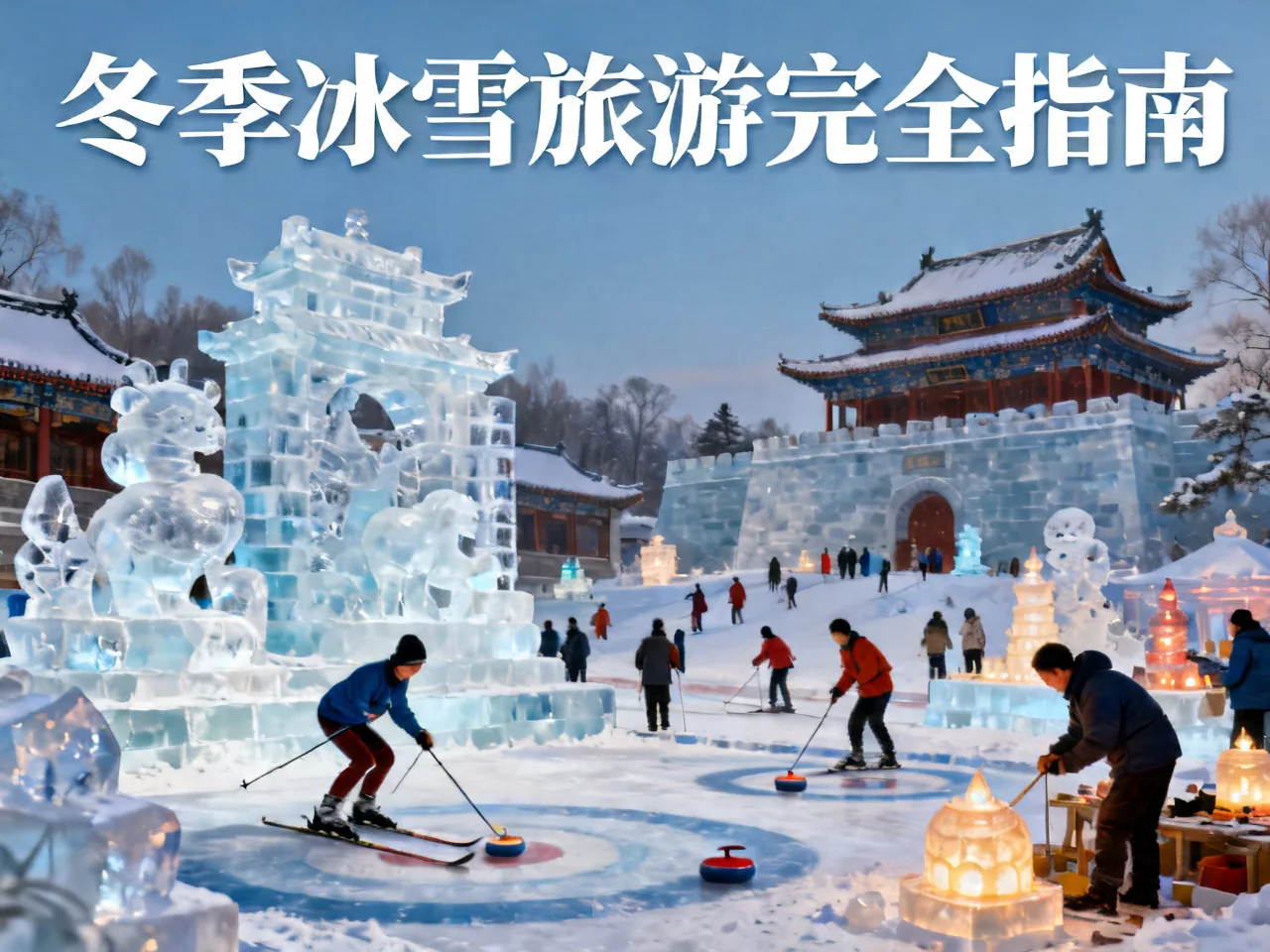
Harbin Ice and Snow World (~¥300) opens late December annually, building giant ice sculptures from Songhua River ice blocks — lit up at night, it looks like a city made of ice. Covering 800,000 sqm with ice slides, ice mazes, and ice bars. You can’t overdress — standing outdoors at -25°C watching ice lanterns, your phone battery drops visibly. Madier popsicle (¥5) on Central Street is a must — eating a popsicle at -20°C outdoors is a Northeast ritual.
Snow Town (Heilongjiang) — One of China’s heaviest snowfall areas, accumulation reaching 2m. Snow on wooden cabin roofs piles into mushroom shapes, red lanterns hanging beneath — China’s most iconic winter image. Fair warning: Snow Town is heavily commercialized with inflated prices; book accommodation ahead and confirm pricing. ~5 hours by chartered car from Harbin.
Mohe Arctic Village — China’s northernmost village, only 7 hours of daylight around winter solstice. The reason to come is simple: take a photo at China’s northernmost point saying “I reached the Arctic,” then throw a basin of hot water into -40°C air and watch it instantly become ice mist. The Arctic Village post office lets you mail a “China’s Northernmost” postcard.
Changbai Mountain (Jilin) — Winter Tianchi (Heaven Lake) is ice-covered, but visibility depends on luck — winter opening rate is only ~30% (heavy wind and snow close the mountain). Missing Tianchi is fine — Changbai’s powder snow is China’s best ski quality. Wanda Changbai and Songhua Lake are international-grade resorts. “Magic World” (free) is a rime ice wonderland at the mountain’s base — hot spring water meets the river, steam freezes into rime on trees, and sunrise golden light through the rime forest is as magical as the name suggests.
Jiuzhaigou in Winter — Many don’t know Jiuzhaigou opens in winter (¥80, vs. ¥169 in summer). Winter Jiuzhaigou has minimal tourists, waterfalls frozen into ice curtains, haizi blue even purer (less algae), snow covering bare colorful branches. So quiet you can hear your own breathing.
This is foreign visitors’ most common question. Northeast winter dressing formula:
- Upper body: thermal underwear + fleece/wool sweater + down jacket (650+ fill power minimum)
- Lower body: thermal long johns + fleece-lined pants or ski pants
- Accessories: ushanka hat (ear protection), scarf, touchscreen gloves, heat packs (stick on back and soles)
Phones auto-shutdown below -20°C — carry a power bank and keep your phone close to your body (body heat).
One Line
China’s winter: either cold to the extreme or warm enough to forget the season — either choice is right.
Related Reads
- Spring Bloom Map: China’s Most Beautiful Flower Fields
- Summer Escapes: Plateaus & Islands
- Huangshan Sea of Clouds & Welcome Pine: Beautiful in All Seasons
- Best Autumn Foliage Spots in China
- 10-Day East China Five-City Loop