У китайских утренних лотков я постепенно понял, почему у каждого обычно есть свой привычный набор
When I first started eating breakfast in China, I treated it like an ordering puzzle. I would choose one item I recognized: buns, soy milk, jianbing, youtiao, or the easiest convenience-store combination of bread and milk. But after enough mornings, I realized that locals usually are not “ordering one item.” They naturally have a fixed combo. Someone always gets soy milk with two youtiao, someone buys congee with a tea egg, someone takes a jianbing and automatically adds an unsweetened soy milk. The smoothness of it is obvious. It feels less like choosing and more like carrying out a sequence the body already remembers.
What made me start noticing this was an ordinary workday morning. I stood beside a breakfast stall and saw that almost nobody ahead of me looked down at the menu. When their turn came, they simply stated the combination, and the vendor seemed able to predict even the bag size and packing style in advance. At first I thought this was just the advantage of being a regular. Later I understood that fixed breakfast combos are really about life rhythm. In many Chinese cities, weekday mornings are tight. People need something stable, quick, suitable for their taste, and ideally easy to carry away. A breakfast combo is not only a taste preference. It is a small daily system shaped by commute, digestion, budget, and time.
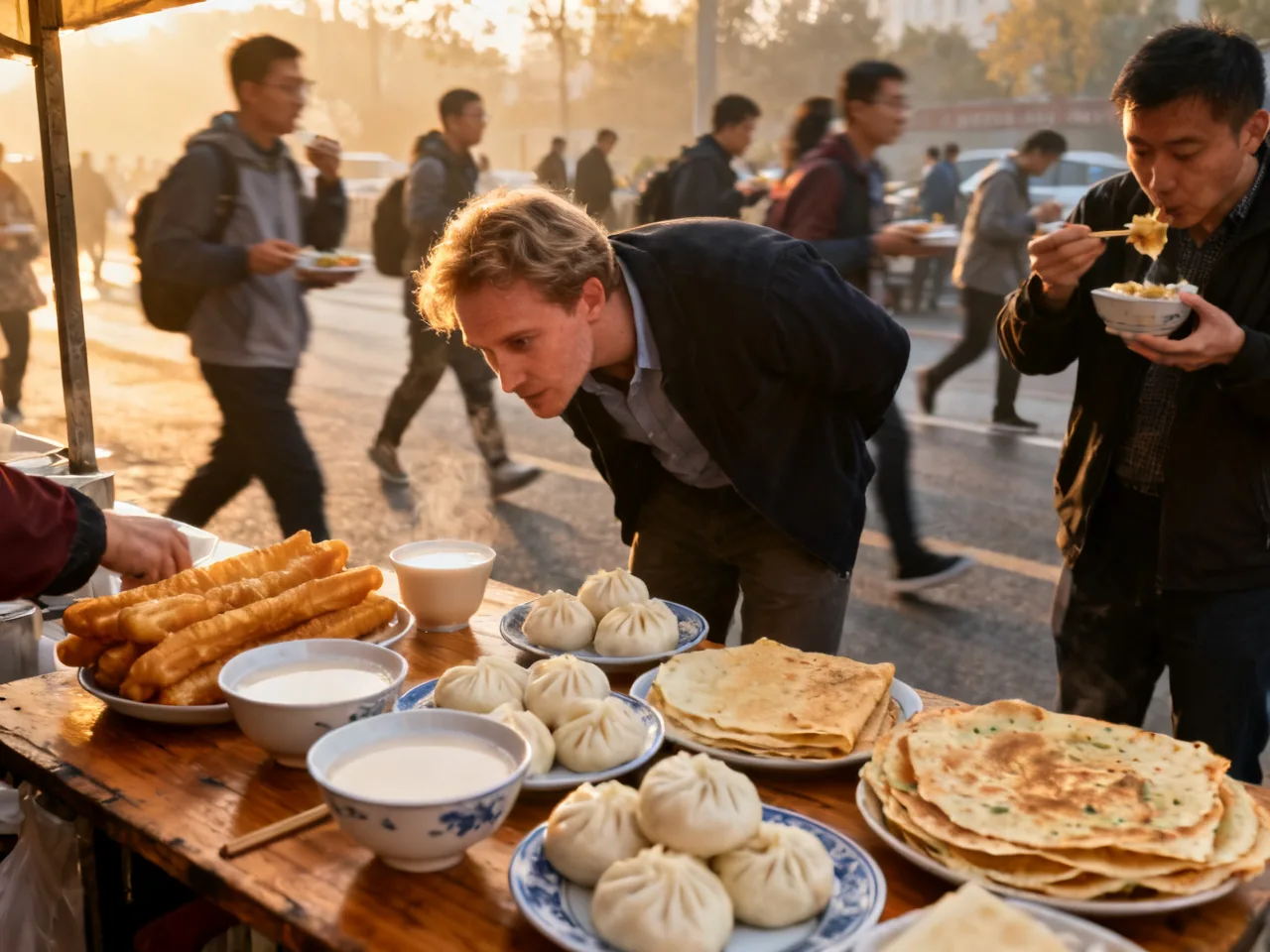
Later I started observing why certain things were paired. Youtiao is often not eaten alone, but with soy milk, doufunao, or congee. A bag of buns often does not end the order by itself either. People may add an egg or a hot drink. Sweet, savory, soft, crisp, hot, portable—these factors are all part of it. Gradually you notice that Chinese breakfasts have a strong sense of combination. The foods are not just sitting next to one another. They are filling in for each other. One item provides fullness, one provides smoothness, one makes the whole meal feel complete. Once I understood that layer, breakfast stalls stopped feeling like a place with too many options and started feeling like a place where you could read how other people organize daily life.
I had a small moment of realization too. For a while, I kept randomly buying one flatbread and leaving, only to get hungry again by ten o’clock or feel that the meal was too dry. Later I learned to build my own combinations. If I bought jianbing, I paired it with soy milk. If I took buns, I added an egg. If I was in a hurry and could only buy something near the metro, I prioritized a combination that was easy to eat while walking and not too greasy. The change was ordinary, but it made me feel for the first time that I was not merely “having breakfast in China.” I was gradually forming my own Chinese breakfast habits. It felt like reaching the point where I no longer had to decide from scratch every morning because my body already knew what kind of breakfast suited what kind of day.
I eventually felt that breakfast combinations are one of the best small ways for foreigners to observe life in China. The stakes are low, but the reality is vivid. If you stand at a stall for a few minutes, you can immediately see who has time to eat slowly, who is clearly rushing to work, who always wants a hot drink, and who prefers something that can be carried the whole way. That made me agree even more strongly with the idea of entering local life through small repeated daily actions. Some kinds of understanding do not arrive through one dramatic trip. They grow quietly after you have watched many ordinary mornings in a row.
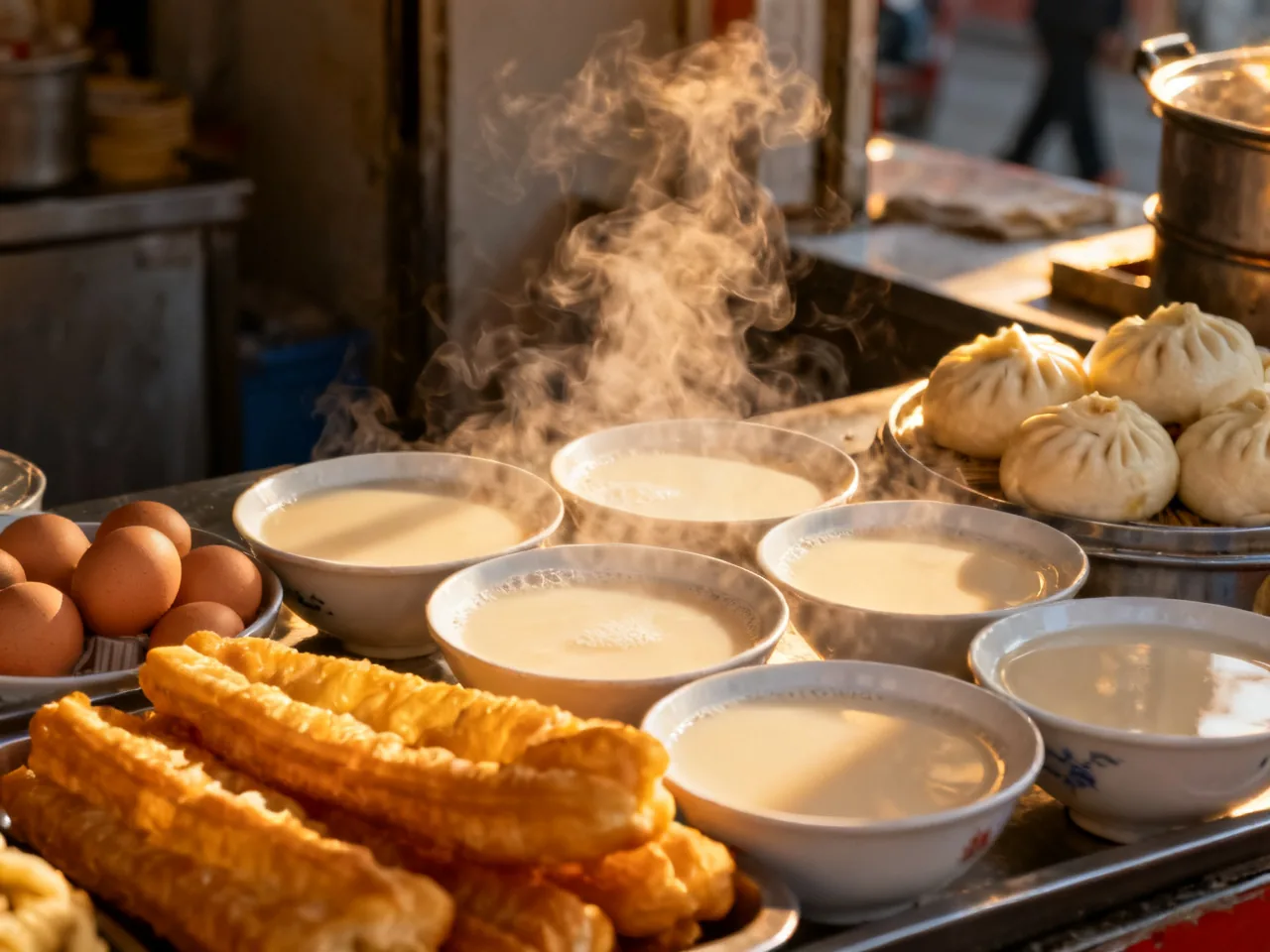
If someone asks me now what is most worth learning from Chinese breakfast culture, I would not name one item. I would say: learn to notice the combinations. Watch how people use two or three small things to make a weekday morning run smoothly, and find which patterns make you feel fed without feeling rushed. You do not need to copy someone else’s exact set. But once you begin to understand the logic of the usual combo, breakfast shifts from tourist-style sampling into a genuine sense of daily familiarity. For me, that is exactly what makes breakfast in China so appealing.