Обед в маленькой лавке на старой улице Сямэня показал мне: «местный вкус» — это не меню из соцсетей
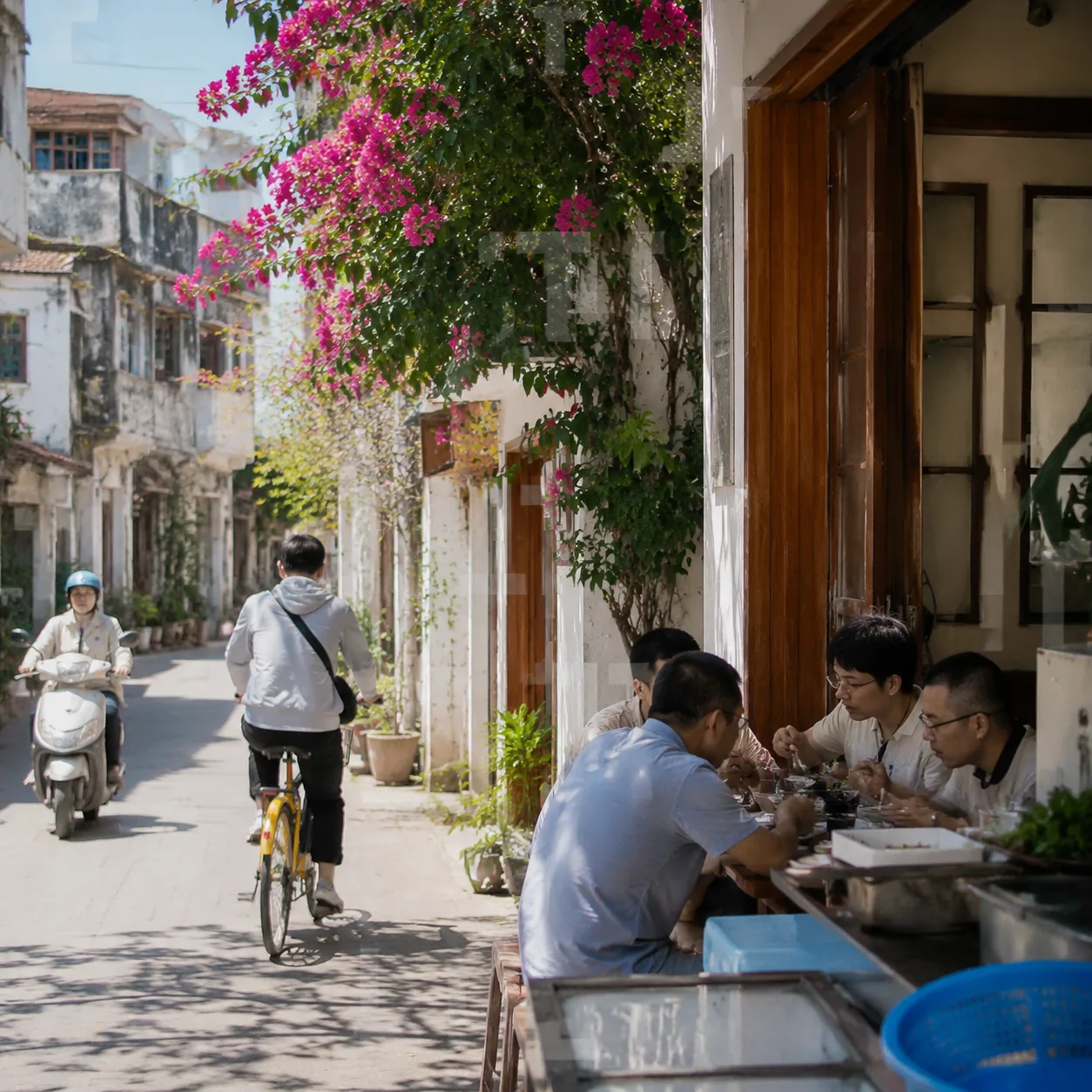
On my second noon in Xiamen, I did not join a line outside any restaurant ranked high on a travel list. The sun had bleached the walls of the old street, and the bougainvillea near the lane mouth looked as if it had just been dipped in water, while the arcade kept a layer of generous shade. I only wanted somewhere to escape the heat and eat a lunch that did not require research. After passing a shop selling incense and another cutting keys, I noticed a faded sign, a few plastic stools at the entrance, and someone inside greeting regulars in Minnan. It was the kind of place a camera might overlook. I stepped in.
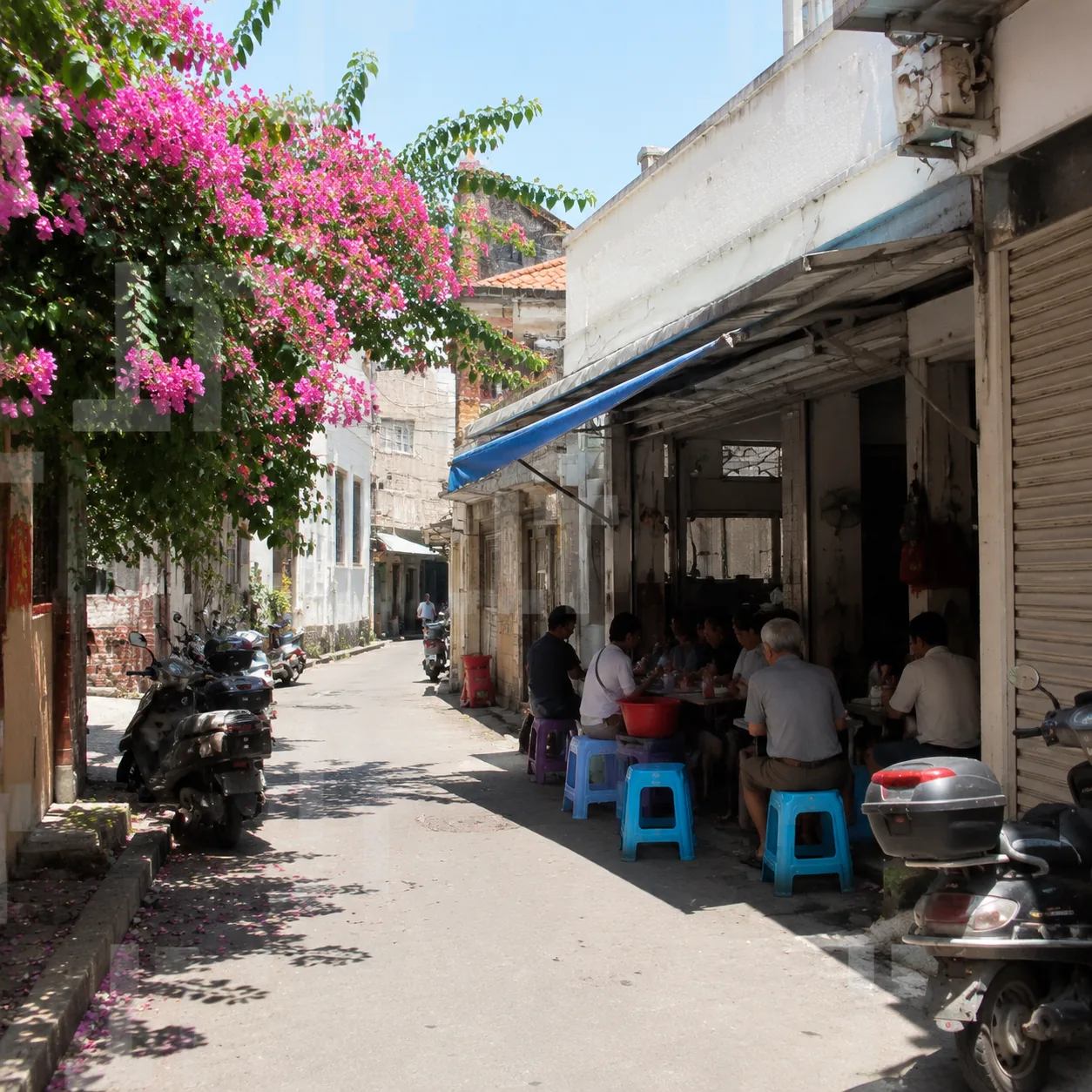
The shop had no carefully manufactured vintage mood. Some wall tiles were cracked, the electric fan worked hard, and the tabletops were clean but polished by age. The menu was written on the wall with few words and plain prices. The owner asked whether I wanted satay noodles. I nodded and added an oyster omelet. She did not recommend a must-order set or point out which dish looked best in photos. She only asked whether I could take a little heat and whether I liked the broth stronger. The question relaxed me, because it cared about how the food would feel in my mouth, not whether the meal would look like Xiamen to someone else.
While waiting for the noodles, I watched an elderly man at the next table set his spoon against the bowl, take a first sip of soup, and then slowly lift the noodles. His movements followed an old order, unhurried and unperformed. At another table, two younger workers in uniforms kept discussing the deliveries they had to make that afternoon. People appeared at the doorway asking if rice was still available, and the owner answered, “Yes, sit.” The rhythm of the shop was not designed for visitors. It first served the people nearby: workers, shoppers, repairmen, anyone stepping in from the sun. A traveler merely joined the rhythm for a short while.
The satay noodle soup arrived with fragrance before shape. It was not simply sweet or spicy, but a mixture of peanut aroma, seafood depth, and a little smoke from daily cooking. The noodles did not try to be dramatically springy. The bean sprouts kept their crunch, while slices of meat and fish balls rested quietly in the bowl. What surprised me most was the measure of the broth: rich without smothering the ingredients, hot without feeling aggressive. After a few bites, I understood that local flavor is not a fixed formula. It is a balance accepted by a neighborhood over time and adjusted by daily use.
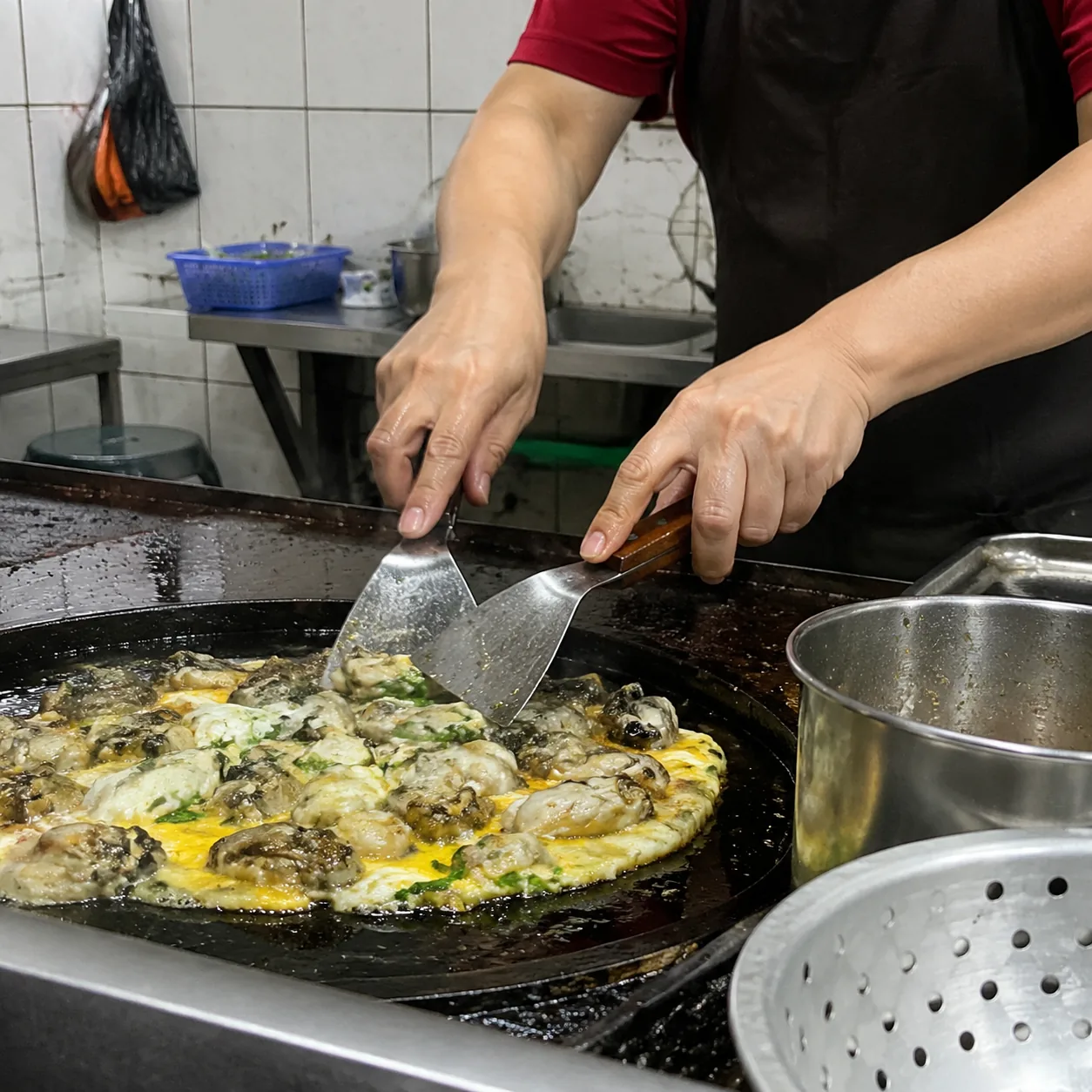
The oyster omelet came next, browned at the edges and still soft inside. The owner set down a small dish of sauce and said I could ask for more. I reached in with my chopsticks, and the freshness of the oysters mixed with the fragrance of egg, while the slight crispness on the outside gave the texture a turn. It was not arranged into a perfect circle, nor decorated with deliberate flourishes. A little sauce even touched the rim of the plate. That irregularity made me trust it more, because it felt like lunch from an actual kitchen, not a rehearsed performance of authenticity.
Halfway through the meal, I heard the owner discuss with someone in the kitchen whether they should buy more oysters for the afternoon. She said there were many tourists that day, but they should not stock too much; in hot weather, ingredients did not stay good for long. The detail mattered more than any menu description. Local flavor is not a product copied without limit. It is constrained by weather, supply, customer flow, the cook’s hand, and neighborhood habit. Because it has limits, it has character. Viral menus often turn taste into a shareable label. The small-shop lunch reminded me that a flavor holds because someone makes concrete judgments for it every day.
I also realized how easily travelers, while claiming to seek local flavor, ask a city to make itself clearer, easier, and closer to expectation. Ideally the sign should be obvious, the line moderate, the menu translated, and every dish matched with a recommendation. But an old-street shop does not exist to satisfy that kind of clarity. Its clarity belongs to those who return: who likes stronger soup, who avoids scallions, who is in a hurry and can order first, who pays at the end of the month. These relationships are hidden in greetings, glances, and habits. An outsider can only see a portion.
After the meal, I drank a few more spoonfuls of broth. The heat brought sweat to my forehead, and the fan scattered it. The owner asked whether I was from out of town. I said yes. She smiled and said the old street was changing quickly: some shops had moved away, new ones had opened, and the people coming to eat were different too. I asked whether she worried that newer excitement might push the small shop aside. She did not answer immediately. She only said they would keep cooking as long as they could, the flavor should not be messed up, and it still meant something if neighbors kept coming. The sentence was plain, but it clarified the shop’s persistence: not a refusal of change, but a refusal to let change take away the scale of daily life.
When I stepped back outside, the old street was brighter than before. Visitors took photos near the lane mouth, scooters moved slowly along the wall, and upstairs someone had hung laundry, wet cloth dripping in the sun. I looked back at the faded sign and suddenly felt it did not need to become more conspicuous. It belonged to those who knew how to find it and to those who passed it every day. Xiamen’s flavor can certainly appear in elegant restaurants, careful plating, and contemporary menus. But at that moment it was closer to the pause brought by a hot bowl of soup, slowing me down from the excitement of travel so I could see the neighborhood itself again.
If that lunch taught me anything, it was not to understand local flavor as a checklist. A checklist can organize expectations before departure, but it cannot replace the act of sitting down and tasting. A living flavor is often in no hurry to explain itself. It appears when the owner asks how strong the broth should be, when a regular’s preference is remembered without words, when ingredients are not overstocked, and when an outsider has the patience to finish quietly. Leaving the old street in Xiamen, I did not carry away a standard answer. I carried a more reliable reminder: deliciousness is not proven by traffic, and locality is not announced by a menu.