大理の風の中で、私は再び自分の話し声を聞いた
Opening
The first thing that welcomed me in Dali that afternoon was almost the wind itself. As soon as I stepped out of the station, the air felt different from other places. It did not have the heavy stillness common in many southern cities, nor the trapped feeling of big urban spaces blocked by buildings. The wind seemed to come from far away, passing through crowds, roadside trees, cloth curtains outside shops, and finally through my own travel-tired mind. As a foreigner who had already been traveling alone for several weeks, I was used to constantly switching between places. But Dali did not first feel “new” to me. It felt like release.
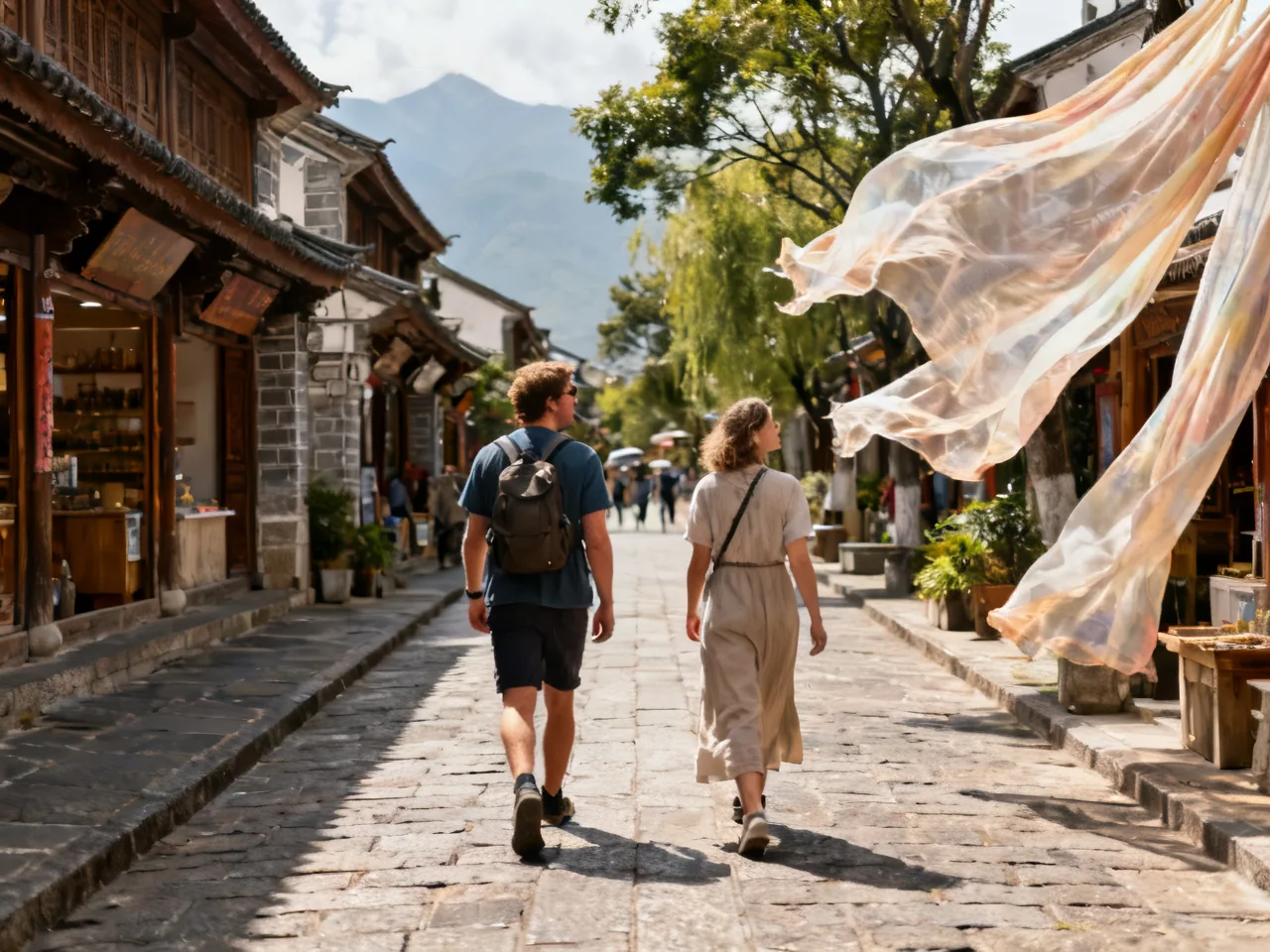
Scene 1: In the old town, nothing needed to happen quickly
I checked into a small guesthouse near the old town. After dropping off my bag, I did not immediately search for “must-see attractions,” nor did I design a perfect route. I simply followed the stone-paved streets inward. There were cafés, tie-dye shops, flower stalls, and travelers rushing by with backpacks. But strangely, even with visitors around, the town did not always feel noisy. Many people were simply sitting, sunbathing, drinking something, or staring at the sky. I am usually cautious around places that have become social-media favorites, and I had worried that Dali might feel too packaged by imagination. But once I walked into it, what I felt instead was a rare looseness.
I stopped at a small café with plants spilling out around its entrance, ordered a coffee, and sat on a wooden chair watching people pass. Nothing pushed me forward, and there was no countdown of things I “could not miss.” Moments like this are not common in travel. You do not stop because something is spectacular; you stop because everything is gentle enough to deserve your time.
Scene 2: By Erhai Lake, the wind slowed every thought
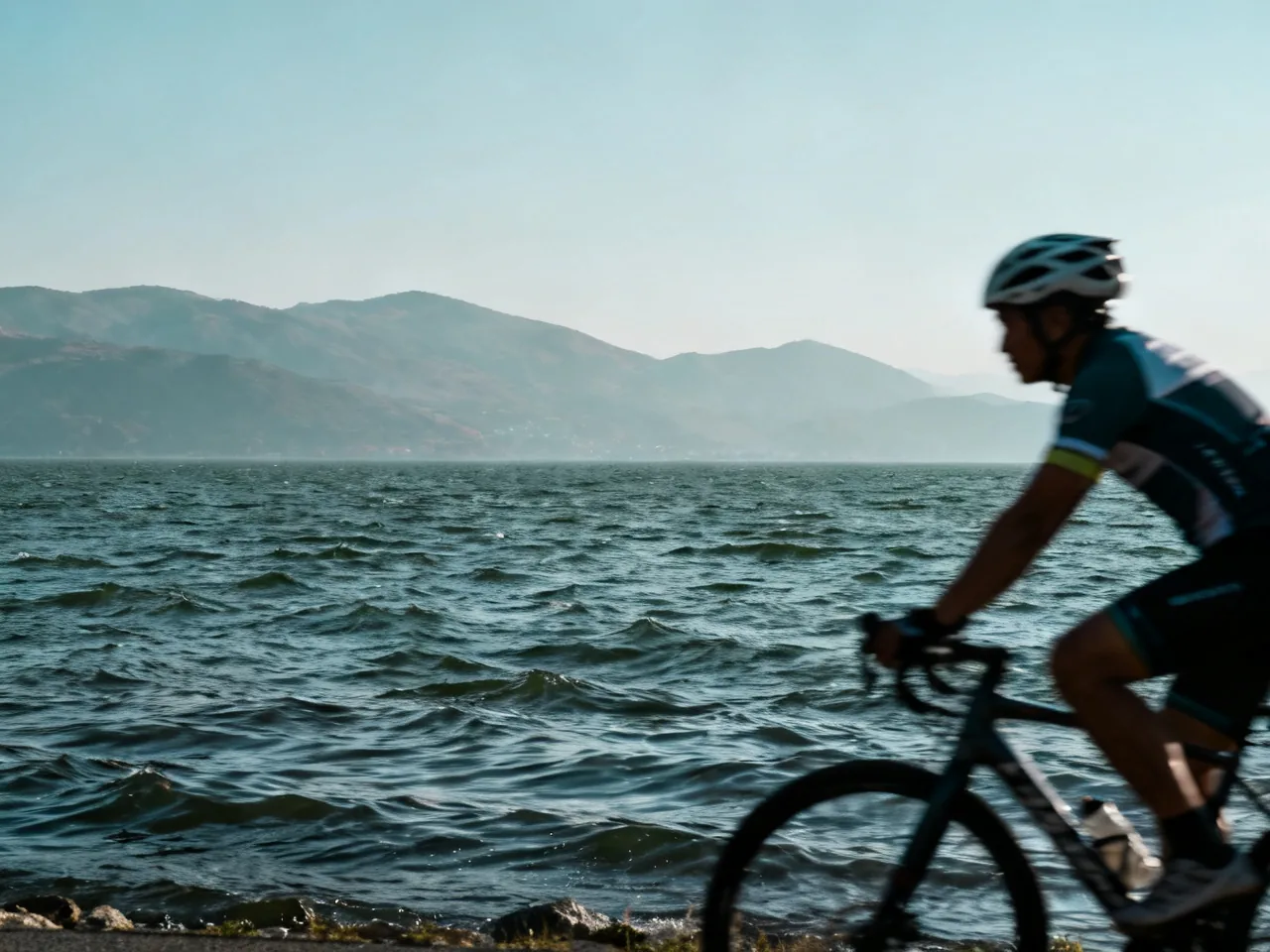
The next day I went to Erhai Lake. The sky was bright, the clouds hung low, and the outline of the Cangshan Mountains was perfectly clear in the distance. Once I reached the water, I became quiet almost immediately. The surface was not perfectly still. The wind came in waves, changing the small ripples again and again, as if someone were gently rewriting the same painting. I walked along the lakeside, stopping now and then to watch cyclists pass, couples take photos, and local elderly residents sit in thought. No one seemed especially hurried.
When you travel alone for a long time, you can fall into a strange kind of inner noise: Where should I go today? Should I be more efficient? Am I missing something? Are my photos good enough? But by Erhai Lake, those voices were scattered a little by the wind. I even found myself speaking quietly to myself, as if I were undoing knots one by one inside my head. It may sound foolish, but in that moment I truly felt that Dali’s greatest gift was not the landscape itself. It was the space it gave people to rearrange themselves inside.
Scene 3: In a courtyard at night, I no longer needed to prove anything
That evening, back at the guesthouse, the courtyard was lit with warm yellow lights. Some people were talking softly, some were working on laptops, and some were doing nothing at all. I took a bottle of beer and sat in the corner listening to the wind passing over the roof. The owner chatted with me for a while and asked where I was from and where I was going next. I said I had not fully decided yet. He nodded and said, “That’s good. Dali suits people who are not too certain.”
That sentence made me laugh, and it also let me relax. Traveling alone often looks like a form of freedom, but it can quietly become another performance too: you are supposed to seem independent, decisive, organized, open to experience, and good at making meaning. But that night, in a small courtyard in Dali, I felt for the first time that I did not need to prove any of those things. I could simply be a person sitting in the wind, and it was fine not to have answers yet.
Closing
When I left Dali, what I carried with me was not one specific attraction, but a physical memory: wind against my face, the feel of stone streets under my feet, long quiet moments by the lake, and the version of myself who no longer felt urgent about organizing life at night. For many people, Dali may mean escape, pause, healing, or simply a beautiful name. For me, it felt more like a place that turned the volume down, so I could hear what I was really thinking again.
Travel Notes Summary
This is the story of my slow, solo time in Dali: easing into the rhythm of the old town, letting the wind by Erhai Lake scatter my anxiety, and learning in a quiet courtyard at night to accept uncertainty itself. Dali’s charm lies not only in its scenery, but in the sense of release it offers.