Learning Toasting in a Shandong Restaurant Was My First Lesson in Chinese Restraint
At first glance, many foreigners think Chinese toasting is a forceful kind of warmth. A glass is raised, the words are offered, and all eyes seem to turn toward you. It is easy to tense up instinctively. Should I empty the glass immediately? Am I not allowed to refuse? If I handle it clumsily, will I look rude? That was exactly my reaction. The first time I ate with local friends in an ordinary small restaurant in Shandong, I sat against the wall with a table full of steaming dishes, sea cucumber with scallions, stir-fried clams, and fresh dumplings. The room lights were yellowish, and the sound of glasses touching was very clear. What made me most nervous was not the food. It was the fear that I did not understand the rhythm of the table at all.
What relaxed me was not a formal lesson in etiquette. It was slowly realizing something deeper: in Chinese toasting, what often matters most is not how much you drink, but whether you recognize the intention behind the gesture and return an appropriate level of feeling. The first person to raise a glass that evening was an older uncle who simply welcomed me to Shandong and invited me to enjoy the local food. My instinct was that I needed to finish the whole glass at once. But the friend beside me touched my wrist lightly and whispered, “Meaning matters more than quantity.” That single sentence loosened the pressure in my head. I have remembered it ever since because it feels very close to the logic in learning to integrate into China through small actions. Many situations are not asking you to perform like a local. They are asking you to learn how to read the atmosphere first.
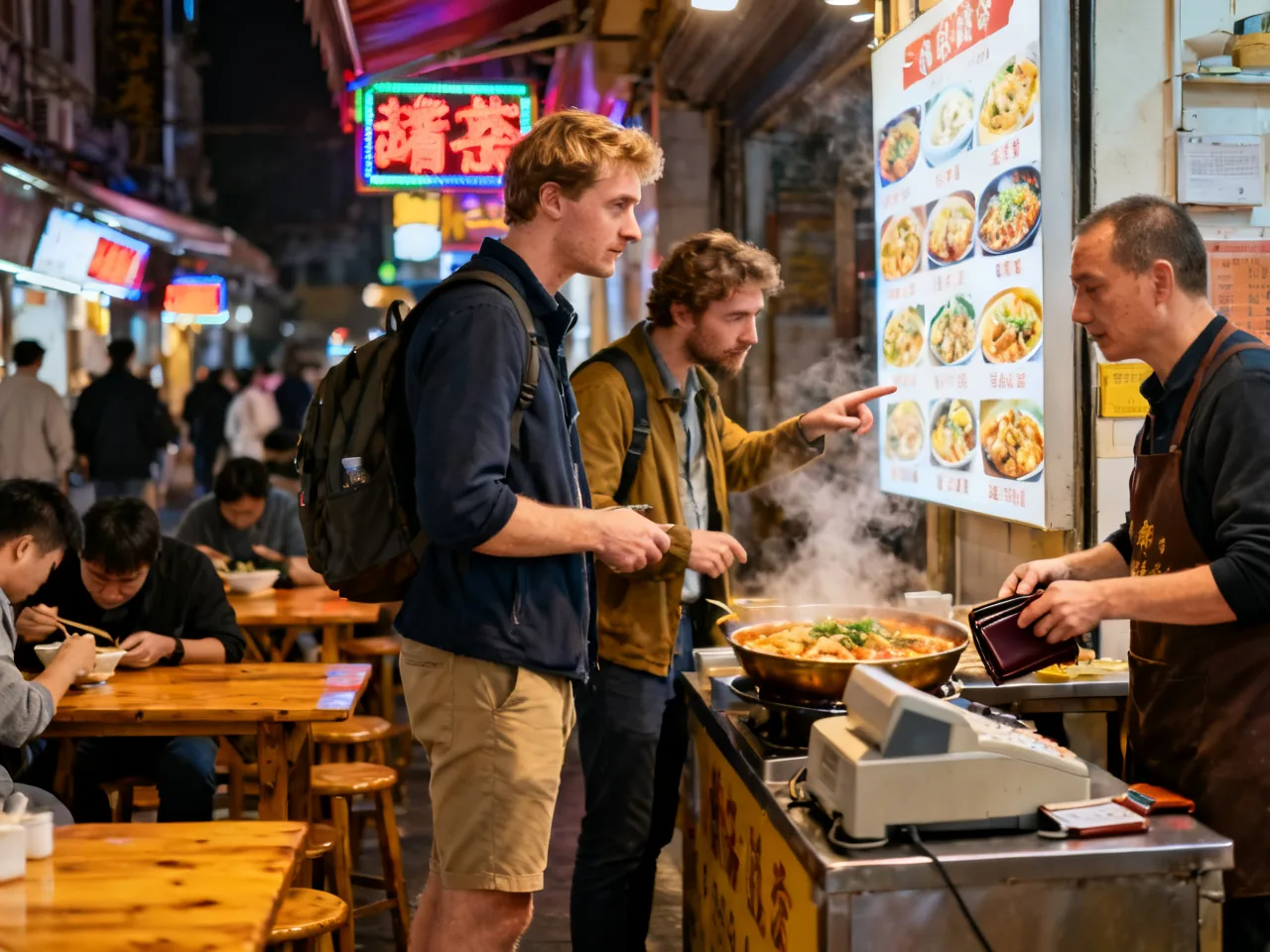
As the meal continued, I began noticing details I would never have paid attention to before. The people most respected were not necessarily the ones who drank the most, but the ones who arranged comfort for others best. When someone offered a toast, they might bend the wrist slightly and lower the rim of the glass. When someone urged you to eat, they might place food for you once without forcing you repeatedly. When someone said “Take it as you like,” it was not always a formula. Sometimes it truly meant they were giving you space. I used to think of politeness as a fixed set of rules that could be memorized to avoid mistakes. That meal in Shandong made me feel very clearly that Chinese politeness is more like dynamic judgment. It is not boundary-free. On the contrary, its boundaries are hidden inside restraint.
The moment I remember most clearly came when someone approached to toast me for the second time. I was ready to answer exactly the way I had the first time, but the older man noticed that there was barely anything left in my glass and smiled first. “No need to fill it. Just the meaning is enough.” In that moment I understood that this was not a social contest about who pressed harder. It was an interaction of constantly adjusting force. If you observe carefully, the most mature people at a Chinese table are often the ones who know how to leave others a step, room, and ease. For foreigners, this discovery matters a lot, because it slowly turns a scene that feels like a pressure test into a kind of social reading that can actually be practiced.
Later I summarized a few practical table habits for myself. First, when someone raises a glass, watch their speed and tone before performing your own response. Second, if you are unsure, answer with a small sip instead of emptying everything. Third, pay attention to phrases like “as you like,” “take it slowly,” and “don’t be formal.” They often truly mean the rhythm can relax. Fourth, instead of worrying whether I drank too little, it is better to ask whether I sincerely responded to the welcome. Fifth, if you cannot make elegant speeches, one short and clear thank-you is usually enough. Sixth, notice who is quietly taking care of others. That person is often the best model for reading the table. Very often, Chinese restraint is not learned through abstract facts. It is read through these small actions by the plate and the glass. In that way, it connects strongly with learning to ask for help naturally and stabilizing judgment through layered confirmation.
When I later encountered similar scenes in other cities, I was no longer as tense as the first time. Not because I had suddenly become skilled at toasting, but because I finally knew that politeness is never only about copying the action. It is about understanding first, then giving a response that neither burdens the other person nor forces yourself. What I admire most about Chinese dinner tables lies exactly there: warmth and boundary are not opposites. Very often they exist at the same time. In the end, what stayed with me from that Shandong meal was not any one dish. It was the first real feeling that cultural integration is often not about becoming eloquent. It is about slowly learning how to read restraint inside the kindness that is being offered to you.
By the time the dinner was winding down, only a little food was left on the table, glasses were no longer touching as often, and I could hear the soft sounds of staff clearing other rooms in the corridor outside. Sitting there, I felt much lighter than I had before the meal began. Not because I had somehow “passed” a test, but because I had started to understand that the deepest part of Chinese politeness may not lie in the visible gestures at all. It lies in the habit of always leaving a little room for someone else. That is what the meal in Shandong taught me.