Зелёные артерии китайских городов: улицы под сенью деревьев
Walking along Zhongshan Road in Nanjing, you forget you’re in a city of millions. French plane trees form a canopy overhead, summer sunlight filtering through in scattered fragments. Some of these trees have stood for nearly a century, planted during the Republic of China era. Nanjing locals call them “lǎo fǎ tóng” — not a botanical term, but an affectionate one.
What a Single Tree Can Change
In 2011, a Nanjing metro construction plan called for removing a batch of old plane trees. When the news broke, residents took to the streets — some literally hugging the trees in protest. The metro line was rerouted. The trees stayed.
This episode reveals something important: urban greening in Chinese cities has long since stopped being purely a government planning matter.
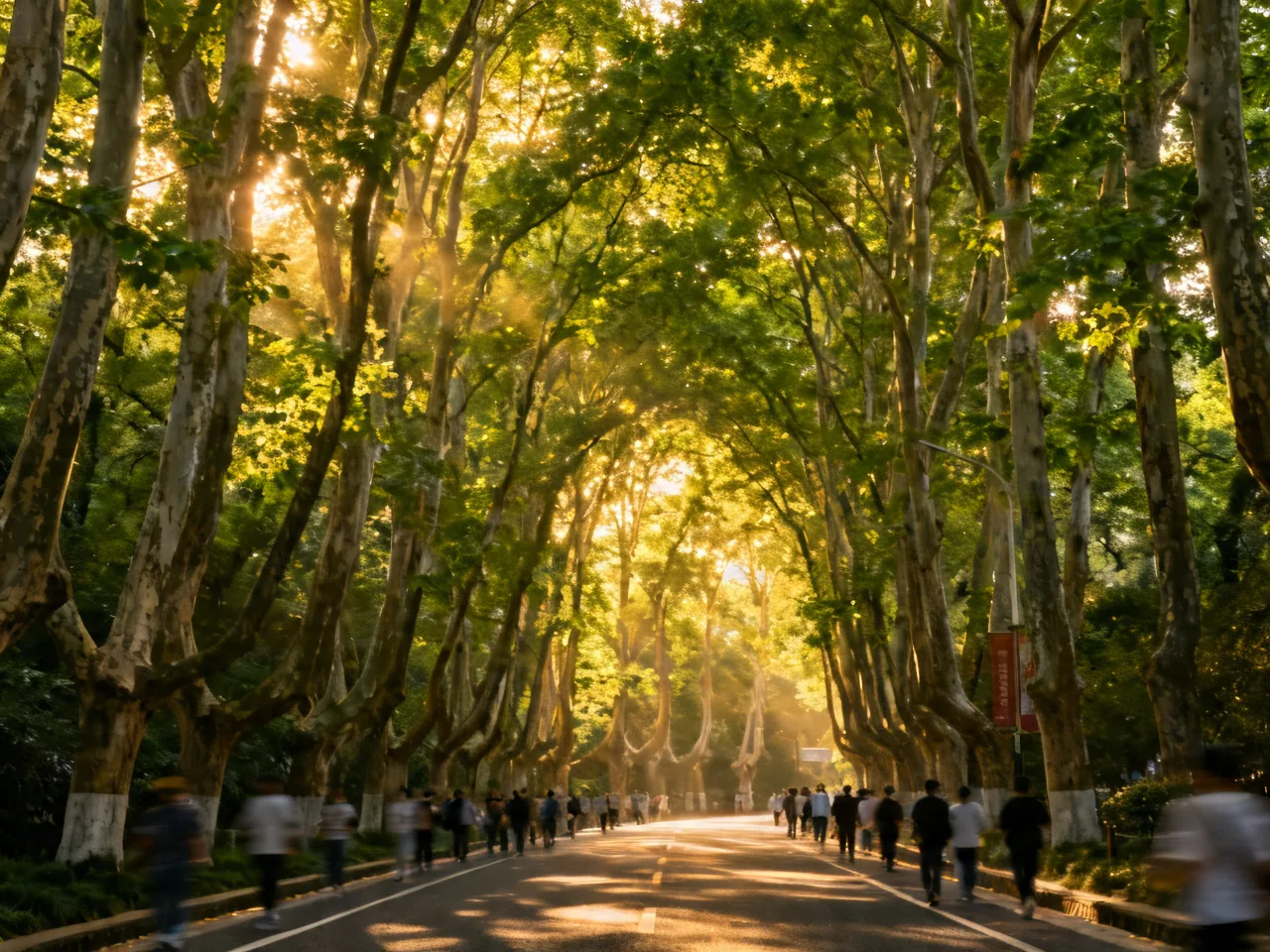
Each Chinese city has its own tree identity.
Nanjing’s plane trees are protected heritage — cutting one requires government approval, and trees over a century old have individual records on file.
Chengdu took a different approach. The “Park City” concept originated here. Tianfu Avenue stretches 108 kilometers, flanked by layered green belts — trees, shrubs, and lawns stacked together, turning the entire road into a linear park rather than just a tree-lined street.
Guangzhou has kapok. Every March, red kapok flowers carpet the ground beneath the trees. Locals call it the “hero tree” — it’s the city flower and one of the most common street trees you’ll see.
Shanghai’s French Concession plane trees share the same species as Nanjing’s, but feel different — on Wukang Road and Huaihai Road, the trees are part of an aesthetic ensemble with old villas and cafés, making them among the most photographed streetscapes in the city.
Xi’an’s ginkgo trees in autumn are something else entirely. When the leaves turn gold near the Big Wild Goose Pagoda, the entire boulevard looks paved in gold. Tourists come specifically for the photos.
Urban greening in China doesn’t happen organically — it’s driven by systematic policy.
The “National Forest City” designation is a key motivator. Over 200 cities have earned this title, which requires urban green coverage of at least 40% and per-capita park green space of at least 15 square meters. Cities invest heavily in greening to compete for the designation.
The 14th Five-Year Plan (2021–2025) set a binding target: national urban green coverage above 43%. This isn’t a slogan — it comes with performance metrics.
Standards for new road construction have also risen. Major roads must have green belts 3 to 10 meters wide on each side, and developers who remove trees must replant at a 3:1 ratio.
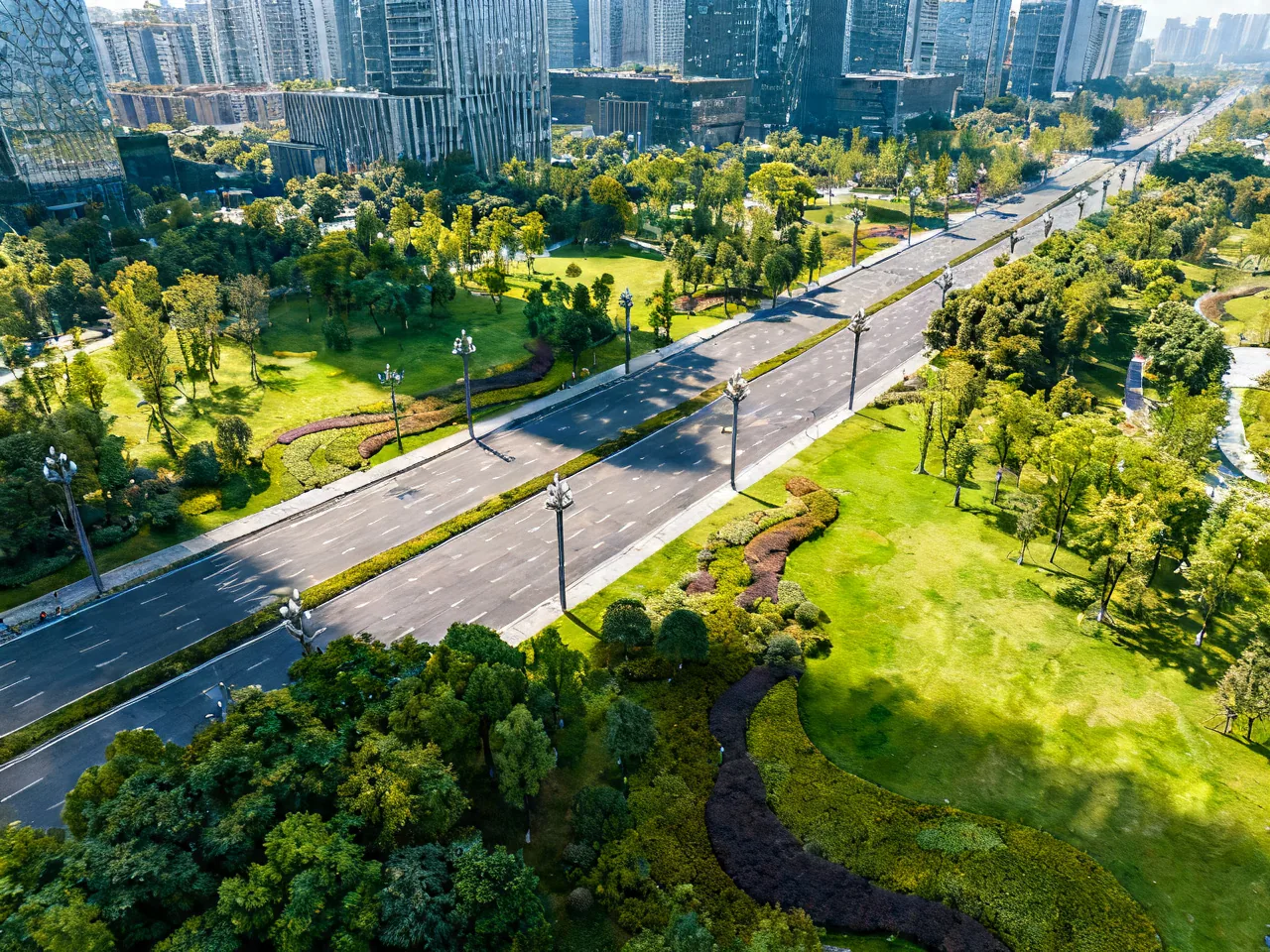
Beyond individual streets, China has a bigger ambition: the greenway network.
China plans to build over 150,000 kilometers of greenways by 2035, connecting parks, riverbanks, hillsides, and urban roads into a single network for cycling, walking, and running — without crossing traffic.
Chengdu’s Tianfu Greenway is already one of the world’s longest urban greenway systems, stretching over 16,900 kilometers across the Chengdu Plain. Wuhan has a “10-minute green space” policy — every resident should be within a 10-minute walk of a park or green corridor.
If you want to see China’s tree-lined streets at their best, here are a few worth the trip:
- Yihe Road, Nanjing — plane tree tunnels with Republican-era architecture; go early morning before the crowds
- Wukang Road, Shanghai — plane trees and old villas; most beautiful in autumn
- Ginkgo Avenue near Big Wild Goose Pagoda, Xi’an — late October to early November for peak golden color
- Tianfu Avenue, Chengdu — experience the “Park City” scale; best explored by bike
- Around Yuexiu Park, Guangzhou — kapok blooms in March, flowers carpeting the ground
China’s urbanization has been breathtaking in speed. But along the way, some cities chose to keep their trees — even rerouting metro lines to do so. That choice alone is worth noting.